
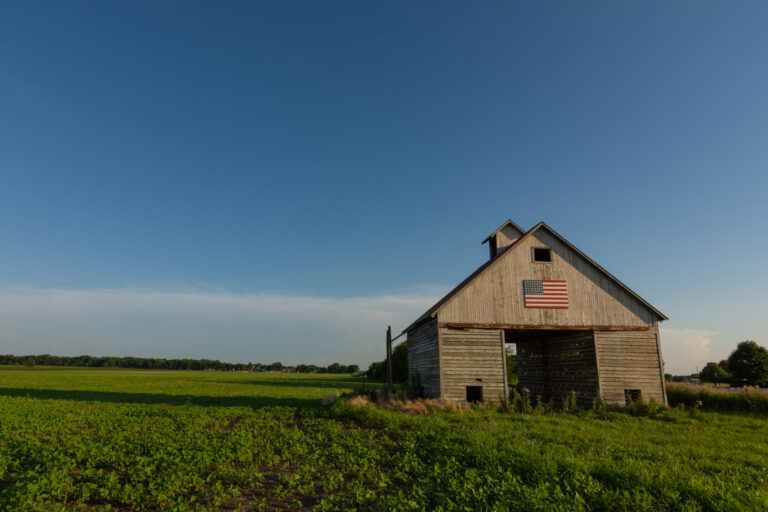
When I first moved to the farm, the land didn’t know me, and I didn’t love the land. Older farmers talked about such a thing: gazing out over a field of lush corn or a backyard bumper crop of tomatoes, full of pride. I didn’t fully believe them; I didn’t imagine you could love something that wasn’t a human or animal. As the years have gone by, though, I’ve watched the farm survive hard seasons and flourish during easy ones. I’ve learned that tending is reciprocal, and as we’ve worked to increase plant diversity, clear out invasive shrubs, build pollinator habitat, and create rich soil, the land has loved us back, nourishing not only our bodies but also our souls. I now hold a combination of deep gratitude, connection, and even love for this land.
But growing and raising food has never been easy, and it’s certainly not getting any easier. Early-season temperature swings led to a more challenging than usual lambing and calving season on the farm. An early drought slowed pasture and hayfield growth. Fruit growers in the eastern U.S. had devastating crop losses because of historic late-April freezing conditions, and the 2026 wheat crop is plagued by drought conditions. Significantly reduced harvests are predicted. At the time of this writing, more than half of our country’s cattle inventory was likewise in drought conditions, and the threat of an increasing screwworm population looms on the horizon. This is all on top of high fuel and fertilizer costs. However, the more we farm and garden in communication with the land, despite all the challenges, the more we can still thrive. We can’t control droughts, erratic temperature fluctuations, or intense wildfires. But we can tend ecosystems both large and small with greater attention to these changes, and we can work collaboratively with the land toward greater resilience. This issue highlights some ways we can achieve this.
Learn how farmers in California are building soil carbon, reducing erosion, and skipping synthetic fertilizers in “Amid Soaring Fertilizer Costs, Farmers Are Going Regenerative.” “Your Regenerative Garden” encourages us to adopt these same methods in our gardens: minimize soil disturbance, consider living mulches, and grow healthier plants in healthier soils by sequestering as much carbon as we can. For more tips on mulch that’s healthy for your soil and skips the microplastics, check out “Alternatives to Black Plastic Mulch.” These methods all work on big farms, in backyard gardens, in raised beds, and in containers.
Well-tended land gives back. Challenge yourself to use everything your garden produces. Preserve produce, visit your farmers market, and consider bulk buys from local farms. Share what you have with food pantries, and barter your garden successes with neighbors. “Sealed, Saved, and Stored, “Flavored with Flowers“, and Country Lore are full of techniques and recipes to put up your harvest. And “Bermed and Budgeted” shows how you can extend your harvest season with a DIY greenhouse.
Well-tended land asks that we listen and reciprocate, and in this issue, you can find inspiration for supporting fragile ecosystems and restoring habitats as well. “Lovely in a Thousand Ways” shares tips to plant and tend prairies everywhere, including the city. “Mind Your Milkweed” has suggestions to support not only monarchs but also moths, hummingbirds, bees, and more. “Prep Your Land and Livestock for Wildfire Season” shares steps you can take to reduce losses when fires come, and “Biochar for Fire Prevention” shares another way to protect buildings, with the added benefit of building soil.
Despite all the challenges, the lambs are growing vigorously on pastures that were allowed to rest and recover until the rains came. The pantry is full of canned goods from an abundant (diverse, deep-mulched) garden. And the prairie, with its deep roots and ecological diversity, thrives no matter what.
– Mother





