

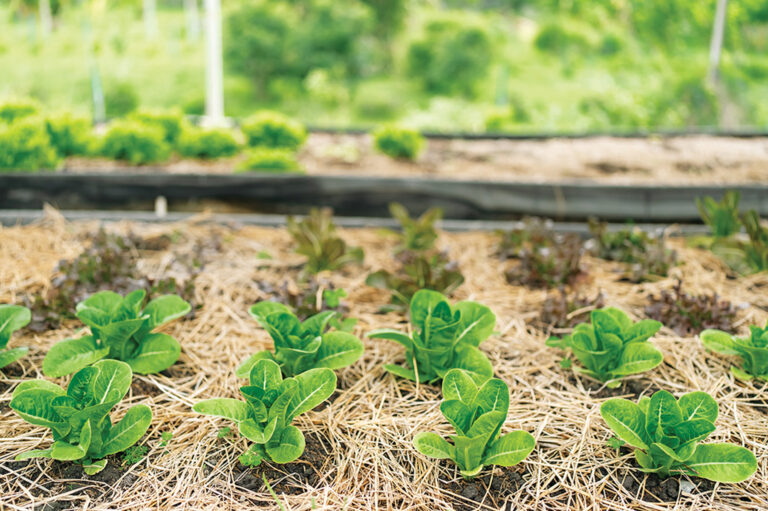
Find natural alternatives to plastic mulch, including cardboard, pine needles, straw, wood chips, or even living mulches and cover crops, and determine the best way to spread mulches.
I’ve heard I shouldn’t use black plastic mulch in my garden. Is that true? What are some good alternatives?
Plastic mulches are used worldwide in commercial farming and home gardens. As plastic mulches age, even UV-resistant types break down and release chemicals and microplastics into the soil.
Studies also show that plastic mulches harm soil quality and fertility by changing soil structure, water-holding capacity, nutrient availability, and more. In addition, plastic alters the soil’s physicochemical properties and microbial activity, which in turn may affect plant growth. And then there’s the question of what ingesting these chemicals is doing to animals throughout the food chain – including humans.
Plastic mulch causes lack of airflow and poor drainage, which can lead to plant disease. Plastic mulch may also make irrigation more necessary, since it causes rain to run off the land, away from plants. And, of course, most plastic mulch lasts only a year or two, so it’s a constant source of expense and waste.
Natural Alternatives to Plastic Mulch
The good news is that there’s an alternative that works well, especially in homestead and backyard gardens: organic matter, which, unlike plastic, improves soil health. This can include leaves, pine needles, straw, wood chips, or even living mulches and cover crops. As organic matter breaks down, it releases nutrients into the soil, feeding beneficial organisms, microbes, and mycelium, which help bring nutrients to our plants. Organic matter also helps prevent erosion and keeps more water in the soil; studies show that organic matter, especially combined with no-till gardening methods, improves water retention while also promoting good drainage.
Best Way to Spread Mulch
While weed control is the main reason most people use plastic mulch (dark plastic keeps sunlight from reaching weed seedlings, which usually, but not always, kills them), organic mulch is a better alternative. Simply lay down 3 to 4 inches of organic straw, brown tree leaves, or wood chips, replacing them as they decompose. To make this mulch even more effective, put a double layer of plain corrugated cardboard (overlapping its edges by 6 inches) beneath the mulch.
Several studies, including one by the ATTRA Sustainable Agriculture Program, show that brown cardboard is benign in the garden. Some recycled cardboard can contain forever chemicals (PFAS), but this can be addressed by testing cardboard before you use it in the garden: Place a drop of olive oil on both sides of the cardboard. If it beads without soaking in or spreading, the cardboard likely contains PFAS, which are designed to repel liquids and fats. Cardboard with black printing is considered safe for the garden, but colored inks and colored or shiny cardboard may leach unwanted chemicals into the soil.
Because tilling brings weed seeds to the surface, where they’re more apt to germinate, adopting no-till methods can also help control weeds. You can even lay pulled weeds on top of the mulch; as they decompose, they’ll feed the soil. (Just don’t do this with weeds that have gone to seed or weeds that are difficult to eradicate, such as buttercup.)
Another reason people use black plastic mulch is for its soil-warming qualities; a thick layer of organic straw or wood chips can also help with that. Straw is particularly effective; its fibrous structure traps pockets of air, creating insulation. Putting 4 inches of straw on top of the soil around plants will keep the soil warmer. Another option is to install raised beds made of metal, which will warm the soil more quickly than raised beds made from other materials.
Finally, if you’re using light-colored plastic mulch to help the soil stay cooler in hot weather, 4 inches of straw mulch is an excellent alternative for that too, given its insulative properties.





