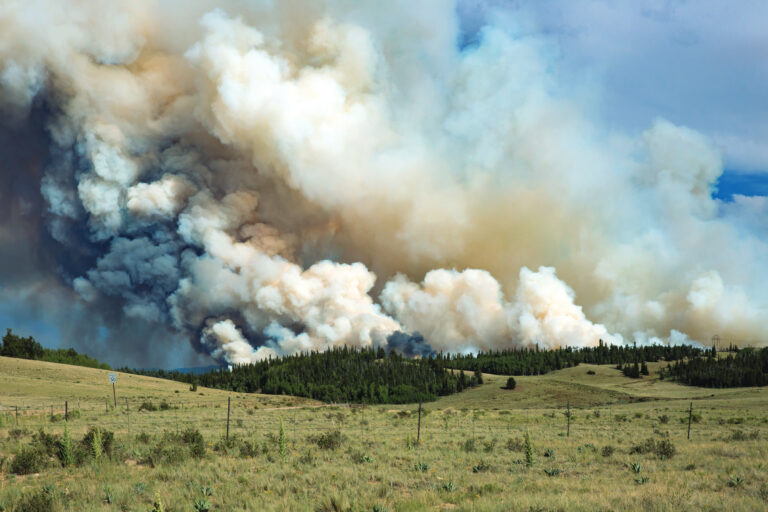
Fire season arrives long before anything burns. It doesn’t follow calendars; it follows conditions. Some years it arrives in August, some in June, hovering just out of sight until lightning sparks a blaze. We live in vigilance. Our senses stay on alert – always scanning for the first trace of smoke that sets everything in motion again. One night, we received a 10 p.m. evacuation alert on our phones. No smoke. No glow on the horizon. No fire reports. It turned out to be a dispatch error, but our adrenaline responded anyway. With fire, your body reacts before your mind can reason. You don’t always know what to trust – not your senses, not your alerts, not the absence of visible flames. That uncertainty is what makes preparation essential.
Observe
The land gives early signals – grasses dry out, soil loses moisture, brush turns brittle. Living on a canyon like we do adds its own challenges. What feels like still air on the rim accelerates once it drops into a canyon draft corridor. Smoke pools in low, protected pockets. We’ve rushed down to investigate our fair share of dense clouds and fog, just to be safe.
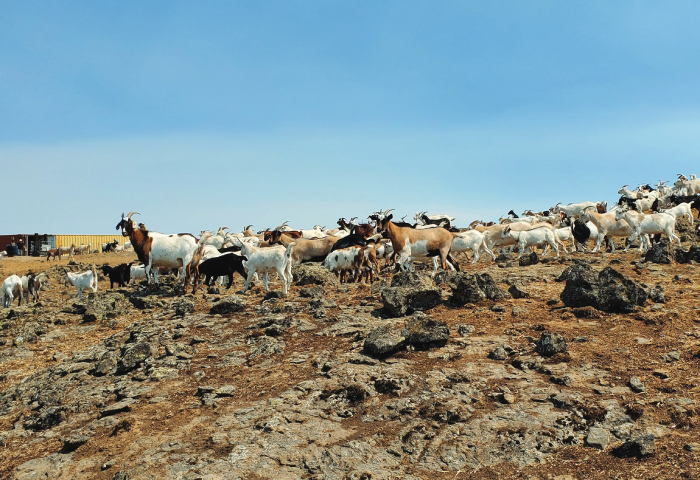
Observation becomes part of your routine, as natural as checking water troughs or scanning a fence line. You learn to pay attention to wind patterns – how they shift in the evenings, how they funnel through draws. You track lightning forecasts. Watching weather has a different purpose in fire country. You’re not planning your week or your wardrobe, you’re assessing risk in real time.
Plan and Prepare
Early decision-making is central to preparation. Producers must determine whether to shelter in place or evacuate, and that decision should be made before an emergency occurs. You can only hope to shelter in place if you’ve already designed your property with fire-resistant structures, reliable water access, protected feed storage, and a plan for managing smoke. To evacuate, you need to be ready to move quickly, with fuel tanks full, trailers maintained, and destinations identified. During severe fire years, nearby states may also be burning, which will reduce the number of available evacuation sites. Planning ahead reduces the number of decisions you have to make under pressure.
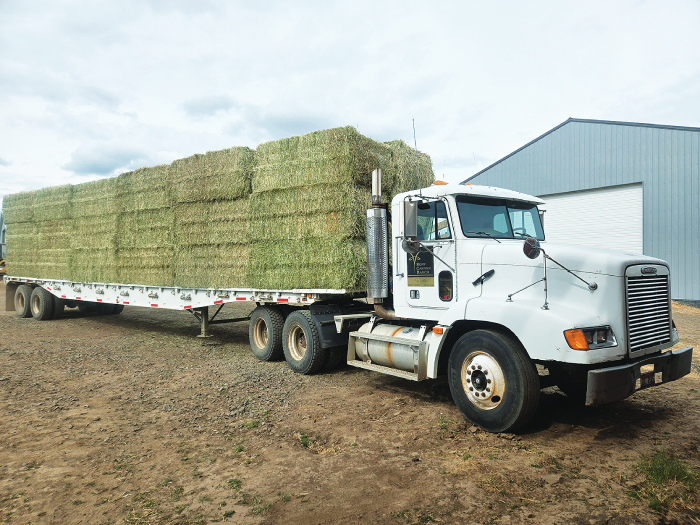
Infrastructure is the first layer of preparation. Fire season is driven by conditions on the ground, and the Firewise USA program offers practical guidance for creating defensible space. Clearing brush, removing ladder fuels, and maintaining a buffer around structures can make a measurable difference. Metal buildings and metal fencing matter more than most people realize: They don’t ignite, they don’t smolder, and they don’t become part of the problem. Protect hay in a fire-resistant metal building so it doesn’t become fuel. Fire disrupts forage access quickly, so safe hay storage is a part of preparedness, not just a convenience. A shelter-in-place plan also requires a designated holding pasture within the defensible space – a barren or closely grazed area on higher ground, not in a draw or valley where smoke settles. This area must be free of fuels and large enough for animals to move away from encroaching fire. Exertion increases smoke intake, so offer water and feed together, close to preferred loafing areas to limit unnecessary movement.
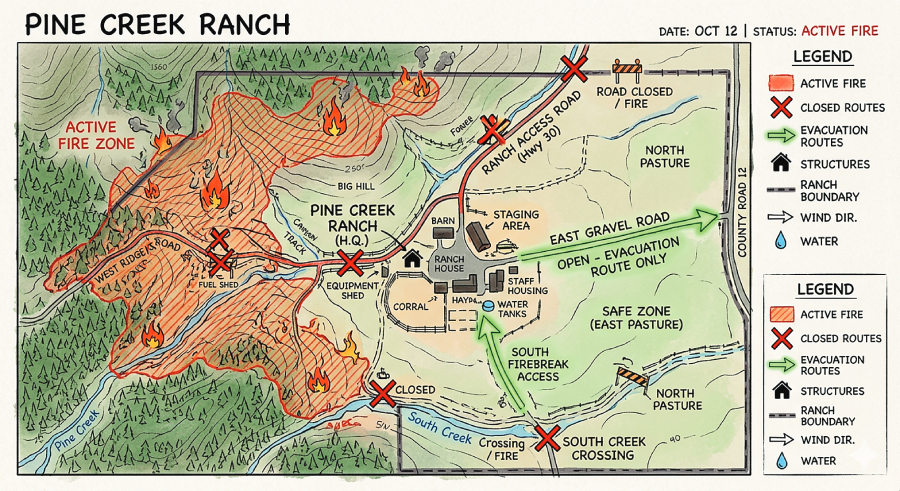
Sometimes, full evacuation is impossible. Producers must plan for partial evacuation of vulnerable animals and build infrastructure that allows those remaining to shelter in place. Structures must be closed to prevent animals from entering buildings during a fire. Pasture gates should be left open to allow for fire escape routes. If fires start when no one is on the property, responders need immediate access to livestock areas and service roads. They must be able to open locked gates – with a code or a key – or have a way to force entry.
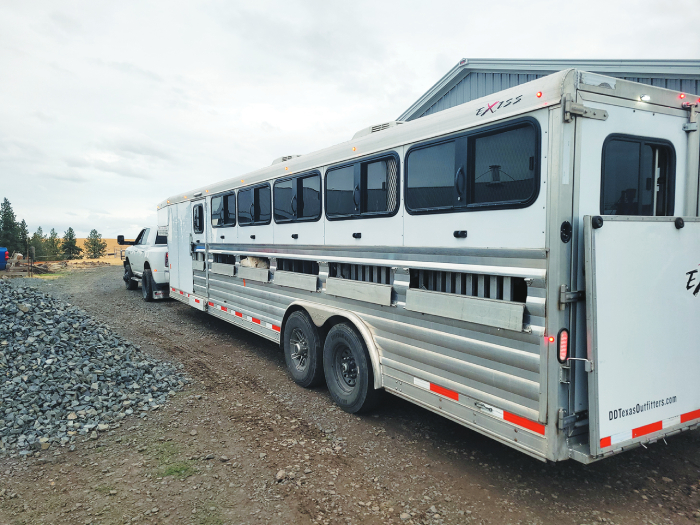
Equipment is the next layer of preparation. Some equipment is so central to daily function that losing it would change your ability to care for animals. If you rely on a skid steer to move large bales, you need an alternate way to feed if it’s lost. If you rely on a generator or alternate fuel source to power your well when electricity is out, you need to protect it. If evacuation is part of your safety plan, owning a truck and trailer isn’t optional. There won’t be trailers to borrow – your neighbors will be evacuating with their own. Make sure trucks and trailers are protected, ready, and accessible. Check your hitches, tires, brakes, batteries, lights, fuel, and spare tires. Unmaintained roads become real hazards during evacuation. Debris, downed limbs, rocks, and washouts can block or damage a trailer, and you need the tools and the ability to change a tire or make a repair under pressure.
Stock supplies in an area that’s organized and accessible, rather than buried in a tack room or scattered across outbuildings. Keep portable storage containers of water, first-aid supplies, temporary fencing, and feed reserves where they can be reached quickly. Animal identification is another overlooked piece of preparation. To reunite animals and owners, you may need tags, tattoos, photos, and proof of ownership.
Are Your Animals Ready?
Animal behavior adds another layer of complexity. Under pressure, animals don’t behave the way they do on an ordinary day. Animals that normally lead may refuse to move. Calm animals may bolt. The herd may not stay together. Stress changes how our goats move and respond. Evacuation can take longer than planned, and producers must build in time and a margin for this reality. If evacuation is part of your plan, your herd must already be familiar with loading. Practice loading them before fire season, although instinct will always override routine when smoke, noise, or urgency enter the picture. Time, space, and patience are essential.
Community Contacts
Community matters during fire season. Neighbors check on livestock, relay information, and coordinate when smoke or alerts appear. Knowing who can help you – and whom you can help – strengthens resilience for everyone. Fire doesn’t respect property lines, and preparation shouldn’t either. You need to have emergency numbers written down and stored where you can reach them without your cellphone. Phones fail, batteries die, and service can disappear when you need it most. A simple list of contacts – family, neighbors, veterinarians, brand inspectors, county dispatch, and emergency management – is essential.
Preparation also includes planning for recovery. Fire changes forage availability and alters soil composition. New growth may include toxic plants. Producers should be ready to adjust feeding and grazing plans accordingly. These aren’t afterthoughts; they’re part of preparing for the full arc of fire season, not just the moment flames appear.
Fire season reshapes the year. Grazing plans shift, breeding timelines are adjusted, and the work doesn’t end when the smoke clears – recovery brings its own set of decisions and demands. Preparation isn’t a single act; it’s a posture. It’s the steady work of noticing conditions, strengthening weak points, and making choices early enough that you’re not forced into them later. Small adjustments made ahead of time can prevent major losses.
Fire season will always bring uncertainty. You may not know what to trust – including your senses, the fire maps, or the alerts. Preparation turns uncertainty into readiness and helps protect your land, your livestock, and your peace of mind. When the familiar conditions return and you smell that faint hint of smoke in the air, your body will react – naturally – and you’ll be ready to respond.
Karen Kopf and her husband, Dale, own Kopf Canyon Ranch in Troy, Idaho. They enjoy “goating” together and helping others goat. They primarily raise Kikos, but they’re experimenting with crosses for their new favorite goating experience: pack goats! You can learn more about them at Kopf Canyon Ranch on Facebook or www.KikoGoats.org.
Originally published in the August/September 2026 issue of MOTHER EARTH NEWS and regularly vetted for accuracy.