

Catch up on the environmental current events of 2026. Get news on sustainable communities, scientific findings, the push toward net-zero carbon emissions, and more.
Shoo Fly: Texas Battles the New World Screwworm
by Kale Roberts
Before this summer, no one had reported seeing New World screwworms on cattle in the United States for 60 years. The U.S. Department of Agriculture (USDA) had eradicated the insect from its historical range in 1966 using the then-groundbreaking “sterile-insect technique” – releasing hundreds of millions of sterile males into the environment.
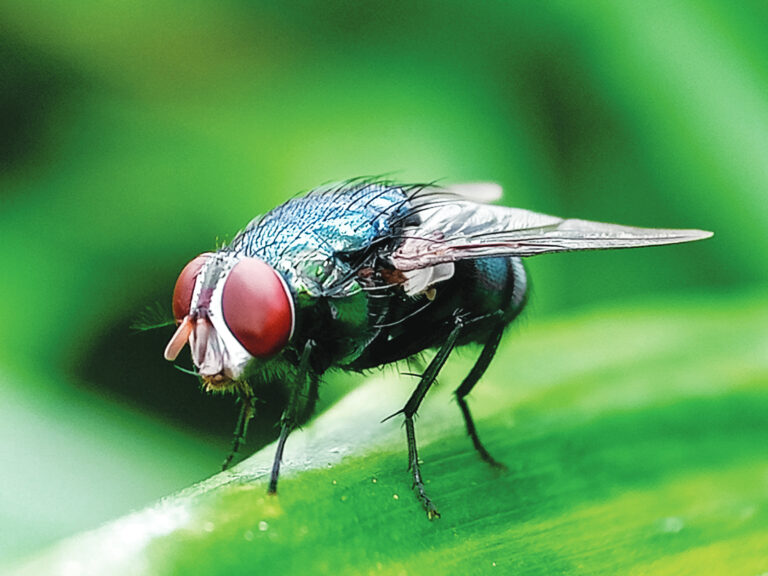
Actually a species of parasitic fly, Cochliomyia hominivorax is only slightly larger than a common house fly and has iridescent aquamarine coloring. The screwworm name refers to the species’ larval stage, or maggots, which can infest livestock and other animals by using sharp mouthparts to burrow through open wounds using a spiral motion. These maggots can quickly inflict a lot of damage: Untreated, the mortality rate for infected livestock can reach 100 percent. So, ranchers were understandably shaken when the screwworm came back all these decades later, making its way up from Central America, through Mexico, and finally to southwestern Texas, where afflicted cattle were reported on June 3 of this year. In response, cattle ranchers, the Texas Animal Health Commission, and both the U.S. and Mexican federal governments leapt into action.
Phillip Kaufman, head of entomology at Texas A&M University and one of the preeminent experts on New World screwworm, fielded many of the early calls. Kaufman came to Texas in 2020 from Florida, where he educated the public about the 2016 outbreak in the endangered deer population on Big Pine Key. He recalled that experience to give me a quick (and colorful) lesson on screwworms. As a member of the family of blow flies, screwworms “are related to the big metallic flies you see on garbage or dead animals,” Kaufman says. “What makes screwworms different from the hundreds of other species of blow flies in the U.S. is that all those other ones lay their eggs on rotting corpses; New World screwworms lay their eggs on living animals.” The maggots can feed only on open wounds, rather than intact tissue or even healthy mucous membranes, meaning “if you fall asleep with your mouth open, you aren’t getting a screwworm.” (Kaufman noted that if you had an active sore in your mouth or nose, you could, in theory, get a screwworm.) “That said, an umbilical site on a newborn is essentially an open wound, so it’s a vector,” as would be the reproductive tract of a cow if she sustained injury during birth. The screwworm lays between 200 and 300 eggs per female fly, and Kaufman’s research suggests an initial batch of eggs may attract more flies, making for a situation that quickly spirals out of control. Infested animals, particularly youngstock, often die within 5 to 14 days.
Irradiating and Eradicating
The New World screwworm isn’t an invasive species. Found throughout most of the Americas, its natural range extended as far north as the southern U.S., including Texas and Florida, until eradication efforts in the 1960s. Just as then, Kaufman says the sterile-insect technique will now be used to control this latest outbreak. “This fly is the perfect organism for the technique,” he says, because the female will mate only once in her entire life, while males mate multiple times. “If you produce enough sterile male flies and release them, wild females will mate with them and lay eggs that will never hatch.” Do this for long enough, and you can collapse the wild fly population into extinction.
Kaufman and his forebears have optimized the ability to produce millions of sterile male flies using cobalt-60, which is a radioactive metal that emits gamma rays. In a “fly factory,” screwworm pupae are placed in a chamber with cobalt-60. The radiation breaks up the flies’ DNA just enough that “we don’t kill the fly, but they can’t produce sperm or eggs that are viable,” Kaufman says. They still grow into breeding adults that get released by the millions. Today, a fly factory in Panama is producing about 15 million flies per day. A second plant recently opened in southern Mexico that will produce 100 million flies per week by the end of this year. And the USDA is building a plant in Edinburg, Texas, that will produce 100 million flies by the end of summer 2027 and triple that a year later. “A total of 500 million flies per week – the number we need to once again eradicate screwworms.”
Kaufman is optimistic that New World screwworms will be controlled or fully eradicated in Texas sooner, sometime between the end of summer 2026 and spring 2027, largely because Texas ranchers have been steadfast in complying with state and federal restrictions. Restrictions involve holding Texas cattle in place for a period of time to ensure they aren’t infested before they’re shipped to other states for slaughter (cattle trade between Mexico and the U.S. is halted). In some inspection sites and livestock markets, dogs are deployed to sniff out flies, picking up the strong odor released by the maggots feeding on live muscle and fat.
GM Screwworms
In addition to irradiated flies, researchers are trialing genetically modified flies. Known as the “NovoFly,” the GM screwworm was developed with funding from the USDA in the mid-2000s by a research team at North Carolina State led by Maxwell Scott. Scott’s team modified a colony of New World screwworm flies to express a genetic change that requires females to become dependent on tetracycline to survive. Without the antibiotic, females die in their first stage, leaving only the males to live on (and, ultimately, be sterilized and released). “This essentially is a way to save on resources by growing and housing twice as many male flies.”
So far, no GM flies have been released in the United States, but the U.S. Environmental Protection Agency has given clearance for field trials to begin in Panama. Kaufman is confident GM males will be released in the United States in the future. Asked whether he’s concerned about any negative ecological impacts, Kaufman said no, because “all GM males are sterilized, so they’re not passing their genes on to the next generation.” If released, the NovoFly would join the list of other approved genetically modified animals that includes the mosquito Aedes aegypti, which carries a self-limiting gene that prevents females from surviving into adulthood, and the AquAdvantage salmon (Salmo salar), which has genes that make it grow more rapidly than its farmed counterpart.
Where’s the Beef?
Even with an end to screwworms in sight, the 43 cases of screwworm in Texas (as of Aug. 1, 2026) and the closed border with Mexico aren’t helping the already struggling beef industry. The USDA announced that a phased reopening of beef imports from Mexico will start in late August. Ranchers should remain vigilant and report any possible cases; if you’re in Texas, contact the Texas Animal Health Commission. Cattle farmers should form relationships with a veterinarian who can help identify screwworm, because some treatments can only legally be used under vet guidance.
Screwworms can infect dogs and cats as well. “I’m aware of cases where a dog steps on a cactus and then gets infested,” Kaufman says. He advises ranchers and pet owners to develop a disaster-management plan now, which includes a vet who can act quickly. “I’m optimistic we’re going to knock this out. We’re in such a better position than during past outbreaks.”
First Nation Unveils Net-Zero Housing
by Darby Stipe
In May, the Squamish Nation completed the first high-rise tower of its net-zero apartment complex in Vancouver, British Columbia. Called Senaḵw after the ancestral Squamish village in the area, the development – which will eventually consist of 11 towers and 6,000 apartments – is intended to provide sustainable housing in one of Canada’s most populous cities and is among the largest net-zero urban developments in Canadian history. Senaḵw puts a focus on clean energy, sourcing heat from a sewer-heat-recovery system. The community is also focused on reducing car dependence by maintaining parking for only 10 percent of residents, while investing in improved bike lanes, pedestrian paths, and a nearby transit hub.

However, the development faced opposition early on. Most of the city is regulated by strict zoning requirements, but the Squamish property is exempt from these, because it sits on federal reserve land. Nearby residents brought up concerns about increased traffic and the disruption of migratory bird patterns. While the village is billed as providing affordable housing for Squamish people – below-market-rate housing will go first to Squamish members, then to other Indigenous people, before opening up to the general public at market rates – the backlash called out the apartments’ high prices: Market-rate studios start at $2,025 per month, while luxury three-bedrooms start at $9,070 per month. Learn more at Squamish.
Beavers Engineer More Resilient Land
by Darby Stipe
Research tracking the rewilding of beavers is yielding encouraging results. A March 2026 study published in Communications Earth & Environment by a research team led by Lukas Hallberg at the University of Birmingham in the U.K. suggests wetlands influenced by the Eurasian beaver (Castor fiber) can store up to 10 times more carbon than those without. The researchers used a decade of measurements for a stream corridor in Switzerland to show that as land is shaped by the reintroduction of beavers, wetlands retain more water, which holds carbon-rich sediment and submerged wood in place, leading to long-term carbon sequestration.

The findings mirror those in several 2025 studies on the North American beaver (Castor canadensis), which showed that in addition to carbon storage, beaver dams in the Rocky Mountains and Great Plains also recharge groundwater and aquifers, improve water quality, reduce wildfire risk, and increase biodiversity.
In the 19th century, humans nearly hunted beavers into extinction, reducing populations to as few as 100,000 in North America – and a mere 1,200 individuals in Europe. Reintroduction programs have slowly built back their numbers: to 1.5 million in Europe and up to 15 million in North America (still less than a tenth of their historical populations). Though beavers aren’t always welcomed by their human neighbors, who often cite damage to crops and unwanted flooding, science is now showing that the largest rodent on both continents imparts myriad environmental benefits.
Everglades Rebound
by Darby Stipe
The Florida Everglades once stretched across more than 3 million acres; less than half the ecosystem remains after years of draining and development. For example, in the 1950s, the Gulf American Land Corporation attempted to create a subdivision on 100,000 swampy acres, blasting limestone bedrock to divert water to canals and create raised roads. The company went bankrupt, and it took until 2004 for restoration efforts to begin in the area, now part of Picayune Strand State Forest. Decades later, in January of this year, the U.S. Army Corps of Engineers and the state of Florida achieved a milestone: The last of 48 miles of drainage canals were finally plugged and 260 miles of road were removed, allowing water to again flow across 55,000 acres of strands (shallow and wide cypress-dominated rivers), wet prairies, and pine forests.
Strong Returns on Prescribed Burns
by Darby Stipe
A new study from the University of California, Davis, has found that for every $1 spent on wildfire fuel treatments, an estimated $3.73 in benefits is realized, attributed to reduced fire damage and avoided deaths (particularly from exposure to fine particulates in smoke). Researchers publishing in Science analyzed how prescribed burns and biomass removal influenced the outcomes for 285 wildfires between 2017 and 2023, finding that “although fuel-reduction treatments are a primary tool for reducing wildfire risk, they remain underutilized, partly owing to limited evidence of their economic value.” Because prescribed burns can produce 80 percent fewer particulates than wildfires, the study takes a step toward proving fire treatments’ great economic payback.
Moving Trees for Cooler Cities
by Darby Stipe

Urban trees are struggling against higher temperatures, droughts, and severe weather, prompting landscape planners to explore assisted migration – the human-supported movement of species – to help. In Louisville, Kentucky, tens of thousands of trees are being lost every year, a trend that may grow as temperatures rise as much as 8 degrees F over the next half century. To prevent further tree loss, the nonprofit TreesLouisville has been planting trees from areas farther south, such as Arkansas, Georgia, and Texas. So far, the organization has donated or planted more than 30,000 trees since 2015. Adapted to a warmer climate, these trees are expected to fare better in a future Louisville, where they’ll impart their many benefits: storing carbon, cleaning the air, maintaining cooler temperatures, and soaking up rain after storms. Learn more at Trees Louisville.
Amid Soaring Fertilizer Costs, Farmers Are Going Regenerative
by Kale Roberts
The typical – and most efficient – way to harvest almonds is to shake the ripened fruits from the tree using a mechanical boom shaker. The fuzzy green fruits drop to the ground, where they’ll lie on bare soil for days or weeks to dry out before getting collected. But on her 756 acres of almond groves in Denair, California, Benina Montes refuses to do things typically.
Montes owns and operates Burroughs Family Orchards with her parents, Ward and Rosie Marie Burroughs. In addition to almonds, the family keeps olive and walnut trees, and they spent 18 years transitioning the orchards to organic and, ultimately, Regenerative Organic Certified and Certified Regenified (the first almonds in the world to have achieved dual status). Walk through the orchard today, and you won’t see any bare soil, but instead a flourishing understory of perennial grasses and legumes grazed by sheep. Montes is able to maintain ground cover because she invested in a large, clamshell-looking harvester made by TOL Incorporated, which nearly envelopes a whole almond tree so that it can both shake and catch the fruits as they fall. On the orchard’s Substack, “Ask Me About My Nuts,” Montes explains that by avoiding bare soil and incorporating other regenerative practices, she’s been able to completely eliminate synthetic fertilizers.

These days, lowering the cost of synthetic fertilizer can be a make-or-break move for a farm: As of March 2026, the cost of both urea-based and anhydrous fertilizers had risen upward of 35 percent over the previous month, to $800 per ton and $1,000 per ton, respectively. To understand how fertilizer costs could uptick so dramatically requires some knowledge of energy geopolitics. Natural gas is a key nitrogen feedstock in synthetic fertilizers and can account for 90 percent of the variable production cost. When natural gas costs spike, fertilizer costs immediately follow. On February 28 this year, the United States’ conflict with Iran effectively closed transit through the Strait of Hormuz, cutting off a key route for trade in liquid natural gas (LNG). About one-fifth of the world’s LNG flows through the strait, and, to make matters worse, about 45 percent of globally traded urea comes from the Persian Gulf region. Experts predict ongoing disruptions could continue for the Strait of Hormuz long after the conflict subsides. Are farmers destined to ever-increasing fertilizer costs for years to come?
Cynthia Daley wants to give farmers a way out. Daley is co-founder of the Center for Regenerative Agriculture and Resilient Systems at California State University, Chico, where she’s studied regenerative agriculture for 20 years. “Regenerative systems can reduce synthetic nitrogen applications between 30 and 80 percent, depending on climate, soil type, and management intensity,” she says, noting that some farmers can eliminate synthetic inputs altogether. Daley cites a 2021 study of Montes’ almond orchard led by researcher Jonathan Lundgren. Lundgren found that, compared with conventional farm soils, Montes’ regeneratively managed soils contained a third more carbon and 19 percent more nitrogen, as well as more phosphorus, calcium, and sulfur. “What’s happening is that you’re shifting from a system that depends on applied nitrogen to one that’s doing a better job of cycling and holding on to nutrients,” Daley says.
Daley appreciates the various certification programs that have emerged for regenerative ag, but she doesn’t get caught up in strict definitions. “If what you’re doing is improving soil health, increasing biological activity, building soil carbon, and making your farm more resilient over time, then you’re moving in a regenerative direction,” she says. Still, several practices are regenerative mainstays: reducing tillage, never leaving bare soil, maximizing plant (and soil) diversity, integrating livestock, and, ultimately, reducing synthetic agrochemicals. A unifying force between them is maintaining ground cover, which Lundgren’s study suggests is the primary driver of increased soil carbon.
By reducing imported fertilizers, as well as decreasing irrigation and introducing income streams from integrated livestock, regenerative systems can make farms more profitable by 78 percent or more. For example, Lundgren found that farms like Montes’ earned about $18,000 gross revenue per hectare compared with about $9,500 per hectare for conventional farms. Daley wants to help more farmers see these gains. She says the biggest barrier is risk. “Farmers are making decisions that affect their livelihoods, and a lot of these practices take a few years before you really see the benefits. That’s a hard sell without support.” Her center has developed the Regen Ag Planner as part web-based tool, part decision tree to help farmers map out the transition to regenerative as well as find grant funds to support it. Daley says the current disruptions in the Strait of Hormuz are politically charged, but “we want to build bridges, not walls. Regenerative agriculture offers a proven pathway forward for farmers.” Try out the Regen Ag Planner.
Fruits and Vegetables Rx
by Kale Roberts
Visit the parking lot of Community Health Center of Buffalo (CHCB) in Buffalo, New York, between June and November, and you’re likely to see a few people congregating around a curious vehicle. The bright-blue, two-seater truck with a refrigerated container on its back displaying fold-out trays of peaches, corn, cucumbers, and more is Buffalo Go Green’s Mobile Market. Besides the fact it roves around on wheels, what makes this market unique is its patrons, who receive medical prescriptions underwritten by CHCB to shop the truck’s produce. By servicing health clinics in underserved neighborhoods, Buffalo Go Green is taking the food-as-medicine movement on the road.
“I started by talking to a lot of doctors,” says Allison DeHonney, who started Buffalo Go Green in 2014 as a nonprofit to address what she saw as interlinked issues troubling New York’s second-largest city: food injustice and wellness. “Coming from the insurance industry, I understood that by giving patients healthy food, insurance companies could lower claims payments – which ultimately would lead to lower premiums for everyone, due to reduced claim activity.” After years working to turn vacant city lots into productive food gardens, DeHonney launched Fruit and Vegetable Prescription (FVRx), the first of its kind in the western part of the state. Under New York’s 1115 Demonstration Waiver – a Medicaid initiative that funds food as medicine in nine more states, including Colorado, Illinois, and North Carolina – patients visiting CHCB get their FVRx prescription from a doctor and walk right out to shop the truck.

DeHonney will soon open Buffalo Go Green‘s Holistic Wellness and Agricultural Education Campus on a formerly derelict lot. The campus will include a teaching kitchen, a meditation room, a juicery, and 5,000 square feet of hydroponic growing space. “Health disparities and the price of food continue to escalate,” she says. “Some states are in jeopardy of losing their food-as-medicine programs. We need to focus on wellness alongside food access – it’s all tied together.”
A Vermont Utility Keeps the Lights On
by Kale Roberts
To help its customers maintain power without needing to purchase expensive generators, Vermont utility Green Mountain Power has partnered with solar-and-battery company Enphase Energy on an innovative leasing program. As part of the program, homeowners lease solar and battery systems and agree to share power back to the grid during times of peak energy demand, such as on summer days when air conditioners are blasting. At the time of writing, Green Mountain Power was offering two batteries with a 10-year lease for $55 per month. Because Enphase’s batteries can last 15 years or longer, homeowners can benefit from battery backup at no cost after the lease is up.

“You can have a multiday outage, as an example, and if you have solar and if you have battery, then you can really ride through that outage,” Raghu Belur, co-founder of Enphase, told Yale Climate Connections, explaining that during good times, the utility can take advantage of its tie-in to home batteries to help regulate the grid. Because peaks tend to be when electricity is most expensive, sourcing it from a distributed network of rooftops can lower the costs for everyone – ”a beautiful win-win.”
Meatpacking Consolidation Threatens Food System
by Kale Roberts
On March 16, about 3,800 workers at the JBS beef-packing plant in Greeley, Colorado, put down their knives and plastic wrap, walked out of the plant, and took up picket signs reading, “Please do not patronize JBS. Employees on unfair labor practice strike.” The strike was the first at a major meatpacking plant in more than 40 years and effectively shut down one of the largest plants in the U.S.
At a time when beef prices have risen more than 15 percent in one year – with fresh beef hitting a record $9.64 per pound in April – JBS didn’t slaughter 90,000 cows across the strike’s three weeks. A class-action lawsuit filed by workers against JBS and Swift Beef Company in December describes the company’s failures to pay minimum wages, forcing workers to work at dangerously fast speeds, and luring “Haitian individuals to the plant with the promises of high-paying jobs [to instead] live in squalid conditions.”

Just four companies control over 80 percent of the beef market: JBS, Tyson, Cargill, and National Beef. Before the 1980s, thousands of smaller meatpacking operations existed around the country. But through the ’80s and ’90s, a surge of consolidation led to the “Big Four” buying out small facilities, processing twice the number of animals in them, and slashing workers’ wages. Consolidation doesn’t only hurt workers: For years, ranchers have sued these companies for colluding to keep beef prices artificially low. The chicken and pork industries have also consolidated, so just four companies now control 60 and 70 percent of the market, respectively. Under these conditions, any single plant going offline can create disruption in the nation’s food supply.
Tick-Borne Meat Allergy Ticks Upward
by Darby Stipe
Tick-borne illnesses are on the rise as tick populations in the United States steadily climb. Alpha-gal syndrome (AGS), a tick-borne illness that causes people to develop an allergy to mammalian meats and dairy, is infecting more people, including farmers and ranchers, putting their livelihoods at risk. In October 2025, VCU Health researchers reported a 100-fold increase in positive cases of AGS, with nearly half a million Americans potentially affected. Most of the increase is attributable to the lone star tick expanding its habitat because of shifting climates. Some affected may need to avoid ingesting animal products, while others experience anaphylaxis in the presence of livestock. For farmers, the disease can fundamentally change their relationship with their animals, and some have started carrying an EpiPen with them. Farmers, ranchers, and the public are advised to wear long sleeves and pants while outdoors and to do regular tick checks.

Biochar for Fire Prevention
by Darby Stipe
As wildfires continue to heat up the western United States, forest managers are looking for ways to lower localized risk while simultaneously keeping more carbon in the ground. Biochar may offer a dual-purpose solution. Created by burning dead and decaying plant materials – such as fire-prone trees and understory – in a low-oxygen environment, biochar removes potential fuel for wildfires while converting biomass into highly stable stores of carbon. Biochar is also an effective soil amendment that helps build soil structure and holds moisture. Park City, Utah, is one city working to maintain defensible spaces around buildings by removing brush, making biochar, and then adding it to soils. The long-term success of the project remains to be seen, but the city received a Leader in Community Resilience Award from the National League of Cities for its efforts.
Folkloric Wildflower Could Be a Secret Weapon Against Superbugs
by Darby Stipe
While improvements in medicine are defeating some once-deadly microbes, other microbes are evolving resistance to antimicrobials that previously worked. During the past six years, between 1 million and 5 million deaths per year globally have included antimicrobial resistance as a factor. Scientists are searching for more effective measures against deadly pathogens, including turning to the plant kingdom for answers. Tormentil (Potentilla erecta) is a small yellow wildflower common in the United Kingdom and Ireland that was traditionally used to treat gum disease, sore throats, and other wounds. The flower is now showing promise to assist in fighting resistant pathogens. Extracts of tormentil appear to boost the impact of antimicrobials, strengthening the case for preserving biodiversity because it’s critical for medicine and human health.
Inaccessible Acreage: Farmland Fetching Record-High Prices
By Kale Roberts
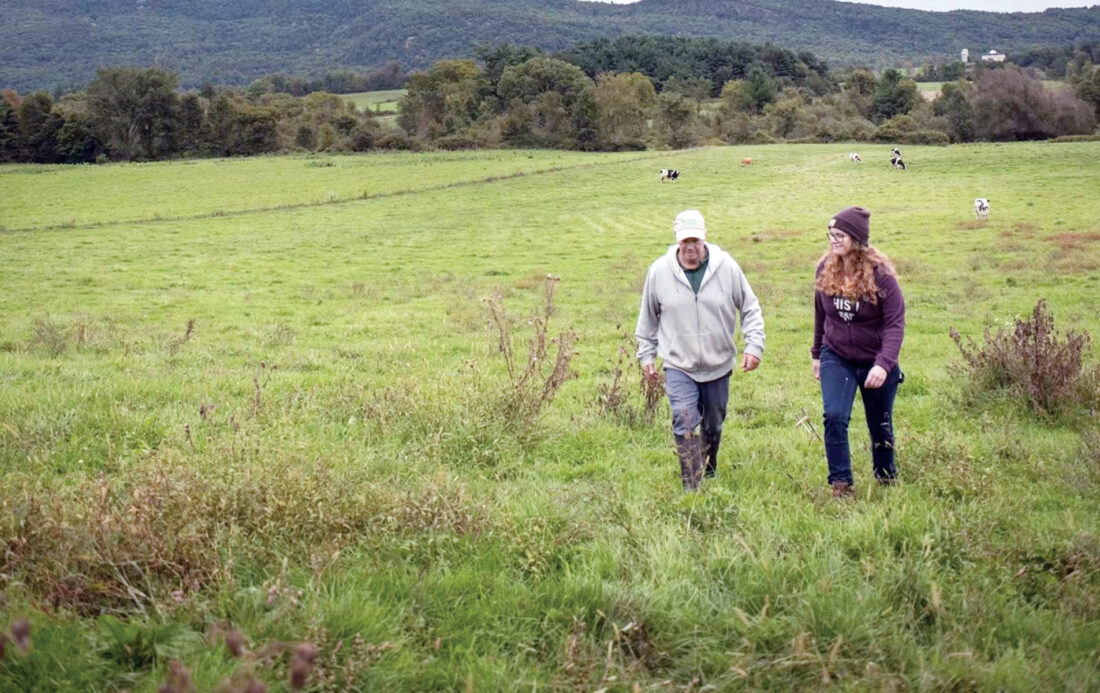
Brooks Lamb grew up in rural Tennessee, in a small agricultural community 50 miles south of Nashville. When he was a child, his neighbors weren’t considered well off, but they comfortably made a living on 50-to-150-acre farms.
Today, Lamb wants to be a farmer himself but is shocked by the land prices he sees. A few miles from his parents’ home, a 30-acre farm is listed for $34,000 per acre. “A million dollars for land with no barn or house, and some of it is in a flood plain,” he says. An 80-acre farm a mile down the road sold in 2024 for $28,000 per acre, and a 7-acre “mini-farm” recently sold for $40,000 per acre. “For an aspiring farmer like myself, it’s a really big challenge.”
Record-high prices for farmland are a nationwide phenomenon. In its annual Land Values Summary Report for 2025, the U.S. Department of Agriculture (USDA) found that ag real estate increased by $180 per acre over the prior year, reaching an average of $4,350 per acre nationally – roughly doubling since 2010 – and marking the fifth year in a row land value increased. Lamb, who now works in strategic communications for the nonprofit American Farmland Trust, tracks these data closely, and says, “We expect high prices in places like California, New England, and New York, but localized prices can be astronomical anywhere.”
Prices only compound the pressures on agricultural lands. In its report “Farms Under Threat 2040,” American Farmland Trust estimates that during the next 20 years, about 300 million acres of U.S. farm and ranchlands will transfer hands as farmers age out or pass away. The average age of an American farmer is 58 years, but it’s been over 50 since at least the 1970s. For this reason, one of the primary pressures on farmland isn’t new: Big Ag operations have bought up thousands of small and mid-sized farms over the past few decades by making it easy for aging farmers without heirs to sell. This trend toward consolidation into the hands of a few conglomerates is likely to continue.
Meanwhile, at least another 20 million acres of ag land, about the size of the state of South Carolina, may be lost altogether, driven by an emergent threat. Investors are gobbling up U.S. farmland, viewing it as a low-risk asset for their financial portfolios. Some develop the land for ticky-tacky housing communities or to put data centers on it. In Port Washington, Wisconsin, the massive Vantage Data Centers project is set to build on over 500 football fields’ worth of farmland by 2028 as part of the White House’s deal with OpenAI and Oracle.
Given the stakes, does a new generation of small farms stand a chance in this David and Goliath story?
Michelle Hughes says it will take a fight and key structural changes. Hughes, who is executive director of National Young Farmers Coalition and a former hog farmer, is on a mission to shift both power and resources to the next generation of farmers. She sees several models working to preserve affordable farmland – including conservation easements, cooperative ownership models, and land-linking programs (whereby retiring farmers get connected with aspiring farmers) – but her personal preference is for lease-to-own arrangements. “They may not be as traditional as the classic land-ownership model, but lease-to-own opportunities set a farmer up with financial stability while they’re transitioning to purchase the land.” Hughes says the model tends to encourage better conservation practices, because farmers know they’re not going to get kicked off the property and that one day it will be their own.
For his part, Lamb also appreciates conservation easements and land-linking, as well as a model known as “buy-protect-sell.” In this model, an organization, such as American Farmland Trust, can step in, using philanthropic dollars to purchase at-risk land at market value. Then, it can protect the land with an easement, sell it to an aspiring farmer, and support them to develop a business plan and maintain ownership.
Both Hughes and Lamb agree there are also steps the federal government could take to open pathways for new farmers. Hughes decries the USDA decision in March to cancel most of the $300 million aimed at supporting land access for underserved farmers, ranchers, and foresters as part of the Increasing Land, Capital, and Market Access Program. “National Young Farmers Coalition advocated for 10 years for this program,” she says. Lamb says that Congress should increase money available for conservation easements, which would prohibit valuable ag land being used for data centers or housing tracts, as well as offer low-interest farmland loans. He also thinks it’s long overdue for the USDA to open an Office of Small Farms dedicated to small-acreage landholders. “We need an office that ensures all the work [USDA] does makes it to small and mid-sized farms,” he says.
States can play an outsized role as well. Some offer income-tax credits for beginning farmers or offer low-interest loans. Minnesota, for example, offers grants to help young farmers purchase equipment and infrastructure. Finally, “on a local level, more communities can plan for ag, not around it,” Lamb says, such as counties offering the same (or better) incentives for farming as they do for development. “All these factors will determine the future of our food system. The way that land transitions, who will own it in the future, is important to anyone who eats.”
Capitalize on Cow Cuddles
By Darby Stipe
Facing volatile milk prices and ever-tighter margins, dairy farmers are looking to diversify their income streams in creative ways. In addition to expanding into more obvious product lines, such as making ice cream or cheese, some farmers have found success capitalizing on cuddles.
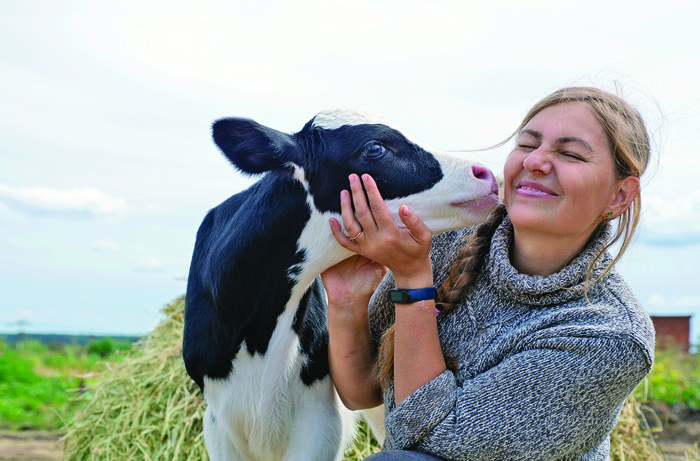
The entrepreneurial family behind Scherber’s Morningstar Dairy in Corcoran, Minnesota, is one such venture. After struggling to pay their bills, the family founded Curious Cows and Company, inviting visitors for group or private calf-cuddling sessions. Co-owner Quinci Schmidt told KCUR, “Dairy isn’t always a consistent form of income. The prices are pretty low. They’ve been very low for a while.” By charging $25 per person for a cuddling session, Schmidt is able to provide another revenue stream.
Some farmers have been using their cows for community building as well as income opportunities. Asam Acres near Tecumseh, Michigan, hosts “Cows and Coffee” events on weekends in summer, charging guests for feed and coffee. Other farms, such as New Day Dairy near Clarksville, Iowa, have developed guest stays near the cows, giving renters the chance to experience farm life, and Country Dairy in New Era, Michigan, has started offering tours and a variety of dairying classes.
After Helene, Microgrids Offer Resilience
By Darby Stipe
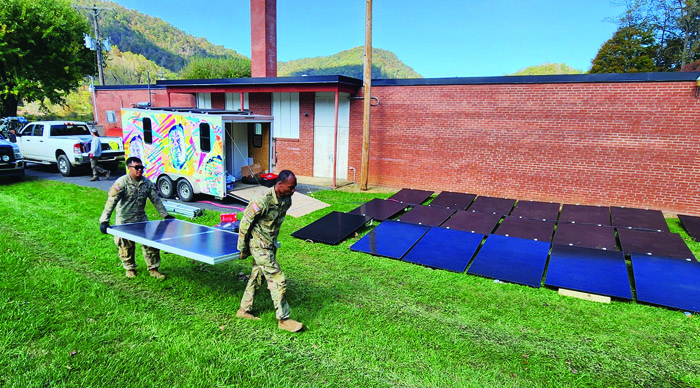
Since Hurricane Helene struck North Carolina on Sept. 26, 2024, resilience hubs have popped up around the state, buoyed by $5 million of state funding for disaster resilience and microgrids. Most microgrid projects take the form of solar panels and batteries sited at a local community center, designed to keep the electricity running for refrigeration, lighting, medical devices, phone- charging stations, and internet. In the immediate aftermath of Helene, severed roads and telecommunications channels prevented communities from accessing supplies and medical attention. By pursuing microgrids, the North Carolina Department of Environmental Quality says the region can maintain power supply during emergencies, but also diversify energy sources, lower energy costs over time, and support the grid during times of high demand.
Footprint Project, an Asheville-based nonprofit dedicated to rebuilding with clean energy after climate disasters, stepped in to help the North Carolina resilience hubs get started. Volunteers donated time, energy, solar panels, and batteries to ensure their communities are prepared the next time a disaster strikes.
Bird Research Rises from the Ashes
By Darby Stipe
On Oct. 4, 2024, a fire blazed through the Boise State University Intermountain Bird Observatory, burning more than 10,000 acres of south-central Idaho. As the fire burned, researchers, technicians, and a class of fifth graders on an overnight trip to the Lucky Peak station all escaped unharmed, but the blaze destroyed research equipment, camping gear, and the blind used to study raptors. Because Boise State had nearly 30 years of data from before the fire, researchers realized the devastation provided an unparalleled opportunity to study the impacts of the fire on local bird populations.
Some changes are already apparent. Open-country birds, such as lark sparrows and rock wrens, have been spotted nesting on the peak for the first time. Lazuli bunting populations have surged in the new vegetation. Yet, other species, such as Nashville warblers and dusky flycatchers, have declined. Researchers are collecting data on bird size, wingspan, muscle, fat content, age, and parasite load, which are essential to measuring the changes to the bird communities after the fire. Early data suggest that the birds that are struggling exhibit weaker muscles, lower body fat, and a higher parasite load. Open areas that once flourished with sagebrush are now infiltrated by invasive grasses, including cheatgrass, that tend to choke out other plant life. Long-term, the future of Lucky Peak remains uncertain. Its recovery is dependent on invasive-species management, well-timed rains, and keeping frequent fires at bay.
New York Builds All-Electric
By Darby Stipe
In an attempt to curb emissions and improve indoor air quality, New York has become the first state to mandate that new buildings be entirely electric. Industrial buildings up to 100,000 square feet and residential buildings up to seven stories tall are already required to follow the updated standards, while larger buildings will be required to follow the mandate starting in 2029. The new rules ban the use of fossil-fuel hookups, such as natural gas, spurring the adoption of electric heat pumps. Businesses that can prove the electric grid isn’t prepared to handle their energy needs can seek exceptions. The rules are expected to increase initial costs for builders but reduce energy costs over time for renters and homeowners.
Algae vs. Microplastics
By Darby Stipe
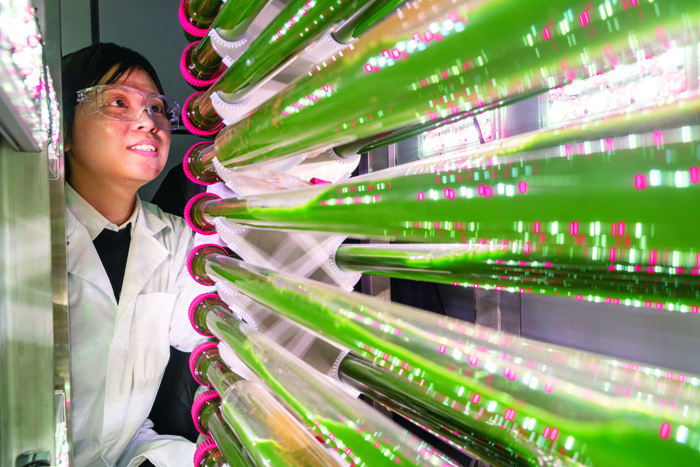
At the University of Missouri, professor Susie Dai has developed algae designed to help remove microplastics from water. Using genetic engineering, Dai was able to get the algae to produce limonene, a water-resistant volatile oil known for giving oranges their scent. Because microplastics are also water-resistant, when they come into contact with the genetically modified algae, they form clumps that sink to the bottom of bodies of water in a biomass that can be scooped out. The algae are currently grown in large tank bioreactors in Dai’s lab but have the potential to scale to wastewater-treatment plants or sites facing pollution – or even to create products, such as plastic films for packaging.
Food Additives on the Map
By Darby Stipe
A new map from the Environmental Working Group shows states taking a stance in favor of consumer protections from food additives. More than 30 U.S. states have introduced or passed legislation designed to regulate chemicals used to enhance color, shelf life, and artificial flavoring in packaged food. Several states are seeking to prevent specific dyes, including Red 40, Yellow 6, and titanium dioxide, from being served or sold in schools. Other states are focused more on including warning labels on products containing certain ingredients, such as BPA, PFAS, potassium bromate, mercury, and arsenic. Pennsylvania has introduced a bill that would require food manufacturers to disclose which ingredients they classify as “generally recognized as safe.” Go to www.EWG.org, and search for “state food chemical regulation.”
Coal Country Charts a New Path
By Kale Roberts
Politicians have spent the past two decades telling a flip-flopping story about coal’s prospects as an energy source for the U.S. “If somebody wants to build a coal-fired power plant, they can. It’s just that it will bankrupt them,” one president said in 2008.
“Coal will last for 1,000 years in this country,” said a soon-to-be president in 2017. And yet another, five years later, asserted, “No one is building new coal plants, because they can’t rely on it.” (This one recommended coal miners learn to code.) These competing narratives paint communities whose economies have historically relied on the mining, refining, or burning of coal as either derelict bastions of a bygone era, or poised for a “clean, beautiful” resurgence (the president’s message in 2025).
Political rhetoric aside, the economic reality of coal over the past 20 years is consistent: The U.S. consumes 64 percent less coal than at its peak in 2007. More than 300 coal plants have closed since then, and another 173 have plans to retire by 2030. Today, it costs a median of $120 to produce a megawatt-hour of electricity from coal. Compare that with $78 for fracked gas or less than $63 for either wind or solar, and coal simply can’t compete in most states. Faced with inevitable plant closures, coal towns from Appalachia to the mountain West are taking steps to diversify their economies using renewable energy – and writing their own stories in the process.
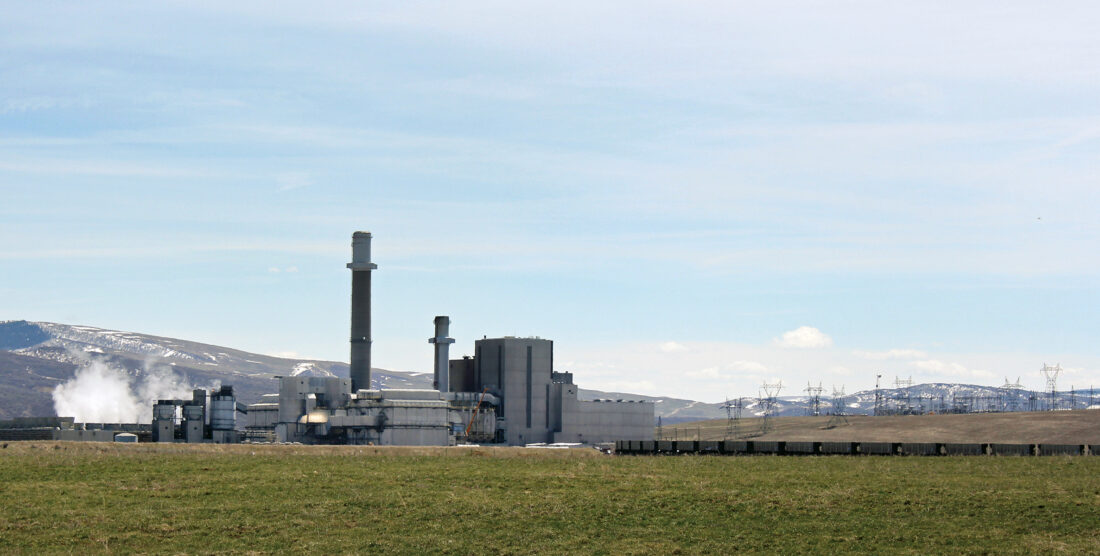
Hayden, Colorado, is one coal town amid an energy transition. Since its opening in 1965, coal-burning Hayden Generating Station and the Twentymile Mine feeding it have employed hundreds of the town’s roughly 2,000 residents. For years, property taxes from coal ventures provided half the budget for schools and the fire district. So, when Xcel Energy, the plant’s owner, announced it would close the Hayden plant by 2028, town leaders faced an existential moment.
An overreliance on a single source of revenue is both destabilizing and common for the 372 counties – roughly 10 percent of the U.S. – that host a coal plant or mine, says Heidi Binko, who founded the Just Transition Fund in 2015 to help coal-dominant communities diversify their economies. “The direct job loss is an important impact [when a plant closes] – but then you have indirect jobs and erosion of the tax base,” explains Binko, who witnessed these impacts firsthand growing up in a coal-dependent town. “For every lost miner, you also lose two or three more jobs in the local community and can see as much as an 80 percent reduction in tax revenue.”
Hayden found a partial solution in geothermal energy. The town’s geothermal-heated Northwest Colorado Business District broke ground on the first 58 of its planned 117 acres in 2024. It’s since attracted big-name companies, including Amazon, which are lured by the stable energy rates geothermal can provide. Tenants won’t have a gas hookup, and the district is expected to offer heating and cooling at costs 40 percent lower than fossil-fueled systems.
Also known as “ground-source heat pumps,” geothermal heating and cooling systems work by circulating fluid through looping pipes placed underground below the frost line. The system draws on the Earth’s constant subterranean temperatures (about 55 to 60 degrees F in many places) to absorb heat in winter and offload it in summer – achieving an astonishing 400 percent efficiency or better.
“Geothermal is one renewable the federal government is supportive of,” says Wade Buchanan, director of Colorado’s Office of Just Transition. Unlike for solar and wind, federal geothermal tax credits have continued under the current administration. This makes going geo particularly attractive in Colorado, where Buchanan’s office supports coal communities to diversify their economies, and the Colorado Energy Office has invested more than $30.3 million to support 70 local geothermal projects to date.
Thirteen state energy offices, including Colorado’s, are part of a Geothermal Power Accelerator, which may help spread lessons from Hayden to more coal-transition towns. Binko is hopeful but cautions against trading one energy “mono-economy” for another, advising coal towns to consider boosting tourism, outdoor recreation, agriculture, tech, or health care alongside renewables. Buchanan agrees, saying the transition is measured in the holistic health of local economies. “Disruption is happening, so how can we ensure communities are not left behind?” he says. “We have enough ghost towns already.”
Roundup Retracted: Glyphosate Study Gets Pulled
By Darby Stipe
A study published 25 years ago in the journal Regulatory Toxicology and Pharmacology concluded glyphosate, the main ingredient in Roundup, is safe. But late last year, the journal’s editors retracted the study because of ethical concerns when uncovered emails indicated that employees of Monsanto, the original manufacturer of glyphosate, provided text and data for the study. Bayer, which purchased Monsanto in 2018, says the company’s involvement was disclosed in the study’s acknowledgments.
The U.S. Environmental Protection Agency (EPA) maintains that glyphosate is safe for widespread use, but an updated human health-risk assessment is due from the agency in 2026. In 2015, the International Agency for Research on Cancer determined glyphosate to be “probably carcinogenic” to humans. The Supreme Court has agreed to hear an appeal from Bayer this spring after a jury from Missouri awarded $1.25 million to a man who developed non-Hodgkin lymphoma after using Roundup. Bayer – which has faced almost 200,000 claims that its products have caused people to develop cancer and paid out $11 billion in settlements so far – contends it’s following federal labeling regulations and shouldn’t be held liable.
New ‘Forever Chemicals’ Approved
By Darby Stipe
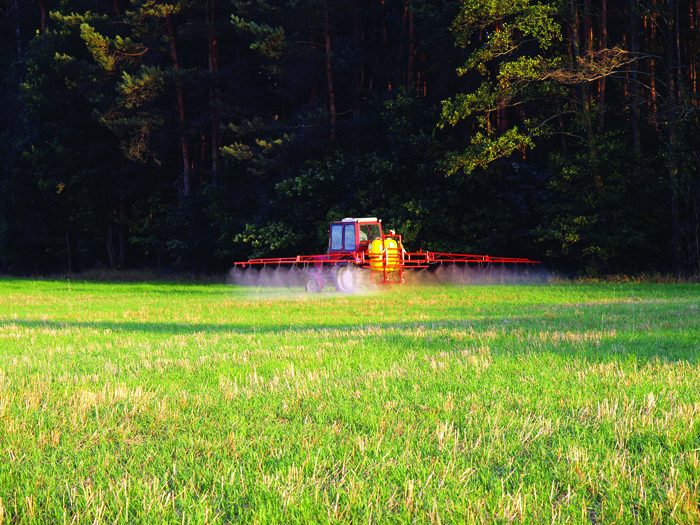
The U.S. Environmental Protection Agency (EPA) has approved new controversial pesticides, including cyclobutrifluram and isocycloseram, for use on agricultural crops, such as broccoli, lettuce, potatoes, and cotton, despite the fact that the chemicals are considered to be a type of poly-and-perfluoroalkyl substances (PFAS). In a press release from November 2025, the EPA maintains that, according to a 2023 definition from the Office of Pollution Prevention and Toxics, PFAS, commonly called “forever chemicals,” are defined as compounds having two or more fluorinated carbons. The newly approved pesticides should not be categorized alongside PFAS, asserts the EPA, because they contain single-fluorinated carbons. Meanwhile, in the EU, the Organisation for Economic Cooperation and Development and the European Chemicals Agency define PFAS as any chemical with at least one fully fluorinated carbon. In 2020, an international group of scientists published a paper in Environmental Science & Technology Letters that argued all PFAS should be managed as a single class of chemicals because of their widespread health and environmental effects.
The Center for Food Safety has challenged the approval of these pesticides in court, stating that cyclobutrifluram is a potential endocrine disruptor that can lead to cancer in humans. It claims the EPA has completely ignored cumulative effects of these chemicals. According to the EPA’s own safety memorandum for isocycloseram, it’s highly toxic to fish and other aquatic animals, as well as terrestrial invertebrates, such as honeybees.
Native Bees Get Legal Rights
By Darby Stipe
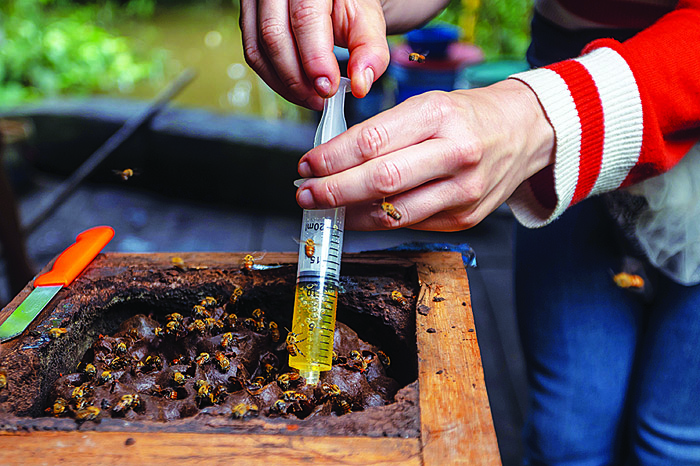
A province in Peru has granted its native bees legal rights, in a world-first effort to protect an insect in this way. The new laws, passed by Satipo province in October 2025 and the town of Nauta later in December, give at least 175 species of native bees the right to exist and flourish without threats impeding their survival. Lawsuits can also be filed on the bees’ behalf. Stingless bees in Peru are an essential part of the natural ecosystem, pollinating the vast majority of food crops, including those important for international export. In addition to the economic and environmental benefits they provide, stingless bees are an important part of the Indigenous peoples’ cultures in the region, having been cultivated for hundreds of years. Threats, including pesticides, deforestation, and non-native bees, have contributed to steady declines in Peru’s stingless bee populations for decades.
These new protections are part of a larger “rights of nature” movement, which seeks to provide legal rights to animals and larger ecosystems, such as rivers. A 2021 study in the Journal of Maps found 409 rights-of-nature laws on the books in 39 countries. The goal of laws like these is to allow communities to more effectively advocate for key species and ecosystems under threat. Colorado-based Earth Law Center is a leading group working on the issue.
Hunters Aim to Help the Hungry
By Amanda Sorell
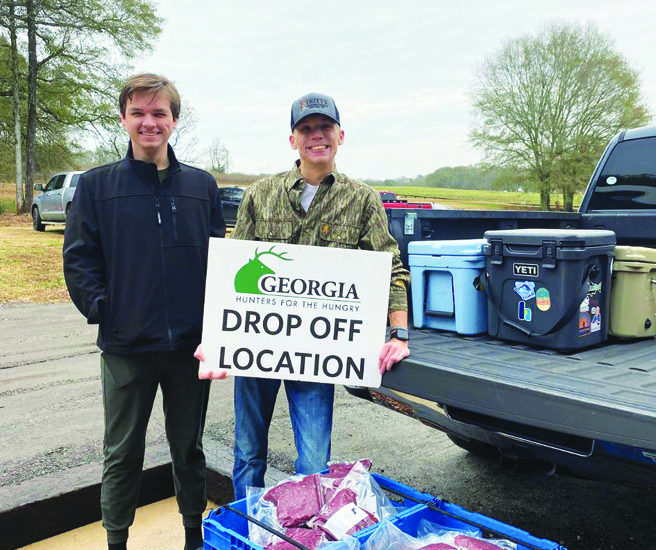
In Georgia, hunters can bag 12 deer per year, and since 1993, a Georgia Wildlife Federation program called Hunters for the Hungry has helped them donate the meat they don’t need or can’t store. Through the program, participants send excess venison, a high-protein, low-fat meat, to participating processors, which recently expanded from just six in the state to 56 after a 2024 increase in state funding. The program’s upgrade also included additional freezer trailers for keeping meat. Post-processing, the venison goes to local food banks. This year, the program’s goal is to provide 140,000 pounds of donated meat to food-insecure families in Georgia, where one in seven people face hunger.
In ‘Butterfly Town U.S.A.,’ Don’t Mess with Monarchs
By Amanda Sorell
Decades ago, Pacific Grove, California, adopted the moniker Butterfly Town U.S.A. as a nod to the monarchs that migrate through every October. With buildings and businesses named after butterflies, an annual butterfly parade, a volunteer-run monarch sanctuary, and fines leveled at anyone who dares “molest or interfere” with these winged creatures, it’s a place that celebrates and protects Lepidoptera. Still, residents have seen monarch populations plummet by 99 percent since the 1980s, when millions of monarchs would overwinter in California. In 2023, the Western Monarch Count welcomed 233,000 monarchs; a year later, volunteers counted only 9,119, and Pacific Grove residents witnessed a mass mortality event caused by pesticides. In response, the town’s residents advocate for strategies that can help these butterflies, including planting native nectar plants and milkweeds, refraining from pesticide use, and supporting a strong Endangered Species Act. Despite this, the monarch’s listing as a threatened species under the Endangered Species Act has been delayed, perhaps until later this year. Get involved in your local count at Western Monarch Count.
A Hemp House in the Heartland
By Amanda Sorell
A partnership between Kansas State University and Habitat for Humanity of the Northern Flint Hills is giving rise to a uniquely designed affordable house in Ogden, Kansas. The home uses hemp insulation, showing how effective the material is at moderating temperatures and thus reducing energy requirements. According to research by professor Michael Gibson, who leads K-State’s Net Positive Studio, which designed the house, using hempcrete and hemp fiber insulation in buildings can address three facets of the U.S. housing crisis: supply, affordability, and sustainability. Legal to cultivate only since 2018, the hemp for this project was sourced from the Prairie Band Potawatomi Reservation north of Topeka, where it’s grown without irrigation, insecticides, or tilling. Follow the home’s progress at Net Positive Studio.
Gleaning for Good: Connecting Farms to Neighbors in Need
By Ciara Konhaus and Kelly Dolan
What began as a small, community-driven gleaning effort in northeastern Vermont has grown into a statewide and nationally recognized model for making the most of the state’s surplus crops. Salvation Farms’ mission is simple but ambitious: to create a future where all are fed and farms are thriving. Through partnerships, smart use of resources, and building hands-on skills, the organization brings surplus food from local farms into a more resilient food system.
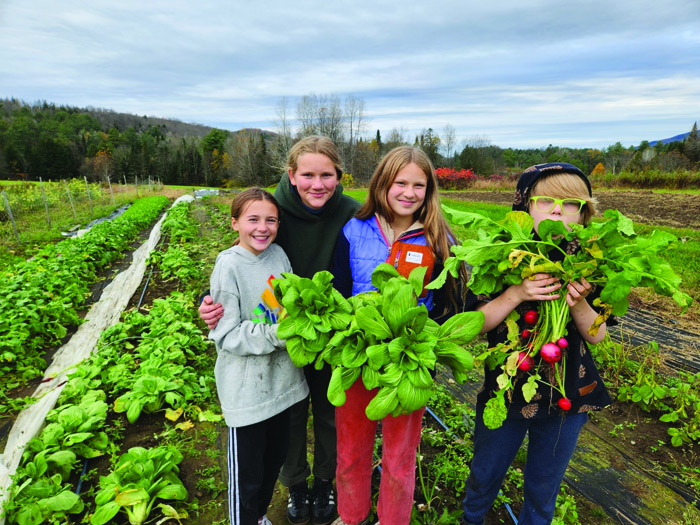
Farms end up with surplus crops for many reasons. A buyer cancels. A crop grows into the “wrong” size or shape. Whatever the reason, perfectly edible food often never leaves the field. In 2016, Salvation Farms conducted the nation’s first statewide study of on-farm food loss, finding that more than 14.3 million pounds of vegetables go unharvested each year in Vermont alone. Meanwhile, two in five Vermonters struggle to meet basic food needs, and the state’s higher education and health-care institutions alone spend over $40 million annually purchasing fresh produce, most of it from outside Vermont.
Salvation Farms fills this gap through two complementary programs: a gleaning program that harvests and redistributes farm surplus, and a processing program designed to manage surplus at scale.
Gleaning is an ancient practice that involves harvesting and rescuing edible crops that would otherwise go to waste. For each week of the growing season, Salvation Farms’ gleaning staff connects with farmers to learn which crops might be available. If a large harvest is offered, volunteers organize quickly to pick, pack, and move the food. This volunteer-powered model is essential; the work simply couldn’t happen without strong community involvement.
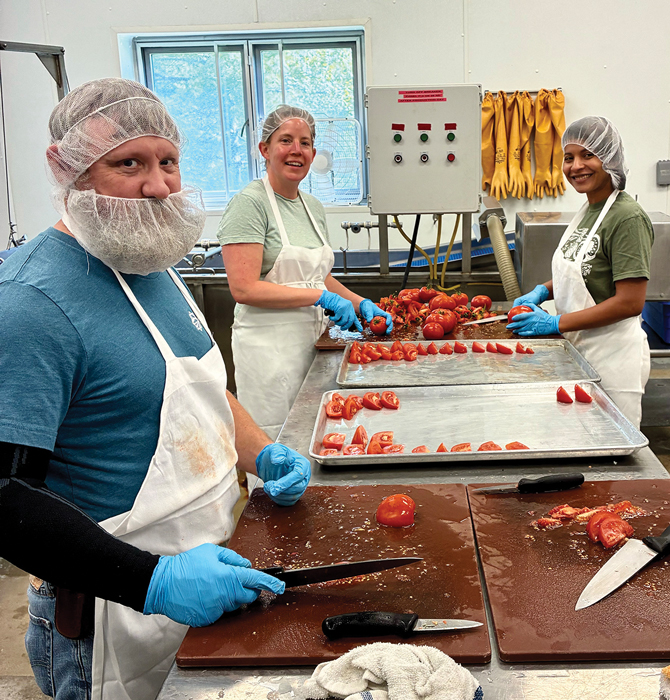
Each year, Salvation Farms gleans and distributes up to 70,000 pounds of produce from more than 40 farms to over 60 recipient sites, including food shelves, after-school programs, meal sites, and elder-care providers. Produce collected during the week is brought to a storage cooler, kept fresh, and delivered on Mondays and Tuesdays across the Lamoille Valley and Northeast Kingdom of Vermont. Each recipient site is offered whatever is available that week – be it cucumbers, squash, and tomatoes in summer or an abundance of root crops in fall – and staff coordinate to make sure everyone gets what they need.
While the gleaning program chugs along, Salvation Farms’ processing program handles surplus at scale, aggregating and minimally processing crops, such as carrots, potatoes, squash, and tomatoes. The produce is prepared in ready-to-use forms (peeled, chopped, and frozen) and distributed to schools, hospitals, correctional facilities, and other institutions that often face barriers to sourcing local food.
In 2026, Salvation Farms will partner with the Center for an Agricultural Economy to renovate processing space at the Vermont Food Venture Center, significantly expanding the community’s capacity to prepare and distribute local crops.
The Return of the GMO Tomato
By Amanda Sorell
The first-ever genetically modified crop approved for human consumption, the Flavr Savr tomato, never really got off the ground. Altered to retain firmness, it was introduced in 1994 and taken off the market in 1997, and the company that created it was acquired by Monsanto. In the decades since, agrichemical companies shifted their focus to commodity crops, such as alfalfa, corn, and soy, modified to resist herbicides and sold to farmers.

But now, genetically engineered tomatoes could return to store shelves. According to nonprofit The Non-GMO Project, the ‘Sicilian Rouge’ tomato was gene-edited to contain high levels of gamma-aminobutyric acid (GABA), “an amino acid believed to lower blood pressure and aid in relaxation,” and the ‘Norfolk Purple’ tomato was engineered with snapdragon DNA to produce more anthocyanins, antioxidants that give the tomato its purple hue.
Currently, ‘Sicilian Rouge’ is sold only in Japan, though the company behind it has announced its intention to bring the tomato to the U.S. The ‘Norfolk Purple’ is already cultivated in the U.S., primarily for sale to restaurants, and is the first transgenic GMO seed marketed to home growers. Meanwhile, researchers in England and South Korea have engineered tomatoes with increased vitamin D.
The Non-GMO Project says these tomatoes “are part of a new wave of GMOs targeting the health-conscious consumer, not the farmer,” and that several of the biofortified tomato varieties were developed with new techniques that could “sidestep older regulatory barriers.” It writes, “Whether the public embraces or rejects new GMOs, one thing remains clear: Transparent labeling and reliable verification are essential for a functioning food system.”
In a Texas Orchard, Bats Control Bugs
By Amanda Sorell
During their nocturnal excursions, bats feast on what humans call “pests” – from mosquitoes to invasive moths – saving the U.S. agricultural industry billions of dollars per year in pest control, according to the U.S. Geological Survey. As the number of bats decreases because of disease and habitat loss, pests – and thus pesticide use – increase.
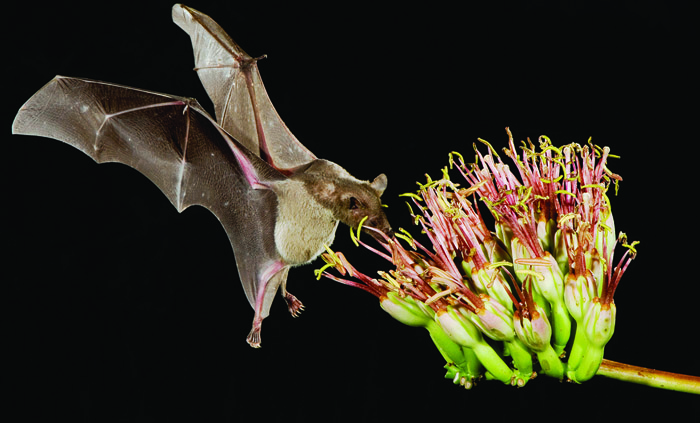
Now, Swift River Pecans, an orchard in Fentress, Texas, is taking advantage of bats’ appetites. The orchard has partnered with Merlin Tuttle’s Bat Conservation to reduce pests and build bat habitat at the same time by installing bat houses in the pecan orchards. The Merlin team will identify which bats inhabit the houses and which insects they’re eating. The farm hopes to find the bats feeding on insects that damage pecan crops, such as the pecan nut casebearer moth, in order to promote its regenerative pest-control method to other orchards as an alternative to conventional chemical methods.
Owner Troy Swift told KCUR that 2025 was the first year the orchard didn’t spray insecticides, and it still had a successful crop. The approach is part of the farm’s broader efforts to use regenerative practices and eliminate pesticides, rebuild soil, reduce erosion, and more. It also sells bat houses and shares design plans on its website.
Minneapolis Turns Wood Chips into Charcoal
By Amanda Sorell
Biochar is a kind of charcoal made by heating wood at high temperatures to turn it into a soil amendment. It’s often made at a home or farm scale, but in April 2025, the city of Minneapolis broke ground on the first city-owned and -operated biochar facility in North America.
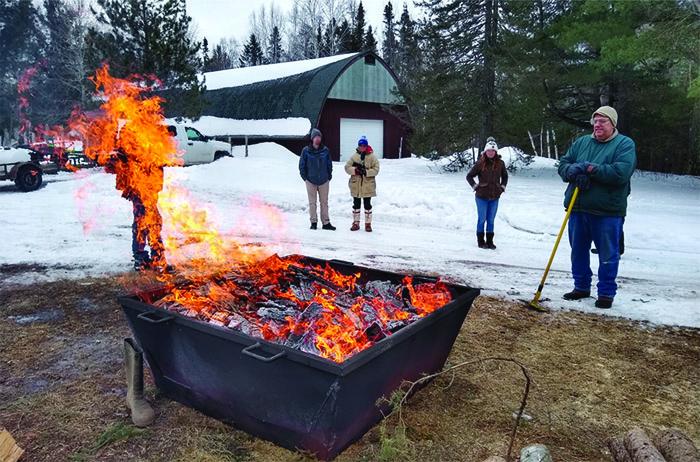
According to its website, Minneapolis broke into biochar through the efforts of the city health department’s carbon sequestration program manager, Jim Doten. In 2011, Doten served as a hydrologist in Afghanistan, where he researched soil restoration and studied biochar, which he found boosted crop health and size and led to less water use. When he returned in 2013, he brought biochar’s benefits back to his boss and partnered with the Shakopee Mdewakanton Sioux Community to launch a pilot program and test its effectiveness. Their success led the city to expand its efforts, first by boosting city plots with biochar, and ultimately building the biochar facility.
When it’s up and running, the facility will have the capacity to transform more than 3,000 tons of wood waste into 500 tons of biochar, a process that the city says reduces tree waste, improves soil health, and removes carbon from the air – the “equivalent of taking over 789 cars off the road.” And the reduction of wood waste is especially useful as the city loses tree canopy to the emerald ash borer.
Youth Project Helps New Farmers Bloom
By Amanda Sorell
“Growing food. Growing people.” This tagline touted by Blooming Health Farms – an aquaponic chicken farm in Greeley, Colorado – reveals the nonprofit’s goal of cultivating more than food. It aims to help youth “find purpose, gain skills, and improve well-being through the power of proven and innovative farming practices.”
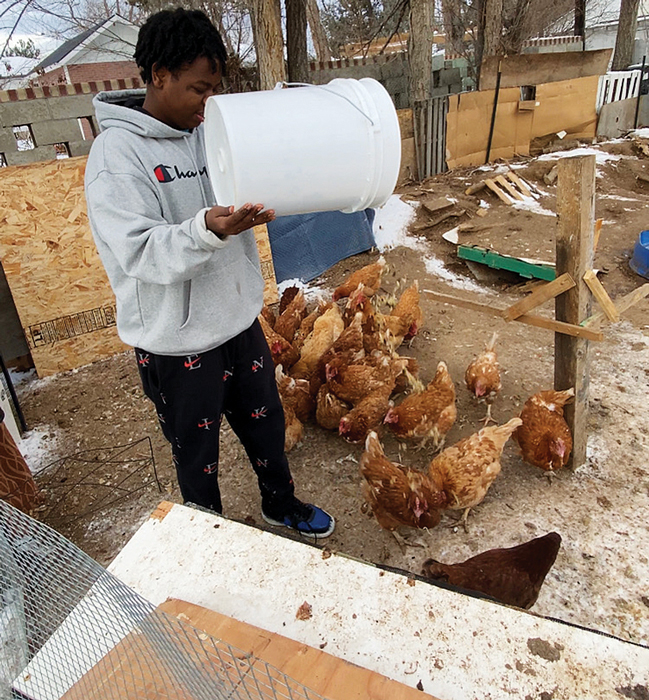
One way the farm is supporting youth in agricultural entrepreneurship is through its 16-week Egg-to-Table program. According to the farm’s co-founder Sean Short, participants assist inside a working egg-laying business, helping with incubation, brooding, daily care, housing, biosecurity, and recordkeeping. They also support business tasks, such as packing and selling eggs, seasonal chicken rentals, attending a farmers market booth, and selling feed. “The idea is simple,” Short says. “Real farmwork that builds real skills and dependable habits” that keep the youth engaged in contributing to their communities.
Students Study Salmon
By Amanda Sorell
Reduced habitat and hungry predators aren’t the only dangers California salmon face – in 2020, researchers noted that a nutritional deficiency, thiamine deficiency complex (TDC), was killing a high number of young salmon in fish hatcheries. To determine the cause of TDC, those researchers, from the Department of Fish and Wildlife Fish Health Laboratory and the UC Davis Aquatic Animal Health Laboratory, launched a partnership with scientists nationwide. But to gather enough data, the researchers needed numerous assistants – and that’s where high school students stepped in.
A teacher in Yolo County had noticed salmon in the classroom fish tank were swimming in circles, a symptom of TDC, and reached out to the UC Davis Center for Watershed Sciences. Upon receiving the teacher’s message, researchers realized this was their ticket to enlist assistance, and they provided classrooms across California with fish tanks filled with salmon eggs so the students could study them. From 2020 to 2025, more than 3,000 students collected data for the final study, which was published in Proceedings of the National Academy of Sciences in June 2025.
The students’ work helped surface the cause of TDC: anchovy-dominated diets due to reduced oceanic biodiversity. The study determined that thiamine injections into adults supported early life-stage survival and swimming behavior, but that the issue will persist for as long as the salmon’s diet is dominated by northern anchovy. Beyond the study, says UC Davis Magazine, the high schoolers’ data collection serves as a model for projects that allow students to learn about conservation challenges in their own communities and contribute to the solutions.
Stories originally published in the Green Gazette column in the 2026 issues of MOTHER EARTH NEWS.






