Start the kidding season off right by reading up on what to expect, what to look for if things go awry, and learn what to have on hand for when you need it most.
“She stuck her index finger down its throat and scooped at a viscous phlegm that completely filled the narrow, serrated shaft of the little gullet. She felt the sandpaper texture of its tongue. Faintly it pulled against her finger, suckling. … She sat up and cradled it in both hands, watching. Faintly it moved, the narrow head lifting at an angle, tilting the outsize ears.”
– Barbara Kingsolver, Flight Behavior
The first lamb born on our farm arrived a bit sooner than I expected. I’d planned to read up on the Merck Veterinary Manual and be ready to roll with whatever happened, but in truth, I was woefully underprepared. Our 12-year-old ran inside to share that my favorite ewe had a lamb on the ground, but he didn’t think it was moving. We went out together and it looked bad. I didn’t see its sides lifting to breathe, and its eyes were glazed. Its mouth was a little open, and I remember the tongue being a little thrust out. I told him I thought we had probably lost this one, and that loss was part of life. He looked at me stubbornly and said, “Just try, maybe you can do something!” I didn’t want to, it looked so close to dead, but I knew I had to demonstrate always trying. I had no idea what I was doing, but fiction saved me. I pictured Kingsolver’s words and vivid imagery as I tried to clear its nose and mouth. I gingerly picked it up, swung it a bit, and blew in its nose and then rubbed its sides and belly vigorously with my sweater. We held it right up to the ewe to lick, and then swung and rubbed a little more, and sure enough, that little bugger sputtered and gasped and wiggled its ears. It finally bleated, got some colostrum in it, and grew up to be another favorite ewe. My son said, “I knew we could do something.”
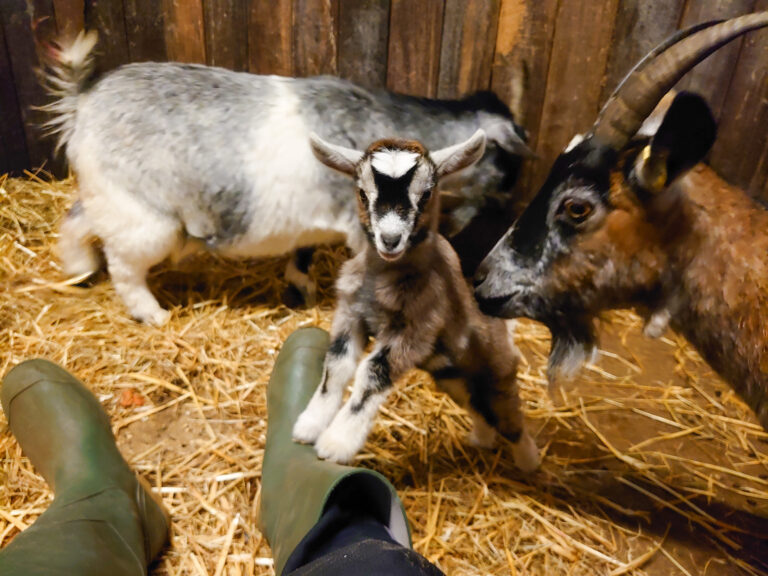
I got lucky that time and know now that being prepared for birthing season is well worth the effort. I have a printed and laminated version of the kidding positions shown in “Livestock Birth 101” and a well-stocked kidding kit all ready to go by the back door.
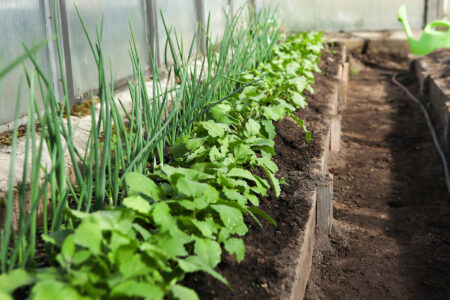
There’s a bit of time yet this winter before kids, lambs, and calves start arriving, and we’re immersed in one of winter’s best activities: perusing seed catalogs. The sweat, tears, and weeds of 2025’s garden are distant memories, and the never-ending optimism of a gardener has kicked in. “Feed Your Family for a Year” has inspired me to plan more carefully so I get to enjoy those dilly beans and butternut squash through at least springtime next year. Like Patrice Lewis, the longer I garden, the more I rely on my staple crops that are high-yielding, nutrient-dense, easy to preserve, and that we actually want to eat. But, of course, variety is the spice of life, and each year, I trial a few new cultivars. Hungarian cheese peppers (“Noteworthy Strange Vegetables to Grow in Your Garden“), ‘Cookstown Orange’ eggplants, and January’s tomatoes are all on the list. Speaking of tomatoes, don’t forget to check out our update on genetically modified tomatoes in Green Gazette. If you save your own seeds and appreciate open-pollinated and heirloom cultivars, you can find reader recommendations in Dear Mother.
Once the garden is all mapped out, it’s time to order chicks – or maybe ducks – and dream of one of summer’s best activities: watching the flock frolic and forage. Let “Beginner-Friendly Heritage Breeds” suggest some great old breeds that are perfect for today’s homesteads. And while I grow and raise a large portion of my family’s medicine, meat, eggs, and vegetables, my oil is still pressed from olives and shipped in glass bottles from thousands of miles away. I’m intrigued by the possibility of yellowbud hickories (“Hickory Oil: An Ancient American Tradition for the Modern Pantry“) and I may just show up on the author’s doorstep with 10 gallons of foraged nuts, ready to go!
– Mother