Discover eggplant growing tips, from seed starting to eggplant companion plants and available varieties. This stunning vegetable is ideal for long and short growing seasons.
Eggplant can be quite easy to grow, and the diversity of varieties available is nothing short of stunning. Most cultivars will need 70 to 80 days after transplanting to harvest. If you live in an area with a shorter season, choose a small fruit, which will mature faster than the larger eggplants. For growers with longer seasons, the full kaleidoscope of eggplant varieties is available.
- Start seeds indoors.
Place your starts under lights about 6 to 8 weeks before your last frost date. Use a heat mat under the seed tray to encourage germination. The seeds should be planted 1/4 inch under the soil and kept moist until they sprout. Using a clear lid on the seed-starting tray will create a greenhouse effect, trapping heat and moisture around the seeds. - Transplant.
Move your starts into the garden only after your soil temp has reached 50 degrees F. Cool soil will shock the plants and slow their growth. Space the plants 18 to 24 inches apart. If you’re growing in rows, leave 2 to 3 feet of space between them. This will give you plenty of room to get in there for harvesting. - Sun and mulch.
Eggplants need at least 6 to 8 hours of sun each day, so plant yours in a full-sun area. Mulch around the plants to suppress weeds and retain moisture. Straw or shredded leaves are both great options for organic mulch. - Fertilize.
Your eggplants will be most productive when well-fertilized. When transplanting, amend the soil with compost or fish emulsion. Later in the season, choose fertilizers that are low in nitrogen to encourage fruit growth. Bone meal and kelp are both great options. - Pest prevention.
Protect the plants with row covers to prevent flea beetles from ruining your fruits. Eggplant flowers are self-pollinating and can produce fruit under cover, so you can leave it on throughout the season. -
Eggplant companion plants.
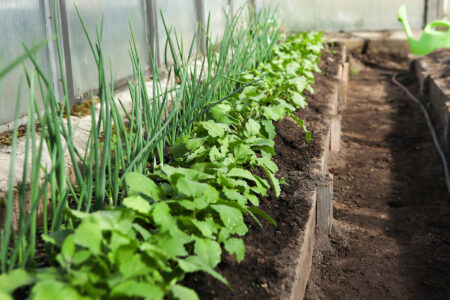
Another great option is to plant herbs, such as dill and fennel, between the plants. These herbs will attract beneficial insects that prey on those pesky flea beetles. Diatomaceous earth is also an effective remedy.
- Harvest.
Harvest your eggplants anytime from when they’re small until they’ve reached full size for their variety. The skin should be shiny and the fruit firm.
Choose Your Eggplant Variety
You can choose from so many wonderful eggplants. The sizes can vary from a whopping 3-pound fruit to tiny, bite-sized eggplants. You can even find cultivars that are white, green, and striking orange.
- ‘Black Beauty.’ The classic dark-purple eggplant. Bell-shaped fruits are perfect for slicing. This is the cultivar to use for ratatouille and eggplant parmesan.
- ‘Rosa Bianca.’ An Italian heirloom with lavender and white striping. My personal favorite.
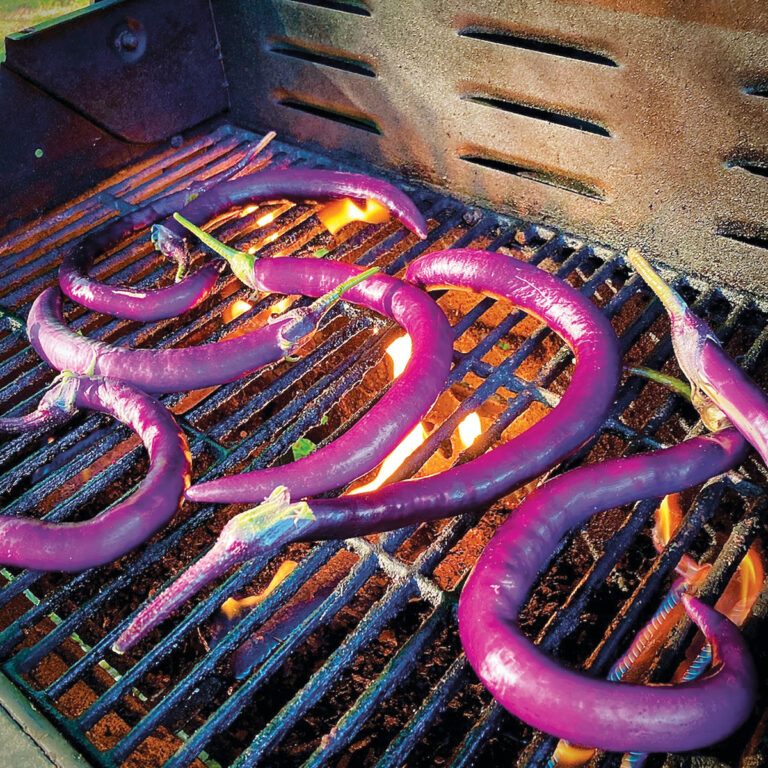
- ‘Chinese String.’ A slender, bright-purple fruit that can reach lengths of 10 to 15 inches! A unique cultivar that’s perfect for grilling.
- ‘Fairy Tale.’ Super cute, tiny eggplants. The fruits are ovals striped with white and purple. Highly productive and early maturing.
- ‘Casper.’ A French heirloom with an earthy flavor and ghostly white appearance. Small fruits on compact and productive bushes.
- ‘Cookstown Orange.’ Unlike most eggplants (Solanum melongena), which were first domesticated in Asia, this is a different species, S. aethiopicum, and it originated in Africa. The fruits are green when harvested as food and ripen to bright orange to be enjoyed as an ornamental.
Originally published in the February/March 2026 issue of MOTHER EARTH NEWS and regularly vetted for accuracy.