Lacy Armentor: I like to wait a week or two before I let young birds out of the coop to free range unless I’ve integrated them into an existing flock that can help show them the ropes. The more tame my birds are and the easier it is to catch them when they’re loose. The earlier I let them out to free range. This way, if I get a wayward chicken, I’m not having to chase it all over the yard to get it back into the coop.
I have a much better chance of catching it on my own. Short free range sessions are a good start letting them out an hour before sunset at first, so they don’t have time to get too far from the coop before they’re ready to go roost for the night is good practice for them to return to the coop at sunset.
As they become more proficient at finding their way back to the coop in the evening, you can extend the time that they spend out free ranging before long they will return to the coop for the night without fail.
Josh Wilder: Welcome to the Mother Earth News and Friends [00:01:00] podcast at Mother Earth News. For 50 years and counting, we’ve been dedicated to conserving the planet’s natural resources, while helping you conserve your financial resources. In this podcast, we host conversations with experts in the fields of sustainability, homesteading natural health, and more to share all about how you can live well wherever you are, in a way that values both people and our mother Earth.
Josh Wilder: Bringing chicks home is an exciting milestone, but it also comes with responsibility. In those early days, everything revolves around creating the right environment, steady warmth, fresh water, and clean bedding. Just as important is providing nutrition designed specifically for growing birds. Home Fresh Chick Starter is a complete and balanced feed crafted to meet the needs of chicks from day one. Made with wholesome ingredients and backed by a hundred percent freshness guaranteed, it delivers consistent nutrition during this critical stage of development.
Essential nutrients and [00:02:00] powerful antioxidants help support immune health while promoting steady growth and development. Feeding a starter formulated for this life stage helps ensure they receive the right nutritional balance as they transition from hatchlings to active members of the flock.
A strong foundation influences everything that follows and choosing dependable nutrition supports long-term vitality and performance later. If you’re preparing to welcome new chicks this season, make feed selection part of your plan. Learn more about Home Fresh Chick Starter at HomeFreshFeeds.com/friends.
That’s HomeFreshFeeds.com/friends and give your flock a healthy start from the very beginning.
Today we’ll be hearing from Lacy Armentor and Queren King-Orozco, chicken keepers who have shared their years of experience in our video library MotherEarthNews.com/videos. First, Lacy shares about the growth of chicks as they begin to feather out.
Lacy Armentor: It’s amazing to watch your chicks grow [00:03:00] and change day by day. The difference in a chick’s appearance from week to week can be astonishing.
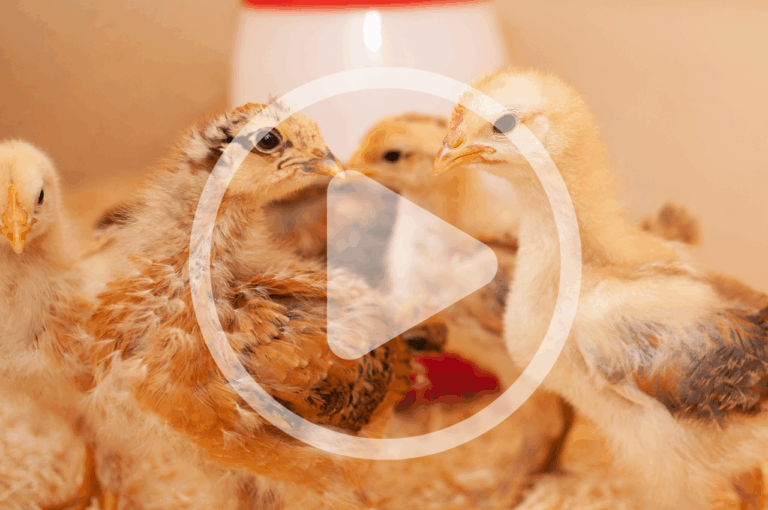
Chicks don’t stay adorable balls of pure fluff for long. During a chick’s first week, you’ll notice more and more feathers growing in on your chick’s wings.
This makes sense because this allows the chicks to become more mobile. Next, you’ll see more development in the tail feathers, which increases balance so that they can make the most of their increased mobility. You’ll often hear new feathers referred to as pin feathers because when the feather shaft first emerges, it’s pointed like a pin.
This will be very obvious in the third to fifth weeks is pen feathers begin to emerge on the chick’s body. They will grow interspersed throughout the down, creating that awkward teenage stage appearance. Usually by the end of the fifth week, the chicks will look like miniature versions of adult chickens, with the head being [00:04:00] the last area to feather out.
After all the chicks feathers grow in, they usually molt shortly after. In this molt, some of the feathers will fall out and be replaced by new ones. It’s with this molt that some chicks will get their final adult feather patterns. I. As with most things, there’s always an exception. Deviation from the process I just described doesn’t necessarily mean that there’s an issue.
For example, broilers or meat chickens grow quite differently than other breeds. Their energy is spent much more so on growing muscle and mass rather than growing feathers. This results in a quite scraggly appearance as they grow and an even more awkward teenage stage. Even as adults, they’re more sparsely feathered than other chickens.
many feathers are missing from the top of her thigh. There are a few more growing in, but even as an adult, she’s going to have much fewer feathers [00:05:00] than a laying type chicken might have.
The rate at which chicks grow depends greatly on the breed of the chick.
Like we just talked about, broiler chicks will grow the fastest with certain older heritage breeds growing. The slowest growing adolescent males tend to grow larger and way more than pullets, which are adolescent females. Keep in mind, this is not a surefire way to judge a chick’s sex as it is not true in every instance, or the differences may be so slight that you don’t even notice them.
As chicks become more mobile, once their wings have feathered out, you’ll start to have escapees. If your brooder isn’t secure, even if your walls look high enough, chicks will get creative.
A classic move is to jump on top of a feed or a water and then fly over the brooder wall. Once a chick is on the loose, they are surprisingly fast. Agile. Hard to catch. If one does get loose and you [00:06:00] aren’t able to catch it, as long as there isn’t an immediate threat to its safety, you can step away for a bit and they’ll usually head back towards the sound of the other chicks peeping in the brooder.
My favorite strategy for catching an escapee is to hurt them towards a corner and then nab them as soon as they reach it.
Josh Wilder: Queren discusses the difference in breeds and the necessity of spending time with them as they adjust to their environment in their teenage years.
Queren King-Orozco: One of the most important things that I can relay to you is knowing exactly how much space you have.
And how much time you’re willing to spend with your flock. We have about 30 chickens and it takes some time every day. So we know that we’re available to do the things that are needed, and we’ve great success with laying and health because of the measures that we’ve taken. We [00:07:00] have been really particular about the breeds that we have.
We currently have Americuanas, Rhode Island Reds, ISA Browns, Olive Eggers. And the reason we chose those is because we wanted some colorful eggs in our batch. One of the things that we most wanted out of our flock was that everyone would get along.
And we did start out with other breeds and we had roosters, which we since have gotten rid of our roosters. We gave some away and we processed some of ’em. And the reason why is because it just created a lot of stress in our flock. I know a lot of people enjoy having them, and if you’re someone who wants to breed your chickens, then you can keep a rooster around.
They are great at alerting you and there’s predators, keeping in mind that docile demeanor is important, especially if you have children. Our daughter enjoys the chickens very much, and so we’ve learned that, the more [00:08:00] tame they are, the more friendly they are, the better of an experience we have.
If you’re someone who is not particular about that, then you know it’s, you can experiment and try different breeds. We also looked at what, how much laying capacity the hen had. And that’s why we went with those breeds. We’ve had, again, great success with laying they really only slow down around the molting time and then in the winter, and that’s something you have to consider ahead of time before you get the chicks, so that you have the time and availability to be able to do that.
Another thing that you really want to be careful with is after you are playing around. Or maybe shifting or moving or cleaning, whatever. You wanna make sure that you wash your hands and I like to wash my hands all the way to my wrist so that you don’t run the risk of any disease or illness from touching all of that that poop.
As you can get salmonella from chickens and [00:09:00] baby chicks. So if you have little ones, just, they love to have fun, they love to hang out with them. I’ll share a picture of my daughter. She’s really enjoyed having chickens and we just always remind her to wash her hands so that so that we don’t run into any problems.
We’ve never really had an issue. So we feel like, again, the measures that we’re taking are the things that are really working for us. And one last tidbit about the heat lamp is that you don’t need to have the heat lamp. As they get older, but right now we’re racing chicks in the fall and we’re gonna be going into the winter and it gets pretty cold here in Kansas, so we’ll probably keep them in their in their brooder a little longer than normal, as long as there’s enough space.
We did get a smaller amount of chicks this time, so we know we have this space. And then again, just making sure they have enough space to go away from the light and then back into the light. And you really wanna make sure. That you choose a good spot for them. We have ours [00:10:00] in our barn, and our barn is enclosed.
So we know that they’re safe in there, but we know that it gets colder in there, so that light is gonna be really important. And then we have a lid for a brooder so that no predators get into the actual box. And if you’re keeping ’em in your garage or anything like that makes it a little bit easier.
You can walk in and out. But just make sure you have enough space.
Josh Wilder: A strong start makes all the difference, especially during the earliest stage of a chick’s life. The nutrition you provide in those first days and weeks helps shape how they grow, develop, and thrive long term. Home fresh chick starter feed is made with premium ingredients and a hundred percent freshness guaranteed.
This complete and balanced formula is thoughtfully crafted to support steady growth, feather development, and immune health from day one. When chicks are small, their nutritional needs are precise. Providing a carefully formulated starter feed helps ensure they’re getting consistent nourishment during a period of rapid change.
One day their tiny hatchlings, and before you know [00:11:00] it, their active curious birds establishing their place in the flock. Supporting that progress starts with dependable nutrition that works behind the scenes every day. And right now you can give them a strong start and save $7. For a limited time download a $7 coupon at HomeFreshFeeds.com/friends. It’s a practical way to invest in your flocks foundation. Start them strong, support their development, and save while you’re at it. Visit HomeFreshFeeds.com/friends to learn how to get $7 off and give your chicks the foundation they deserve.
Lacy returns to describe slowly integrating chicks into their space outside the brooder, in the time in between birth and when they begin to lay eggs.
Lacy Armentor: Chicks can start taking field trips outside around three weeks old as weather permits. Field trips allow chicks to become acclimated to the outdoors, expand their diets, and can be used as a bonding experience between you and your chicks.
These excursions [00:12:00] will help make the move out of the brooder less of a shock to your chicks. If your chick’s outdoor pen is not secure against predators in inclement weather, then they should only be outside while supervised outdoor pens should include food, water, shade, and shelter. Keeping the chicks contained in a small area rather than releasing them into a large Cooper run makes it much easier to collect them, to return ’em to the brooder at night.
There are a few things that you should be aware of whenever you’re taking your chicks out for field trips. Wild birds can carry parasites and pathogens that can infect chicks once they begin to go outside. Coccidia can be spread by wild birds, so keep an eye on your chicks to monitor whether they show any signs of coccidiosis.
If you see the signs of coccidiosis, keep the chicks indoors for a few days while you treat them. Remember that slow exposure to coccidia does help build a resistance [00:13:00] to the parasite, so don’t let fear of coccidiosis hold you back when it comes to letting your chicks explore the outdoors. Wild birds can also spread viruses to chickens such as infectious bronchitis.
Since it’s a virus, it can’t be treated with antibiotics. Anytime chicks feel under the weather, they should be kept warm and comfortable in a low stress environment. Chicks showing signs of illness should be separated from the others and may return to the flock in their field trips once they no longer show signs of the illness.
A big step towards moving out of the brooder is turning off the supplemental heat. Usually by six weeks, you’re able to turn off the heat in your brooder as chicks are mostly feathered and can begin regulating their body temperature. Having the heat source off during the last week or two of brooding allows chicks to acclimate to vari temperatures.
If the daytime outdoor temps are close to your brooder temperatures, chicks [00:14:00] can stay outside during the day as long as the weather is good. If chicks have areas such as head or neck that have not yet feathered, they should not be allowed to sleep outside yet. Keep an eye on chick body language and make sure they don’t get chilled by wind or dampness.
Once fully feathered chicks are ready to move to their outdoor coop full-time. If they’ve gone on field trips and are familiar with the outdoors, this will be pretty uneventful. It’s a good idea to bring some familiarity from the brooder into your coop. For example, bringing the feeders and waters they’re used to out to the coop until they become acclimated to the new layout they’ll be living in is a good idea.
Check on the young birds and their new coop often for the first few days. Take note of their behavior, body language, and health indicators to make sure everyone is feeling good and acclimating. Also use this time to do a double check and make sure that your brooder is secure. If you have a chicken [00:15:00] that has managed to escape, then you definitely have a risk of a predator getting into your coop.
So be sure to do a perimeter check and a headcount each day. If you plan to let your birds free range, don’t let them loose on day one. Allow plenty of time for them to learn that their coop is home. They’ll learn where their feet is and where they like to roost. They’ll become more secure with their surroundings.
I like to wait a week or two before I let young birds out of the coop to free range unless I’ve integrated them into an existing flock that can help show them the ropes. The more tame my birds are and the easier it is to catch them when they’re loose. The earlier I let them out to free range. This way, if I get a wayward chicken, I’m not having to chase it all over the yard to get it back into the coop.
I have a much better chance of catching it on my own. Short free range sessions are a good start letting them out an hour before sunset at first, so they don’t [00:16:00] have time to get too far from the coop before they’re ready to go. Roost for the night is good practice for them to return to the coop at sunset.
As they become more proficient at finding their way back to the coop in the evening, you can extend the time that they spend out free ranging before long they will return to the coop for the night without fail.
Josh Wilder:
One of the most important parts of flock management is matching feed to life stage. Chickens don’t have the same nutritional needs throughout their lives and adjusting their feed as they grow plays a major role in performance and health. Growing chicks require different nutrients than layers hens. Early on Home Fresh Chick Starter feed provides complete and balanced nutrition with essential ingredients to support immune health and steady growth. As birds mature and begin laying around 20 weeks, their needs shift. That’s when transitioning to home fresh extra egg layer helps support increased egg production, with 17% protein to support growth and reproduction, higher calcium levels for [00:17:00] stronger shells and yolk rich technology for deep golden yolks.
Feeding for the right stage helps maintain consistency from early growth to peak laying performance. It’s not about feeding more, it’s about feeding whether you’re welcoming new chicks or collecting eggs each morning, home fresh offers thoughtfully crafted nutrition to support your flock at every stage.
Learn more at HomeFreshFeeds.com/friends. That’s HomeFreshFeeds.com/friends. And keep your flock performing from first peep to full production.
Thanks for joining us for this episode of Mother Earth News and Friends. To listen to more podcasts and get connected on our social media, visit www.MotherEarthnews.com/podcast. You can also email us at podcast@ogdenpubs.com with any questions or suggestions. Our podcast production team includes Alyssa Warner, and myself, Josh Wilder.
Music for this episode is the Song Hustle by Kevin McLeod, the Mother Earth News and Friends [00:18:00] Podcast is a production of Ogden Publications.