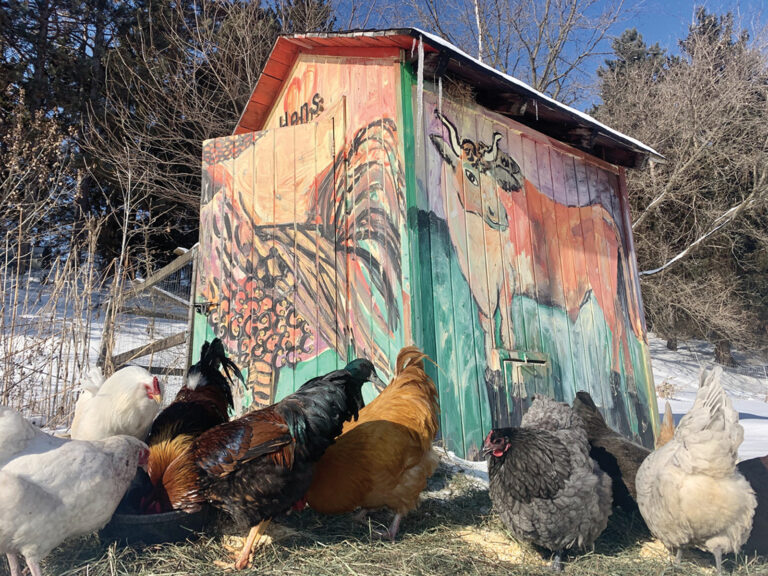
Learn how to raise chickens humanely by following the animal Five Freedoms as an everyday guide, or when you’re just beginning.
Like many of you out there, my first foray into homesteading was a small flock of backyard chickens. I was fresh out of college, renting my first house in the country, full of energy, no children, and with no real responsibilities other than my nine-to-five. I had plenty of free time to enjoy that first flock of five birds. I drew them, wrote about them, and generally enjoyed their feathery company. Fast-forward more decades than seems possible, and I still enjoy my quiet evening duty of collecting eggs from our flock, now in the multiple hundreds.
I chat to the girls, scolding fights over hen-perceived injustices and giving our only named chicken, Nubs, head scratches. Nubs is so named for having only one wing. We’re not sure if she hatched that way or lost it in an epic fight for her life. The animal lover in me hopes for the former, the storyteller in me the latter.
The Animal Five Freedoms
In my role at Food Animal Concerns Trust (FACT), we’re always thinking about the five pillars of animal welfare (aka the Five Freedoms):
- Freedom from hunger and thirst.
- Freedom from discomfort.
- Freedom from pain, injury, and disease.
- Freedom to express normal behavior.
- Freedom from fear and distress.
Here are some things that will help ensure your poultry have access to all Five Freedoms. These are by no means the only things to keep in mind, and some might not be practical or even possible in your situation. It would be the rare farmer who has everything dialed in perfectly. If you recognize areas where your birds’ welfare could be improved, extend yourself a bit of grace while also committing to meaningful changes. When the Five Freedoms are the standard, each of us should work to align financial sustainability with humane responsibility.
Choose the Right Poultry Breed
It’s hard to choose one breed of chicken over another, especially when you want all the chickens, but make sure you have breeds that work well together and in your situation. It took me 10 years before I finally admitted that expecting the sweet, shy Brown Leghorn to tolerate camp kids each summer wasn’t very nice. I adore the breed and loved having white eggs to round out the palette in my egg basket, but the poor birds were obviously stressed. I definitely broke the “freedom from fear and distress” rule with those sensitive girls.
Chicken breeds have been pushed to the extreme more than any other food animal, often bred to live in extreme confinement, making some, such as the Cornish Cross, no longer suitable for outdoor, pasture-based living. They live under conditions most heritage birds wouldn’t, and vice versa.
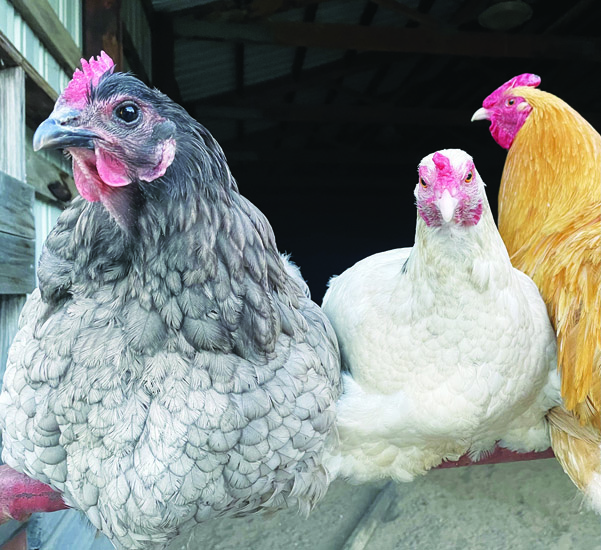
You might look at the laying potential of a production hen (who wouldn’t, when they can lay 300-plus eggs a year?) and think it’s financial lunacy not to raise them. While at first glance these birds look impressive on paper, when you look more closely, they only lay prolifically for the first couple of years, averaging around 450 eggs during that time. Plus, their ability to lay a large number of eggs usually leads to a shorter lifespan and makes them more prone to prolapse and other reproductive issues, cancers, and bone issues.
This is where the tricky balance between values and business comes into play. Last year, we found ourselves with more hens in retirement than in production and decided to add some ready-to-lay pullets to our geriatric flock. All we were able to find were production hens, certainly not our first choice, but sometimes you have to make do with what’s available.
We found a more humane balance by raising the hens out on pasture in natural light rather than implementing an extended light cycle for continual egg production. If you live in an area that requires indoor facilities during winter, resist the urge to extend the winter day to maintain production; instead, align daylight as closely as possible with the natural light cycle. This will prolong the hens’ lives (whether production or heritage breed) and can reduce the issues the production breed is inclined toward. They won’t lay anywhere near 300 eggs a year, but they’ll likely give you over 200, which isn’t too shabby. Be aware that they aren’t as hardy and their feather quality isn’t as good as a heritage breed, meaning extreme weather or rain events may stress them more than their fluffier flockmates.
Conversely, the Orpington (a favorite of ours) lays an average of 180 to 200 eggs a year for up to three years. That means each one has the potential to lay 540 to 600 eggs during her prolific years. If you consider that an Orpington will usually continue to lay for most of her life, albeit less often than in her early years, she’s the more financially viable and arguably more humane choice.
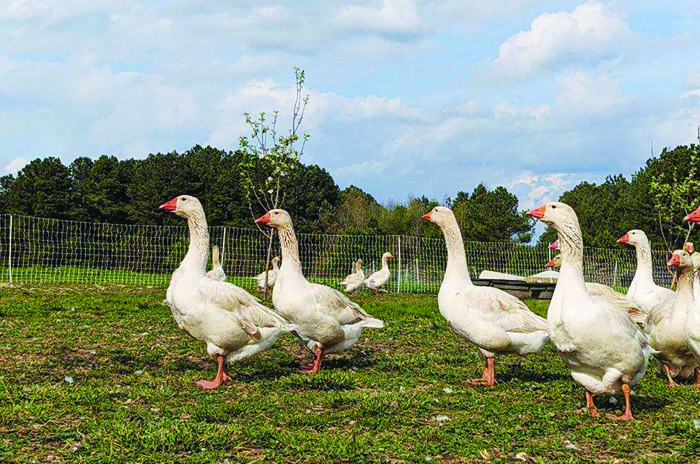
It’s a more straightforward case when you consider the humane choice with meat poultry breeds, especially chickens. If there’s one simple thing you can do on your farm to improve animal welfare, it’s to avoid raising the fast-growing Cornish Cross.
Cornish Crosses are bred to put on as much weight as possible in as short a time as possible, resulting in their muscles developing faster than their skeletal and circulatory systems. As a result, producers raising these birds routinely see health issues, including ascites (water belly), which is a symptom of heart failure; green muscle disease (deep pectoral myopathy), which leads to areas of necrotic muscle tissue caused by the natural act of using muscles to flap the wings without adequate blood flow; and woody breast, a muscle deformity caused by muscle growing so quickly that it exceeds the available blood supply.
Add in higher mortality, leg deformities caused when the muscles grow faster than the bones meant to anchor them, and breast blisters from the birds resting when they have trouble standing, and it’s hard to come up with a reason, financial or otherwise, to raise them. If not processed by about 10 weeks, their bones and organs often begin to fail. You aren’t guaranteeing the animals their right to “freedom from discomfort” or “freedom from pain, injury, and disease,” especially if they are not butchered at the appropriate age.
There are some fabulous, slower-growing breeds that perform well on pasture, have a lower mortality rate, can handle heat, taste better, and satisfy the second and third freedoms. When you combine lower mortality with the fact that they eat less, it’s my experience that you can easily come out ahead financially.
But sometimes, raising Cornish Cross is the only realistic option, especially if it’s the only breed your poultry processor will accept. If it’s your best option, consider processing a little younger so they don’t experience the same stressors as a full-grown bird.
Pick Your Hatchery Wisely
The best way to get chicks (or goslings or ducks) is to drive to a hatchery. However, since this isn’t a viable option for many of us, choosing a hatchery with a good shipping reputation is essential. Check out the hatchery’s reviews. If you see lots of complaints about high mortality on delivery, then ask more questions or keep looking. It might be worth seeking out a hatchery in the same region of the country as you to reduce time in transit.
Your birds will likely be shipped through the USPS. Unfortunately, you don’t have much control over the shipping process, but you can make sure your new charges get into your hands and their brooder as quickly and safely as possible, satisfying the “freedom from discomfort.” FACT has several webinars on brooders.

Our local post office deals with thousands of chicks during spring and summer; they’re pros. I know I’ll get a call as soon as my birds arrive at their dock. If you live in a more urban area, develop a good working relationship with your post office so it understands the importance of calling you as soon as your birds arrive. We track our birds obsessively and make sure our phones are charged, the volume is up, and someone is free to pick up the chicks as soon as we get that call.
While shipping has its problems, it’s often the best option for getting the healthiest birds possible if you don’t have a hatchery close by. As tempting as it might be, avoid getting chicks from the feedstore. I doubt I’m alone in having entered our local feedstore during spring and failed to resist the urge to purchase a selection of laying hens or ducklings. While instantly gratifying, you have no idea what’s happened to those chicks up to the point you purchased them, who’s handled them, whether they’ve been dropped or left without water, etc. You run the risk of getting birds weakened by stress and potentially exposed to disease. It’s also not uncommon for breeds to get mixed up, so you run the risk of getting chicks that aren’t what they’re labeled. If you aren’t experienced in picking out healthy chicks, and if they aren’t newly arrived at the store, passing on them may be a better option. Some feedstores will allow you to preorder chicks, keeping your birds separate and safer.
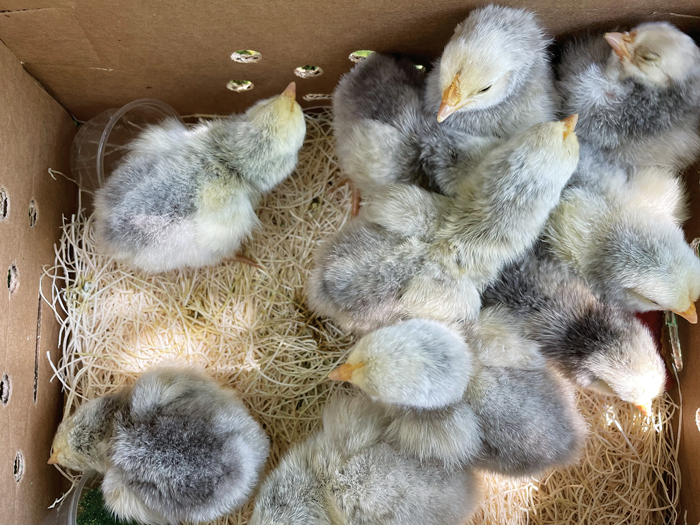
Luckily, most of the bigger hatcheries have low minimum chick orders during the warmer months, which makes getting chicks from a hatchery an option for even the backyard poultry hobbyist.
Give Your Birds Space
Just as with livestock, poultry need space. It’s tempting to add to your flock by arguing that a few more can’t hurt. Unfortunately, especially if you don’t have the freedom to move your coop or yard, adding that unique breed or taking in a rescue bird can put your flock over the tipping point from healthy to crashing.
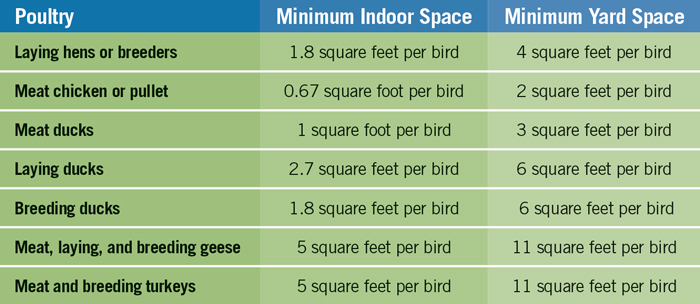
When calculating how many birds you can raise in your space, make sure you look at information from the correct industry. For example, in an industrial chicken house, 1 square foot per chicken is acceptable, even though their beaks are trimmed to counteract the stress of living in such tight quarters, they’re given a list of vaccinations the length of your arm, and they’re fed medicated feeds. Pasture-based and humane standards require significantly more space.
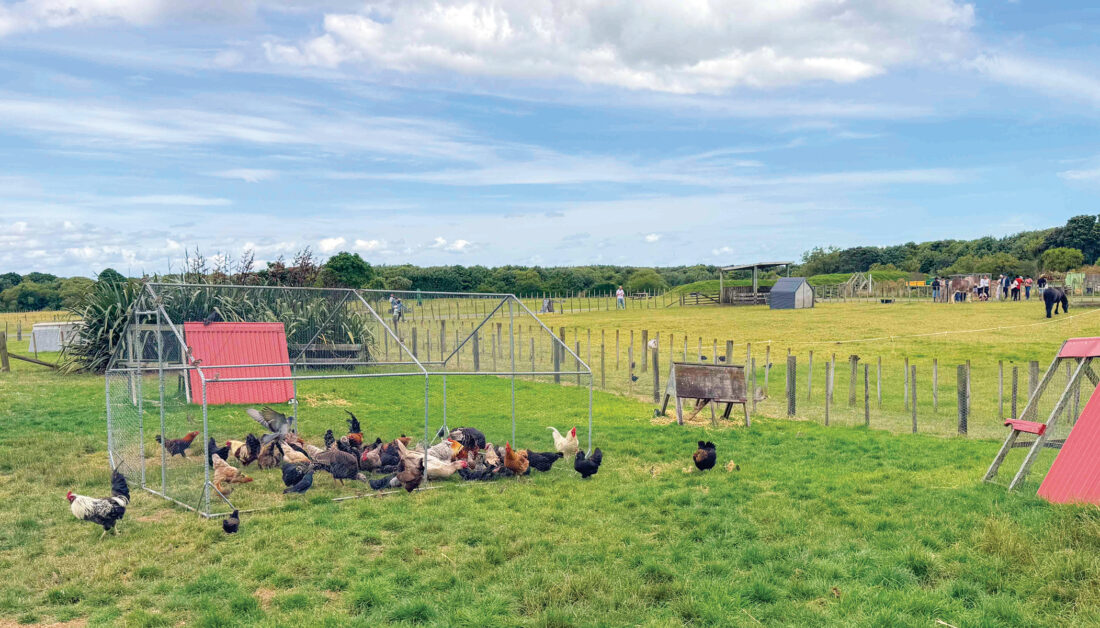
The best way to tell if your coop or yard is overstocked is to sit quietly outside and watch them until they forget about you. If they’re milling around happily scratching, preening, and pecking, then they’re likely stocked just right. If they seem to be fighting or chasing each other, then you should probably build another coop or downsize. Birds should have the “freedom from discomfort,” the “freedom to express normal behavior,” and the “freedom from fear and distress,” which are hard to provide when they’re overcrowded.
Consider your seasons. How will you keep your birds safe during hot and humid summers or extreme winter weather? Will you have adequate indoor space for your flock when it’s below freezing? Or enough shade when the cool spring turns into the dog days of summer? Think of your housing year-round, not just under ideal conditions.
Poultry Space Requirements Chart
From A Greener World’s Animal Welfare Approved (AWA) standards.
Birds on the Move
If you’re able, keep your birds in movable coops; it’s best for the birds and the environment. However, that’s not always possible. Not everyone has the luxury of acres of land or a large, fenced-in yard. If you’re unable to move your birds, make sure you have bedding that’s frequently changed to mitigate parasites and allow them the “freedom from discomfort.”
No matter if you’ve got birds on the move or standing still, pay attention to their vertical space. For a while, low-height chicken tractors were popular; many are still in use. The problem with these is that the birds often lack the vertical space to flap their wings, violating their “freedom to express normal behavior.” If you raise the roof in this style of coop by a couple of feet and incorporate roosts, you can make sure your birds have all five of their basic freedoms met.
Recognize Stressed Birds or Flocks
Knowing when things aren’t going well with your flock is key to keeping it alive. It seems like when things go wrong, they tend to go epically wrong. During our twice-daily check on the layers and meat birds and the almost constant monitoring of our chicks, I look for not only an individual bird in distress, but I also examine the flock as a whole. Good farmers are good observers; they know their flock, their movements, and their sounds. Plus, your birds’ reaction to you and your movements can give you a heads up and the time to avoid disaster.
I had a customer ask me at market last weekend, “How do I know if my chickens are happy? I want them to be happy; they certainly seem happy, but how do I know?” It’s a hard question to answer because every flock of birds is different, but there are signs if you get to know your flock.
It’s easy to spot an individual bird not feeling its best; it will be off by itself, fluffed up, or have its head down when the rest of its mates are scratching and pecking. It’s much harder to tell the mood of a flock; it comes with experience and learning to “read” them.
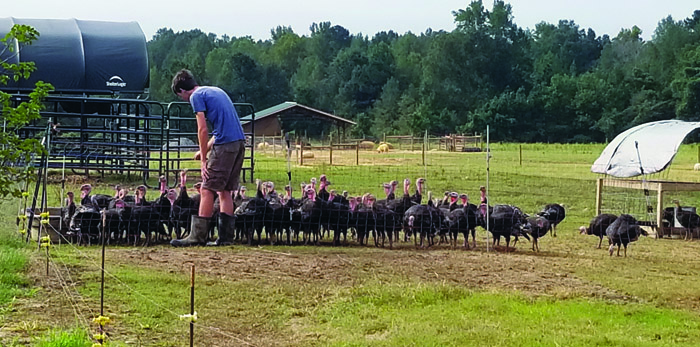
There are different signs to look for, depending on species and age. I know when the chicks are upset before I even open the door to the brooder. They make a distinct call when distressed.
We once had a batch of turkey chicks that constantly made that call from the day they arrived. We couldn’t figure out what was going on. They had plenty of the right food, and the right grit size, and they were at the right temperature with the right amount of space. After a few days of eliminating problems, we had our first death, followed by another later that day. We looked at these carcasses (you can sometimes learn just as much from a dead bird as a live one) and noticed they had nothing in their crops and were much lighter than expected.
After examining a dozen or so live chicks, we realized a fair number of them had empty crops, indicating they weren’t eating. It turned out their locally milled food was ever so slightly too large for the smaller birds. We separated out all those with empty crops, ground a bunch of feed in the spice grinder (which was a big mess), and gave them the boost they needed to get big enough to be released with the others. At processing, we had no idea which bird was which. If we hadn’t been able to “read” our flock, noting the distress calls and trying changes, and had instead waited until the first death, it would’ve taken longer to discover that some of the chicks weren’t eating. All we did was listen.
With any adult bird group, I look for a flock in harmony. What I hope not to see are pecking injuries, bald tails, or birds fighting. I listen for the egg-laying victory song, roosters crowing, and squawks of annoyance. I also note the lack of sound. Nothing gets me up and running out of the house faster than noticing silence. I’ve successfully chased off more bald eagles than I’d like, just by listening.
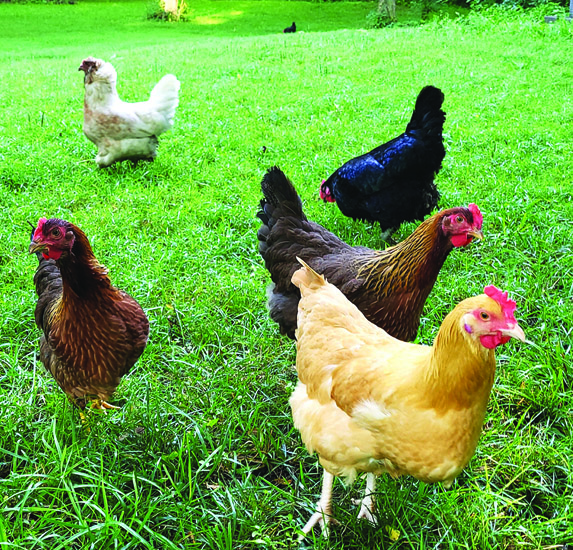
I’ve noticed my production hens are prone to fighting, which has always been a sign of trouble in the flock. About a month ago, I set out to discover what the problem was; they have more than enough roosting, laying, feeding, and roaming space, so there was something else going on. I watched them at different times of the day and discovered that the only time they fought was when I collected eggs. It turns out, I’m the problem! I routinely tossed any cracked, small, or overly dirty eggs into the pasture for the hens to eat, and they were fighting over them.
Farming humanely takes a different mindset than just raising animals for food. It takes a deep appreciation for the animal, patient observance, intuition that grows with experience, monitoring weather patterns, and facing hard truths. I hope you find practices that make sense for you to incrementally adopt over time. By no means are these the only practices that lead to a more humane poultry farm, but they’re pretty easy to implement and make for a good start.
Peck Up Some Knowledge
Saving Heritage Chicken Breeds
FACT Webinars on Medicated Feed and More
FACT Course for Pastured Poultry
Samantha Gasson is the humane farming program director for Food Animal Concerns Trust. In addition to her FACT position, Gasson owns and operates a diversified livestock and poultry farm in North Carolina.
Originally published in the June/July 2026 issue of MOTHER EARTH NEWS and regularly vetted for accuracy.