
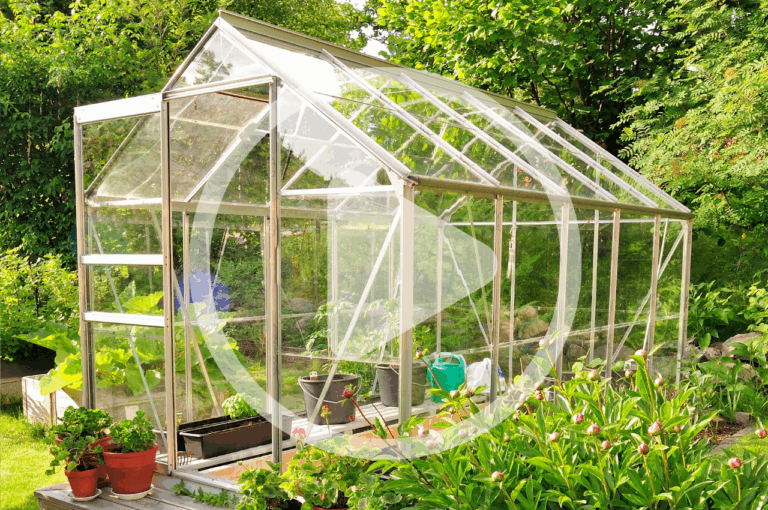
Leslie Halleck: The greenhouse is gonna have some spots that are a little different. Micro-zoning can be even as simple as, okay, I have one little area where I’ve set up misters, and that’s where I’m gonna germinate my seeds. That’s essentially a little micro climate that you’ve created there, and maybe you have some grow lights there, ’cause you’re probably gonna need those, for seed or for fruiting warm season crops off season.
[00:00:21] You generally are gonna need more light intensity for those activities. So there are ways you can zone in your greenhouse just by how it naturally operates from an environmental standpoint and sometimes you can’t correct those, so you need to work with them and figure out which plants can take that higher light intensity, which plants can sit closer to the door where it’s cooler.
[00:00:42] Josh Wilder: Welcome to the Mother Earth News and Friends podcast. At Mother Earth News, for 50 years and counting, we’ve been dedicated to conserving the planet’s natural resources while helping you conserve your financial resources. In this podcast, we host conversations with experts in the fields of [00:01:00] sustainability, homesteading, natural health, and more, to share all about how you can live well wherever you are in a way that values both people and our Mother Earth.
[00:01:10] Want to grow more without adding a full-size greenhouse? Cold frames from Growing Spaces are a simple way to extend your season, protect plants from changing weather, and get more from a small garden. They’re especially great for renters, patios, and growers with limited space. Start earlier, grow later, and make the most of the space you have at growingspaces.com.
[00:01:32] Hello, and welcome to this episode of Mother Earth News and Friends. I’m your host, Josh Wilder, and with me today I have Leslie Halleck. How are you doing today, Leslie?
[00:01:41] Leslie Halleck: Hey, I’m great. Even better that I get to talk to you and we get to talk about greenhouses. It’s all good.
[00:01:47] Josh Wilder: Absolutely, yes. I’m excited to talk about your new book, Home Greenhouse Revival.
[00:01:52] This is great. The photos in here are amazing, and I know our readership is just gonna eat this up, ’cause if there’s one thing they love to [00:02:00] spend time in and build, it’s greenhouses.
[00:02:03] Leslie Halleck: I think for anybody who loves to grow plants and garden, a greenhouse is always on the dream list, isn’t it?
[00:02:09] It’s, it’s a very romantic idea, but it’s also, I think a lot of us, and I would suspect a lot of your readers, are maximalists when it comes to growing. And greenhouses are the gateway to being able to grow all the things you want in and out of season. It’s how you extend your seasons, it’s how you maximize them, and that’s one of the things I love about having a greenhouse is just the ability to grow more when you want to grow it so you can feed yourself better, right?
[00:02:39] Josh Wilder: Yeah, absolutely. So- For our readers, what sort of ground up build can we expect out of the book and to tell, for you to talk about? And what are you… How do you structure the conversation around greenhouses?
[00:02:55] Leslie Halleck: Yes. So I think the most important thread for [00:03:00] me when I teach people about this, and what I’ve done with the book, is that I feel it’s really important to take a plant-centric approach to any greenhouse build kit decision.
[00:03:13] And I think a lot of folks do it backwards. People focus really on the build from the get-go, the aesthetics, the build, all of the gear, everything that’s gonna go into it, and then might realize, “Oh, this doesn’t actually support the kind of environment that I need to grow the things I want it to grow.”
[00:03:32] I cannot tell you how many very expensive, very fancy greenhouses I have c- been brought in to consultant on after the fact, only to have to let these folks know, if you’d have talked to me before you built it, your HVAC system would’ve been different, and you could have done what you wanted to do, et cetera.”
[00:03:49] So the, the conversation is geared in this book from a very plant-centric space. What I really encourage people to do is before you get attached to the look of the [00:04:00] greenhouse that you want, before you get attached to the materials, you need to look at your region, you need to look at your climate, and you need to sit down and think about, what do you really wanna grow?
[00:04:10] What do you wanna produce? When do you wanna do that? Get to know the plant species, its requirements, then reverse engineer that greenhouse build decision, because it might end up being a different greenhouse than you thought you wanted, and isn’t that the whole goal, right? The goal is to grow what you wanna grow.
[00:04:31] So I certainly go into all of the hardscape logistics of either building or getting a kit or having it built for you. All the considerations you need to take into account, your climate, the materials, the glazing, which is the covering material HVAC controls- And I categorize a lot of different groups of greenhouses by temperature range.
[00:04:55] So I give them a name and a temperature range so you can go through and see, okay, in this type of [00:05:00] greenhouse you can grow this with this temperature range. In this type of greenhouse you can do this. But I think what differentiates Home Greenhouse Revival from a lot of the other greenhouse books that are on the market is the very detailed, specific plant-growing information that I give you in the book.
[00:05:16] I- you’re never gonna get a bright, diffuse light recommendation from me. You’re gonna get metrics. You’re gonna get specifics so you can dial in exactly the gear you need and what you need to provide when you build that greenhouse. So the thread always gets pulled, plants first, build after. That’s the conversation.
[00:05:36] Josh Wilder: Great. So as far as, siting your greenhouse and thinking about your microclimate and obviously you’re going through the plans. But once you have your plans in mind, what sort of characteristics do you need to think about in your lawn or your backyard or your homestead that when you’re siting them?
[00:05:53] Leslie Halleck: Yeah, sure. Obviously your region, climate, your latitude, how cold does it get there in the winter? How warm does it get in [00:06:00] the summer? Obviously those are primary concerns. But then logistically you need to think about orientation. I’ve seen a lot of greenhouses placed in, on, on a property where it just gets a ton of shade all day, or seasonally it’s actually missing winter sun because of obstructions of where it was placed.
[00:06:18] So making sure you have a space on your property that’s got a clear sight line to some sunshine, especially that winter sun angle, which is going to be different than the summer sun angle, right? It’s gonna be lower, and those trees might block all that sun to your greenhouse in the winter, but great in the hot and intense in the summer, but not in the winter.
[00:06:36] So orientation, ideally you’re always gonna, take that long side of the greenhouse and make sure it’s facing south, right? Especially for winter exposure, meaning the peak of that greenhouse runs east to west, ideally. There are some exceptions that I teach you about in the book depending on what you’re producing, and you can get into the book for that.
[00:06:58] But [00:07:00] essentially you wanna make sure the greenhouse is not completely shaded by your house. Now, if you’re in a really cold climate, it could behoove you to do a lean-to greenhouse with that north side up against an instulated- insulated wall of a structure, right? So it, you’re not gonna have light, ambient on that side, but the- The clear side is gonna face that southern side, and that allows you to get some insulation.
[00:07:23] So you really have to think about all of those things depending on your location, which is gonna be different for everybody, right? Based on your latitude and your, and how cold and how warm it gets. So orientation obstructions that are gonna block light when you need it most. The type of glazing material could be different.
[00:07:43] If you have trees nearby, glass might not be the best option for you. Glass also loses more ambient heat, so a less attractive plastic material might actually better suit your needs from an insulation standpoint. So yeah, [00:08:00] or- orientation, obstructions, angle of your winter sun, the pitch of your greenhouse roof, your AOI, angle of incidence, meaning how much light at the angle that sunlight comes in is actually gonna get into the greenhouse.
[00:08:15] So there are some placement logistics. And then as a side note, know your local laws about setbacks permits. I’ve seen a lot of people have to take their greenhouses down after the fact because the neighbor calls in a code violation. That greenhouse has to come down. That’s not fun. Make sure you know your setbacks, make sure you know if you need a permit.
[00:08:37] If you’re building a f- a foundation, you might need a permit. If you’re gonna put power to that greenhouse, you might need a permit. So those are all really important considerations to take into account.
[00:08:50] Josh Wilder: Yeah. And certainly there’s a lot of y- you can be- once you’re, once you have the means and the materials you
[00:08:57] It’s easy to jump the gun sometimes,
[00:08:59] Leslie Halleck: I [00:09:00] actually see jumping the gun happen quite a bit with greenhouses, again, because you just get excited, and you have a picture in your mind about what you want, and you do that, and then you end up having to deal with a lot of after-the-fact issues that may or m- may not work in your favor.
[00:09:18] Josh Wilder: Yeah. Now, as far as different budget-saving characteristics of the greenhouse, a lot of our readers are budget-friendly- Sure … and love to tinker with different systems. What sort of automation tools are available to deliver the best b- bang for your buck?
[00:09:35] Leslie Halleck: Yeah, that runs the gamut.
[00:09:37] I would say with greenhouses as a whole, you can get as basic or as fancy and expensive as you want. It really, there’s a wide variety. But I think people might be surprised that a lot of the really simple-to-use, basic, watering systems that you can buy for your outdoor garden or raised beds or containers work great inside an [00:10:00] ins- indoor greenhouse, and they’re inexpensive.
[00:10:02] The little watering kits that you can get with micro bubblers or micro sprays for your patio or raised beds, you can just retrofit those into the greenhouse. As long as you have water p- to the greenhouse, whether that’s a hose, a spigot plumbed into the greenhouse, as long as you can get water to the greenhouse, you can use really simple watering systems and even just a basic timer that costs you 11 bucks, you can keep that pretty simple or you can get fancy, right? And you can plumb it in. You can zone misting areas. You can put a fancy controller in that greenhouse that automates all that for you. So it really just depends on your end goals and your current budget and how do you compromise. But, a l- I- I’ve used a lot of just inexpensive, easy watering micro tube systems for the outdoor garden inside the greenhouse.
[00:10:51] They work great.
[00:10:51] Josh Wilder: That’s great. As far as energy bills during the winters, what are some insulation uses that you have used or come [00:11:00] across that you recommend?
[00:11:01] Leslie Halleck: I think there’s a few considerations when you’re thinking about winter hardiness of the greenhouse. Obviously, depending on where you are.
[00:11:07] In Texas your winter protection needs are gonna be very different than Alaska, right? So y- there’s a big range in needs there. But, I think something a lot of people don’t think about is the shape of your greenhouse. Just to start out, the shape of your greenhouse and the type of glazing impacts insulation.
[00:11:23] So for example, a geodesic dome greenhouse tends to lose less ambient heat through leakage than a lot of other shapes. So that’s a consideration if you’re in a really cold climate. Glass glazing loses more ambient heat than other glazing types, so you wanna think about that. And then of course, if you’re just trying to keep it passive, you wanna think about things like thermal load, solar heating.
[00:11:47] Big, buckets or barrels of water in the greenhouse placed on the north side of that greenhouse. Make sure sun can hit those water barrels. You collect that ambient heat during the day, it radiates at night. There [00:12:00] are insulating curtains and blankets you can use inside the greenhouse.
[00:12:03] A lot of people use bubble wrap, just insulating bubble wrap inside the greenhouse. Painting things like pavers and those water barrels black to absorb more heat. There’s a lot of basic things you can do. Obviously orienting your greenhouse such that you get maximum winter sun angle and exposure is gonna be key to any of that working.
[00:12:23] Otherwise, you’re not gonna have any radiant heat coming in there for you to collect, right, and output. So yeah, there’s some, some very basic kind of DIY tools that you can use to capture that ambient radiation so that it is then released into the greenhouse at night, which is your, what you’re trying to do, is keep those, the night temperature warm enough in the greenhouse.
[00:12:46] Pavers, black pavers or painting your pavers black. If sun’s hitting that, you can put those water barrels under the tables, as long as sun is hitting them. So there’s a lot of different strategies you can use to insulate. You might wanna consider not [00:13:00] building a greenhouse with glass or glazing all the way to the ground.
[00:13:03] You might want a solid foundation that offers a little more insulation and heat absorption. If you are in an area that’s got permafrost, you may wanna dig your greenhouse down. You may wanna go below that permafrost level with your foundation so that you get better ground insulation. So there’s all those considerations depending on where you live and grow
[00:13:27] Josh Wilder: Yeah, and obviously winter is the key season to think about, and- Sure
[00:13:31] it’s a game changer for food security, which is- Yes … obviously a big thing to think about right now.
[00:13:36] Leslie Halleck: Yes, for a lot of people. I l- I think the stock in lettuce seeds gonna go way up.
[00:13:42] Josh Wilder: Oh, yeah, absolutely. So if you’re looking to maximize your production over the winter months, what sort of crops do you talk about that can be the best return on investment?
[00:13:53] Leslie Halleck: Yeah, I think o- obviously to go with the flow of the temperatures you’re experiencing and you’re … and if you don’t wanna put a [00:14:00] lot of money in, i- into heating you’re gonna wanna stick to cool season crops, right? So cool season crops are gonna be things like lettuces, leafy greens, sorrel, kale, cabbage.
[00:14:11] Those sorts of things are gonna be easier to grow at cooler temperatures. Spinach can germinate down at as low as 20 degrees Fahrenheit. It’s a lot slower that cold, but it will eventually germinate if the seed is fresh enough. So there are specific species that those are the climates they grow in, a lot of those biannual cool season edibles, cool season herbs.
[00:14:33] Microgreens. So if you’re looking for nutrient-dense, quick-turn crops, microgreens are gonna give you a good bang for your buck. So yeah the cool season crops I think are going to be, quote-unquote, easier and will work with cooler winter temperatures. If you’re not cooling the greenhouse, or you’re only minimally cooling it, or maybe using, just thermal load passive [00:15:00] solar, tomatoes are probably not gonna be fruiting for you in the winter, right?
[00:15:04] So you have to be realistic about your temperature range. What temperature 24-hour average temperature, and what are your highs and lows that you’re creating in that space? And that’s ultimately gonna dictate what you can or can’t grow.
[00:15:19] Josh Wilder: That’s great.
[00:15:21] Make more of your backyard growing season with the GrowZebo greenhouse from Growing Spaces. This hexagonal greenhouse creates a protected space for starting earlier in spring, growing later into fall, and giving your plants added protection from the elements. With customizable garden beds and benches, it can be built around the way you wanna grow.
[00:15:40] Learn more at growingspaces.com.
[00:15:44] So you also talk in the book about transitioning things, everything from greens to citrus.
[00:15:50] And how can a backyard grower in a cooler climate manage those climates inside of a small structure to stretch their shoulder seasons?
[00:15:58] Leslie Halleck: Sure. We call that [00:16:00] zoning. So there’s lots of different ways you can zone a greenhouse. If you’re fancy or industrious, you can block off and zone rooms in your greenhouse, right?
[00:16:09] If you, if any of you have visited bigger greenhouses, say at Longwood or someplace like that, or Q, you’ve been to a big Victorian greenhouse complex, you’ll notice there’s many different rooms, and they’re zoned. They have different temperature, different humidity for different plants. You might be able to do that with a s- with a simple build at home.
[00:16:28] If you can’t, that’s okay. What you’re gonna find in most greenhouses, if they’re big enough, you’re gonna have hot spots, you’re gonna have cool spots. You’re gonna have areas that get more light intensity or lower light intensity, or perhaps taller plants you have in the greenhouse are casting shade in certain areas of the greenhouse.
[00:16:47] So you’ll find that whether it was intentional or not, you’re gonna have little micro zones inside your greenhouse, and learning how to leverage those for plants that need a little more light intensity, need a little more warmth, [00:17:00] maybe seedlings. You’ve got some plants you’re overwintering. Maybe you’re trying to grow kiwi in there.
[00:17:05] Whatever it is that you’re doing- The greenhouse is gonna have some spots that are a little different. It, m- Micro-zoning can be even as simple as, okay, I have one little area where I’ve set up misters, and that’s where I’m gonna germinate my seeds. That’s essentially a little micro climate that you’ve created there, and maybe you have some grow lights there, ’cause you’re probably gonna need those , for seed or for fruiting w- warm season crops off season.
[00:17:30] You generally are gonna need more light intensity for those activities. So there are ways you can zone in your greenhouse just by how it naturally operates from an environmental standpoint and sometimes you can’t correct those, so you need to work with them and figure out which plants can take that higher light intensity, which plants can sit closer to the door where it’s cooler.
[00:17:51] Your Cymbidium orchids can go there along with your cool season greens, but the tropical stuff needs to be back where it’s a little bit warmer or closer to the heater or whatever it is you have [00:18:00] going on. So yeah, zoning can be very intentional and technical. Another strategy I like to give people, because a lot of folks have to start out with a smaller greenhouse, and most, as you probably know, one of the biggest regrets is, “Ugh, I wish I’d built a bigger greenhouse, ’cause I’ve instantly filled this up and don’t have room.”
[00:18:20] But it can be more budget friendly and accessible to start out with one small greenhouse and then maybe put up a second small greenhouse, and now you’re creating zones, right? One can be f- for a cold house where you’re just, you know, overwintering or hardening off. If you decide you wanna heat the second greenhouse, that can be for, seeds, that can be for plants that you’re trying to harvest in the winter.
[00:18:44] So you can kinda take a step-by-step budget friendly approach to zoning by having a few individual small greenhouses, like those little six by eight sizes. And a lot of people don’t think about that. They don’t think, “Oh, I could have three little greenhouses and each one can have different [00:19:00] conditions in it.
[00:19:01] I might put grow lights in one of them, but not the others.” So you can zone that way, too
[00:19:07] Josh Wilder: Yep, and we have an example of a cattle panel greenhouse that we built and have plans for in the October-November issue of- Oh, great … Mother Earth News. Great.
[00:19:16] Leslie Halleck: Yeah.
[00:19:17] Josh Wilder: And something also to consider, when thinking about the, those micro zones and inside the greenhouse, which, pest pressures, which- Oh, yeah
[00:19:26] To avoid getting, letting them get out of control inside there- Yeah … what sort of controls do you recommend?
[00:19:32] Leslie Halleck: Yeah, I think that’s a surprise for a lot of people just getting into greenhouse growing, is how pest populations can explode. I say you’ve created this perfect environment for plants, which is also the perfect environment for a lot of pests to thrive unchecked.”
[00:19:47] You don’t have predatory insects from the outside taking care of that problem, or wind or rain or whatever it is that would normally reduce that pest pressure, they can go unchecked. For natural growing, I’m always gonna tell you [00:20:00] prevention is your best, first tool in the toolbox. So we call this biosecurity.
[00:20:04] You need to pay attention. You need to be scouting your greenhouse, using things like yellow sticky cards for monitoring that will tell you if you’ve got whiteflies showing up or fungus gnats or whatever it is. That’s your first best defense, making sure you check every plant you bring in the greenhouse, that it doesn’t have hitchhikers on it that you can see.
[00:20:25] Culling plants that are diseased or highly infested, getting them out of that greenhouse quickly is imperative. Don’t make the mistake of thinking you can leave an infected or infested plant with the rest of your plants and, “Oh I’ll treat it over time and eventually get rid of it.” No, it’s gonna spread.
[00:20:42] So you have to be quick and a little bit brutal about that stuff sometimes, which is hard for plant people to do. Beyond that- It’s not that I have a favorite method. I always try to start out with the lowest impact treatment first that can get rid of the problem before you step it up to [00:21:00] something more powerful, right?
[00:21:02] So a lot of the simple insecticidal soaps, horticultural oils, those are always a good first preventative or maintenance. There are biofungicides, more biofungicides on the market these days that are beneficial bacteria that can help you deal with a lot of fungus issues. And predatory insects.
[00:21:20] If your temperature can sustain them in your greenhouse, as a part of IPM, integrated pest management, predatory beneficial insects can be employed very successfully. And in, in fact, a lot of commercial growers are relying on them much more heavily now, especially organic certified growers. So beneficial insects can be great.
[00:21:39] So you need to educate yourself about all of those things first. And of course, a lot of the more powerful chemical systemic, insecticides and fungicides are not gonna be things you wanna use on edible plants anyway, and they may not be labeled for that use. So always read the label, make sure you know what you’re doing, and realize that many [00:22:00] products, even if they are organic, may have a re-entry period in a greenhouse for safety purposes.
[00:22:05] Even if it’s something really that you think is very simple, it may tell you, “Hey, stay out of that greenhouse for 24 hours before you go back in it.” So you really have to educate yourself about all the products you’re using. But if you can prevent, be observant, watch, clean, cull, that’s gonna be huge.
[00:22:22] Monitor, and then really educate yourself about the insects. I put a really big, nice, robust table in the book. I love reference tables. You’ll find them in all my books. But there’s a nice big reference table for pests and diseases that are gonna tell you the best way to take care of those depending on what issue you have going on.
[00:22:41] Josh Wilder: That’s great. When it comes to greenhouses in my experience, they, th- their construction can be a little contagious once- … a gardener builds one and- Yeah … their gardener friends see it and- Yes … what they can do with it. It just- Yes … kind of spreads.
[00:22:57] Leslie Halleck: Yeah.
[00:22:57] Josh Wilder: So can you talk a little bit, I I’m guessing that has a little bit to [00:23:00] do with the title of the book, but what, c- talk about this revival
[00:23:04] Leslie Halleck: I chose that word for two fronts.
[00:23:07] One, I think greenhouses are having a new moment again. The, the interesting thing about gardening is that it’s a trend that never goes away in our culture. It’s embedded in our culture. But there are waves of popularity of things that come and go repeatedly, and I think I noticed, and this is actually the reason I agreed to write the book which is put out through Corridor Cool Springs Press, because I felt like greenhouses were starting to have a moment again, and I felt like they needed to have a moment again for many reasons.
[00:23:36] So yes, I think it’s always on that dream list, and when people see somebody else putting one up, I think what it says is, “Oh, that’s more accessible than I thought it was. Maybe I could do that, too.” But I also use the word revival because there’s a whole lot of people who maybe put up a greenhouse or started trying to grow and didn’t have the results because they maybe didn’t [00:24:00] know what they didn’t know when they built that greenhouse.
[00:24:03] And I see a lot of greenhouses getting used as storage sheds in people’s backyards. So I also use the word revival because my book, I think, can really help you revive that old greenhouse and learn how to grow the way you need to grow with techniques and strategies for the plants that you love, that it, you didn’t have that information before and that’s why it didn’t work out.
[00:24:25] So I think both from an interest level, I see a resurgence in an interest in greenhouses most bec- a lot of people got way back into houseplants again during the, what I call the plantdemic, and that resulted in, pl- houseplants are always the gateway drug to gardening, right? That’s where we all get hooked, and then we want to grow everything, and then we want a greenhouse.
[00:24:45] And so a lot of people wanted to grow and propagate more of their own plants and also started growing to sell commercially. A lot of cottage businesses came out of the plantdemic. But there’s a lot of folks that have abandoned it, so I’m hoping that I can also help you revive a [00:25:00] defunct greenhouse, if you’ve got one of those hanging out in your backyard.
[00:25:04] Josh Wilder: Yeah, and I think I think having a greenhouse can really turn what some people might see as a seasonal hobby into a lifestyle.
[00:25:11] Leslie Halleck: Absolutely. Yeah. And even a business, if you’re zoned for that and you can do that. A lot of folks I know start… it’s like the classic conundrum, with zucchini and squash, it’s like you run to the neighbor’s, drop it on the porch and run away before they see you leaving. Sometimes you just end up with a lot more than you thought y- you would have and “Hey, could I support the local farmers market with this, or could I sell to my neighbors?” So sometimes it becomes a, a professional pursuit for people as well once they start to have some success with their greenhouse.
[00:25:40] Josh Wilder: Yeah, and at the very least, great way to build community.
[00:25:44] Leslie Halleck: Absolutely. I… Front yard gardening I find is one of the best ways to get to know your neighbors, have good community. So if you’re a, if you’re a, a gardener and people, you drive by your property it’s always gonna be a good conversation [00:26:00] starter.
[00:26:00] And being able to grow and share food. I’m out on six acres of rural farm forestry property in Oregon now. And I ha- I have so many farmers and growers and s- so many things grow here, and all of us as neighbors are starting to share food. I have tons of grapes ready on my property now. I can’t eat them all.
[00:26:18] I gotta share those. My neighbor’s got plums. I’m gonna have some of hers. So it is, yes gardening and growing food is a wonderful way to build community.
[00:26:27] Josh Wilder: Awesome. I’m glad you mentioned the front yard gardens. I, there’s a couple here in Kansas. I’m in Topeka. And I’ve been meaning to just knock on the door and be like, “Can I take some pictures?
[00:26:38] ‘Cause this is beautiful.”
[00:26:40] Leslie Halleck: And they will say yes- Yeah … and they will spend an hour outside talking to you- … about their garden. Anybody who does that wants to talk about their plants and garden and greenhouse. You’ll probably get some greenhouse tours out of that, who knows? So yes, we, plant people love to talk about their plants.
[00:26:54] Josh Wilder: Absolutely. And I’m here for it.
[00:26:58] Leslie Halleck: Aren’t we all? [00:27:00]
[00:27:00] Josh Wilder: All right thanks so much. And we’ll have, right when this podcast comes out, the book will be available on Mother Earth News store. Great. And it’s been great talking to you. Thanks so much.
[00:27:10] Leslie Halleck: Thanks for having me, and I hope I’ve inspired people to either get started with a greenhouse or make the most of the one they already have.
[00:27:17] Josh Wilder: I hear it. Thank you.
[00:27:19] Leslie Halleck: Sure thing.
[00:27:21] Josh Wilder: If you’re ready to grow beyond the traditional gardening season, the Growing Dome from Growing Spaces is a complete year-round growing system designed for challenging climates. Its geodesic structure, insulated design, thermal mass, ventilation, and durable polycarbonate work together to create a more stable growing environment through every season. Discover what year-round growing can look like at growingspaces.com.
[00:27:47] Thanks for joining us for this episode of Mother Earth News and Friends. To listen to more podcasts and get connected on our social media, visit www.motherearthnews.com/podcast. You can [00:28:00] also email us at podcast@ogdenpubs.com with any questions or suggestions. Our podcast production team includes Alyssa Warner and myself, Josh Wilder.
[00:28:10] Music for this episode is the song Hustle by Kevin MacLeod. The Mother Earth News and Friends podcast is a production of Ogden Publications.







