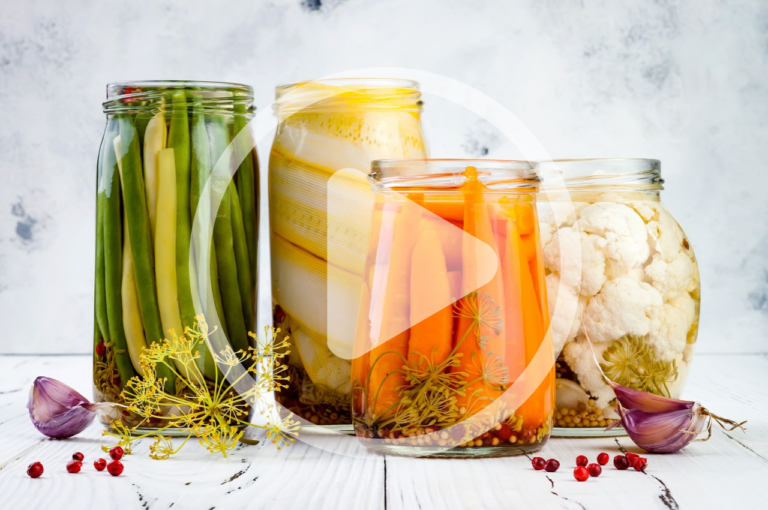
Kirsten Shockey: I often bring out ferments on Thanksgiving. I will ’cause I, I like the, the concept of Thanksgiving celebrating and being thankful for the harvest.
And since a lot of my ferments, especially by that time of year, are from the garden I would always found Thanksgiving was just a little too late for most anything from the garden to actually be at the table in its fresh form. And so ferments solves that for me and I’ll put out, relish type plates of, the gardenara and, pickled carrots or, kimchi I have a lot of large cucumbers the kind that aren’t for pickling. H- I was gone for a few weeks and they, got super huge. And so I will take those and scoop out the seeds and chop those up and make [00:01:00] a kimchi, and then they’ll be in, little squares and that’ll fit really nicely on a plate like that.
Josh Wilder: That was Mother of Fermentation, Kirsten Shockey. We’ll hear more from her later in the show. But first, welcome to the Mother Earth News and Friends podcast. At Mother Earth News, for 50 years and counting, we’ve been dedicated to conserving the planet’s natural resources while helping you conserve your financial resources. In this podcast, we host conversations with experts in the fields of sustainability, homesteading, natural health, and more, to share all about how you can live well wherever you are in a way that values both people and our Mother Earth
Hello, and welcome to this episode of Mother Earth News and Friends. I’m Josh Wilder, and with me today I have Laura Poe Mathes. How are you doing today?
Laura Mathes Poe: Great. How are you?
Josh Wilder: Great. Tell me a little bit about yourself and how you got into fermenting.
Laura Mathes Poe: Oh, I certainly… A little bit about [00:02:00] myself would be that I’m really into fermenting. I’m, and I am a dietician. My kind of specialty is in digestive health and I I’ve been a dietician for I… 17 years, and the last decade or so has- I’ve really been focused on digestive health.
But I’ve been fermenting foods for about 15 years. I started in, when I was in college in dietetic school, I started making kombucha in my college apartment and my roommates were like, “What is this science experiment?” Because this was 15 years ago, there wasn’t kombucha in Walmart and cook- you know, the gas stations and stuff.
It was like pretty, even though it’s thousands of years old, in our, in our current culture it’s still, it’s new. Yeah,
Josh Wilder: It wasn’t cool yet.
Laura Mathes Poe: No, I was weird. Yeah. I wasn’t cool. So it’s coming back around. Yeah, and so I started with kombucha and I was like working in a like a hippie [00:03:00] health food store and got, exposed to all sorts of new foods that I had never even heard of before and I was like, “I need to learn to make these.”
So that’s where I started and then went from there, and I’ve been fermenting ever since. And now I live in, at the, in the Big Woods of Wisconsin, I like to say like Laura Ingalls. And yeah, do a lot of gardening and homesteading and a lot of fermenting of the things we grow,
Josh Wilder: great.
Laura Mathes Poe: Yeah.
Josh Wilder: All right. Let’s have you read your Four Fabulous Fall Ferments article from the October/November 2026 issue of Mother Earth News, and then I’ll come back in at the end and we’ll chat about it a little bit. How’s that sound?
Laura Mathes Poe: All right, great.
Josh Wilder: Okay. Take it away.
Laura Mathes Poe: All right. What better time of year than fall to fill your kitchen with fermented foods?
One of the oldest methods of preserving foods, fermentation is a wonderful way to put up the end of the season harvest while also adding nutrition and flavor to your diet. Fermented foods are simply foods pr- pro- food products such as sauerkraut, yogurt, sourdough bread, kefir, and lacto-fermented [00:04:00] pickles that have undergone changes through microbial action.
Microbes like bacteria and yeast, either added to or naturally present in and on the food, will essentially start to digest parts of the food and transform it in the process. The result is an end product that has not only changed in flavor and texture, but also in nutritional value. Fermented foods have been around for tens of thousands of years, and we’re only just starting to learn how much we need them.
These foods support our health in a variety of ways, most notably digestive function. Fermented foods are rich in beneficial microbes. Even just a teaspoon of a fermented food, such as kefir or sauerkraut, can have billions of gut-friendly bacteria in it, supporting digestion, skin, immunity, and so much more.
Fermented foods are also easier to digest for some people because through the fermentation process, microbes break down fibers, starches, gluten, and lactose. Some antri- anti-nutrients found in plant foods, such as phytates, are greatly reduced during fermentation, increasing the availability of vitamins and minerals in fermented foods.
Fermented foods [00:05:00] also boast an incredible nutrition content. They often provide prebiotics and fiber, and during fermentation, the microbes create vitamins B12 and K2, which weren’t present prior to fermentation. Fermentation also preserves nutrients such as vitamin C and potassium, which can be lost during canning and cooking, making it a great way to preserve food.
The beneficial microbes in fermented foods don’t survive cooking or canning, so if you want the bacterial benefit of these foods, be sure they’re raw. Some foods that undergo fermentation aren’t probiotic, even though fermentation makes them easier to digest, because they’re heated. Sourdough bread is one example.
These are still great choices, though. I generally recommend a small serving of a fermented food with each meal to help support digestion and improve diversity in the microbiome. If you’re new to fermenting, or if you’re new to eating bacteria-rich fermented foods, start slowly and gradually and add more over time to avoid digestive upset, though not everyone experiences this, especially if certain gut conditions are present.
Even kids love fermented foods, [00:06:00] especially yogurt, kefir, and pickles. Don’t be afraid to let your littles try these, and they can even help you make some of the recipes shared here. Whether you’re a homesteader looking to put up produce as fall arrives, a home cook l- looking to expand your culinary repertoire, or someone who simply wants to bolster digestion and immune function in the cooler months, I encourage you to give these fall foods a try.
So the first recipe is end of season giardiniera. This easy-to-prepare recipe is perfect for a beginning fermenter. The process of making brine-fermented or pickled vegetables is as simple as cutting up a few vegetables and making a quick saltwater brine. Pickles can be so much more than just cucumbers, and I love this recipe for using up vegetables at the end of the growing season.
These veggies are cut into bite-size pieces, creating the perfect snack, condiment, or side dish for any fall meal. This recipe gives you the basic process for making brine-fermented vegetables, so feel free to improvise and use what you like or have on hand, [00:07:00] keeping the ratio of a half a cup of salt to one gallon of water for the brine, and go from there.
So the next recipe is anti-inflammatory golden kraut. Basic sauerkraut is amazing, but can ma- be made even better with a few additions. This kraut gets its bright yellow color from golden beets and turmeric, storing up the sunshine of summer for the cooler fall months. Plus, these ingredients add anti-inflammatory and immune-supporting antioxidants.
Golden kraut is amazing on over easy eggs, brats, salads, or straight out of the jar. This recipe uses the dry salting method with a ratio of one teaspoon of salt to one pound of vegetables. This recipe should, you need about four teaspoons of salt
The third recipe is Dilly Sauerruben. Sauerruben is like sauerkraut’s cool, weird cousin. It’s basically sauerkraut but made from turnips instead of cabbage. The dry salting method is used, as is the salt-to-veggie ratio of one teaspoon salt per one pound of vegetables. The garlic and dill paired with the slightly funky turnips creates a [00:08:00] delicious, powerful burst of flavor that goes well on hot dogs, Reubens, or even a tuna salad
And our fourth recipe is beet kvass with lemon and ginger. Beet kvass is a digestive tonic that comes from Eastern Europe. It’s a powerhouse for digestive, cardiov- cardiovascular and liver health, providing probiotics, prebiotics, electrolytes, betaine, folate, and plenty of minerals. The strong, earthy taste of the beets is balanced with the sweet, pungent ginger and bright lemon.
Using a starter culture speeds up for- fermentation time, but it’s not totally necessary. Enjoy chilled kvass alone, sipping three to four ounces before a meal to support digestion, or add to sparkling water for a refreshing, nutritious spritzer. This also goes great… This also makes a great slightly savory, herbaceous Bloody Mary or cocktail, and pairs well with gin
And that’s it.
Josh Wilder: All right. Thanks so much for reading that. Now, I understand that [00:09:00] you had a fifth recipe that unfortunately had to be edited out of the print version. Can you talk a little bit about that?
Laura Mathes Poe: Yeah our fifth recipe was for water kefir, which is similar to milk kefir, so it’s fermented using a starter culture that l- or called kefir grains that look like little clumps of cottage cheese essentially
Whereas milk kefir ferments the lactose in milk and as it’s kind of food that these microbes eat. In water kefir they’re eating sugar, and so they’re similar but different although the process is very similar. So in this recipe we’re using the kefir grains to ferment apple cider. So usually you’re with the water kefir, you’re fermenting essentially sugar water using the grains, and then you can add flavorings in the second ferment.
But with this you are just using straight up apple cider, which is perfect for fall. It also would work great for pear cider. I’ve tried both. And you just ferment that and then do a second ferment in a flip-top bottle that allows it to carbonate [00:10:00] safely and it is delicious.
Josh Wilder: That’s great.
Yeah. So on fermenting in general, what are some like absolute telltale signs that a ferment has gone bad versus just obviously, ferments get weird, like the cloudiness- Sure … the effervescence like you mentioned in the giard- giardiniera recipe. What are some like- Red flags
Laura Mathes Poe: Great question.
Yeah I know it can be daunting to be like, “So I just let food sit on my counter for a week?”
Josh Wilder: Yeah.
Laura Mathes Poe: This is new. Yeah, so the red flags would be mold, absolutely. That’s your number one kind of indicator that something’s not right. In general, fermenting is an extremely safe practice because especially the kind, these kinds of ferments just using vegetables the, the environment is not right for something like botulism, whereas in canning you have low acid, low salt and it’s been heated to kill off any competing microbes.
In fermentation you have high salt, high acidity. You’re [00:11:00] using raw foods that still have their own bacteria to help control the environment. And that’s not a concern. It’s really mold is gonna be your number one factor. So that usually happens if oxygen is allowed to touch the vegetables or, whatever you’re fermenting.
So everything, except for the kefir, all the vegetable ferments we’re doing are, were anaerobic, so they want to be away from oxygen. And if oxygen starts to touch them, then unwanted microbes can grow. Our kind of motto, which I got from the book Fermented Vegetables by Kirsten Shockey, which is noted at the bottom of this article if you read the, the print version.
But she says, “Keep under brine and all will be fine.” So the brine is your barrier between your vegetables and the air outside. So if that kind of is breached, then mold can happen, and that’s a surefire way to know it’s best to just toss and start over. Especially if it’s certain col- like, if it’s pink or black or orange molds, those have definitely gotta go.
But even the [00:12:00] blue and white molds, I just say toss and start over. Vegetables aren’t that, expensive and it’s really not worth starting over. I, in all my years of fermenting I think I’ve thrown away two batches of things, and I ferment a couple things every week. So it’s if follow the directions, have generally clean jars and utensils and environment, it doesn’t need to be sterilized.
But if it’s generally clean and you’re using the right ratio of salt and keeping the air out, you should be totally fine. There’s also something that can form on the top layer of some of these ferments called, that’s a yeast called kahm yeast, K-A-H-M. And that, that can happen in lots of fermentation, making vinegar, all sorts of things.
And that is essentially like a la- it looks like a film over the top, and doesn’t look like mold ’cause it’s not fuzzy and it’s not splotchy. And when you, if you like poke it, it breaks apart, and mold doesn’t really do that. So it will look different than mold. And that is … That one I usually [00:13:00] will toss a batch too if there’s quite a bit of that, because it will affect the taste.
It can it’ll give a yeasty taste. And so that one is a little bit more up to person’s kind of risk tolerance, but you can look online of pictures of what that would look like if you’re not sure. And there’s some pictures in that Fermented Vegetables book as well of examples of that.
But y- mold is gonna be your main way you would know something’s not right. But trust your senses, right? We, if it smells not like, if you’ve had sauerkraut or pickles or different things and you know that funky smell it should have, but it smells off or it tastes off or looks, just trust your senses and, toss it
Josh Wilder: Thanks. Yeah. Yeah, it’s, and I think that’s the, the big thing that can hold some people back from trying it for the first time. But I think some of the, especially the dry salting method is a, I had the opportunity to sit down with Sandor Katz once and he was like, “Sauerkraut just try sauerkraut.”
That’s your gateway.
Laura Mathes Poe: Yes …
Josh Wilder: so [00:14:00] talking about that, that method
what would happen to the golden kraut or the sauerkraut if someone accidentally used iodized salt instead of pure sea salt?
Laura Mathes Poe: Yeah, it could work. It could be totally fine if you accidentally did that and it looks fine and smells fine and seems all right, then I wouldn’t, I wouldn’t necessarily toss it.
But the thing that can happen is, iodine is, this isn’t the reason it’s in salt, but it’s naturally antimicrobial. And if, people use iodine to filter water on camping trips or, it can use be- used topically as an antiseptic. So it is naturally antimicrobial, and this is in a high concentration, but, there’s certainly the risk of of inhibiting fermentation, and so it maybe, wouldn’t have a good ferment.
If you accidentally did that and you went all the way through the process, I would say, try it and see how it is, and if it’s fine, then it’s fine. Similarly, when I make the brine, I talk about using non-chlorinated water because similarly chlorine is antimicrobial, [00:15:00] and if you’re using that in a brine for fermentation, that could inhibit that microbial growth that we want.
So it’s not necessarily a deal breaker, but in terms of like what’s the best practice and the most optimal way to make these those are things you wanna leave out.
Josh Wilder: For sure. Makes sense. So talking about the lacto-fermentation, for beginners that are using like a starter culture, like yogurt whey versus purely using wild fermentation, does it change the overall microbial diversity as far as gut health goes, or does it just speed up the process?
Laura Mathes Poe: It will mostly speed up the process because the microbes are very similar in some of these products. I’ve never looked at I’ve never seen like a study that’s comparing necessarily the, the microbial diversity. I, I’d have to assume it would change it somewhat, right? You’re taking something that’s, if you’re using whey that’s strained from yogurt, that’s certainly its own product.
But [00:16:00] I think it would only change it slightly in part because even when you’re adding a starter culture, you are still getting the, the bacteria and yeast from the environment of the, of wherever you’re fermenting your sauerkraut or your pickles or whatever. So it’s, you’re getting a little bit of both.
Even, wild ferment, all of the, all the bacteria are either on the vegetables, they’re on your hands, they’re in the air, they’re everywhere, they’re in the soil, right? You’re still going to be getting that. It’s, I think it’s just adding the starter helps to boost it a little bit more.
I don’t have any specifics on it, but I would say I’m sure it changes it somewhat, but it’s also you’re still getting some of the benefit of the environment and the wild fermentation.
Josh Wilder: Yeah, for sure. I and I think like you said about your kombucha making, that fermentation is catching on and growing.
There was actually a, I believe the keys to longevity in the New York Times that came out a few a few weeks ago. It mentioned eating fermented foods [00:17:00] as one of the keys to longevity, and,
Laura Mathes Poe: Ooh …
Josh Wilder: and can you just talk briefly just about how important gut health is for our for our diets?
Laura Mathes Poe: Yeah, there is a connection between digestive health, the gut health, and almost every other health outcome we can look at.
We call, there’s, the, maybe you’ve heard of the gut-brain axis. So there, we know that the gut and brain communicate with each other directly and through, through the nervous system, and but we’ve also seen there’s an axis or direct connection between the gut and the skin, the gut and the, the mouth, so dental and oral health, and the heart and our immune system, and, it, it also impacts weight and metabolic function, so everything from blood sugar to blood lipids and weight management.
I- so having good gut health, which really when we’re in this type of conversation often talking about that microbial diversity, the microbiome in the gut w- if that [00:18:00] is really diverse and robust and really nicely balanced, you have the potential to have really balanced health in all sorts of other ways because it’s, the gut is directly connected to every other part of the body.
It’s not just hanging out down there with its own little microbiome. It does have, the microbiome. It has its own ecosystem of bacteria and yeast and so many other things, but so does the rest of the body, and including the brain including the mouth, including the skin, and these commu- these are communicating with each other.
So by, by nourishing the gut microbiome with fermented foods and with, plenty of fiber and phytochemicals and spending time in nature and keeping our stress nice and lowered and having good sleep, by supporting our digestive health, we are supporting every other health factor too. So that doesn’t surprise me that that it helps with increasing our lifespan and kind of health as we age as well.[00:19:00]
Josh Wilder: For sure, yeah. And it’s just, I think it just makes your diet more interesting. Be- the beet kvass, for instance, if you’d have asked me when I was a kid if I’d be interested in, in, in drinking that- … my answer would not be the same as it is today. That’s for sure.
Laura Mathes Poe: Yeah.
Josh Wilder: But, and as far as that recipe goes specifically, I was curious that when you mentioned reusing the beets and ginger for a second batch in the recipe, does the second batch require adding extra fresh salt or just fresh water?
Laura Mathes Poe: I would make a whole new salt brine, yeah.
Josh Wilder: Okay.
Laura Mathes Poe: Great question. So you’re emptying out most of the brine, and there might be a little extra salt because it’s, on the beets and the ginger, but it’s not enough to make a whole ‘nother batch. So you just save the vegetables in there and add another round of salt brine.
After that, they’ve lost their flavor and their their oomph their ability to b- ferment a whole ‘nother batch because most of the sugars would’ve been consumed by that point. Yeah. Sure.
Josh Wilder: All these, all [00:20:00] these ferments obviously have a, a mother that you can use in much the same way pass on to each batch.
How, just out of curiosity, how many do you… Do you have an idea of how many you ha- mothers you have in your house right now?
Laura Mathes Poe: Let’s see. Like, how many different ferment, types of ferments? Okay. Yeah. Let’s see. I’m teaching a b- a big fermentation workshop this weekend, so that’s a little extra- Oh, good.
All right … so every time you ask me Yeah. Let’s see. Kombucha, I pro- you know, so I have kombucha, but I also have a, what we call a SCOBY hotel. So as you make kombucha, it multiplies itself and you have more of these starter, these mother starter cultures, and I keep them all, eh, so I can give them away.
So I probably have 12 of those right now. And I have water kefir. I have probably a quart of water kefir grains I have just for, to give away ’cause I can only use so much. S- and there’s beet kvass, and there’s many di- different types of sauerkraut, kimchi, [00:21:00] curtido. I just made a curtido, which is a, it’s a Salvadoran ferment, so with flavors like lime and cilantro and jalapeno and, but I used zucchini instead of cabbage.
So that’s its own, that’s its own starter. I have a, a starter culture for a ginger bug, which makes a, a naturally fermented soda, like a ginger ale. Oh, man. So how many are we at? Five or six?
Josh Wilder: I lost count.
Laura Mathes Poe: Maybe. Yeah, and then there’s- There’s I’ve got three gallons of pickles fermenting on on my counter right now ’cause the, the pickling cucumbers are in full swing.
And then I’ve got milk kefir yogurt- Kefir cream, which is like a creme fresh, kind of homemade sour cream. So no less than 10, that’s for sure.
Josh Wilder: Great. That’s great.
Laura Mathes Poe: It’s I
Josh Wilder: probably- It’s a commun- it’s a community, yeah.
Laura Mathes Poe: Yeah. Yeah.
Josh Wilder: All right. I appreciate your time you have any parting [00:22:00] words, any last tips for even if they’re seasoned fermenters who, might be unsure of what they wanna try next or beginners that wanna dip their toe in?
Laura Mathes Poe: Yeah. I would say my two things would be try something new, and the second would be have something fermented with every meal, even if it’s just a little bite of something, just to get that regular rhythm of adding to your microbial diversity, improving your digestion as you, digest whatever meal you’re eating.
And yeah, s- a little bit of something at every meal is a good … I- so if you’ve been fermenting for a long time, but you don’t eat ’em on a regular, super regular basis, try to get more of ’em in the diet. And if you’re new to it, just try one thing, and I think Sandor’s advice for, tr- start with sauerkraut.
It’s one ingredient plus salt. You can do it. You can do it
Josh Wilder: Great. Thank you.
Kirsten Shockey: What have I fermented lately? Harvest season is always a chance to [00:23:00] really be fermenting daily- Yeah … if you’d like. The garden offers that opportunity. So yeah, just fermenting the harvest.
I have been doing a lot more playing around with herbs. I always have done a lot with herbs, I think more than maybe the average fermenter, just because I like to see what, where we can push the flavors and what kind of fun we can have. I think way back, my first time of fermenting basil, I realized that, dry basil doesn’t have any flavor.
Takes a lot of freezer space to make all the pesto for the year. But if you squish it in a jar, you can use it like fresh basil throughout the year because those volatiles don’t… And that was the, the gateway to that. So I’ve been, putting herbs in kimchi and [00:24:00] gochujang, and places maybe that it doesn’t officially belong, but it’s been fun.
Josh Wilder: I’ll allow it. I’ll allow it. Yeah, we have a, we have one of your videos on fermenting cilantro, Okay … for our subscribers, and that I, I- So I’m
Kirsten Shockey: consistent.
Josh Wilder: Yes, absolutely. You have a niche.
Kirsten Shockey: Yeah.
Josh Wilder: I think that’s, maybe that’s the next book. I don’t know.
Kirsten Shockey: Maybe.
Josh Wilder: With me is Kirsten Shockey, expert and author of fermenting books such as Home Brewed Vinegar, The Big Book of Cider Making, Miso, Tempeh, Natto and Other Tasty Ferments, Fiery Ferments, and Fermented Vegetables, which just came out with its 10th anniversary edition.
Can we call you a fermentation guide?
Kirsten Shockey: Yeah, sure.
Josh Wilder: Yeah … Mother of Fermentation, perhaps? I don’t know. I don’t know, I don’t know if that’s been taken, but we’ll lend it to you for this episode if nothing else.
Kirsten Shockey: Sounds good.
Josh Wilder: So yeah, your second edition of Fermented Vegetables is teased in the article that also talks about this podcast coming out in the October/November issue of Mother Earth News.
So it goes through a couple ferments. The article’s written by Laura Poe Mathes, and I talked to her a little bit about these recipes. But I’d love to hear some of your history with with some of these items, such as we’ll start at the top, the the giardiniera. Can you recall when the first time you made giardiniera was?
Kirsten Shockey: Sure. No, I can’t.
Josh Wilder: Just always been?
Kirsten Shockey: Sure I think variations of that, of course, it had to be before I wrote the first book, which the first edition came out in 2014. And I quickly was into once I realized, pickles were not just pickles, cucumbers, then I moved on to things like carrots and cauliflower and all of that.
So I’m gonna say somewhere in [00:26:00] that 2007 or ’08, ’09 range. I had a small fermentation farmstead business and so I was doing that and spicy versions for the market. So somewhere in there. ‘Cause cauliflower really does ferment beautifully.
Josh Wilder: And lends itself well to a, a fiery ferment, if you will.
I’ve I’ve had many a buffalo cauliflower in my day, and,
Kirsten Shockey: Nice.
Josh Wilder: I’m sure there are… I’m sure, I’m su- I, I if someone hasn’t done a fermented buffalo cauliflower, I would be surprised.
Kirsten Shockey: No, I feel like it’s must’ve been done.
Josh Wilder: Absolutely. So what are some of the obviously there’s some kind of go-to vegetables that w- that tend to go in a giardiniera.
But what are some that people might not think about that that you’ve used or you could see being used and work well in there?
Kirsten Shockey: Sure. So what I’ve been attracted to from the [00:27:00] get-go, but more recently, especially with the giardiniera, is is I’m tr- attracted to how pretty things look in the jar, and that might come from the canning days of, having all those little jars lined up and their pretty colors and all of that. And so I’ve always been attracted to fermenting in a way that is also beautiful in the jar. That’s just me. You don’t have to spend the time to do that. But I will spend a ridiculous amount of time arranging green beans, for example, just but with the giardiniera, it’s really fun to use pink and purple vegetables. For example, like the, the purple carrots will bleed their purple out into the water, or the purple green beans, and you’ll get this beautiful pink brine. So I encourage people to if that’s something they’re nerdy about not just think that you need to use the regular colors of the vegetables.
So [00:28:00] just as a little side note colors like the carrots themselves that are orange or red peppers or something like that, those reds, those… Oh, yellow, turmeric. Those are all oil-soluble pigments, and that color will stay in the vegetables. So you’ll notice if you put a bunch of really hot, Fresno peppers or something in a brine, that the brine will turn cloudy like it does, but it won’t leak out any pink or red.
But if you put a bunch of purple carrots in that brine you’ll have this beautiful pink. The, the… Any oranges in the carrot won’t leak out, but that pink of that purple will. And so I like to use red onions and purple carrots and purple green beans because those all kind of lend itself to something that people do a double-take when you put it out on the table, which [00:29:00] is always fun.
Josh Wilder: Yeah, absolutely. And, as far as the presentation goes how- How are you, how might you be using kind of some of the jars just to, Do you use them maybe to decorate your home perhaps? I could s- honestly, I could see having some behind you on a bookshelf, for instance, just to liven up the-
Kirsten Shockey: Sure.
Yeah, a lot of restaurants do. And sometimes when I walk in, I can tell that they’re actually using them or they’ve been there for 10 years. Yeah. It’s like, “Your decoration’s looking a little tired.”
Josh Wilder: For sure.
Kirsten Shockey: Yeah, especially when people have to remember that these fermented vegetables, that canning is so new, relatively speaking, to the f- preservation scene, it wasn’t ’til the late 1800s, I believe that people started figuring out canning. But people have been using fermentation to preserve their harvest, to preserve their, whatever they gathered for [00:30:00] nobody really knows how long. Because the microbes happen, and they do create, these stable foods if you’ve managed it.
And so if you’ve, let’s say it’s a, a pepper paste, and I’m saying peppers ’cause I have a lot right now. And you do it in a jar, and you burp it pretty regularly at the beginning when it is making a lot of CO2. And then once that slows down, you stop burping it, and you’ll have this beautiful jar of, and I, my pepper ferments, ’cause they’re real pretty, I don’t keep them in the fridge. If I burp it like that, what happens is the oxygen, which is what will cause problems on the top layer there, isn’t in there because the CO2 is heavier. So as long as I don’t lift the lid off, that CO2 creates a layer there.
And then those ferments can absolutely be left. I could have them behind me on this [00:31:00] bookshelf. That’s an idea. I have an old typewriter. Ooh. Maybe jars of pepper ferments- … would be much more appropriate.
Josh Wilder: Yeah. Maybe a little bit of both. Yeah and going back to what you had said about herbs and some of the different properties that, that can be added to a ferment one of the other recipes in the article is the anti-inflammatory golden kraut, which includes some turmeric root and ginger root.
What sort of what sort of, compounds are you trying to use in some of your kraut or other ferments to, up the nutrient levels?
Kirsten Shockey: Sure. Turmeric is a favorite for sure. The, the big thing with turmeric is, want, you wanna add a little black pepper because the curcumin and the piperine from the pepper work wonderfully together.
I think, any vegetable that has- Good reason to be eaten, beets. Lots of heart healthy reasons [00:32:00] and all of that are, brought forward by that fermentation. Often the, the benefits are actually magnified. I’m not gonna say always, but very often these benefits in these things like the curcumin a- in the turmeric are more bioavailable.
And so you’re taking your beet or your ginger root or your garlic. Garlic is another wonderful food that, ferments beautifully and is also super healthy. And it magnifies by, by making it more bioavailable, so you’re gonna be able to soak that in and you see it because any more, a lot of these supplements are, you’ll see, they’re now becoming fermented, now, some of that I think is based in science and real, and some of it’s just people jumping on the band wagon and, how much is, of that is snake oil? Who knows? It’s not my place to say, but, as food, as medicine or food as part of [00:33:00] keeping yourself healthy ferments are pretty, pretty amazing.
And the big thing, it’s an aside, but the big thing that’s changed, I think, since I first started doing this and teaching people how to ferment and, going to the old Mother Earth News fairs, is that in the beginning, not in the beginning of time, but in the beginning of the consciousness of fermentation in the US about 10, 15 years ago, it was all about the probiotics.
And if a doctor was saying, “Eat fermented vegetables,” they were saying, “Eat it for the probiotics.” And the science now, they’re, the way they can measure stuff and look at things is incredible. And the scientists now are saying, the probiotics are fine. Great. It’s good to have this extra.”
But that’s not why we’re eating these foods. Why we need to eat these foods are the metabolites, the things they create, you know, and that, that can be [00:34:00] vitamin B, that can be extra C. That’s, the digestive enzymes and other enzymes, but it’s also these anti-inflammatory things and they’re in these foods that they aren’t before.
So anything you take, your beet, whatever, you’re just amping it up
Josh Wilder: Yeah, there was a- So not
Kirsten Shockey: answered. Sorry.
Josh Wilder: No, you’re fine. No. There was an article that came out in July in New York Times that it was the nine things experts wish you’d do in midlife to increase longevity, and the third was eat fermented foods.
A professor of aging from Columbia said that the healthy gut microbiome is associated with healthy aging, and closely is tied to the immune system and controlling inflammation. So- … the, the experts are on record.
Kirsten Shockey: They are. They are.
Josh Wilder: Yeah. So as far as kraut goes, obviously there’s a lot of different, methods to do that, and the, the next one in the article is [00:35:00] turnips.
And this is the one o- of the four that when I talked to different people around the office about that was the one that was the one that was a little bit most surprising because when you think of kraut, you think of cabbage, but the, the turnips I haven’t had it.
We, I haven’t I haven’t been able to get my hands on some, any turnips lately, but it’s definitely something I’m interested in trying.
Kirsten Shockey: Yeah turnips are, I think turnips are somewhat i- misunderstood. I think people don’t know what to do with turnips in general, and so I think it’s harder to find turnips.
It, the funny story about that is so the, the Fermented Vegetable Book is A to Z, and so T of course includes turnips. And one of the ideas when we were first writing that book was to do th- the A to Z because at the time when we were writing it CSAs, they’re still popular, but they were super popular, and I remember we were members [00:36:00] of a CSA even though I have a garden and f- grow o- grew way too much food anyway.
I wanted to support our local farmer. And I remember for weeks getting turnips, and it was part of the idea around that book was, okay, if you are a CSA member and, you’re getting a glut of whatever during a season, you can open it to that page. And turnips was the genesis … for that idea.
But in, traditionally in Germany, turnip kraut it’s called sauerruben, is actually one of the traditional sauerkrauts. One more funny story about turnips. So I made a sauerruben when I was, had this tiny business, and I would put things in these, food safe five gallon buckets and put them in the big fridge.
And, I, we made some sour Reuben and I put it in and [00:37:00] saved it because I would, every week I would take to market something in bulk that people could fill their own jars, and I loved it to be a one-off, something that wasn’t jarred and normally there. Not one of the regular recipes. And so I put it into bring it out in the fall.
And then of course, obviously didn’t label it like I should’ve, and we were supplying the sauerkraut for a small deli. And I delivered their five gallon buckets, went on with my day. Christopher called me up and he’s so and so’s called and his sauerkraut, he said it tastes really good but it, there’s something weird about it.”
And I didn’t, I still didn’t realize what I’d done. I made up some, thing about well, cabbage is… And he didn’t say the texture was shredded versus, grated. And, and it’s true. You do different harvests will give you a very different ferment. And so it [00:38:00] wasn’t until two months later when I went to go find my sour Reuben and I didn’t have it that I, the light bulb went off and I was like, oh.
So long story again, but it tastes very similar to sauerkraut ultimately.
Josh Wilder: I will have to hunt it down and try to spread the good word of turnips.
Kirsten Shockey: Yeah. Yeah.
Josh Wilder: And actually Topeka I don’t know if you knew this we’re the headquarters of Mother Earth News is in Topeka, Kansas. Topeka is based off of a indigenous word that means good place to dig for potatoes.
However, it’s a actually a prairie turnip that it’s named after. It’s a perennial. And that, I’ve been working on getting a… I’ve gotten some seeds and I’ve got a couple folks that are working on growing them, but that’s certainly a turnip that I’m trying to get my hands on.
Oh,
Kirsten Shockey: fun. When that happens you’ll have to let me know how that is. Sure. You’ll make your Topeka kraut.
Josh Wilder: Yeah, absolutely. So now the final… And we, we touched on [00:39:00] beets earlier briefly, but the, the final ferment of the article is the kvass the beet kvass drink. And, as I, I’ve had a kind of a mixed relationship with beets.
Pickled beets as a child aren’t look a bit alien I think compared to, any foods that, you know. I loved carrots for example the sweetness of a carrot and I have fond memories peeling my carrots and just eating them up. But and I’ve come to love beets. Especially there’s a beet burger recipe where you grind up some lentils and rice with some shredded beets- Oh,
Kirsten Shockey: that sounds tasty.
Josh Wilder: It’s quite good, yeah. But as far as beet kvass goes, what what sort of variations have you made over the years?
Kirsten Shockey: I’ve put rose petals in it, and that’s been really nice. I have a friend who has a, one of these heirloom roses that’s a scented rose that really has w- is great for culinary purposes, and so that’s actually one of my [00:40:00] favorites.
I’ve put just depending on the season, I’ve put more earthy flavors like cinnamon or, things that feel more wintery during that time of the year. And the whole concept of beet kvass too, you can make it with red beets, and I think, there’s a lot of advantage to the red and the polyphenols and all of that.
But I’ve made some really lovely beet kvasses in the summer with the golden beets and some turmeric and, some other flavors that are, that feel more summery. I’ve done it also with lemon and put flowers in there and calendula and yeah, you can have a lot of fun with beet kvass.
Josh Wilder: That’s great. Now, this this episode comes out about a week before Thanksgiving and you know- Might not have kvass on the table necessarily, or you might. And we chatted a little bit before [00:41:00] recording you, you’re not necessarily someone who… We are recording in August, so you have a few- a couple months here to, to plan.
But off the top of your head, e- even going back to past Thanksgivings, what are some ferments that have been on your table, or perhaps could be again?
Kirsten Shockey: Sure. So yeah, I’ve never thought of beet kvass on the table, but that actually is an excellent idea, because if you gave everybody a little shot before they started consuming their dinner, they’d get all these digestive enzymes, they’d wake up their digestive system and, say, tell this, tell your digestion, “Okay, it’s game on.”
Josh Wilder: It’s go. Yeah, it’s time to go.
Kirsten Shockey: Here’s some help. So maybe I’ll try that this year. That would be fun. It’s
Josh Wilder: not a bad
Kirsten Shockey: idea. And maybe the golden beets just because yeah, ’cause the golden color sort of fits the vibe. Sure. I often bring out ferments on Thanksgiving. I will ’cause I, I like the, the concept of Thanksgiving [00:42:00] celebrating and being thankful for the harvest.
And since a lot of my ferments, especially by that time of year, are from the garden I would always found Thanksgiving was just a little too late for most anything from the garden to actually be at the table in its fresh form. And so ferments solves that for me and I’ll put out, relish type plates of, the gardenara and, pickled carrots or, kimchi or this year, I don’t know that my cabbage crop is looking very favorable to a whole lot.
But certainly I have a lot of large cucumbers the kind that aren’t for pickling. H- I was gone for a few weeks and they, got super huge. And so I will take those and scoop out the seeds and chop those up and make [00:43:00] a kimchi, and then they’ll be in, little squares and that’ll fit really nicely on a p- plate like that.
And yeah. And then I will… I am not, I am known to sneak ferments into all kinds of things. The first thing when you were telling me about your beet burger was like, “Oh yeah, you could put fermented beets in that instead of fresh beets,” and you’d get this, another place to both use the ferment that you made, but also, up the nutritional value perhaps of that burger.
Because again, if we’re not worried about the probiotics, we’re also not worried about cooking. And so I don’t have any problem cooking with ferments and using them as, as ingredients. So I’ve snuck them in all kinds of things.
Josh Wilder: Any desserts by chance?
Kirsten Shockey: Miso. It’s not a fermented vegetable, but it is a ferment.
And there is the other [00:44:00] book, Miso, Tempeh, Natto, which I think you guys also have. But yeah, miso is amazing in baked goods. You add it to your brownies or your cookies. I’ve added it to pumpkin pie. And that, that is… It just, it adds just enough umami and just enough the savory saltiness to things that people don’t know what’s happened to it, but it levels up that flavor in a way that people are like, “Oh, wow.”
Josh Wilder: I can
Kirsten Shockey: imagine.
Josh Wilder: Yeah.
Kirsten Shockey: And so yeah I’ve done that. And then I like to ferment white strawberries and make little pickles out of those, and those can be fun to, put on top of a, a dessert too,
Josh Wilder: that’s great. All right. I, I know where I’ll be traveling to for Thanksgiving this year.
I have enough time now to plan.
Kirsten Shockey: That’s
Josh Wilder: true.
Kirsten Shockey: Yeah. Come on over.
Josh Wilder: Thanks so much for for going through those with [00:45:00] me and we’ll have to have you back on because like you said fermentation has been around a long time and there’s a lot of fermentation to talk about and I think it also has been too long,
Kirsten Shockey: yeah.
Josh Wilder: All right.
Kirsten Shockey: Yeah. Thank you. And yeah, tell everybody out there, let’s go forth and ferment.
Josh Wilder: Absolutely. Thanks.
Thanks for joining us for this episode of Mother Earth News and Friends. To listen to more podcasts and get connected on our social media, visit www.motherearthnews.com/podcast. You can also email us at podcast@ogdenpubs.com with any questions or suggestions. Our podcast production team includes Alyssa Warner and myself, Josh Wilder.
Music for this episode is the song Hustle by Kevin MacLeod. The Mother Earth News and Friends podcast is a production of Ogden Publications.