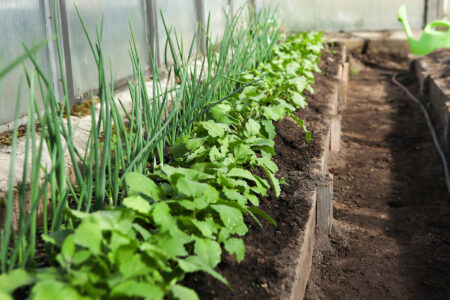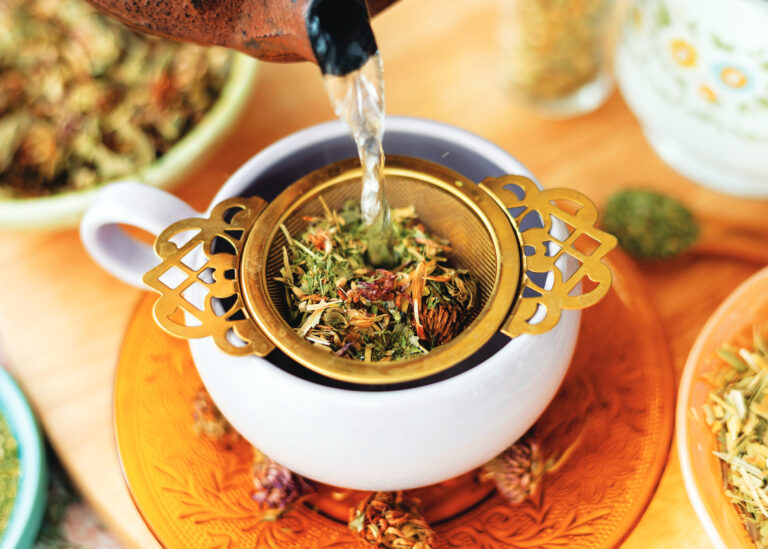
Alfalfa, oats, and red clover sprout quickly and are great choices for improving the health of garden beds while also delivering a nutritious crop for your cup.
Many gardeners seed these plants when their main crops are finished for the season. This gives the soil a chance to rest, as the cover crops hold moisture, prevent erosion, reduce weeds, and build organic matter as they grow. Some cover crops, including alfalfa and clover, store nitrogen from the air and then fix it in the soil after breaking down or being chopped and dropped, reducing the need for fertilizer.
And if you don’t grow these plants yourself, they’ll be easy to find. Most herb shops carry dried alfalfa leaf, oat straw, and red clover.
Benefits of These 3 Herbs
- Alfalfa (Medicago sativa) has a long taproot that stretches far down into the soil, sometimes more than 20 feet, pulling up minerals from layers where other plants don’t grow. Many people know alfalfa as a sprout, but the dried leaf makes a cooling and nutrient-dense tea. Alfalfa leaf contains vitamins B, C, E, and K, and it’s considered a mineral tonic because of its rich calcium, iron, magnesium, and potassium content.
- Two parts of the oat plant (Avena sativa) can be used for making herbal tea. In spring, harvest the milky seed tops, which are ready to pick when you squeeze them between your fingers and a sweet white sap is released. Then, harvest the top 6 inches of the oat stems. This plant has a short harvest window before it turns to dry fluff. Once harvested and dried, brew the upper stems and milky oat tops together into a nutritive tonic tea that supports the bones, helps with chronic stress, and is restorative to the nervous system. Enjoy this mild tea that’s full of calcium, magnesium, iron, and B vitamins.
- Red clover (Trifolium pratense) thrives just about everywhere. You’ll see it in fields, meadows, and along roadsides. The blossoms contain calcium, magnesium, potassium, and vitamins C and K. The flowers come in succession for months, and they make a great tea for supporting skin and healthy lymph flow. Red clover has a mild flavor and can be mixed into any herbal tea blend. It does contain phytoestrogens, so anyone taking estrogen should approach it with care.
Dry Homegrown Herbs
If you grow these cover crops in your garden, dry the harvest for your DIY tea blends (such as the recipe below). Spread the flowers or leafy stems in a single layer inside a wide basket. Keep them in a cool spot out of direct sunlight and where air can move through. Check them now and then. Once they feel crisp and the stems snap, store them in jars.
Alfalfa, Oat, and Red Clover Tea
When you add up the vitamin and mineral content of your cover-crops-turned-herbal-tea, you can understand why these herbs are good for your health. It’s not that they cure something specific; instead, they provide foundational nutrition your body needs to create healthy cells and rejuvenate. For a deeper extraction of the minerals, this tea needs a longer steeping time than most. Because of the long steeping time, I usually make a quart at a time and drink it throughout the day.
- 1/4 cup dried alfalfa leaf
- 1/4 cup dried oat straw or milky tops
- 1/4 cup dried red clover flowers
- Combine the herbs in a jar so they’re ready to scoop when needed.
- Use 2 teaspoons of the blend per cup of hot water.
- Pour hot water over herbs and let steep for 1 hour. Strain, reheat, and drink.
Originally published in the April/May 2026 issue of MOTHER EARTH NEWS and regularly vetted for accuracy.