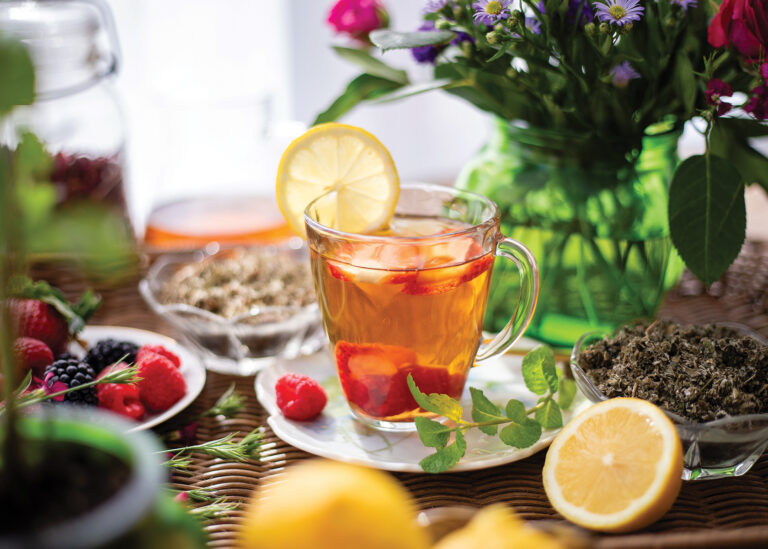
Save the leaves from brambles to reap the blackberry and raspberry leaf benefits given by simply drinking a cup of tea.
Many homesteaders grow blackberry (Rubus spp.) and raspberry (R. idaeus) bushes for their sweet fruits. But I like to remind people that their bushes have a secondary harvest in the leaves, which have been traditionally used to brew tea for drinking, gargling, and applying to irritated skin.
Raspberry Leaf Benefits
Raspberry leaf tea is a nutritive tonic full of vitamins, minerals, and antioxidants. It’s high in vitamin C, iron, calcium, magnesium, and potassium. The tea is cooling and has a mild flavor.
Raspberry leaf tea is known to help with nausea and menstrual cramps. It also makes a superb compress for cooling red, itchy, irritated eyes. Soak a clean washcloth with well-strained raspberry tea and cover eyes with the cloth. The tea-soaked cloth should be warm, but cool enough to be comfortable on the eyes.
Blackberry Leaf Tea Benefits
Blackberry leaf tea is higher in tannins and more drying than raspberry leaf. It’s also cooling, but because it’s more bitter and drying, I mostly use it as a topical herbal remedy.
The tannins give the leaves an astringent action that’s beneficial for many home remedies. As a topical astringent, it tightens and tones tissue and is used as an external remedy to soothe and cool skin tissue. Make tea with 2 cups of water and 4 tablespoons of blackberry leaf. Strain it and use it for any of these situations:
- Tea compress for cuts, scrapes and skin eruptions
- Mouthwash for inflamed or spongy gums
- Gargle for a sore throat
- Compress for tired, sore eyes
- Poultice for bee stings and acne
- Sitz bath for hemorrhoids
Harvest Bramble Leaves
Harvest the leaves in spring or early summer before the plants flower. Look for vibrant green leaves and skip any that have holes, spots, or discoloration. A small pair of clippers will make it much easier to work around thorns. Take a little from here and there rather than from one plant.
Put them in a single layer on a basket or screen and place them out of the sunlight. Check every once in a while to make sure they aren’t sticking together. You’ll know they’re done when they feel crisp and break easily.
How long it takes for them to dry will depend on your climate. If you live in a humid environment, don’t bother air-drying; use a dehydrator on its lowest setting instead. Once the leaves are dry, put them into labeled jars.
Summer Garden Sun Tea Recipe
Summer is a great time to use these leaves, as they have a cooling effect on the body. This blackberry and raspberry leaf tea steeps gently in the sun. The leaves alone can be too astringent and bitter for some people. I like leading with other seasonal plants that grow right near the raspberry and blackberry in my garden, such as mint and lemon balm, and then adding raspberry and blackberry leaves as secondary ingredients. The apple helps balance the dryness of the Rubus plants and adds more flavor. This refreshing, nourishing tea can be made with fresh or dried plants.
- 2 tablespoons lemon balm (Melissa officinalis)
- 2 tablespoons fresh chopped apple
- 2 tablespoons raspberry leaf
- 1 tablespoon blackberry leaf
- 1 tablespoon peppermint (Mentha spp.)
- 1 tablespoon rose petals (Rosa spp.)
- 8 cups water
- Place herbs into a clean 1/2-gallon glass jar. Fill with room-temperature water and cover loosely with a lid.
- Set in direct sunlight for 2 to 4 hours. Then, strain the tea and refrigerate.
- Serve with fresh berries, lemon, and a sprig of mint.
– Kami McBride
Originally published in the June/July 2026 issue of MOTHER EARTH NEWS and regularly vetted for accuracy.