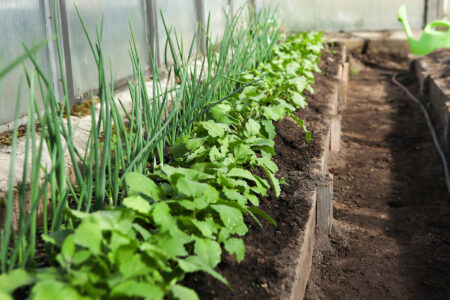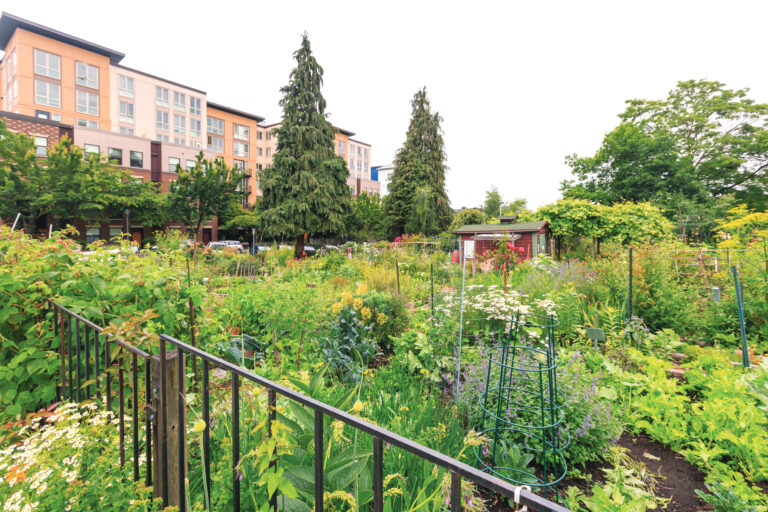
Grow a modern victory garden — including choosing the best crops for a victory garden — to save money, feed your family, build community, gain food security, and resilience.
Take a stroll through a garden store and glance at the prices. Gardening is big business! From designer tools to “magic” plant foods; trendy pots to grow lights and towers; composting contraptions to bagged mulch, soil, and fertilizers; and big-promise gimmicks with big price tags, the longer you look, the more it will seem that gardening is only the pursuit of the upper crust who can actually afford it. If you were to buy absolutely everything you needed to grow even a small plot of vegetables, you’d very easily break three figures, and if you wanted to get enough to grow a more subsistence-level amount of food, you could push the four-figure mark in no time.
It doesn’t have to be this way. Growing food for your family has been the inheritance of humans since the beginning of agricultural history. All around the world, regardless of their level of financial accumulations – heck, before paper currency was even a concept – many who had access to a bit of ground have grown food to eat. It’s woven into our human nature to secure what we want to eat with the resources we have on hand. The huge budget supposedly needed for a garden plot is really as modern an invention as the microwave.
If you don’t want to burn through a huge wad of dollars just to grow a tomato, you don’t have to. If you don’t want to source soil, fertility, seeds, and tools from outside, out-of-your-control sources, you don’t have to. The true cost of a thrifty garden is time, not dollars. So if you don’t mind putting in a little extra sweat and hours of work, repurposing nearby materials, and shirking modern conveniences, you can have a productive, diverse, thriving food plot for, if you’ll pardon the pun, dirt cheap. Here’s how to do it.
Make Your Own Soil
Soil can be bought in plastic bags or purchased by the truckload, but it can also be created. After all, in the thousands of years before our modern era of plastic-bagged dirt, folks were growing and making soil with the materials they had at hand. Some seasoned gardeners quip that they’re really growing soil – they just happen to have vegetables sitting on top of it.
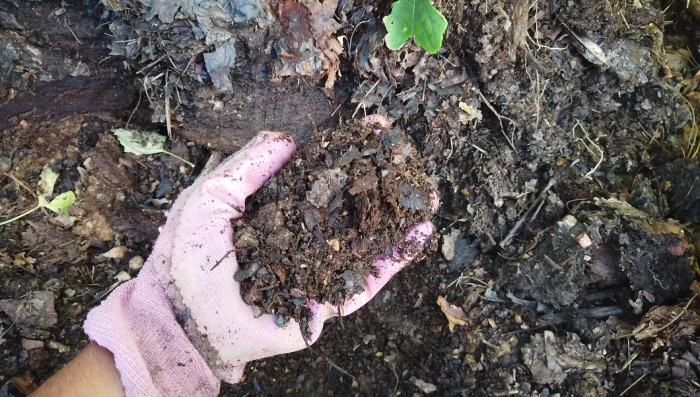
Making soil is easy and accessible – it just takes an investment of time, rather than cash. The most basic formula for growing soil is to compost like a forest floor: Gather as much organic material (free from pet waste, pesticides, and lead) as you can, pile it up, let it rot, and then spread it in the garden. If you have chickens or goats, all the better – their manure and soiled bedding are excellent additions to your soil. Now, you can’t grow in this right away (let that manure and everything else properly age at least a few months and become safe), but this manner of cold composting requires no purchases and no special equipment. In this manner, “waste” – including manure, leaves, grass clippings, bark, and food scraps – suddenly becomes precious material to gather wherever possible. It all gets funneled into the garden soil, which, over time, will increase in fertility and friability.
In this simple manner, I’ve taken the past six years to transform a rocky outcropping into thousands of square feet of loamy garden. I can’t begin to guess how many wheelbarrows of material I’ve transported since I first ripped the grass out (and threw it in the first compost pile, of course), and the result is dark, crumbly soil that cost me plenty of sweat and time, but not a single penny.
Find Your Tools
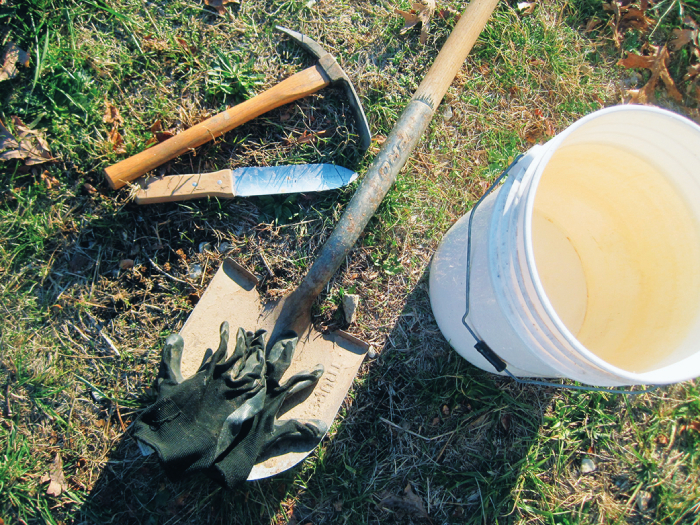
There are hundreds of tools you could purchase, each of them promising to make gardening more easy, ergonomic, and efficient. They often come with big-ticket price tags, which can make getting started quite intimidating. Thankfully, however, you can accomplish most gardening tasks with just a few basic tools. This is my personal list of must-haves:
- Hori hori knife. This wonderful Japanese tool is spade, weeder, and harvesting blade all in one. I find it essential for transplanting, as it makes neat little slices and perfect holes for seedlings.
- Shovel. You can’t dig a hole or plant a tree without one!
- Hand mattock. This is a pickaxe in miniature, and I use it every day for levering out grass clumps, removing stones, and making furrows.
- Gloves. Forget about the fancy-schmancy gloves with touch-screen compatibility. A pack of nitrile-dipped fabric gloves will cost less and work just as well.
- 5-gallon bucket. This is easy to find, as food-grade 5-gallon buckets are a common container in the restaurant industry. My bucket is indispensable as a water lugger, compost hauler, and weed collector. And even when the buckets’ bottoms give out, they can instantly be converted into planters big enough to handle tomatoes and squash.
These tools can be acquired in several ways. You can just buy them, of course. I personally believe it’s worth investing in good tools once rather than cheap, easy-to-break tools several times, and I’ve bought most of my trusty tools “normally.” That said, if you’re patient, you may be able to collect a good assortment of tools by perusing garage sales and antique malls, or keeping an eye on your local Facebook Marketplace or Buy Nothing groups. Some libraries have a tool library where you can check out tools for short-term use, just like a book. Finally, many big-box stores will sell garden tools at an extreme discount at the end of the so-called “gardening season” in early fall to make room for throwaway plastic holiday décor.
Start Your Own Plants
One of the bigger ways you can save a bundle on your garden is by starting your own plants from seed rather than buying starts at the store. Consider how, at my local Walmart, one ‘Beefsteak’ tomato seedling is a whopping $25.95 (as I write this in March 2026). Meanwhile, a packet of ‘Beefsteak’ tomato seeds from that very same Walmart is $2.96 for 270 milligrams of seeds (roughly 50 seeds). Granted, those seeds take more work and time to get started, but you’ll actually get a garden’s worth of tomatoes rather than a couple of debatably healthy, potentially pot-bound plants.
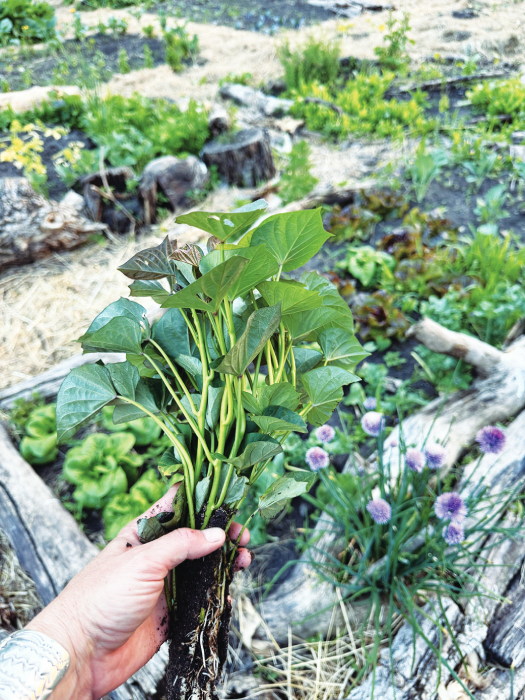
Starting from seed also gives you an enormous range of cultivars to choose from. Most people who use starts for their tomatoes are often limited to ‘Better Boy’ or ‘Early Girl’ hybrid tomatoes, as these are the ones typically stocked in stores. There are thousands of tomato varieties in flavors, colors, and sizes beyond your wildest dreams.
Save Your Own Seeds
Of course, if you really want to go cheap, there are plenty of ways to get seeds for free. Look for local free seed libraries and seed swaps. You can even grow plants from a lot of the food you may already have in your home – dry beans, final-color peppers, tomatoes, seeds that are used as spices, and winter squash can all yield bountiful seeds for your garden.
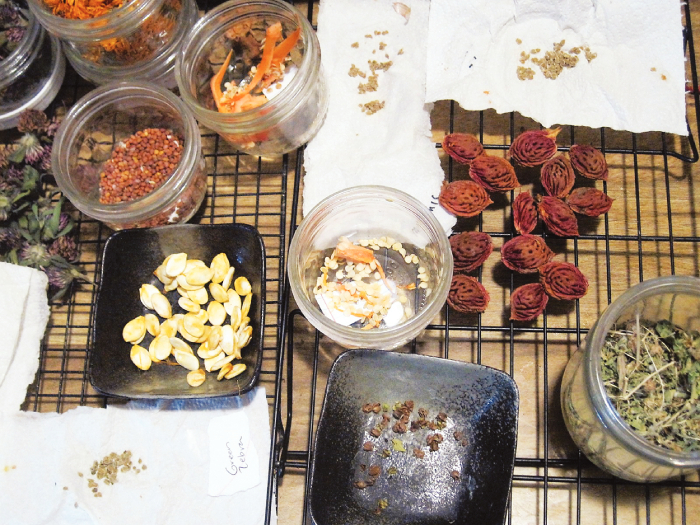
The absolute best way to make your garden thriftily self-sufficient, however, is to save your own seeds from your own plants, year after year. Not only will this eliminate an annual seed purchase, but it will also allow you to grow ever-more-adapted plants that are custom-fit to your specific climate.
Salvage Your Seed-Starting Containers
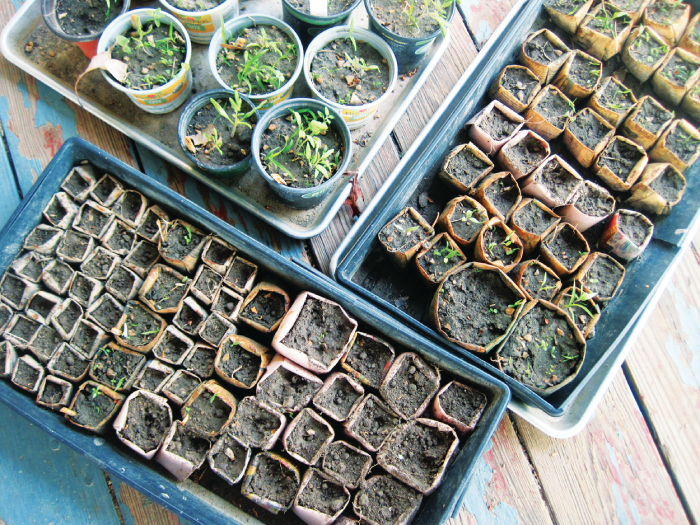
Old yogurt cups, the bottoms of gallon jugs, cardboard egg cartons, mushroom containers, toilet-paper tubes, or carefully folded newspapers: The list of containers that can be used to start seeds is long and impossible to compile. If you choose to become self-reliant with your seed-starting efforts, the results won’t be picture-perfect, but I encourage you to enjoy and embrace the patchwork effort. The intense modern efforts to make gardening look picturesque at all costs really does result in unnecessary purchases and plastic waste! Whatever container you use, be sure it has good drainage (you can use a screwdriver to poke holes, if necessary).
Collect Your Own Fertilizer
You may not realize it, but if you’re not taking certain medications, you’re an excellent source of absolutely free fertilizer for your plants. Yes, I’m talking about your urine, but before you dismiss the notion as “too icky,” bear in mind that the high nitrogen levels of human urine have been both studied and promoted as a safe, inexpensive fertilizer by such institutions as the University of Cambridge, the American Chemical Society, the University of Eastern Finland, the Rich Earth Institute, and the National Agronomic Research Institute of Niger.
An adult human generally produces enough nitrogen in their urine to fertilize their own supply of vegetables. In the case of nitrogen-hungry plants, such as corn, the application of urine diluted 1-to-8 with water or greywater (the water left over from washing dishes, bodies, or clothes) dramatically improves yield. I’ve seen this in my own plants as well as those featured in the studies I’ve mentioned above. To that end, recycled milk-gallon jugs make convenient collectors, dilution vessels, and applicators for your self-made fertilizer.
I know I might’ve lost some of you with this one, but if you want much more in-depth, cited, and field-tested research on this topic, you can read more from Urine as Fertilizer, where I have links to all the research studies mentioned. Just consider this before we move on: Human-made fertilizer is universally accessible and freely available, lessens the load on our septic systems, and doesn’t benefit the bottom line of those Big Ag chemical-pushers. Perhaps that’s why you’re not going to hear much about it elsewhere.
Gather Your Own Mulch
One of the best ways to add organic material to your soil, retain moisture, and suppress weeds is a healthy layer of mulch in the garden. Thankfully, you don’t have to pay for bags of wood chips or rolls of one-use plastic mulch if you don’t want to. Cardboard, grass clippings, fall leaves, and old hay or straw make dandy mulch, usually for the low price of moving it to your garden from wherever you collected it. You can even collect your neighbors’ unsprayed lawn clippings and autumn leaves, if they’re willing to share. I make a habit of collecting mulch throughout the year by storing leaves and piles of grass clippings in a host of recycled rings made of old fencing. Come mulching time, I delve into my extensive hoard of slightly decomposed material with glee.
If it’s wood chips you’re after, check in with a local arborist or consider signing up as a drop-off point for Chipdrop. This free service dumps a truckload of mulch off at your place – it’s a way for the logging industry to get rid of an unwanted byproduct without adding to landfills. The mulch you’ll get won’t be the perfectly pretty graded and colored mulch you buy by the bag, but it will do the same job.
Grow Sprouts
Now, all of that said, some landless folks will probably read this article with a sigh, knowing that it’s impossible to garden without a garden. To them I say, if you grow sprouts, it’s not true! Sure, you might not be able to grow ‘Beefsteak’ tomatoes or a huge squash vine, but if you have a jar and water, you can grow your own fresh vegetables without access to the ground or even a window.
You could buy a dedicated sprouting contraption, but all you need is a glass jar – any recycled glass jar could work – and a breathable cover for the opening. A cloth secured with a rubber band can work, though I’m a fan of the stainless-steel wire-mesh lids.
There are many different seeds you can sprout, but mung beans are probably the easiest. The resulting sprouts are incredibly nutritious and incredibly easy to produce. What’s more, they’re probably one of the cheapest foods you can produce for yourself – 1/4 cup of dry beans, when rinsed and drained 2 or 3 times a day, will grow into more than 8 cups of fresh, nutrient-dense veggies in the space of about a week.
Gardening gives us food in exchange for our thoughtful efforts rather than our paychecks. I hope that this (incomplete) list of ideas is encouraging proof that you can fill your harvest basket without emptying your wallet. Now, what should we grow?
Grow a Modern ‘Victory Garden’ (But Make It a Resilience Garden Instead!)
You may be familiar with the concept of a victory garden, but if you’re not, here’s a quick refresher. World War I was a time of incredible chaos, and American supply chains were catastrophically broken as European imports were disrupted. Add in the pressures for farmers to supply food for the war effort rather than civilian life, and a lot of people were left without the food they wanted and needed. As a way to build morale, lighten the demand for fresh vegetables, and galvanize the public with a feeling of patriotism, the National War Garden Commission was founded. Its goal was to incentivize and encourage the civilian public to plant food in every available area of previously uncultivated public and private land, including lawns, the edges of baseball diamonds, rooftops, and vacant lots.
When World War II broke out, the concept was promoted and widely practiced again, both in the United States and abroad. It’s estimated that hundreds of tons of food were produced in this way.
In our current times, I’ve heard of preparedness-minded folks talking about reviving the concept. Now, while I’m all for more people gardening and eating their own vegetables, I’d like to do a bit of rebranding, if I can be so bold. The (somewhat propagandistic) nature of the victory garden hinges on war and is propelled by fear of future deprivation. When so-called “victory” is achieved, the eponymous gardens have basically lost their reason for being (which is why so many of those WWI and WWII gardens quickly ceased to exist come peacetime). I’d propose that we collectively plant “resilience gardens” instead.
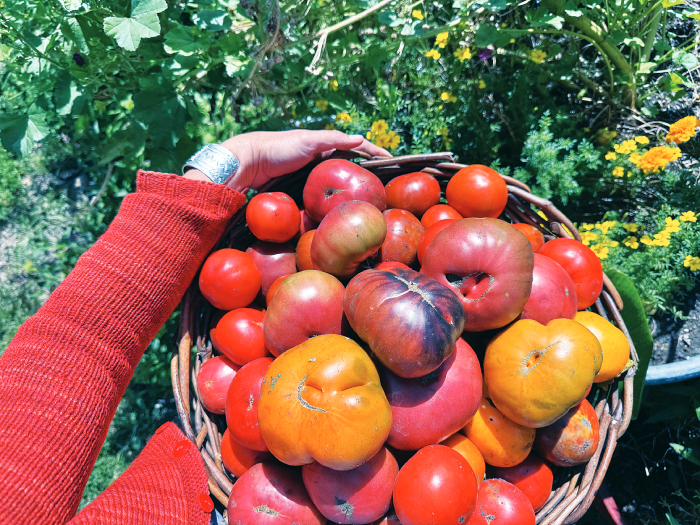
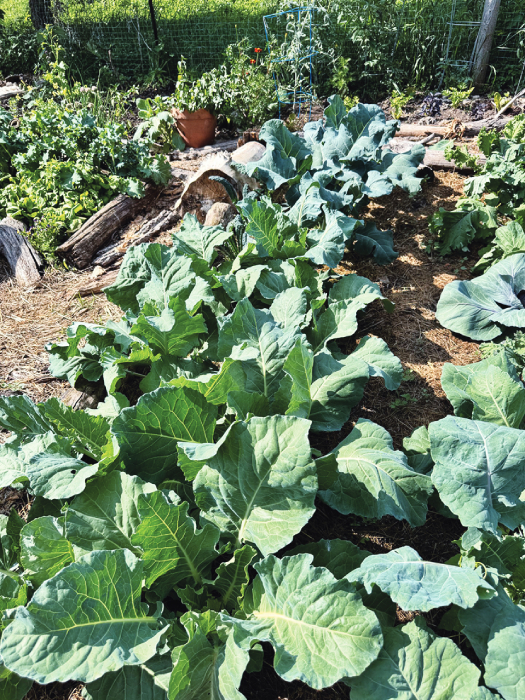
A resilience garden isn’t planted out of fear, nor is it necessarily connected to the ever-changing daily news, but it’s planted out of a desire for independence and self-sufficiency in both good times and bad. A resilience garden, like its wartime predecessors, can and should be planted anywhere and everywhere available ground can be found. A bit of earth might be located on the grounds of religious buildings, at the edges of libraries and schools, in a raised bed in the business parking lot, and, of course, in any bit of earth in your own yard, if you have it. If you’re worried about a homeowner’s association getting fussy, try planting colorful varieties that are as ornamental as they are edible. You can also garden in prepared straw bales if you’re living in a place short-term: They can be easily broken down at the season’s end and removed without leaving much of a trace.
A resilience garden uses all the thrifty tips I’ve listed in this article – it sources soil, seeds, and fertility from local, accessible sources. And a resilience garden is rewarding as well – there’s nothing that can replace the feeling of eating your own produce from your own land, no matter how big or small that land might be.
Best Crops for a Victory Garden
If you want to start your own resilience garden this year, the best way to begin is to decide what vegetables you need most. Though you might not be able to grow your own staple grain (though if you can plant a patch of wheat, corn, sorghum, or amaranth, by all means do!), you can plant potatoes, beans, onions, greens, tomatoes, and medicinal herbs in surprising places and space-saving arrangements. Whatever plants you decide to put in your resilience garden, make sure they’re ones that you’ll actually harvest with a will and eat when ripe (I still feel morose when I think about the gorgeous turnips left to rot in my community’s own “garden club” plot). There’s no point in growing vegetables for resilience if they go to waste. (This may require you to expand your cooking expertise; that’s a good thing!)
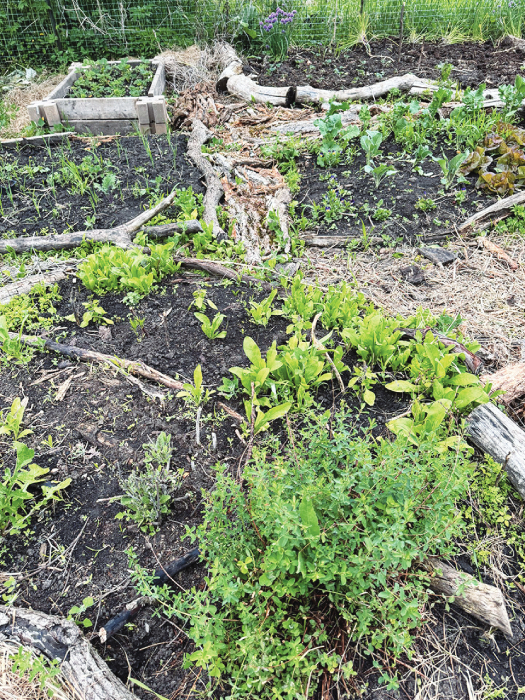
For ultimate food production, I heartily recommend planting crops that offer multiple harvests from one planting. This includes my beloved (and often overlooked) turnips (Brassica rapa), which offer tasty, storable bulbs, ample leaves, and edible flower stalks; cowpeas and long beans (Vigna unguiculata), which offer edible fresh pods, dry beans, and edible leaves (and can be grown vertically, saving space!); or sweet potatoes (Ipomoea batatas), which produce both nutritious tubers and supremely edible foliage. Herbs and flowers are also easy to tuck between bigger plants. Consider calendula (Calendula officinalis), tulsi (Ocimum sanctum), or dill (Anethum graveolens) for flavor, tea, healing, and attracting pollinators.
Grow for the Greater Good
Resilience gardens can go beyond your own backyard too. Maybe you and a neighbor or friend can work out an arrangement – your work for access to their garden, and shared produce as a result! Perhaps the produce grown on church grounds can be canned and used to stock a food pantry or be featured in shared community meals. The seeds saved from any gardening endeavor can be shared freely, both hand to hand or in a local seed library or seed swap. The more you look for ways to build up food security both for yourself and for your neighbors, the more ways you’ll discover.
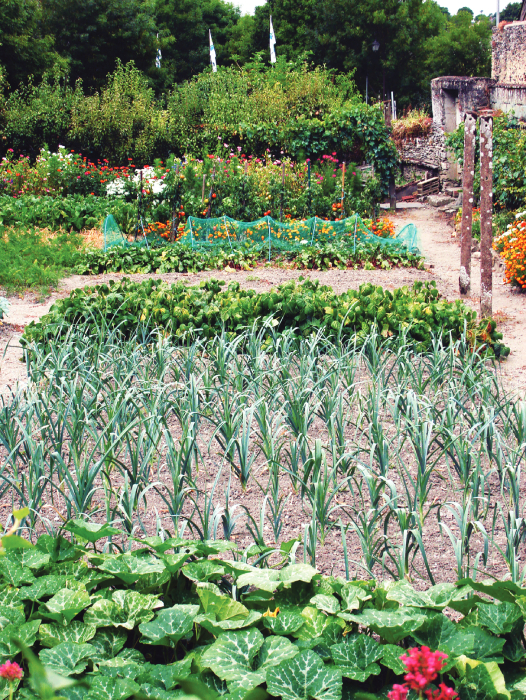
Most of all, resilience gardens give a bit of local stability to anyone who grows them. When you depend on supply chains that are outside of your control – and subject to the whims and disruptions that come in a volatile world – you can feel powerless and vulnerable. Growing your own food is the exact sort of calm, productive, and useful work that makes us a little more happy, healthy, connected, independent, and resilient – no matter what the future brings.
Cultivate Food and Knowledge
- Save Seeds with Small House Farm
- Safely Compost Your Waste into Garden Gold
- Companion Plants Are Happy Together
Wren Everett and her husband quit their teaching jobs in the city and moved back to the land on 12 acres in the Ozarks. There, they’re learning to live as modern peasants, off-grid, as self-sufficiently as possible, and quite happily.
Originally published in the June/July 2026 issue of MOTHER EARTH NEWS and regularly vetted for accuracy.