

Movers and shakers are all around. Here are some celebrities doing right…
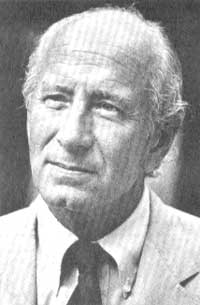
Congressman Jim Weaver Aims to Turn Waste Into Energy
Every spring and fall, smokestacks smear the blue skies
over Oregon’s forests with haze as thousands of tons of
logging slash are burned to clear the ground for
reforestation. The goal of Congressman Jim Weaver
(D-Oregon) is to turn that waste into useful energy and — at the same time — to create jobs and reduce
pollution.
Since much of the slash is produced on government-owned
forest lands, Weaver decided that government agencies
should take the initiative in reclaiming this resource. So,
the legislator sponsored the Wood Waste Utilization Act
(which is now law) to provide monetary incentives which
will — it’s hoped — prod such agencies as the
Forest Service to sell their waste slash to small
independent logging companies. The same agencies are now
also responsible for helping to make the slash-recovery
operations more profitable by researching new equipment and
methods.
Once it’s out of the forest, however, the slash still needs
to be used wisely. To aid that effort, Weaver visited a privately owned wood-waste thermal plant in
California that produces electricity for a mere 4¢ per
kilowatt hour … and also provides 500 jobs based on a
Forest Service guarantee of a constant 30-year supply of
wood-waste. Impressed by what he saw there, the Oregon
lawmaker is now arranging funding for the establishment of
similar plants in his state, and working out a slash-supply
agreement with the Willamette National Forest. In
recognition of his efforts, the Wood Energy Institute
recently proclaimed Congressman Weaver the “Champion of the
West.”
Jim has made energy conservation a part of his day-to-day
life, too. He’s installed a solar water heater and had a
solar greenhouse added to his well-insulated home, attached his stationary exercise bicycle to a battery
storage system and plans to construct a wind
generator. His ultimate goal is to have an
energy-independent house in an energy-independent
state.
Amory and Hunter Lovins Star in an Eco-Documentary
Amory and Hunter Lovins — the husband and wife team
whose concept of the “soft path” to a renewable technology
helped spark today’s widespread interest in alternative
sources of energy — are the stars of a recently
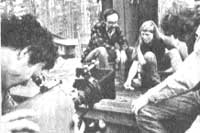
released film called Lovins on the Soft Path
(Bullfrog Films, 1982), a 36-minute documentary that
attempts to present the basic principles that, if followed,
could bring about an economically viable future. The film
poses three critical questions: How much energy do we need?
What kinds of energy? Where can we get it?
The point of the project is to make viewers aware of the
fact that — as Amory puts it — “We’re in the
position of somebody that can’t keep the bathtub full
because the water keeps running out. Before we buy a bigger
water heater, we ought to get a plug.”
The Lovinses — whose busy schedule as energy
consultants includes speaking engagements, environmental
research projects, and more — agreed to make the film
in order to bring their message to a greater audience and,
as the president of Bullfrog Films says, to encourage
“resourcefulness, thrift, community action, and democratic
decision-making.” The production is available for sale in
16mm film or video-cassette form and can also be
rented — in 16mm only — by schools, churches,
public libraries, industries, or civic groups for $75 (for
three days) plus shipping and handling.
Race Car Driver Junior Johnson Renovates an Old Home
Even those who live
“in the fast lane” sometimes need to retreat. And that’s
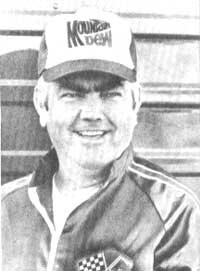
probably why Junior Johnson – a race car builder and
former NASCAR driver — recently turned a 150-year-old
cattle barn into a peaceful Blue Ridge Mountain home for
himself and his wife Flossie.
After first carefully identifying each log with a numbered
tag, Johnson removed them from the livestock structure one
at a time and then reset them in the cabin in their same
positions. The 10-inch-thick logs are all interlocked by
hand-hewn notches and joined with cement mortar. To build
the house’s foundation and two chimneys, the Johnsons
gathered 10 tons of blue granite field-stone from the
surrounding hills. Native oak and pine were used to form a
front porch, as well as the large overhead beams and pegged
floors inside the house. The couple also salvaged
planks from the old barn to build a pair of Dutch doors and
a massive bed headboard.
The cabin is surrounded by thick woods and a mountain
creek. And, in the fall, rows of cabbages and wild
mushrooms vie for space in the yard. Only their love of
racing lures the Johnsons away from their Appalachian
retreat: On Sundays, fans can watch Darrell Waltrip driving
one of junior’s cars.
In Brief …
- Tom Brown, Jr. (author of MOTHER EARTH NEWS’ “At Home in the
Wilderness” features) recently published a new edition of
his book The Search (Berkley Press),
describing his year-long retreat into the wilderness. - Rene Dubos — well-known microbiologist and environmentalist — died several months ago in New York City.
- The author of The Passive Solar Energy Book
(Rodale Press), Edward Mazria, is one of the
architects of a newly built solar-heated library in Mt.
Airy, North Carolina. - Companion bills designed to
control acid rain have been introduced in the House and the
Senate by Congressmen Toby Moffett (D-Connecticut) and Judd Gregg (R-New Hampshire), and Senator George J. Mitchell
(D-Maine).






