

PODCAST TRANSCRIPT
Jon Thomas: We actually started growing einkorn because of some family members that had a gluten sensitivity. And we did I think what a lot of people do and we started using alternatives, almond flour or, other things.
[00:00:15] But again, they just don’t taste like wheat and so through some, some research that was done we learned about einkorn and this property of it being digestible, because it’s so much simpler and hadn’t gone through this hybridization process.
[00:00:33] We ordered some flour. We brought it home, made some bread and it worked, it could be eaten without these reactions. And then the more we researched it and found out about the nutrition qualities and just all these things that, you know, from a health and wellness standpoint, we thought, “Man, everybody should be eating this.”
[00:00:57] Josh Wilder: Welcome to the Mother Earth News and [00:01:00] Friends podcast. At Mother Earth News, for 50 years and counting, we’ve been dedicated to conserving the planet’s natural resources while helping you conserve your financial resources. In this podcast, we host conversations with experts in the fields of sustainability, homesteading, natural health, and more, to share all about how you can live well wherever you are in a way that values both people and our Mother Earth.
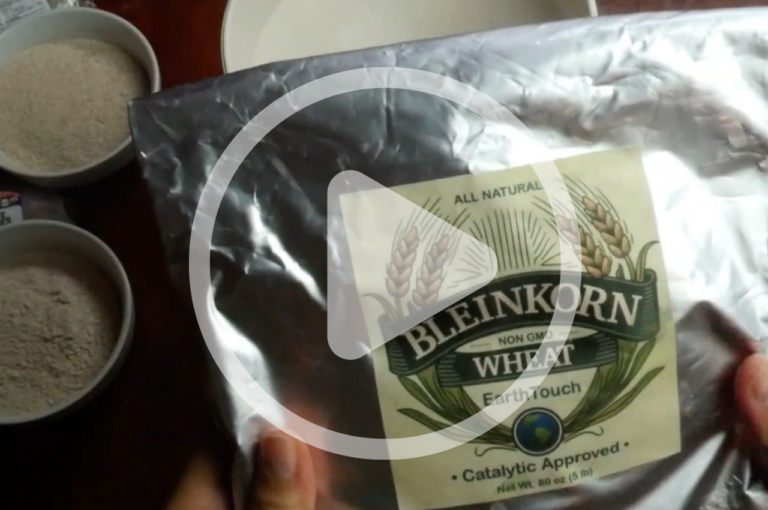
[00:01:25] Discover Bleinkorn, the original cultivated wheat on Earth. With just fourteen chromosomes and a simple gluten structure, it’s naturally easier for your body to digest. Modern wheat, forty-two chromosomes, the result of repeated hybridization over the last century. Heavily bred, then ultra-processed into something your ancestors would never recognize.
[00:01:47] Bleinkorn is different. Grown regeneratively in Missouri, it stays close to the grain that fed the first farmers. Rich, nutty, and gentle. Nourish yourself with the original. [00:02:00] EarthTouch.com.
[00:02:02] Lois Hoffman: ‘; Each grain has three parts to it. The bran is the outside, the hard layer of the kernel grain. The endosperm is the middle part. It has starch and proteins. And then the germ is the way inner part. It’s where you would start a new plant from, and it has the vitamin E, antioxidants, and healthy fats.
[00:02:22] They take all this stuff out to make modern flour, and then they bleach the modern flour to make it white, and then they add preservatives back in. So basically, what you’re ending up with is nothing like the original grain itself. And each of the ancient grains and the heritage grains has all three parts of these intact, and all of these has their own flavor profile, a lot of it depending where they was raised, like different parts of the country.
[00:02:49]
[00:02:49] Josh Wilder: Welcome to this episode of Mother Earth News and Friends. I’m Josh Wilder, and the voice you just heard was Lois Hoffman, the author of the new book, The Essential Guide to Baking With Ancient Grains. [00:03:00] And before that, you heard the voice of Jon Thomas, the president of EarthTouch. And we’ll be hearing from both of them during this episode.
[00:03:09] But first, Lois.
[00:03:12] So what inspired you to focus on ancient grains, and how does incorporating them into home baking align with a sustainable kitchen lifestyle?
[00:03:20] Lois Hoffman: To answer that question, I’d have to go back to really where it all started. When I was a child, my great-grandparents on my mother’s side was from Germany, which they baked a lot. My great-grandparents on my dad’s side was Amish, and of course, they baked a lot. So it was just natural.
[00:03:38] That’s how I grew up. Us three kids thought that every kid grew up having cookies and pastries for breakfast, cake for lunch, and pie for supper so that’s where that started. And every Saturday morning, we would bake for the whole week. We’d spend, we’d bake pies, cakes, cookies, because we was busy, because we had a farm.
[00:03:58] We had a truck patch where we [00:04:00] raised potatoes and sweet corn, sold by the roadside, and a personal garden. So we was busy all week long. And whatever we didn’t raise, we would like U-pick at farms, like blueberries, peaches. We’d go there and pick, and we preserved all this. We butchered our own meat. We had hogs, cattle, and chickens.
[00:04:18] So we really didn’t go to the store for a lot. This is just how we grew up, and we just figured that was a way of life. So when I got older, I continued that. And I didn’t think too much about it, but I always remembered my grandparents. We live in Southwest Michigan. My grandparents would always go over the line to the northern Indiana to a, a mill called Greenfield Mills and buy buckwheat flour that was freshly milled there, and they made the best buckwheat pancakes.
[00:04:45] I still make them to this day. So anyway, we continued doing that, and I really didn’t get into the ancient grains until I have a friend. Her name is Steph, and she’s, does not have celiac disease, but she’s gluten intolerant. [00:05:00] So if you can imagine, every time her and her husband came for supper, flour is in just about everything.
[00:05:06] We couldn’t make desserts without having flour in them. She couldn’t eat them, and it was really hard to cook for her. And one time she come over, she mentioned she could eat stuff made with Red Fife flour, and I had no idea what that was. So being a researcher, I started researching a little bit what Red Fife was, and lo and behold, the same mill where we used to go and get the buckwheat flour was now milling Red Fife flour.
[00:05:30] And so I went down and talked to him. And what he did, he would mill it that day, and he made sure whatever he milled that day was fresh, and he would deliver to the local stores. And so I talked to him a lot about why it was better for everybody, and it’s not an ancient flour. It’s a heritage flour, which is like kind of the middle of the road.
[00:05:50] And he explained about all the other flours that was out there. So I did a little more research, and I found there’s just tons and tons of different ancient [00:06:00] flours. And so I started experimenting with them. And after researching, I found that they are so different from the modern flours that we know today because modern flours, I don’t care if you buy Pillsbury or Gold Medal or King Arthur, they’re all basically the same.
[00:06:20] Everything that’s really good in flour has been stripped out of them. And ancient grains, like einkorn, which is one that I will talk about that I use a lot, that dates back 10,000 years ago. And to this day, the genetics for einkorn has not changed from what it was 10,000 years ago, which makes them better for us so I started baking with these ancient flours, and at first we really didn’t like it because it was such a different, they have a different flavor, they have a different texture.
[00:06:53] And so I started little by little incorporating them, and we finally found out that after we ate baked goods [00:07:00] made with these flours, we didn’t have that heavy, bloated feeling like we did with the modern flours. So that’s why I started, and that’s what brought me to writing this book, because my friends and family started using these, and we just feel so much better, and I wanted to share it with everyone else.
[00:07:19] Josh Wilder: That’s great. Appreciate that.
[00:07:21] Lois Hoffman: Yes
[00:07:22] Josh Wilder: And so the book Baking With Ancient Grains: The Essential Guide it covers seven favorite ancient grains. Which of these do you recommend folks start with if they’re completely new to working outside of standard flour?
[00:07:35] Lois Hoffman: Okay. I can’t choose one, I’m gonna choose two, and I’ll explain why. First of all, if they have never worked with these ancient flours before, I would suggest starting with spelt, just because it is, it acts the closest to modern flours. You can take a recipe and switch your modern flour out for spelt, and you won’t notice a lot of difference, and that’s a good place to [00:08:00] start. However, anybody starting out, please don’t make the mistake that I did. Start out a little bit at a time. Take 15% of the flour that your recipe calls for and swap it out and put the ancient flour in. If you like that, go up to 25% and 50%, because they do taste different, they act different, and your taste buds, your body, needs a chance to get used to them.
[00:08:23] Me, on the other hand, I was so anxious to start that I just swapped it out 50/50 right away, and we decided we really didn’t like them. And I thought, “Now, this is strange,” because everybody else says how good they are, but it was too much of a change too soon. So as they say, less is more. Start small and work up from there And the other thing to remember is not every flour is meant for everything.
[00:08:48] Modern flour, you can use it for pie crusts, cakes, breads, and the ancient flours you can too, but each one is so different that they all don’t work for the same [00:09:00] thing. Okay, take buckwheat for example. It’s great for pancakes, but it is gluten-free, so it’s great for people that can’t take gluten.
[00:09:08] However, you need gluten if you wanna make bread. Don’t make a loaf of bread with buckwheat, ’cause I guarantee you will not like it. On the other hand, if you want something like with a lot of fiber, you wanna go for barley. It has, of all the seed grains, that has the most fiber of any of them. So you wanna try f- barley if you want a lot of fiber in your diet.
[00:09:28] So anyway, that’s the first one that I would rec- recommend, is spelt. The second one is einkorn. Number one, not just because it’s one of my favorites, but because this woman, her name is Victoria Pruitt, and she has a website called A Modern Homestead, and she developed this app for einkorn, and you can take any home recipe, any recipe you find on the internet, and you plug it in to this app, and it will adjust all the ingredients, the flour, the [00:10:00] water, the yeast, and everything, for what works best with einkorn.
[00:10:03] So it takes the guesswork out of it. Everything turns out perfect with that, and it’s great. I wish there was an app for every single ancient flour out there like this. And with this app, it’ll take also it will convert not only for the yeast, for the water or liquid amounts, and for the flours, but it will adjust if you’re using different flours, like bread flour, pastry flour, all-purpose.
[00:10:29] You plug that in, and it will adjust. It is just so easy to use. And the next thing is, if it’s just basically developed for einkorn, it may work with some other flours. I wouldn’t guarantee it. But the other night, I actually discovered this by mistake. I was gonna make cinnamon rolls, and I got everything out, plugged my ingredients into this app, told me exactly what I needed, and when I got ready to bake, I discovered I didn’t have enough einkorn flour, which is unusual.
[00:10:59] So [00:11:00] instead of throwing everything out, I thought, “Okay, I’m gonna go back to my spelt and throw it in there.” And it turned out great. We actually liked the rolls so much better that I might just do it that way with spelt again. So anyway it doesn’t work for every flour, but it may. So I, like I said, start out and start out slow.
[00:11:19] When you try this, make a half a batch and basically see how they come out. You don’t wanna throw all the ingredients away if it doesn’t work. So those are the two that I would recommend, the spelt and the einkorn. If you’re gonna try einkorn, definitely get the app because it, it’s not as forgiving as spelt.
[00:11:35] If you just wanna dive in and try something, get some spelt
[00:11:39] Josh Wilder: That’s great. And yeah, I’ll definitely have to check out that app. That sounds really really valuable.
[00:11:45] Lois Hoffman: It is
[00:11:47] Josh Wilder: so how do ancient grains like spelt or einkorn change the flavor or nutritional value of everyday baked goods compared to commercial flour?
[00:11:57] Lois Hoffman: It changes [00:12:00] Some of them, einkorn, okay, like if you bake something chocolate, it gives it a really deep, robust flavor. Anything molasses, it- because, okay, first of all, ancient grains, what really sets them apart from the modern grains, when they take and make a modern flour, they take the grain and they strip everything out of it, like all three parts.
[00:12:22] Each grain has three parts to it. The bran is the outside, the hard layer of the kernel grain. The endosperm is the middle part. It has starch and proteins. And then the germ is the way inner part. It’s where you would start a new plant from, and it has the vita- vitamin E, antioxidants, and healthy fats.
[00:12:43] They take all this stuff out to make modern flour, and then they bleach the modern flour to make it white, and then they add preservatives back in. So basically, what you’re ending up with is nothing like the original grain itself. And each of the ancient grains and the [00:13:00] heritage grains has all three parts of these intact, and all of these has their own flavor profile, a lot of it depending where they was raised, like different parts of the country.
[00:13:10] The soil has different nutrients. Those nutrients are taken up into these wheats and grains, and that imparts the different flavor profiles. So I guess you have to try it just okay, rye. If you’ve ever had pumpernickel bread, that’s your dark rye, and you know you either like it or you don’t. There’s no middle ground here.
[00:13:32] And if you like that dark, robust flour, you’re gonna use the dark rye. But there’s no way you’re gonna use that to make a delicate pie crust from. And so I guess each grain does have its own flavor profile, has its own textures, and it also depends how the grain is ground. You can grind it coarse. You can grind it fine.
[00:13:51] For some breads, like artisan breads, you want it grained a lot coarser, ’cause you wanna taste that grain in there. For cakes, you don’t want it. [00:14:00] You want it ground finer. So each one has their own flavor profile. They have their own textures. And as people get into these, if you’re like me, you’re gonna try one.
[00:14:09] You’re gonna wanna try another one, and you’re gonna say, “Oh, I really like this one for bread. I really like this one for pies.” You’re gonna have your favorites for different applications
[00:14:20] Josh Wilder: Okay. So you mentioned that app from Victoria Pruitt and obviously, making cakes and people probably have their favorite family recipes. So when people, substitute these flours, do they require adjusting the hydration, resting time, or leavening?
[00:14:37] Lois Hoffman: They do. This is a big thing. Some recipes you can swap out, like sometimes muffins is really forgiving. You can s- put your own recipe in, and you’re not gonna get much difference. Breads is the big thing. It’s kind of finicky ’cause you’re working with yeast in breads, and some of these ancient flours, you know how you make bread, you always knead the dough?
[00:14:58] Some of these flours don’t wanna [00:15:00] be kneaded because it breaks down the gluten strands too much and won’t let the bread rise. So you can use your own recipes. And I, what I would tell people to do is take your own recipe, make a half a batch of whatever you’re making, see how it turns out. If it’s too dense, if it doesn’t rise as much, okay, then you know you’re gonna have to adjust the yeast.
[00:15:23] You’re gonna have to adjust the liquid, and the only way to do that without an app like Victoria created is just trial and error. If it seems a little too dense then next time maybe not add so much flour. Maybe let it rest a little more. Maybe you don’t knead it as much. All of these are so different. You’re just gonna have to I guess trial and error. But yes, they do work with your home recipes and, but I would say just start slow. Substitute a little bit at a time
[00:15:54] Josh Wilder: Okay. So for listeners tuning in today then what’s one simple foolproof [00:16:00] recipe from the book that showcases the unique qualities of ancient grain?
[00:16:05] Lois Hoffman: Okay from the book, I would try the blueberry muffins, just because number one, who doesn’t like blueberry muffins? And number two, muffins are really forgiving. It’s like a one-bowl recipe. You throw everything in, you mix it up, and you put it in the little papers, and they come out fine. So I would try that to start out with, and you can try those with the different grains, see what you like with the flavor profile. However, everybody, when they think of ancient grains, when they think of flour, I think the first thing that comes to mind is bread. I was amazed when I started talking to people about these flours, and some people go you can just bake bread with them.” Yeah, you can, but you can make cookies and pie crust.
[00:16:47] You can make monkey bread. You can make flour tortillas. The list goes on. And I get this, “Oh, really?” And I said, “Yeah.” So everybody thinks of bread. And another reason I would say [00:17:00] bread is because not everybody eats cookies every day. We did as kids, but not everybody does now. And not everybody eats monkey bread every day, but most everyone eats bread all the time.
[00:17:12] And I would suggest the Red Fife bread from the book if you want to try it. I’ve made that ever since I met Dave Rinkel down at Greenfield Mills. It has always turned out. It toasts very well. It stays fresh. You can freeze it. It’s just an all-around good bread. So I would try that first, and then branch out and try some other flours.
[00:17:37] Get on the internet if you’re more like, if you think I’d like to try an einkorn bread.” Get on the internet. There’s bunches of recipes out there for einkorn or any of the ancient grains. And one reason I would- another reason I would say to try bread, it’s so much better for you if you can make your own bread.
[00:17:56] Case in point, we was going on vacation one time, and we [00:18:00] laid a loaf of bread out that we had meaning to take along with us. Duh, we forgot and left it home. So when we come back, we said, “Oh, that’s just gonna be so molded and so gross.” It wasn’t molded after about a week. So we said, “Let’s just try.
[00:18:13] Let’s just see how long it takes.” We left that loaf of bread lay out for exactly one year. It never molded, but it dried out, and the reason it never molded is all those preservatives, and you’re eating all that when you buy a pound of bread. So I would tell people, find a bread recipe that you really like, and then make two, three loaves at a time.
[00:18:36] Put a couple in the freezer. It’s so much better for you, and you’re gonna feel better, too.
[00:18:42] Josh Wilder: Yeah, absolutely.
[00:18:44] Lois Hoffman: say
[00:18:45] Josh Wilder: That’s great. So for folks wanting to try this at home how do you source your ancient grains, and is there a benefit to milling your own at home?
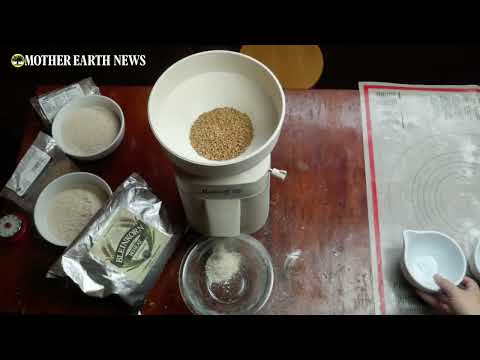
[00:18:55] Lois Hoffman: There definitely is. I don’t right now have a grain mill, [00:19:00] but a couple friends do, and I have tasted. I’ve taken my flour that I’ve bought and had them fresh mill the same kind of flour, and you can taste the freshness. And with a home grain mill, if you’re just baking one loaf of bread, you can mill just enough for the one loaf.
[00:19:16] You don’t have to mill an extra bunch, and it is so much fresher. It tastes better. But I realize not everybody can mill their own, and I would tell people, even if you’re excited about these ancient flours, don’t run out and get a grain mill right away until you see if you’re really gonna start baking with them a lot.
[00:19:34] ‘Cause number one, they are pricey sometimes, and if you’re like me, it’s just another gadget looking for a home in your kitchen, and I don’t have a lot of extra room in my kitchen like some people. So make sure you’re gonna actually work with these before you actually go out and buy a grain mill.
[00:19:49] So second best thing, if you don’t have a grain mill, there’s still around the country some flour mills, like wheat field mills, that are still operating that mill their own flour, and [00:20:00] there may be some in your neck of the woods. I would check that out, because that would be the best place to get flour. If not, there’s a lot of these artisan bakeries popping up all over the country, and they definitely, usually, mill their own flour because it is fresher.
[00:20:16] And a lot of times they’ll mill flour for the public just because they wanna make a little extra money, and you can go in there one day and get what you want and bake with it. And if not a lot of Amish around the country, they of course mill their own, and they bake with it, and they will mill for you sometimes too.
[00:20:35] What I definitely would tell people do not do is order, like, from Amazon or the big box stores, just because this flour sits on shelves and it is stale. I guarantee it is not fresh. It’s stale. You will notice the difference. And they can’t help it. It’s not their fault. It’s just the way the economy is. And another thing, you can’t s- store fresh-milled flour.
[00:20:59] The [00:21:00] ancient flours, when I said they have all three parts in them, that means they have their own oils in them, and oils go rancid. So you can’t store them for very long, maybe six months in the freezer is all. So if you can find somebody that can mill for you or you get your own mill, you can buy what’s called the wheat berries, which is the wheat kernels themselves, and mill your own as you need it. And another thing, these mills are not very hard to clean up at all. My friend, it took her five minutes. Most of them you just brush the extra dust of the flour out and it’s done. You don’t have to wash them, so it’s not a big cleanup either. So that’s what I would tell people to do. If you can mill your own, please do.
[00:21:43] If not, source it from some of these other places. Do not go to the store and just buy the something that’s been sitting there.
[00:21:52] Josh Wilder: Thank you. Yeah that’s great advice. And going back quickly to the, to what you had said about the blueberry muffins and people think of just bread, but you [00:22:00] can do a lot of different things with it. I spoke to someone who runs a black iron corn mill in Missouri, and he- they’re putting out a line of crackers and noodles and cookies, which, is not what most people would think.
[00:22:15] But you can do, you really can do a lot with the ancient grains.
[00:22:19] Lois Hoffman: You can, yes. And even now these farmer’s markets, I forgot to mention those. A lot of people are baking with ancient grains and selling their goods there, and I know a couple anyway that are also selling the flour there. That’s another possibility too, especially during the summer months. And a lot of people, I think, are getting into the ancient grains, so they’re becoming more popular and more available around the country than was, than what they once were
[00:22:43] Josh Wilder: I’m glad that we could talk about your new book, The Essential Guide to Baking With Ancient Grains, and looking forward to everybody being able to get their hands on it and try some of these recipes.
[00:22:54] Lois Hoffman: Thank you so much, and I really hope they do try them. Even if you’re piqued in interest just a little bit, [00:23:00] give them a try. You might just find that you really do like them.
[00:23:03] Josh Wilder: Discover Bleinkorn. Black Einkorn is a rare ancient variety of the original cultivated wheat, over ten thousand years old and naturally higher in antioxidants and anthocyanins, the same compounds that make blueberries so healthy. Bleinkorn is what the grain becomes after it is carefully curated
[00:23:24] Kernel by kernel, only the darkest hulls and awns are selected, the ones that hold the highest nutrition and the richest, most distinctive flavor. It’s not just black Einkorn, it’s Einkorn. Try it today at EarthTouch.com.
[00:23:42] Jon Thomas: With the einkorn, the body recognizes it, and so it knows how to digest it. It knows how to break it down and utilize the nutrition that’s there. And from that standpoint, we have a lot more people with a gluten sensitivity. And if you’re gluten sensitive, we’re not [00:24:00] saying that einkorn doesn’t have gluten.
[00:24:02] It does. But we’re saying that the structure is much more simple, so in many cases your body knows how to break it down. And so I always tell people if you have a sensitivity there, start small. And if your reaction is you’re gonna die don’t try it at all, just be careful with it.
[00:24:22] Try a little bit. See how you react, how you respond. But I’ve been surprised how many people who have come to us and said, “Hey, I have a sensitivity. Will this work?” They try a little bit, and it works, and they can eat it. And it tastes like wheat. That’s… There’s a lot of substitutes for wheat that don’t taste like wheat.
[00:24:40] My name is John Thomas. I’m president of a company called EarthTouch, and we grow black einkorn or bleinkorn as we call it. We’re currently growing about 500 plus acres a year, and we got into it about 10 years ago through a, a long [00:25:00] process that, that was quite fun. But we’ve grown our capability from just a one ton tote sack of seed all the way up to what we’re growing today.
[00:25:10] We have a full processing facility, so we de-hull it, clean it, package it, and then it gets shipped out to home fresh mill customers across the country, as well as a lot of flour mills that mill it for their customers as well
[00:25:31] Josh Wilder: So let’s talk about ancient grains. Why is something like why is something like einkorn more important for our health and agriculture compared to modern wheat?
[00:25:44] Jon Thomas: Sure, sure. Einkorn, if you look at the history of it, it- it’s the original wheat that was on the Earth.
[00:25:51] It’s been on the Earth for over 10,000 years, and it has some very distinct differences [00:26:00] between, what it looks like versus what modern wheat looks like. Just strictly from an appearance einkorn grows about chest-high, and it puts on a much smaller head. The berries are much smaller.
[00:26:15] But while they’re smaller the, the nutrient density of einkorn, and especially black einkorn, is much, much higher. And so when you compare the two, y- you have very dense nutrition, and modern wheat has lost that along the way due to how it was hybridized through the years.
[00:26:39] And that hybridization was done with cause. They were… The, the purpose of the hybridization was to grow a, a, a wheat strain that was a shorter stalk and then it puts on bigger berries, and so we can feed more people was the concept. So[00:27:00]
[00:27:02] Josh Wilder: So that hybridization obviously will change the, how it reacts with our bodies. And so how do ancient grains interact with the soil microbiome and differently than, modern commodity crops?
[00:27:19] Jon Thomas: Sure. A lot of your ancient grains, again, especially einkorn, they develop a, a more extensive or differently architected root system.
[00:27:31] They form, stronger associations with your mycorrhizal fungi and other beneficial microbes when, especially when grown in soils where those biology is present and where we’re not over-fertilizing. Modern wheat, we tend to use higher fertilization rates especially things like nitrogen because it, it needs a lot of nitrogen.
[00:27:56] And since those are so prevalent they don’t [00:28:00] scavenge for it. So einkorn will actually go through and scavenge for those, those micronutrients. And so there’s a very symbiotic relationship between the soil and the root system, and that’s, how it should be. I think, like I said, we, we tend to over-fertilize in modern farming, and so it doesn’t cause the plant to scavenge for those, those micronutrients like, like they should
[00:28:33] Josh Wilder: So what are some of the nutrients that modern breeding sacrificed in exchange for higher crop yields and industrial baking traits?
[00:28:42] Jon Thomas: Sure, sure. There’s kind of two parts to this, we talked about this hybridization and the cross breeding of different strains of grasses to get to modern wheat. And one of the things, that it, that happened I’m not sure they intended [00:29:00] for this to happen, but einkorn has, 14 chromosomes, and then your modern wheats have 42.
[00:29:10] And so the structure, the… Especially your gluten structure, your sugar structures are much more complex. And so when we eat these things that’s why so many people nowadays they’re starting to find have a gluten sensitivity, and so their body reacts to it. And it’s because the body does not know how to process the modern wheat, and so it reacts.
[00:29:37] It has a, an effect. Whereas with the einkorn, the body recognizes it, and so it knows how to digest it. It knows how to break it down and utilize the nutrition that’s there. And from that standpoint, we have a lot more people with a gluten sensitivity. And if you’re gluten sensitive, we’re not saying that einkorn doesn’t have [00:30:00] gluten.
[00:30:00] It does. But we’re saying that the structure is much more simple, so in many cases your body knows how to break it down. And so I always tell people if you have a sensitivity there, start small. And if your reaction is you’re gonna die don’t try it at all , just be careful with it.
[00:30:20] Try a little bit. See how you react, how you respond. But I’ve been surprised how many people who have come to us and said, “Hey, I have a sensitivity. Will this work?” They try a little bit, and it works, and they can eat it. And it tastes like wheat. That’s… There’s a lot of substitutes for wheat that don’t taste like wheat.
[00:30:38] But this stuff has a phenomenal taste. When it comes to, key nutrients and nutrition that we’ve lost number one is gonna be your mineral density. We’re talking about your zinc, iron, magnesium, copper. A- and this is, in, in some ways a pure dilution because [00:31:00] modern wheat have larger kernels, and therefore, just by sheer volume there’s more there, and so there- there’s less of these, these minerals.
[00:31:11] The other thing would be certain antioxidants. Carotenes that are noticeably greater in your ancient grains of course especially einkorn and especially black einkorn. A lot of people ask about black einkorn is, and- and what is the difference between einkorn and black einkorn is a pigmented version of einkorn.
[00:31:38] And so wherever it originated from what my research has shown the plant was regular einkorn and came under some type of stress. Whether it was drought or something else, we don’t know. None of us were there. But it naturally pigmented in the growing [00:32:00] process, and this is a phenomenon that happens naturally.
[00:32:04] You may have seen purple corn or other pigmented grains where this happens. And when it happens, the what they’ve found is the antioxidant properties are much greater. The anthocyanins are much greater. And so y- the, the thing that’s neat about black einkorn is, it’s got all these digestibility benefits and mineral density, higher proteins and all these beneficial things, and digestibility, but yet you get these other additional benefits as well.
[00:32:41] And we take that even a step further in, in what we offer. We call it bleinkorn or it’s a combination of the word black and einkorn, but we call it bleinkorn. We actually curate our einkorn for the darker awns and darker hulls [00:33:00] because that’s where these higher values reside, as well as the higher or better flavor profile resides.
[00:33:09] And so you… We- we’re actually trying to keep that pigmentation for these properties ongoing and alive. And then people tell us, the flavor profile is incredible. And if you haven’t tried einkorn or black einkorn or bleinkorn, you really should give it a try. It just has such a wonderful flavor to it
[00:33:34] Josh Wilder: So what was it like trying to grow the einkorn in Missouri? What did you come into any obstacles or any barriers to that?
[00:33:43] Jon Thomas: Yeah, Einkorn is a, a hulled grain. That was probably one of the biggest challenges we ran into. So it’s not a free-threshing plant, and so when it grows, there’s a hull or a, a wrapper that is [00:34:00] around the berry.
[00:34:01] And when you combine it your combine isn’t able to remove that hull like in a free-threshing variety. And so you harvest it out of the field, but you can’t mill it right then. You can’t, start utilizing. And so we had to acquire special special equipment to dehull it. We initially started out with, some kinda off the shelf, readily available dehulling equipment.
[00:34:33] And because it’s so difficult to take that hull off we were only getting about a third of the product we were putting through dehulled. And then when we would cycle it back through, what didn’t get dehulled the first round, send it back through, we were getting a lot of broken berries. And when offer it to customers they like the whole berry.
[00:34:57] Even though maybe they’re gonna mill it into wheat or something, [00:35:00] they still like it, the, the whole berry there. And there is something to once you break the berry, some of that nutrition value starts to decay or go away. And so the longer it’s exposed that way, some of the, the nutrients and things start to go away.
[00:35:15] And that, that was probably the biggest challenge for us. We ended up acquiring some equipment from overseas in Europe, where they actually grow a lot more einkorn and process a lot more einkorn over there. And we found a couple of dehulling machines. They’re not cheap.
[00:35:32] They’re not giving those things away but very worthwhile. And since we have grown our operation to the scale that we’re at, you know, th- those were good acquisitions for us to dehull and clean the einkorn. So that, that’s probably one of the biggest challenges. In Missouri, we tend to, I, and I
[00:35:50] This is probably true in all farming, but either we have too much rain or not enough, and those are challenges. Einkorn, like [00:36:00] I said earlier it grows chest-tall, so it tends to lodge and fall over. And that’s always a challenge, when you come harvest time It always seems like the week before harvest, it’s all standing up and blowing in the wind, and then inevitably, when it’s finally dried down enough, we have some lodging and we have to, just take our time and just run through it with the combines, slow and low.
[00:36:26] Just we drop the heads down and just pick up everything we can because there’s such a large stem on it y- a lot of that material goes into the combine, and it’s got to process through. But so there’s definitely challenges. Some of the, the people that work for us that help us on our farm, they’ve got years and years of experience in the farm fields, and they’ve grown all kinds of different wheat.
[00:36:52] And they ask you, what’s different about this one?” And until you sit… you put yourself in the seat and start combining, it’s hard to [00:37:00] explain. But it’s just a little different on the harvest. Again, the, the berries are so small, it takes a while to fill that tank up, so you’ll be out running for a while.
[00:37:10] But but it actually grows quite well in Missouri. It likes the climate here. We get a lot of humidity and heat. It tends to do all right with that. Never had any problems with, any kind of fungus or things like that even though w- we are in a humid climate, especially during the summer months.
[00:37:31] We do grow it as a, a fall crop, and so we put it in late September, early October. It winters quite well as long as we can get established, before we get a hard freeze, and then we’re usually pulling it out very early July. So it works real well
[00:37:51] Josh Wilder: So is the, the atmosphere in Missouri that, that gives you the growing conditions that work for you, is [00:38:00] that what brought you to black einkorn in the first place or did you try some other grains before that didn’t work as well in that environment or-
[00:38:10] What was it that drew you specifically to black einkorn?
[00:38:14] Jon Thomas: This is a fun and interesting story how we got here. We actually started growing einkorn because of some family members that had a gluten sensitivity. And w- we did I think what a lot of people do and we started using alternatives, almond flour or, other things.
[00:38:33] But again, they just don’t taste like wheat and so through some, some research that was done we learned about einkorn and and this property of the, it being digestible, because it’s so much simpler and hadn’t gone through this hybridization process. And we found some online.
[00:38:56] We ordered some flour. We brought it home, made some [00:39:00] bread and it worked, it could be eaten without these reactions. And then the more we researched it and found out about the nutrition qualities and just all these things that, you know, from a health and wellness standpoint, we thought, “Man, everybody should be eating this.”
[00:39:19] Whether you have the sensitivity or not, it’s so much better for you. And we had, farm acreage. We were farming, already, so why not add this to the rotation? And this was about 10 years ago now, and we started and I’m not exaggerating here, we started scavenging the Earth to find some einkorn seed.
[00:39:43] And back then anyone that was growing it, they just would not sell you any seed. And you were paying much higher prices for it than even you are today, 10 years ago. And it was almost as though, those growers didn’t wanna let more people into the [00:40:00] club, because they kinda had something cornered.
[00:40:03] And but we… I was communicating with guys over in Israel that had it, that said they would send me some seed and, the import, export, laws kinda shut that down. We found a grower in Canada. We found a couple of growers here in the US that had smaller opera- just no one would sell us the seed.
[00:40:24] And then finally one of our guys found an Amish gentleman in Pennsylvania that had some. And the only reason he was willing to sell it to us was he had accidentally mixed it with oats, oat seed and einkorn seed, and he didn’t have a way to separate it back out. And so we were able to buy a, a one ton tote sack of it.
[00:40:52] And we brought it back here to Missouri, excuse me, and we planted it as a f- [00:41:00] a winter wheat. And so we planted both the einkorn and the oats together. They both came up, and then winter killed off all the oats. And in the spring, we had einkorn. And so we let Mother Nature sort it out for us- That’s great
[00:41:18] and do that separation. And but as the einkorn grew, this was our first year growing it. We didn’t know much about it because we, there was not a lot known about it 10 years ago. And as the einkorn grew up, it was… it looked beautiful, put on a beautiful head, and then all of a sudden, the field turned black And it was almost overnight it did this.
[00:41:46] And we thought, with the humid climate here, we must have some type of fungus or something has just taken over this whole crop. And so we reached out to everyone we [00:42:00] could think of to find out what do we do or how, i- is the crop just lost, and we finally found a, a gentleman that knew, and he said, “No, you have the variety,” he was an agronomist, “You have the variety of einkorn known as black einkorn.
[00:42:19] It’s very rare. And you just give it some time and it’ll be fine.” And sure enough, we gave it a little time and it lightens up in the field and it is a little darker than, than what regular einkorn is with the hull on it, but, we had black einkorn. We started researching black einkorn.
[00:42:39] What is, And so it just so happened that it had these higher properties, it had these beneficial things, and and it was a rare variety. And we were quite blessed to fall into this, but, we, we have since done, like I said, a lot more research on it and found that it- it’s actually a [00:43:00] very beneficial variety of einkorn.
[00:43:02] And so we have brought it back to life, so to speak, because it is a rare variety. And even people in the know of einkorn, when you tell them, “We have black einkorn,” they kinda shake their head and say, w- is that a variety?” W- they don’t know anything about it.
[00:43:21] And I think we are quickly becoming known as the black einkorn guys or the bleinkorn guys, that, that grow it here in Northwest Missouri, that’s great. That’s kinda how we got into it.
[00:43:31] Josh Wilder: That’s great. So as as part of that preparing it yourself and, trying to look for different varieties for, gluten sensitivities part of what you do is encouraging grinding whole wheat berries at home, whole the berries at home.
[00:43:47] Why is that important?
[00:43:50] Jon Thomas: Yeah, there, there seems to be a movement of people that are into this fresh milling. And, They, there’s [00:44:00] all kinds of claims as to why you should do it and that and I leave people to do their own research on that. But when you buy, flour that’s already been milled down, as soon as you expose the berry the inside of the berry the, the nutrition value starts to break down and evaporate off.
[00:44:25] And it doesn’t happen overnight. It does take some time. But, People want that freshness. They want it they don’t wanna lose any of the nutrition value that’s there. And so they’re willing to make the investment in a, a home mill where they can, mill it fresh. And there is also a flavor aspect to it as well.
[00:44:53] When you fresh mill, you get all of those fresh aromas and flavors [00:45:00] that are inside the berry. And we have here in our office a, a mill, and people that locally buy our bleinkorn from us, we let them come in and use the mill because sometimes, making an investment in a, a little home mill is significant.
[00:45:20] And you can always tell when someone’s been here using the mill because the whole office just smells so wonderful, like fresh milled einkorn. And again, the flavor, the nutrition, the, the aroma that’s in these when you fresh mill it is amazing. And today, I think more than ever before, people care more about what they eat and how it was grown and the nutrition value than ever before.
[00:45:53] We’re starting to learn a lot more about how our food has become ultra-processed. And [00:46:00] so if they can be in more control of that or at least be aware of that, then they wanna be involved. They wanna do it. Now, not everyone has the time or capacity to mill it fresh. We do offer flour to our customer base, but we try to keep it fairly freshly milled.
[00:46:24] And so we don’t mill ahead, months and months in advance. We try to keep it fairly fresh, and then we’ll seal it, as soon as it is milled down so that, we can, maintain as much of that as possible. And the other part of that I think too, a lot of people like baking with an all-purpose flour, a lighter flour, so you get, baked goods that are a lot more excuse me, fluffy and light.
[00:46:57] And the problem with that is to get [00:47:00] them those, that way to an all-purpose, you know, state, you have to sift it and pull out a lot of the bran is one of the main things that comes out, and that’s where a lot of your nutrition value is. And so I know a lot of fresh mill folks that will, if they’re making a certain, baked good like some baguettes or some pretzels or something, they’ll mill that down.
[00:47:27] They’ll actually sift off the bran to make those goods, but then they use that bran in some bran muffins or in, another baked good so they’re not losing that nutrition value
[00:47:41] Josh Wilder: That’s smart. That’s smart. I know you have some recipes on your on the website there that I saw. What are some of your favorite baked goods or breads that can be made with einkorn?
[00:47:51] Jon Thomas: I’m I love… My wife makes a three-ingredient sourdough bread, and it’s [00:48:00] probably my favorite from a bread standpoint. And all she uses in it is our bleinkorn flour, salt, and water, and that’s it. And it’s a, a hearty l- little more rustic, bread. It’s not super fluffy, but it’s not a dense loaf either, and I really like that, that bread.
[00:48:21] And every time she tries something new with it, I tell her, “No, go back. Go back to just the original way you did it. That’s what I like.” When it comes to bleinkorn I just, I don’t think you can beat the pancakes. I don’t think you can beat the waffles. I don’t think you can beat the biscuits. I have a friend that makes the most amazing bleinkorn biscuits and gravy, and they use the bleinkorn in both the biscuits and in the gravy.
[00:48:51] Just it’s so good. I have a lot of people that tell me when they try our bleinkorn, it tastes like wheat is [00:49:00] supposed to taste like, or it’s almost got a familiar flavor to it that people really like. And but you can make anything with it. Cakes cookies.
[00:49:09] My wife just last night, in fact made some cookies at home and they’re fantastic. We’ve actually started to develop a line of crackers and cookies made with it, as well as pasta, and so those are just starting to come out now and be available. Again, all with our black einkorn, our bleinkorn.
[00:49:31] And, Like in our pasta, it’s literally just our bleinkorn flour and water. That’s it. And even the crackers, cookies, very simple ingredients that you know what they are. Salt, milk, just very simple things that I think people are starting to gravitate towards, but no, definitely we’ve got a lot of recipes on the website at earthtouch.com, and that’s [00:50:00] probably what I get hit up on the most is, you know- Yeah. For sure … once people try it, “Oh, I need a recipe for this.” Or if somebody posts, something that they’ve made with it, you know, that’s the number one thing is, “I need this recipe.”
[00:50:13] Josh Wilder: Yeah.
[00:50:14] Jon Thomas: But it’s good. It really forms a community of people that are like-minded, around it,
[00:50:19] Josh Wilder: absolutely. Yeah, what’s better than breaking bread?
[00:50:22] Jon Thomas: Oh, yeah. Oh, yeah. That’s exactly.
[00:50:26] Josh Wilder: I appreciate your time, and thanks for telling your story, and looking forward to trying a bunch of new recipes. Thanks again.
[00:50:32] Jon Thomas: Thanks so much.
[00:50:35] Josh Wilder: Discover bleinkorn, the original wheat that has been on the Earth for more than ten thousand years. Today, more than ever, people want to know where their food comes from, how it was grown, and whether it’s real food or ultra-processed garbage. Bleinkorn is grown in Northwest Missouri by farmers who care and farm for nutrition.
[00:50:55] That means no glyphosate, non-GMO, using [00:51:00] cover crops and natural biology that builds nutrient-rich soil. The result is bleinkorn, a highly nutritious superfood your body actually recognizes. Real food, grown with care, EarthTouch.com.
[00:51:13] Thanks for joining us for this episode of Mother Earth News and Friends. To listen to more podcasts and get connected on our social media, visit www.motherearthnews.com/podcast. You can also email us at podcast@ogdenpubs.com with any questions or suggestions. Our podcast production team includes Alyssa Warner and myself, Josh Wilder.
[00:51:39] Music for this episode is the song Hustle by Kevin MacLeod. The Mother Earth News and Friends podcast is a production of Ogden Publications.







