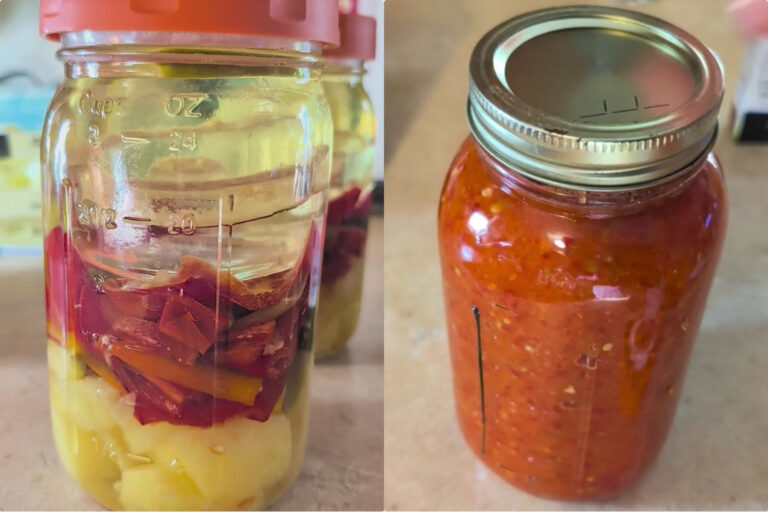
Make this lacto-fermented hot sauce recipe with pineapple and peppers of your choice for a citrus twist on a classic hot sauce.
Ingredients:
- Pineapple (or other citrus)
- Hot peppers of choice
- 2 garlic cloves
- Water
- Pickling salt
Directions:
- Place jar on scale and tare it out so you only get the weight of ingredients.
- Pack pineapple, hot pepper, and garlic in a wide-mouth mason jar leaving approximately 1″ headspace.
- Pour water just to the top of the other ingredients.
- Note the weight of ingredients, including water.
- Remove water and add 3.5 percent of the ingredient weight in pickling salt. Shake until dissolved.
- Add salt brine back to ingredients.
- Add fermentation weight to ensure ingredients remain under the top of the water line.
- Add lid and airlock. Ferment for 3-4 weeks.
- Test with a pH strip. Aim for a pH less than 4.6.
- When ready, blend and refrigerate for 6-12 months.
Frequently Asked Questions
How to Make Fermented Hot Sauce
To make lacto-fermented hot sauce at home, follow these simple steps:
Pack the jar: Place a wide-mouth mason jar on a kitchen scale and tare it to zero. Pack in your chosen hot peppers, pineapple (or citrus), and 2 garlic cloves, leaving about 1 inch of headspace at the top.
Make the 3.5% salt brine: Pour water just to the top of the ingredients and record the total combined weight. Pour that water out into a separate container, weigh out 3.5% of the total ingredient weight in pickling salt, and shake until completely dissolved.
Submerge and seal: Pour the salt brine back over the produce, place a fermentation weight on top to keep everything submerged below the water line, and seal the jar with a lid and airlock.
Ferment and blend: Let the jar ferment at room temperature for 3 to 4 weeks until it reaches a safe pH of less than 4.6 (checked with a pH strip). Once ready, blend the fermented solids and brine together until smooth, bottle, and refrigerate for 6 to 12 months.
How Long to Ferment Hot Sauce
Ferment hot sauce for approximately 3 to 4 weeks under an airlock lid. Allowing the peppers, pineapple, and garlic to ferment for the full 3–4 weeks gives beneficial Lactobacillus bacteria plenty of time to consume the natural fruit sugars, develop deep tangy complexity, and drop the acidity to a safe, shelf-stable level (a pH below 4.6) before blending.
(Note: Warmer kitchen temperatures will speed up fermentation slightly, while cooler rooms may take the full four weeks—always verify readiness with a pH strip before bottling.)