

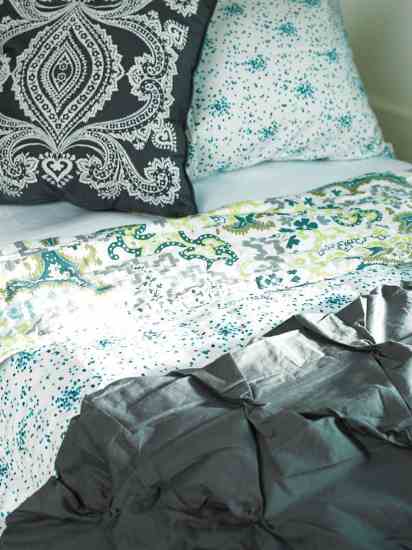
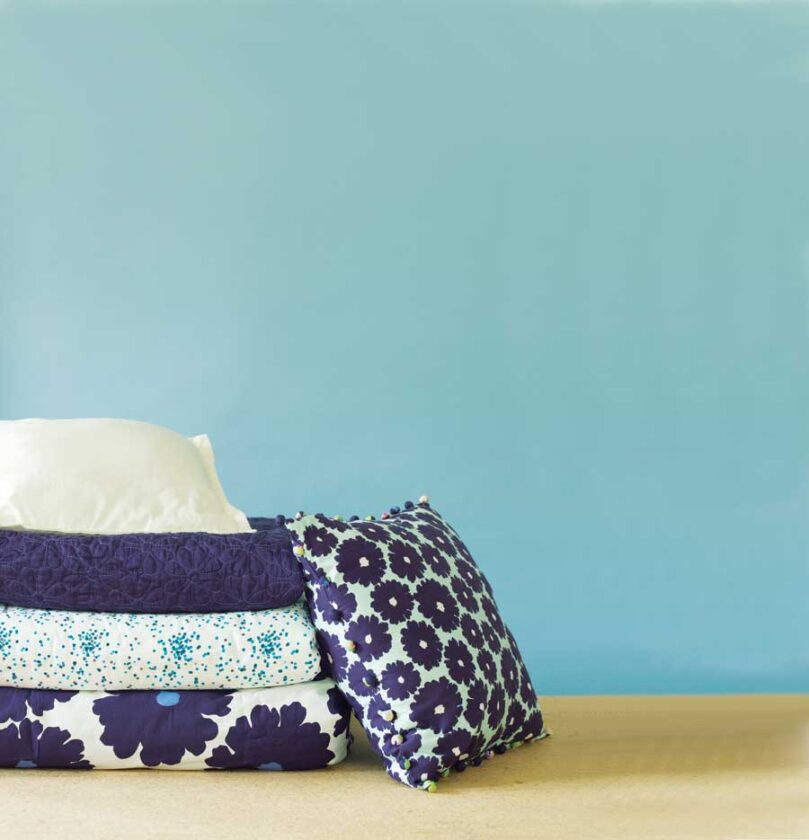
Conventional bedding supports chemical-heavy synthetic fabric production and pesticide-laden cotton farming. Such bedding is often treated with formaldehyde and chemical dyes, and can be full of irritating allergens. Choose from the many options healthier for you, your family and the planet.
Linens
Organic Cotton
Pros: Hypoallergenic, soft and breathable; not treated with formaldehyde, bleaches, harsh dyes or other chemicals; easiest to find
Cons: More expensive than conventional cotton; can be hard to find in bright colors or a variety of patterns
Hemp
Pros: Absorbent, lightweight and sturdy; requires no pesticides to grow; can be blended with other organic fabrics to soften; gets softer over time
Cons: Some hemp fabric can be stiff; manufacturer softening can entail a long, chemical-heavy process.
Peace Silk
Pros: Natural protein fiber; eco-friendly production process; lets silk worm live a full life; luxurious texture
Cons: Expensive; requires special care; not always machine washable; snags and wrinkles easily
Pillows
Organic Cotton
Pros: Free of pesticides and chemicals; hypoallergenic; less irritating to skin
Cons: Not as supportive as other materials; tends to flatten over time
Organic Wool
Pros: Naturally flame-retardant, waterrepellent, hypoallergenic and resistant to dust mites; eco-friendly alternative to down; durable
Cons: Doesn’t have down’s soft, squishy feel
Natural Latex
Pros: Made from rubber trees; naturally flame-retardant; resistant to mold, mildew, bacteria and dust mites; conforms to body shape
Cons: Some people are allergic to latex.
Hemp
Pros: Lasts longer than cotton; firm; great insulator; very durable
Cons: Stuffing not typically washable; not as fluffy as other stuffing
Buckwheat Hull
Pros: Made from the buckwheat kernel’s protective husks; supportive, eco-friendly and washable
Cons: Can become infested with bed bugs or dust mites if not used regularly or stored properly
Resources
Amenity
organic cotton bedding
Amy Butler
organic cotton bedding
Branch
organic cotton and hemp pillows
CozyPure
organic cotton bedding, pillows
Earthsake
organic cotton bedding
EcoChoices Eco Bedroom
organic cotton sheets
Good Night Naturals
organic cotton and wool bedding
Harmony Bedding
organic cotton sheets, pillows
Holy Lamb Organics
organic wool pillows, organic cotton sheets
The Natural Sleep Store
organic cotton and eco-silk bedding
Nikki Designs
hemp sheets, buckwheat pillows
Plover Organic
organic cotton bedding
Rajboori
silk quilts, coverlets and pillows
Savvy Rest
organic cotton bedding
Shepherd’s Dream
wool pillows, bedding





