Make the best homemade skincare gifts with everyday flowers and herbs, creating natural balms, lotions, and salves.
Many common weeds that might be considered the scourge of the garden are actually valuable herbal allies. These wild herbs can be harvested and used to create a plethora of helpful, healing products. Broadleaf plantain (Plantago major), dandelion (Taraxacum officinale), mullein (Verbascum thapsus), yarrow (Achillea millefolium), and stinging nettle (Urtica dioica) are all beneficial herbs that nourish and heal the body.
Take broadleaf plantain, for example. This ubiquitous yard weed is anti-inflammatory, antimicrobial, and offers expectorant actions. This means this common herb can be used topically to help heal minor cuts and scratches or used in tea blends to help ease a cough. It’s perhaps most well-known for relieving the itching and redness from insect bites. Simply chew up a leaf of broadleaf plantain and rub it onto a mosquito bite for almost instant relief!
If you’re considering growing herbs for the first time, some of the easiest plants to grow are those from the mint family, Lamiaceae. This includes sage, thyme, oregano, lemon balm, and, of course, peppermint. These are all hardy perennials that will thrive in most areas, and, once established, they’ll provide you with years of bountiful harvests for very little effort. One thing to consider when growing plants in the mint family is their propensity to spread. Try growing them in containers sunk into the ground to restrict the underground runners, or, if you have the space, plant your peppermint in an out-of-the-way area and let it sprawl and make itself at home.

In addition to mint family members, consider herbs grown for their eye-catching flowers, such as calendula (Calendula officinalis) or echinacea (Echinacea purpurea). Not only do these herbs offer a wealth of potential health benefits that make them great ingredients for handcrafted body care products, but they’ll also attract beneficial pollinators into the garden. Calendula is an annual herb and, although it may reseed itself, it will often need to be planted fresh again each spring. It’s best known for its emollient properties, meaning it softens and moisturizes skin, making it a perfect choice for lotions, lip balms, and similar products. Echinacea, on the other hand, is a perennial plant with tall, upright stems and long-lasting, beautiful flowers that make it a wonderful landscaping plant, adding a burst of color along garden borders or in pollinator strips. This herb is often included in wellness tea blends but can also be enjoyed as cut flowers for vase arrangements and bouquets.
Let’s make some simple, helpful recipes from these powerful plants.
Sore Muscle Salve
Topical salves are a great way to harness the healing power of herbs. They can be made with limited equipment and just a few ingredients, and they can easily be tossed into a purse or backpack and taken on the road for whenever they’re needed. This salve is perfect for easing tired and sore muscles and relieving the pain caused by inflammation, stiff joints, and arthritis.
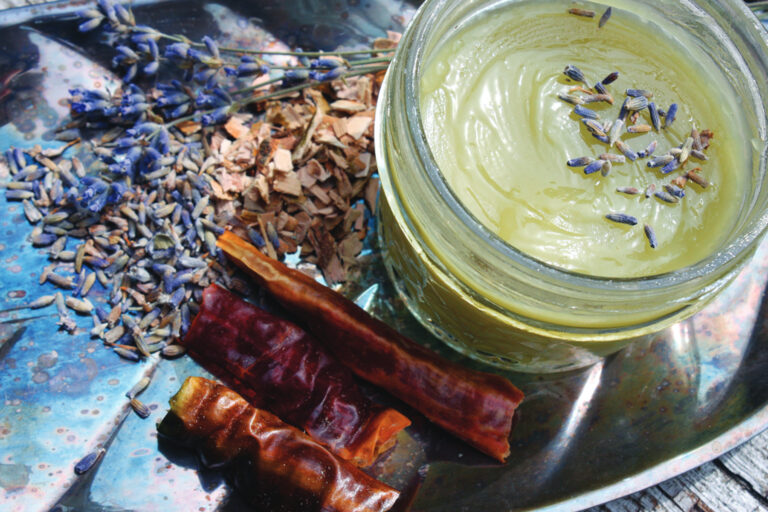
In this recipe, we’ll be using lavender (Lavandula angustifolia) flowers, white willow (Salix alba) bark, and cayenne peppers (Capsicum annuum). I recommend using dried herbs when making a salve, since the moisture in fresh plant material will encourage mold growth and spoilage of the final product.

Lavender flowers may be most well-known for their calming effect, but they also have analgesic (pain-relieving) and anti-inflammatory properties. White willow bark contains a compound known as “salicin,” which is an anti-inflammatory. The spice from cayenne peppers is caused by the chemical capsaicin, which is widely recognized as a pain reliever. Together, these three herbs make a potent and useful salve that can be applied whenever needed to bring relief from a wide variety of aches and pains. Yield: 4 ounces of salve.
- 1 tablespoon lavender flowers
- 1/2 tablespoon white willow bark
- 1/2 tablespoon cayenne
- 3-1/2 ounces (by volume) olive oil
- 1/4 ounce (by weight) beeswax
The first step in making a salve is to create an herb-infused oil. Place the herbs into a jar and cover them with the oil of your choice. Cap the jar, label it, and place it in a cupboard or other cool, dark location. Let it steep for 4 to 6 weeks. During this time, the fat-soluble chemical constituents of the herbs will be extracted into the oil. You’ll often notice that the oil picks up the colors and scent of the plants you’re using; this means your extraction is working!
Once your herb-infused oil is ready, strain out the plant material using a cheesecloth, coffee filter, or fine mesh screen. Put the infused oil into the top of a double boiler and add beeswax. If you don’t have a double boiler, use a stainless-steel bowl placed over a pot of boiling water – but be careful, as the bowl will get quite hot! Set the heat to medium and gently stir the oil to ensure the beeswax blends well as it melts. Once the beeswax is completely melted, turn off the heat and gently pour the oil into a small container, such as a jelly jar or reused baby-food jar. As it cools, the beeswax will solidify and your handcrafted herbal salve will be ready!

Moisturizing Chamomile Lotion
Crafting a homemade lotion may involve a few more steps than making other handcrafted herbal products, but this soft and soothing chamomile body butter is well worth the extra time and effort! Chamomile is loaded with antioxidants that help regenerate the skin, tighten pores, and reduce blemishes and redness. Adding this aromatic herb to lotion creates a versatile product that will moisturize and soften skin while smoothing wrinkles and clearing up acne. Yield: 4-ounce jar of lotion.
- 2-1/2 ounces chamomile infusion
- 3 ounces oil of choice
- 1-1/2 ounces coconut oil
- 1/2 ounce (by weight) beeswax
- 1 teaspoon vitamin E oil (optional)
- 5 to 15 drops essential oil (optional)
First, brew the chamomile infusion. This can be made with either Roman chamomile (Chamaemelum nobile) or German chamomile (Matricaria recutita). Although these two plants are different species, they offer many of the same benefits and are often used interchangeably in commercial skin-care products. Feel free to use whichever species of chamomile you have available. Make the infusion by pouring 1 cup of boiling water over 3 tablespoons of dried chamomile flowers and steeping for at least 15 to 20 minutes. Use a tea ball or reusable teabag, or strain out the flowers using a sieve after the water is well-infused. This will produce more than enough chamomile infusion for the lotion recipe.
Combine the oil, coconut oil, and beeswax in a double boiler over medium heat, stirring occasionally until the beeswax is melted and the mixture is well-blended. Pour the oil and beeswax mixture into a glass or stainless-steel bowl to let cool. Once the oils have cooled to room temperature and begun to solidify, add the vitamin E oil. This step is optional, but vitamin E is a preservative and will extend the shelf life of the lotion. This is also the time to add any essential oils to the lotion. Lavender oil is an excellent addition to this recipe, but feel free to experiment with oils that you may already have at home. Anywhere from 5 to 15 drops of essential oil should be plenty.
Now, add the room-temperature chamomile infusion, mixing continuously until the lotion emulsifies into a smooth, creamy consistency. This can be done by hand with a whisk, but using an immersion blender will make the job much easier. To ensure proper emulsification, the infusion must be at room temperature. Use a silicone or rubber spatula to transfer the lotion into jars, and your fragrant and soothing body butter will be ready to enjoy.
Calendula Lip Balm
Homemade lip balms are relatively easy to make. In essence, a lip balm is similar to an herbal salve: a mix of oils that are blended with beeswax to solidify the product. The ratio of oil to beeswax determines how soft or how stiff the lip balm will be. Use the ratio in the recipe to get started, but once you’ve made it a few times and feel comfortable, adjust the blend to fit your personal preference. Yield: 10 lip balm sticks.

Herb Infused Oil
- 1/4 cup calendula flowers
- 3-1/2 ounces oil of choice
Calendula is an emollient herb, meaning it softens and soothes the skin. Adding these flowers to the recipe creates a nourishing balm to protect your lips in even the driest and most harsh conditions. The first step in crafting this balm is making the calendula-infused oil. Add the calendula petals to a 4-ounce jar, then fill the jar with the oil of your choice. Olive oil is the most common oil for balms, but sunflower or sesame oil would also be great choices. Allow the flowers to infuse in the oil for 4 to 6 weeks before straining them out. This will create enough calendula-infused oil to complete this recipe several times! Label the jar before putting it into the cupboard to infuse.
Lip Balm
- 2 tablespoons herb-infused oil
- 1 tablespoon coconut oil
- 1 tablespoon shea butter
- 1/2 ounce beeswax by weight (1-1/2 tablespoons)
- 5 to 8 drops essential oil of choice (optional)

Combine your herbal oil with the coconut oil, shea butter, and beeswax in a double boiler over medium heat until the beeswax has completely melted. As the mixture warms, stir it to ensure the ingredients are well-blended. Once the oils and wax are well-blended, turn off the heat. At this point, you can add essential oils into the mix to enhance the qualities of the lip balm, but this step is optional. Consider using an essential oil, such as peppermint or vanilla, to add flavor and scent to your product.
Carefully pour the mixture into lip balm tubes. As the product cools, it will harden and your calendula-infused lip balm will be ready to use.
For more skin care recipes, read: Natural Care for Winter Skin and Hair and Homemade Bath Products.
Bevin Cohen is an author, herbalist, and co-founder of Small House Farm in Michigan. He has spent most of his life studying the many uses of plants and continues to be inspired by the wonders of nature. He has written nearly a dozen books on herbs, gardening, and local food, including The Complete Guide to Seed and Nut Oils and Herbs in Every Season.
Originally published in the December 2026/January 2027 issue of MOTHER EARTH NEWS magazine and regularly vetted for accuracy.
Frequently Asked Questions
How to make lotion?
Combine the oil, coconut oil, and beeswax in a double boiler over medium heat, stirring occasionally until the beeswax is melted and the mixture is well-blended. Pour the oil and beeswax mixture into a glass or stainless-steel bowl to let cool. Once the oils have cooled to room temperature and begun to solidify, add the vitamin E oil. This step is optional, but vitamin E is a preservative and will extend the shelf life of the lotion. This is also the time to add any essential oils to the lotion. Lavender oil is an excellent addition to this recipe, but feel free to experiment with oils that you may already have at home. Anywhere from 5 to 15 drops of essential oil should be plenty.
Now, add the room-temperature chamomile infusion, mixing continuously until the lotion emulsifies into a smooth, creamy consistency. This can be done by hand with a whisk, but using an immersion blender will make the job much easier. To ensure proper emulsification, the infusion must be at room temperature. Use a silicone or rubber spatula to transfer the lotion into jars, and your fragrant and soothing body butter will be ready to enjoy.
How to make salve?
The first step in making a salve is to create an herb-infused oil. Place the herbs into a jar and cover them with the oil of your choice. Cap the jar, label it, and place it in a cupboard or other cool, dark location. Let it steep for 4 to 6 weeks. During this time, the fat-soluble chemical constituents of the herbs will be extracted into the oil. You’ll often notice that the oil picks up the colors and scent of the plants you’re using; this means your extraction is working!
Once your herb-infused oil is ready, strain out the plant material using a cheesecloth, coffee filter, or fine mesh screen. Put the infused oil into the top of a double boiler and add beeswax. If you don’t have a double boiler, use a stainless-steel bowl placed over a pot of boiling water — but be careful, as the bowl will get quite hot! Set the heat to medium and gently stir the oil to ensure the beeswax blends well as it melts. Once the beeswax is completely melted, turn off the heat and gently pour the oil into a small container, such as a jelly jar or reused baby-food jar. As it cools, the beeswax will solidify and your handcrafted herbal salve will be ready!
How to make lip balm with coconut oil?
2 tablespoons herb-infused oil
1 tablespoon coconut oil
1 tablespoon shea butter
1/2 ounce beeswax by weight (1-1/2 tablespoons)
5 to 8 drops essential oil of choice (optional)
Combine your herbal oil with the coconut oil, shea butter, and beeswax in a double boiler over medium heat until the beeswax has completely melted. As the mixture warms, stir it to ensure the ingredients are well-blended. Once the oils and wax are well-blended, turn off the heat. At this point, you can add essential oils into the mix to enhance the qualities of the lip balm, but this step is optional. Consider using an essential oil, such as peppermint or vanilla, to add flavor and scent to your product.
Carefully pour the mixture into lip balm tubes. As the product cools, it will harden and your calendula-infused lip balm will be ready to use.