
Slow Food Almanac (Slow Food, 2013) argues that something valuable has been lost in this era of fast food and instant gratification. Humanity needs the pleasure meals made with love and attention, and from locally grown ingredients. A global, grassroots organization with supporters in 150 countries around the world, Slow Food International promotes the pleasure of good food with a commitment to their community and the environment. The excerpt looks at how the Slow Food Movement has been introduced to different communities in Africa.
From Crises to Riches
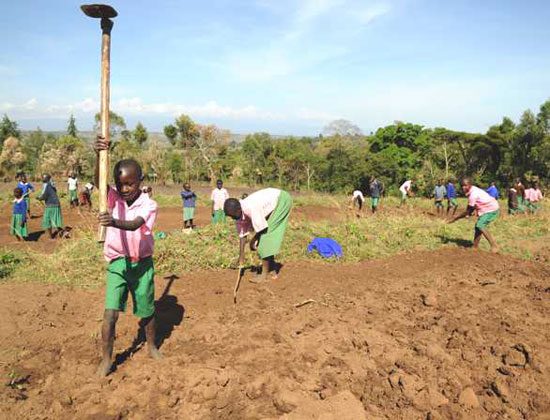
Kirikou is a young boy, bursting with curiosity. When something bad happens in his village, the elders blame the evil witch Karaba. But Kirikou looks around, tries to understand, and in the end manages to solve the problems himself. Kirikou is a character in an animated film, but his adventures are not actually so far from reality. In one of the film’s scenes, Kirikou’s village is cultivating a beautiful food garden, planting it with beans, eggplant and medicinal herbs. The soil is prepared and the women bring baskets full of seeds stored from the previous season and seedlings nurtured in the seedbed. A child chases away the chickens to stop them eating the seeds. A little further off, a woman digs a ditch that links the garden to a tank for collecting water. As soon as the water starts to flow, Kirikou runs after it and watches it spread to the smaller channels dug between the beds. Along with the other villagers he starts dancing and singing with joy. These are not just scenes from a cartoon, but the daily reality in the food gardens cultivated by communities participating in Slow Food’s Thousand Gardens in Africa project. Certainly, real life is not always as colorful as Kirikou’s adventures, as the experiences recounted by the African garden coordinators project make clear. What they also make clear, however, is that these sustainable food gardens are a little bit like Kirikou: very small when compared to Africa’s problems, but able to point the way towards simple solutions for a better future.
Africa’s Problems
Sid Ali Mohamed Abdi is 65 and lives in Somalia, where he works as a farmer and coordinates his country’s Slow Food gardens. Talking about the problems in his native land, he says: “Everyone knows about the Somali situation over the last 20 years. However, I think that for someone who hasn’t experienced it, it is not easy to imagine the level of deterioration and despair and the terror of many people. The Somali crisis, between civil war, tribal wars, banditry, drought and floods, is considered to be the worst in the world, and in part we created it with our own hands. Now that in theory everything is over and a democratic state has been born after 20 years of anarchy, of course there is a whole economy to reconstruct.”
The coordinator of the Egyptian gardens, Sara El Sayed, is 32. Having seen the revolution, talking about crisis and difficulties for her also means talking about hope and change. “We Egyptians have lifted our heads and declared ourselves proud of our identity. We have found ourselves facing the collapse of our economy, in a country where 40% of the population is illiterate and where often we don’t know how to discuss, how to build new infrastructure, how to tackle problems like soil infertility, poor water resource management, the loss of skills…” Abdon Manga, 44, a cook from Guinea-Bissau, says: “We all know that the name Africa is generally linked to wars, problems and political and military instability. But we also know that Africa is the richest continent in the world, and this wealth must be put to good use.”
Slow Food Gardens and Reconstruction
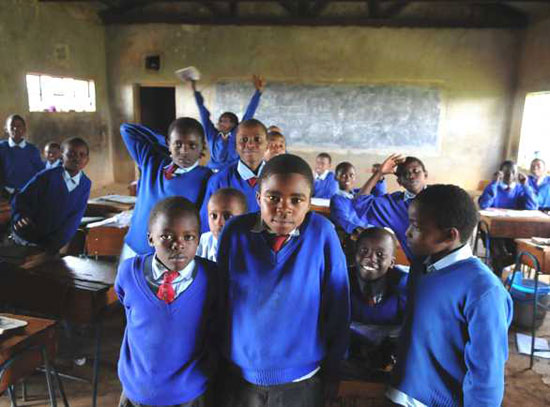
There are problems, but also many possible solutions. For Sid Ali, “the first step for the Lower Shebelle is to start with agriculture. With the help of the NGO Water For Life, we have laid the foundations for recovery, creating an agricultural school and primary schools in the farming villages. Plus, thanks to the Slow Food Foundation for Biodiversity, we have rediscovered the food garden and its importance to diet and health. Students from several villages are collaborating on reforestation projects on uncultivated land and with the support of Slow Food, 15 food gardens have been created in the same number of villages. It’s a tiny number compared to how many need to be created, but in Somalia these are the models that work best.”
For Sara, the strength of young people lies in not despairing, in always finding new resources. “With a project like Nawaya, we want to emphasize that the starting point must be the thousands of years of history of our agriculture. This is why we look to nature, which offers inspirational models, but also new communication tools. At the moment we only have 17 food gardens, but it’s a good place to start from to give value to Egyptian food and cuisine, beginning with agriculture and seed preservation.”
Abdon, meanwhile, insists on the role of cooks in promoting the wealth of local foods: “I invite cooks from all African countries to join the ceaseless fight to promote our local products, our local gastronomy. There are other cooks in Africa who are our teachers. In order to manage to promote what is traditional, we must create a union, a synergy together with these cooks to help to promote what is ours.”
In Africa, a food garden means being able to grow and eat local food, without depending on food aid or imports. It offers a path towards a better future and Slow Food is working to ensure that many communities can follow this path.
Interested in learning more about the slow food? Read Inside the Slow Food Movement
Reprinted with permission from Slow Food Almanac edited by Silvia Ceriani and published by Slow Food International, 2013. Slow Food is a global, grassroots organization with supporters in 150 countries around the world who are linking the pleasure of good food with a commitment to their community and the environment.