
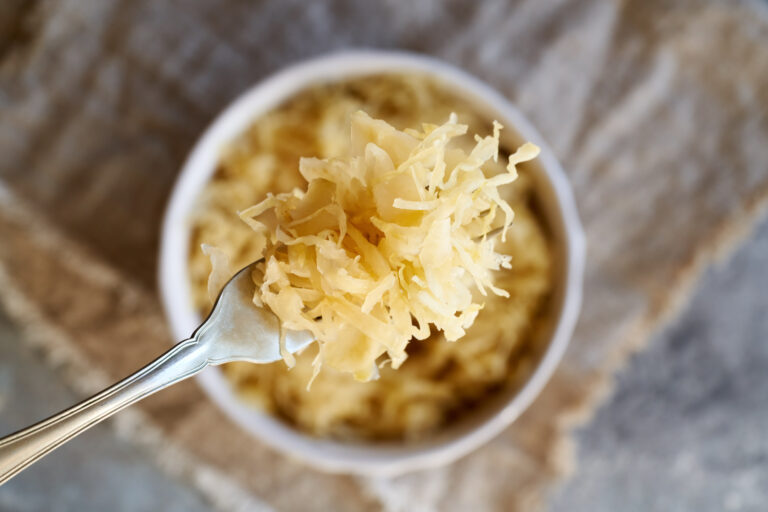
Is sauerkraut good for you? Making sauerkraut in a crock is a simple way to make a tasty, nutritious snack or side that delivers a probiotic powerhouse.
If you’ve only eaten store-bought, canned sauerkraut, you owe it to yourself to try the homemade variety. Fresh sauerkraut has a crunchier texture, a delightfully tangy flavor and a much greater potential for interesting recipes.

When European immigrants brought the technique for fermenting cabbage to the United States, many of their recipes included surprising ingredients, such as apples, turnips, juniper berries, wine, and garlic. In fact, traditional sauerkraut is very similar to the Korean dish kimchi, a food that’s also made with fermented cabbage but contains additional vegetables, such as radishes and cucumbers, and is seasoned with ginger and other spices.

There’s nothing wrong with the classic, just-plain-cabbage variety of sauerkraut usually eaten on a hot dog or pork chop. But homemade sauerkraut made with additional vegetables, herbs, and spices is more than a condiment; it’s a delicious side dish all on its own — and a surprisingly healthy one.
What to do with Extra Cabbage: Superhealthy Sauerkraut
Perhaps because it’s often paired with hot dogs, sauerkraut doesn’t have a reputation as an especially healthy food, but that’s been changing in the last few years. One reason is that sauerkraut is a live-culture “probiotic” food. Fresh sauerkraut contains lactobacilli, beneficial bacteria that improve the functioning of the digestive tract. Probiotic foods, such as sauerkraut and yogurt, are often recommended for people taking antibiotics, which kill both the beneficial and harmful bacteria in the body. Live-culture foods can help restore the beneficial bacteria.

Sauerkraut also is a good source of fiber and essential nutrients, including iron, vitamin K, and vitamin C. In fact, in the 18th century, sailors ate sauerkraut on long voyages to prevent scurvy, a disease caused by vitamin C deficiency.
Another interesting health claim was made last fall by a group of scientists. They reported that feeding an extract of kimchi to 13 chickens with avian flu led to a much lower mortality rate in the birds. More research is needed to support this claim, but the announcement fueled a spike in sauerkraut sales last year. Scientists also are studying cabbage and other vegetables in the brassica family for their potential to prevent breast cancer.
In spite of its many health benefits, most sauerkraut is still loaded with salt. If you’re on a low-sodium diet, you may be better off avoiding sauerkraut entirely, or making your own at home with a low-salt recipe.
Making Sauerkraut in a Crock
Making your own sauerkraut is a terrific way to preserve an abundant harvest of cabbage, and it’s a remarkably simple process that requires just two basic ingredients: shredded cabbage and salt. A few simple tools can make the process even easier. You can shred the cabbage with a regular vegetable grater, but a full-sized cabbage slicer is easier and more fun. These large graters look antique, but you can buy them online.

Once you’ve shredded the cabbage, you’ll need to pack it tightly in a suitable container. Many people use a large crock, but a food-grade plastic bucket also works. Next, you’ll need to put something heavy on top of the shredded cabbage, which will help it release water. The usual technique is to cover the cabbage with a plate, and then put a couple of clean rocks on top. If that seems a little too old-fashioned, a bag full of water also works as a weight.

At this point, you can sit back and let the cabbage ferment. The shredded cabbage releases water, which combines with the salt to form vegetable brine. Bacteria on the cabbage create lactic acid, which acts as a preservative. As the cabbage ferments, scum floats to the top of the container. Don’t worry, scum is normal. Just remove it regularly so it doesn’t inhibit fermentation.
Cabbage ferments quickly at room temperature and will be ready to eat in two or three weeks. At cooler temperatures, fermentation is slower, but the kraut stays crunchier and may have better flavor. Also, sauerkraut will spoil more quickly if you don’t keep it cool (if it turns dark brown, it’s spoiled), so keep it in a cool place, such as a refrigerator or root cellar, unless you plan to can it or eat it all within a few weeks.

Information Resources: Check out these books for more on food preservation techniques.
Wild Fermentation: The Flavor, Nutrition, and Craft of Live-Culture Foods By Sandor Ellix Katz
The Joy of Pickling: 200 Flavor-packed Recipes for all Kinds of Produce from Garden or Market By Linda Ziedrich
Keeping Food Fresh: Old World Techniques and Recipes By The Gardeners and Farmers of Terre Vivante
Megan E. Phelps is a freelance writer based in Kansas. She enjoys reading and writing about all things related to sustainable living including homesteading skills, green building and renewable energy.
Originally published as “Got Cabbage? Make Sauerkraut” in the August/September 2006 issue of MOTHER EARTH NEWS.
Frequently Asked Questions
What is sauerkraut?
Traditional sauerkraut is very similar to the Korean dish kimchi, a food that’s also made with fermented cabbage but contains additional vegetables, such as radishes and cucumbers, and is seasoned with ginger and other spices. There’s nothing wrong with the classic, just-plain-cabbage variety of sauerkraut usually eaten on a hot dog or pork chop. But homemade sauerkraut made with additional vegetables, herbs, and spices is more than a condiment; it’s a delicious side dish all on its own — and a surprisingly healthy one.
Is sauerkraut good for you?
Sauerkraut is a live-culture “probiotic” food. Fresh sauerkraut contains lactobacilli, beneficial bacteria that improve the functioning of the digestive tract. Probiotic foods, such as sauerkraut and yogurt, are often recommended for people taking antibiotics, which kill both the beneficial and harmful bacteria in the body. Live-culture foods can help restore the beneficial bacteria. Sauerkraut also is a good source of fiber and essential nutrients, including iron, vitamin K, and vitamin C. In fact, in the 18th century, sailors ate sauerkraut on long voyages to prevent scurvy, a disease caused by vitamin C deficiency.
How long to ferment sauerkraut?
Cabbage ferments quickly at room temperature and will be ready to eat in two or three weeks. At cooler temperatures, fermentation is slower, but the kraut stays crunchier and may have better flavor. Also, sauerkraut will spoil more quickly if you don’t keep it cool (if it turns dark brown, it’s spoiled), so keep it in a cool place, such as a refrigerator or root cellar, unless you plan to can it or eat it all within a few weeks.







