Preserve your green bean harvest with this dilly beans canning recipe, which can be water-bath canned using store-bought vinegar.
We’re feeling even more motivated to put up the harvest this year. Food isn’t cheap, and it isn’t likely to get any cheaper after a growing season troubled with elevated prices of diesel (which is used to both grow and transport food) and fertilizer costs that have affected many farmers. We’re reminded that every jar of blueberries or green beans we put up now is one less thing we’ll have to buy – shipped from hundreds of miles away – in January.

So, roll up your sleeves and let’s get to work. Take a minute to think about what your family likes to eat and how many jars you’ll get through each week, and then set some goals. Pull out the water bath canner and the dehydrator (your oven works too). Get the freeze dryer ready for a busy month, and organize the freezer so it’s ready for winter food as well. These recipes will help you save money, stock up, and enjoy local food all year long.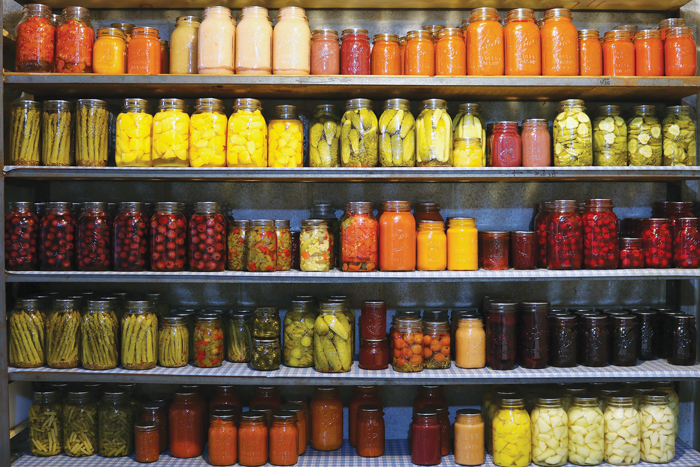
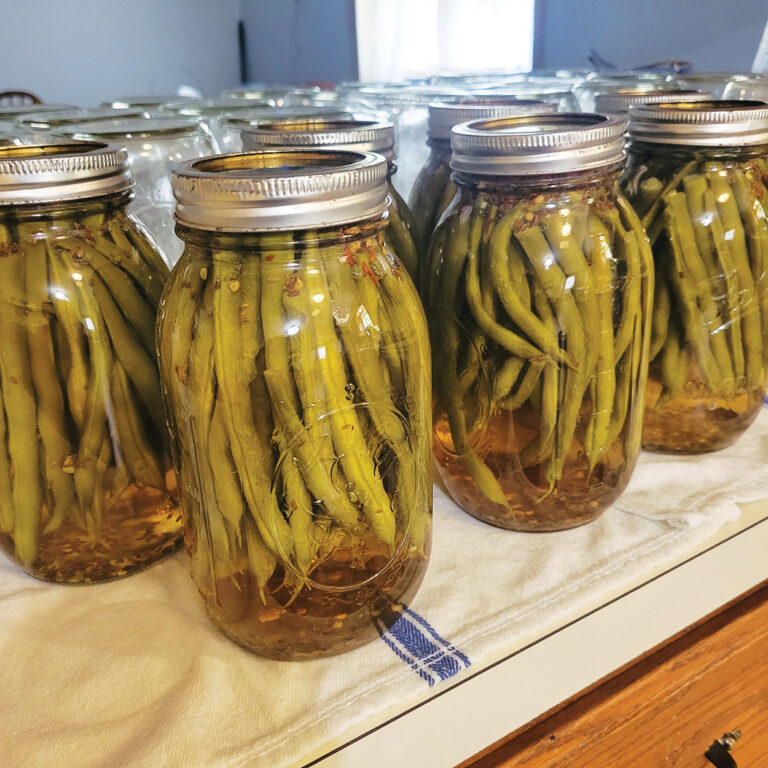
Green beans are a staple in most gardens for a reason. They’re easy to grow, produce abundantly, and lend themselves to many recipes. They’re also versatile. Once you’ve had your fill of snap and shell beans, you can leave some on the vines for dry beans. Dilly beans, preserved in the water bath canner, are delicious on the dinner plate, can be added to a salad or charcuterie board, and, when diced, add good flavor to an egg-salad sandwich.

Dilly beans are preserved in a brine of non-iodized pickling salt, vinegar, and water with garlic, dill, and cayenne peppers for pizzazz. The vinegar must be 5 percent acidity, and for this reason, homemade vinegar shouldn’t be used, as acidity levels fluctuate. Additionally, check the label of any store-bought vinegar; sometimes it has been diluted to less than 5 percent. Because of the acidity, dilly beans can safely be water bath canned. The basic brine ratio is 8 parts vinegar, 8 parts water, and 1 part canning or pickling salt. This ratio can be multiplied for the number of jars being processed. Yield: 4 pints
Brine
- 4 cups vinegar
- 4 cups water
- 1/2 cup pickling salt
Per Pint Jar
- About 1 pound green beans
- 1/4 teaspoon cayenne pepper
- 2 cloves crushed (or sliced) garlic
- 1 head of dill
- Before you begin, double-check your elevation, as this affects processing time, and review safe canning practices at the National Center for Home Food Preservation.
- Combine the vinegar, water, and salt in a saucepan and bring to a boil.
Pack clean beans with the stem snapped off into hot jars, leaving 1/2 inch of headspace, and add cayenne pepper, garlic, and dill to each jar. - Ladle the hot brine into the jars over the beans, leaving 1/2 inch of headspace.
- Adjust the lids and process in a boiling water bath for 10 minutes for both pints and quarts – make sure to check your elevation, as processing times will change if you live above 1,000 feet.
- Remove the jars from the water bath and cool on a towel. Leave undisturbed for 12 to 24 hours, then check the seals. Wait at least 2 weeks before eating for the best flavor.
Patrice Lewis is a homesteader, homeschooler, author, and speaker. An advocate of simple living and self-sufficiency, she’s practiced and written about self-reliance and preparedness for 30 years.
Find more ideas and recipes for abundant garden bounty!
Best Foods to Dehydrate for Snacks
Frequently Asked Questions
Can dilly beans be water bath canned?
Dilly beans are pickled and have a high acidity, which makes them perfect for water bath canning. When canning homemade pickles, it is best to use a recipe designed for canning and tested by experts.
What kind of vinegar is best for dilly beans?
Store-bought vinegar is best for dilly beans. The vinegar must be 5% acidity. Because acidity levels in homemade vinegar can fluctuate, it is safest to use commercial vinegar.
What kind of salt is best for dilly beans?
Dilly beans for canning are best made with pickling salt.
How long should dilly beans be processed in a water bath canner?
Dilly beans should be processed in a water bath canner for 10 minutes, and can be canned in pints or quarts. If you’re canning at an elevation over 1000 feet adjust your processing time.