A search for “Ruth Stout” on MOTHER EARTH NEWS turns up a range of links to articles, letters, and blog posts from 1976 through the past decade. Stout is best known for her year-round deep mulch recommendations found in her 1955 book, How to Have a Green Thumb Without an Aching Back. It’s no wonder she remains popular. Who doesn’t want healthy soil and hearty plants with fewer weeds and less work?
The Stout System, as it came to be called, is simple: Spread a thick layer of spoiled hay (this is material that for some reason got wet and moldy and can’t be used to feed animals, plus any combination of leaves, grass clippings, and other vegetative compostable materials) and leave it on year-round. Stout recommends starting with 8 inches and then, in her own words, “As it decays and enriches the soil, I add more.”
I can’t remember when I first heard of Stout. I am sure I wasn’t much of a mulcher when I was just gardening for myself and my family. But mulching heavily with straw was something we adopted as soon as we began farming. I still remember the first time I spread it around our backyard micro farm and exclaimed, “Now it really feels like a farm!”
Ron Engeland’s tips in Growing Great Garlic (1991) offered early inspiration included covering beds in multiple inches of compost and straw, in both the fall and spring. I quickly saw how this cut down on labor and helped retain water. Years later I still marvel when I stick my hand under a deep layer of mulch after weeks without rain and feel moist earth below!
A few years back I remember hearing Dan Kittredge of the Bionutrient Food Association speak at a Ohio Ecological Food and Farm Association (OEFFA) conference. The conference is held in February, historically our coldest month of the year. At one point, he spoke about the importance of roots (both living and rotting) for providing microorganisms in the soil something to live in concert with. He touted cover crops as a good way to keep the soil thriving outside primary growing seasons. The worst thing you can do, he chided, is have bare soil. Bravely, another attendee raised their hand and asked what we could do if we hadn’t planted cover crops, given that it was too cold to start anything at the time. Kittredge’s recommendation: Go home and mulch, with whatever you have! I had my marching orders. I went home that night, pulled some bales of straw a neighbor had given me after Halloween decorating season and got to work.
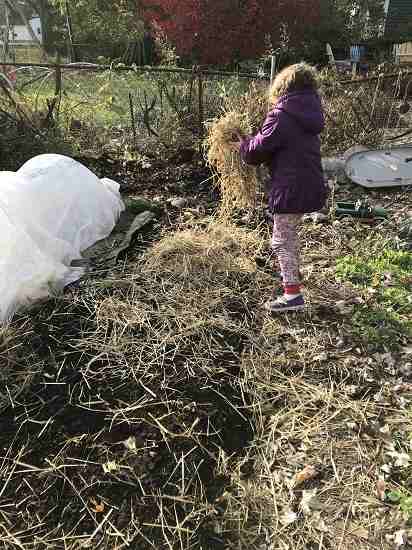
This fall as I put our beds to rest for the season, I’m reading Stout’s Gardening Without Work (1963). Stout’s wisdom and humor have re-emboldened me and I’m on a mission to cover our farm in a thick blanket of mulch before this winter settles in. I have requests out for moldy straw across social media platforms. I’ve been filling the car with the leaves the neighbors have bagged and left for the city to compost. And, I reconnected with our local Rabbit rescue organization to collect their bedding and manure.
I’m half the age Stout was when she left this world (she lived to be 96!). But my body already feels older than when I started farming 6 years ago. If I hope to keep going and growing into the future, I need to work smarter not harder and I believe the Stout System will help me get there. If you’re a devotee, please share your experiences and advice in the comment space below.
Jodi Kushinsowns and operatesOver the Fence Urban Farm, a cooperatively maintained, community-supported agricultural project located in Columbus, Ohio. The farm, founded in 2013, is an experiment in creative placemaking, an outgrowth of Jodi’s training as an artist, teacher, and researcher. Connect with Jodi onFacebookandInstagram, and read all of her MOTHER EARTH NEWS postshere.
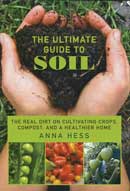
THE ULTIMATE GUIDE TO SOIL
Grow twice the fruits and vegetables in half the space on the farm, in the backyard, or in your window! Have you noticed the extraordinary flavors and yields emanating from even a small garden when the soil is just right? If you’ve ever been envious of your neighbor’s dirt or just curious about homesteading, then The Ultimate Guide to Soil is perfect for you. The book begins with a personality test for your soil, then uses that information to plan a course of action for revitalizing poor soil and turning good dirt into great earth. Next, you’ll learn to start and maintain a no-till garden, to balance nutrients with remineralization, and to boost organic matter with easy cover crops. Don’t forget the encyclopedic overview of organic soil amendments at the end. Old standbys like manures and mulches are explained in depth along with less common additions such as bokashi compost and castings from worms and black soldier fly larvae. Learn when hugelkultur, biochar, paper, and cardboard do and don’t match your garden needs, then read about when and how to safely use urine and humanure around edible plantings. With an emphasis on simple techniques suitable for the backyard gardener, The Ultimate Guide to Soil gives you the real dirt on good soil. Maybe next year your neighbor will be envious of you!
Order from the MOTHER EARTH NEWS Store or by calling 800-234-3368.
All MOTHER EARTH NEWS community bloggers have agreed to follow our Blogging Guidelines, and they are responsible for the accuracy of their posts. To learn more about the author of this post, click on their byline link at the top of the page.