Is leaf compost good for vegetable gardens? Most experts say yes, but the way you use them should depend on several factors.
Autumn brings cold weather, fallen leaves, and yard work. While raking up leaves consider using them for next year’s vegetables. Is leaf compost good for vegetable gardens? It’s some of the most beneficial (and FREE) organic matter you can find. But factors like pests, diseases, and tree species may determine how to use that compost.
- Instead of disposing of leaves or burning them, consider composting them for gardens.
- Compost methods include mulch, cold composting, hot composting, vermicomposting, and using livestock.
- Fall mulching protects soil from erosion, especially in absence of a snow blanket, and helps insulate overwintered crops like garlic.
- If overwintering pests are a problem, compost the leaves first. Choose hot composting for infestations.
- Consider using leaves as coop bedding. After cleaning out old bedding and manure, finish it by hot composting.
Using Leaves in Gardens
Whether you’re an organic gardener or you just want to get a larger harvest while spending less money on fertilizers, you’ve probably wondered what to do with raked leaves other than leaving them for trash collection. The good news is that leaf compost retains many macronutrients and micronutrients from the original living leaves, and they transfer that nutrition to the soil during decomposition. Putting leaves in gardens sequesters carbon, harnesses organic nitrogen for plant use, and provides food for earthworms, beneficial nematodes, and microorganisms essential for soil and plant health. But is one composting method better than another? It depends.
Your grandparents may have burned their fall leaves. And, while burning creates potassium-rich, alkaline ashes that add carbon to the soil, it also destroys the non-elemental compounds which may have built your soil better than the ash could. Microbes and earthworms can’t digest ash, which means they can’t turn it into worm castings or use it to build subterranean nitrogen. Plus, as cities grow, so does the risk of fire danger to other people’s properties. Many municipalities have banned burning yard waste. If you need potassium and alkali for root crops, it’s better to use clean hardwood ashes (sparingly, to protect earthworms) and to compost your leaves instead.
Is Leaf Compost Good for Vegetable Gardens?
The New Jersey Agricultural Experiment Station says that leaf compost buffers the adverse effects of alkalinity, acidity, or over-fertilization. Leaf compost increases soil’s cation exchange capacity, meaning its ability to hold the positively charged ions which influence soil structure and the nutrients available for crops. Leaf decomposition “…produces organic acids which combine with iron and aluminum ions, thereby reducing their potential toxicity to plants.” Essentially, leaf compost works as an organic failsafe. Even in conventional gardens, it protects against some negative effects of chemical fertilizers.
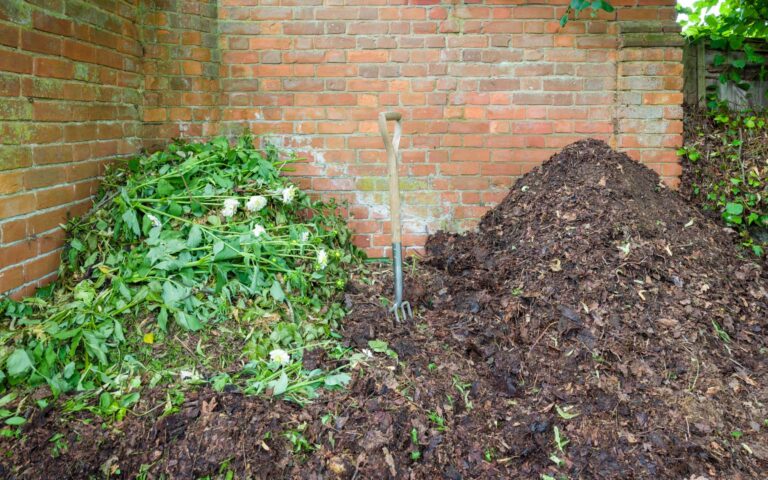
To make leaf compost, apply via mulch, hot or cold compost, or let your livestock help.
Leaf Mulching
Fall mulching is, by far, the least labor-intensive way to add leaf compost to gardens. This technique mimics what happens on forest floors: Leaves fall, then rain and snow sets them in place and begins the decomposition process. While this decomposition is slow, the leaves also shelter wildlife and beneficial insects. It protects soil microbes from wind and water erosion that strips away topsoil, and it avoids sun-bleaching and moisture loss that can kill the top layer of microbes in hotter locations.
During winter, mulch helps insulate soil when temperatures turn extremely cold. Arborists laud the benefits of applying mulch below trees, as it protects young roots and allows subterranean life to flourish. In addition, this layer acts as weed suppression: When weed seeds sprout within the mulch layer, they soon die because they cannot reach sunlight. Mulching with leaves also provides a free way to avoid winter mud in areas that don’t always freeze hard. If you need to use your garden during this wet and sloppy time, you may soon grow weary of scraping off your boots each time you enter the house. Mulch will keep you above the mud and will press the leaves into the dirt to begin decomposition for next year. Turning leaves into mulch is easy: rake them up then pile them on!
Cold Composting Leaves
But, if your garden suffers from pests such as squash bugs or potato beetles, avoid using leaves as mulch. Colorado potato beetle control methods include avoiding overwintering locations such as fallen bark and debris piles; instead, mulch with straw pine needles. Cold composting, which involves piling organic materials and allowing nature to slowly do its work, might not kill overwintering pests.
Host Composting Leaves
But hot composting raises the internal temperature above 130 degrees Fahrenheit. While this temperature might not kill all weed seeds, it will kill most of them plus those pests that might have returned the next year. Hot-compost infested crops, such as squash vines or potato plants, to prevent pest return while keeping nutrients bio-available.
Since dry, fallen leaves are low in nitrogen, they don’t add many nutrients before decomposition. Unlock their potential by mixing them with high-nitrogen products such as blood meal, poultry manure, cow or horse manure, grass clippings, or coffee grounds. (Note: The materials mentioned first in this list are highest in nitrogen content, decreasing as the list goes on. So you would need much more of the coffee grounds, in relation to the leaves, than you would of poultry manure.) Mixing higher-nitrogen materials with higher-carbon materials allows bacterial growth which decomposes the leaves for garden use.
Dry Leaves with Livestock
Dry leaves are also great for vermiculture. Add those clean fallen leaves to worm composting bins.

If using dry leaves as chicken coop bedding or within larger livestock pens, avoid toxic species. Prunus (peaches, plums, cherries) leaves are high in cyanide when wilted but have much lower levels when dry. Avoid specific evergreen needles, such as deadly yew. Dried red maple leaves and bark can be toxic to horses and other large livestock. Nontoxic leaves like poplar, elm, and aspen make great bedding that chickens love to dig in while looking for insects. When cleaning the coop, scoop up old leaf bedding plus chicken manure, then add it to a hot compost pile so it can continue decomposition before planting season.
Can You Use Too Many Leaves in Garden Soil?
While a thin layer of leaf compost helps seeds germinate, the New Jersey Agricultural Experiment Station recommends adding less than 1/8th inch on top of leaves, since more than that can hamper germination. To utilize more, spread a ¾-inch layer of compost on the ground, tilling leaves into garden soil at the top 6 inches. You can add leaf compost to potting soil at up to 30%.
And how often should you use leaf compost in gardens? Every year! Of all the organic material you add to gardens this year, less than half of it will persist until this time next year and very little of that will remain the year after. Because of this, add leaf compost annually — no matter which method you employ.
Is leaf compost good for vegetable gardens? Absolutely. But putting leaves in gardens may involve a little forethought. No matter what composting method you choose, leaf litter is valuable.
Sources
https://njaes.rutgers.edu/fs117/
https://www.soilquality.org.au/factsheets/cation-exchange-capacity
https://vet.tufts.edu/news-events/news/truth-about-red-maple-leaf-toxicity