Grow the best perennial fruit plants for succession harvesting to enjoy fresh berries, plums, cherries, persimmons and more throughout the growing season.
Most of us would agree you can break gardening into two main classes; vegetable and flower. But don’t forget the fruit! You could make the argument that vegetable gardening already has fruit in it, but I’m not talking about melons and cantaloupes. No, I mean the rest of the fruit world, the fruits that don’t comfortably fit in a garden dominated by annuals. Because let’s be honest, we even treat perennial peppers and tomatoes and biennial carrots and beets like annuals, harvesting what we can the first year and abandoning them to the frost at season’s end.
Most fruits are of a more permanent nature, requiring a certain amount of planning and long-term commitment. There are some exceptions, such as the strawberry patch that’ll give a crop the same year it’s planted. Even then, no one sets out to put in the effort of creating a strawberry bed for just one year’s harvest. In my experience, there are two main ways to approach fruit gardening: the vegetable model and the floral model.
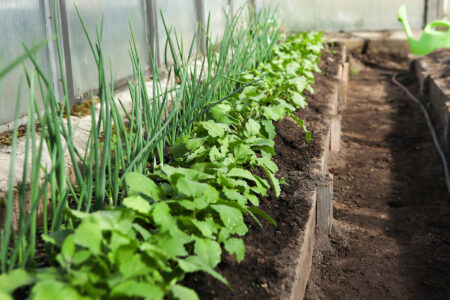
The vegetable model creates a dedicated plot of ground planted with rows of bushes, canes, or trees, all carefully laid out for ease of cultivation and management. That’s the basic premise of an orchard. It’s also a high production model and not necessarily well-suited to a suburban backyard situation. If you have large tracts of land and the time to fiddle, this could be a good model for you.
The floral model is also known as “edible landscaping.” It involves planting fruiting trees and bushes in the landscape where they’ll have visual impact. Striking features, such as espaliered fruit trees, strawberry pyramids, and grapevine-draped pergolas, come to mind. With a bit of planning and creativity, you can easily create a backyard paradise – your own Garden of Eden, if you will, just without a reptilian tempter.
In this article, we’ll explore some fruiting possibilities and how to fit them into your backyard plan. My suggestions are based on a mid-Atlantic Zone 6 garden. Your garden will most likely have a different palette of fruit options. And don’t be afraid to push boundaries a bit; you may be surprised by what you “shouldn’t be able to grow here!”
So, how much fruit can you grow at home? Let’s put a calendar together, shall we? Before we do, let me take a moment to point out there are some fruits you may want to let the professionals grow for you, including apples, peaches, and cherries. Now, if you have your heart set on these fruits, you should try them (I do have three apple trees in my backyard). However, they tend to be more persnickety and can require more care than most gardeners want to provide, especially if you’re seeking fruit that looks at least comparable to something you could purchase at the grocery store. If you want to give them a try, seek out good local recommendations that’ll help you beat some of the various bacterial, fungal, and insect pressures you’ll be up against. For example, ‘Honeycrisp’ apples have some natural scab resistance. Yellow-skinned apples tend to be less appealing to apple maggot flies, a common pest that lays eggs in the flesh that leads to off-flavors that eventually rot the fruit. Ask local farmers to recommend cultivars that are more likely to thrive under a “no-spray” regimen. Or, support those same farmers and the local economy and purchase these trickier fruits to supplement your backyard harvests.
Early Summer Fruit
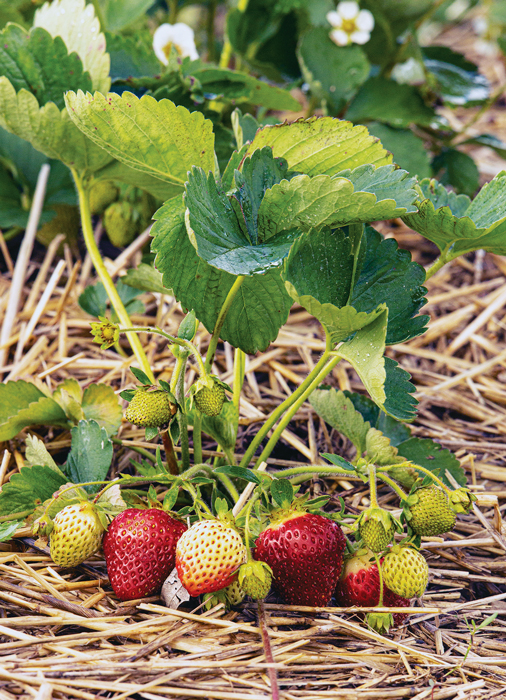
Our calendar starts with fresh strawberries in June. Strawberries are a great place to start, not only because they ripen early, but also because they’re a fruit you can harvest the same year you plant them. They also make an excellent focal point in your vegetable garden. Or, imagine a raised bed of strawberries in the center of a four-square garden. Often, strawberries are planted in a stacked pyramid of raised beds. I’ve even seen elevated rain-gutter beds of strawberries in a greenhouse, eliminating the need to stoop over for harvest. Terra-cotta strawberry jars may look nice but should be reserved for herb plantings or succulents; they’re just too small for much of a berry crop.
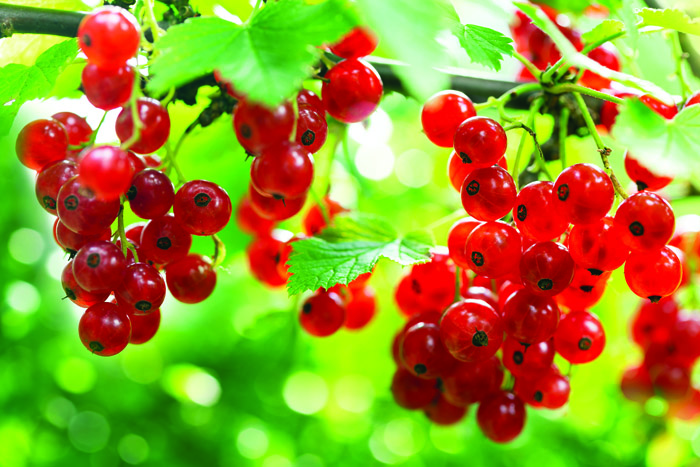
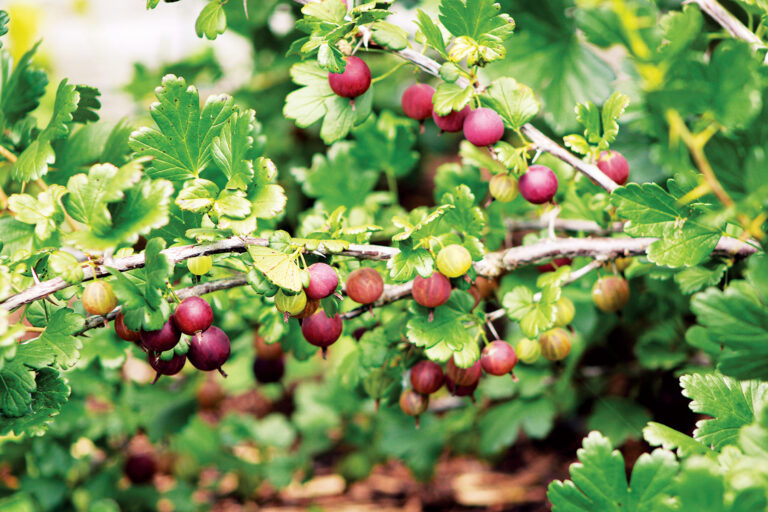
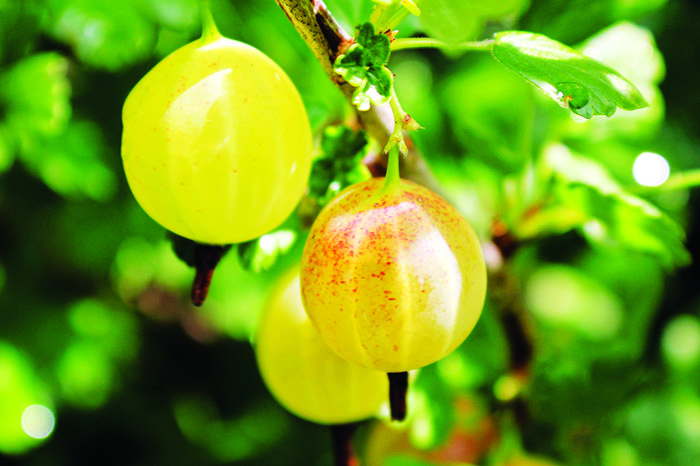
Next in line are gooseberries and currants, both members of the Ribes genus. There’s a curious matter of legality concerning Ribes. At one point, the U.S. was importing white pine seedlings from France and accidentally introduced white pine blister rust, which requires an alternate host – black currants. Subsequently, many states, in an effort to protect the lumber industry, banned cultivation of all Ribes plants. Many of these laws are still on the books, and some are still enforced. Check with your state extension office before planting any Ribes.
Currants are excellent for jams and jellies, but they may be a bit tart or, in the case of black currants, too resinous for most tastes. Gooseberries, depending on the variety, can be snacked on out of hand or made into mouthwatering desserts or jams. Currant bushes do tend to sprawl but are otherwise well-behaved. Gooseberries are usually armed with long, fine, and vicious thorns, so wear long sleeves and gloves to harvest – or pick at a careful pace. Give a gooseberry bush some extra space in its bed so it doesn’t attack as you mow past it.
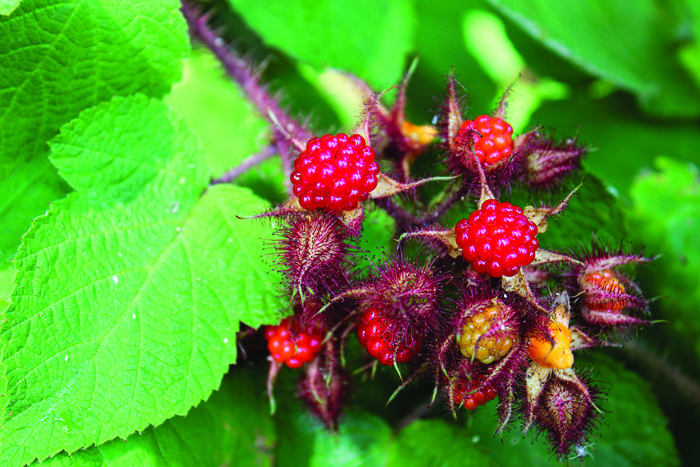
Speaking of thorns, wineberries and raspberries, both red and black, are next on the schedule, rounding out the month of July. By the time raspberries fade out, blackberries are ready to take their turn supplying fruit.
Cane fruits are notorious for their ability to “walk” and invade neighboring territories, eventually creating an impenetrable thicket where the most succulent berries always seem to be in the middle. They also need to be thinned out every year, as each individual cane lives for only two years, growing (or growing and fruiting, in the case of ever-bearers) one year and fruiting the second, before dying out at the end of the season. With new canes being produced every year, the berry production never stops. Berry canes are ideal for creating fence lines, especially if grown on wire trellising.
High Summer Fruit
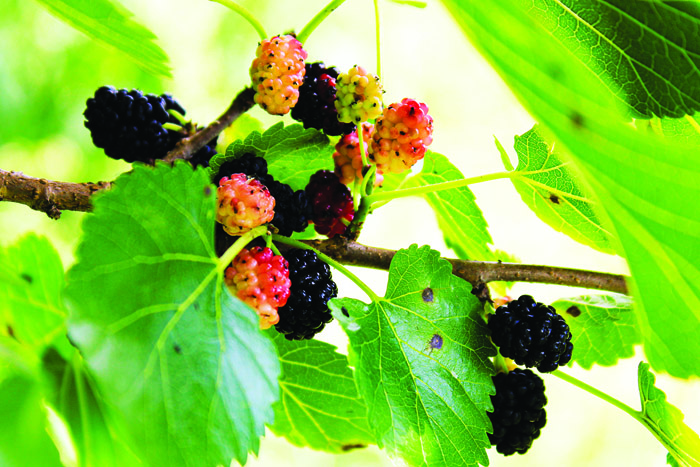
In the heat of July, tree fruits are just getting started, with cherries and mulberries coming in alongside raspberries. Just imagine homemade cherry or mulberry pie, jams, tarts – if any last long enough to make the trip to the kitchen! Both of these tree fruits are pretty low-maintenance – with one caveat being that birds love raiding the crops. That would be bad enough, if the birds didn’t also have a habit of perching on clotheslines above cars and over patios before doubling down on the insult of berry theft.
Not only does mulberry juice stain, but the seedlings also pop up everywhere. If you’re going to plant mulberries or cherries, install them well away from the house. To protect your crop, cover trees with netting or hang old CDs or sparkle tape in the branches to scare the birds off. Another tactic is to plant extra so there’s enough to go around.
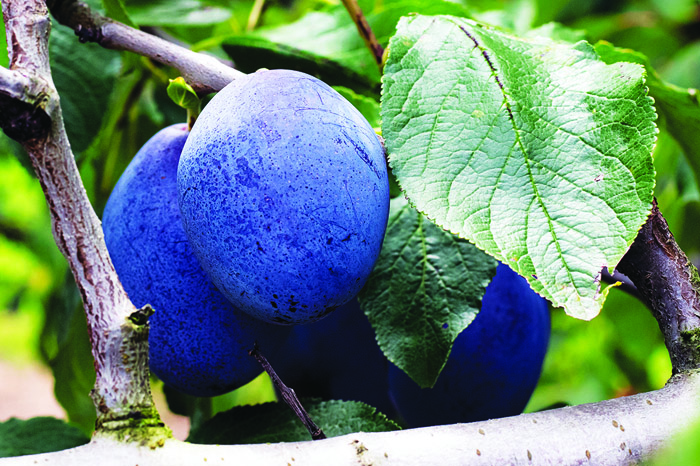
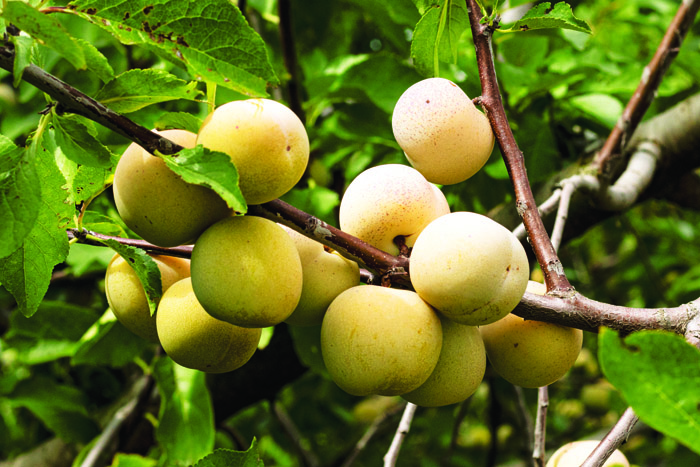
Afterward, peaches and plums come into season. Plums can easily be fit into a home planting, but peaches can be a bit tricky! Tremendous patience is advised.
Fall Fruit
As summer slides into fall, the tree crops continue with pears, both European and Asian. Pears are an excellent addition to almost any backyard fruit operation, either as freestanding trees or trained flat to a fence or wall as an espalier. I’ve even seen fruiting pear arches and tunnels – although that’s a lot of pruning and training, a true dedication to fresh fruit and aesthetics.
In general, pears are pretty low-key and easy to grow. The biggest concern is fire blight, a bacterial disease that causes entire branches to blacken and droop, exactly as if scorched. It can rapidly move through the entire tree, or an entire orchard, as if driven by actual fire. The only recourse is to cut out the damage, chopping at least half a foot to a foot below infected wood. Be sure to explore blight-resistant varieties.
An important difference between Asian and European pears is in the way they ripen. Asian pears ripen completely on the tree and should never be picked early. Picked too soon, they won’t ripen any further. Once you experience the sweet, juicy explosion that’s a perfectly ripened Asian pear, you’ll be hooked, and no supermarket pear will ever compare.
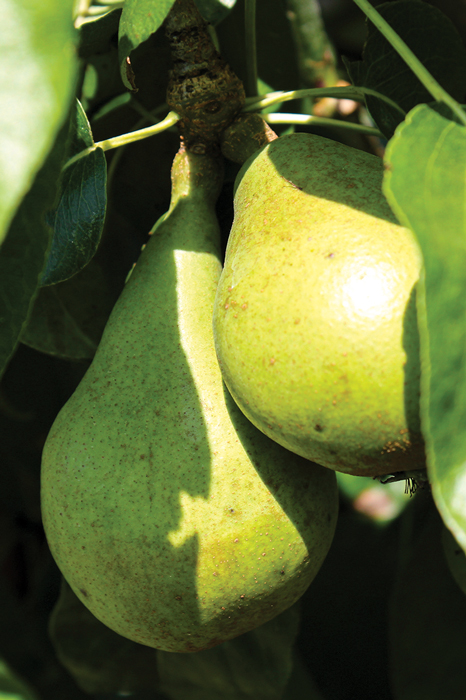
By contrast, European pears have a weird habit of refusing to tree-ripen properly. They need to be picked at the green-ripe stage, their flesh soft enough to crunch like an apple, but before they begin softening to the juicy, melting texture we all love. Left on the tree, European pears start rotting from the inside out before they become ripe. With a slight twist of the wrist, pick when they soften a bit at the stem and begin to “slip” from the tree. Store them in cool conditions for a few weeks to allow European pears the time and conditions to ripen perfectly.
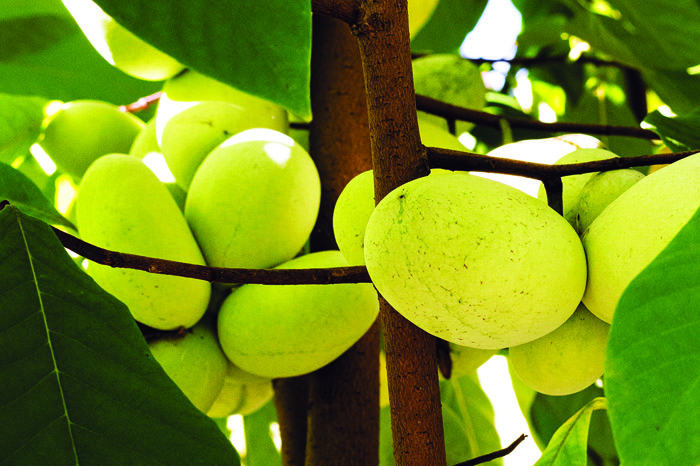
Don’t forget the fruits your local orchards may not be growing; dare I say, the “weird” stuff? I’m talking pawpaws, persimmons, and figs, among others. These three also provide a nice spread of fall fruit, from September pawpaws (great for bread, muffins, pancakes, and desserts), through midseason figs, and finishing with persimmons, both American and Japanese. Even better, they’re all largely pest-free and great for starting conversations and trying new seasonal recipes.
So, what about the rest of the year, you ask? The so-called “back half”? That’s where the jams and jellies come in, along with fresh-stored, canned, and dried fruits – making use of all the ways food was preserved before modern transportation shrank the world we live in. If you really want to stretch the season and don’t mind taking liberties, you can add rhubarb, an early spring “fruit,” to your planting schedule. Remember to contact your local extension office for a more comprehensive list of fruits that’ll grow in your region.
If you start small and improve your fruit-growing capacity, you won’t need to rely solely on the supermarket. You may still buy tropical fruits and out-of-season favorites, but once you’ve tasted how good fresh, in-season fruit can be, you may find yourself expanding your fruit plants every year. With a little planning and artistic expression, you’ll have a backyard Eden that’ll be the talk of the neighborhood!
A Fruitful Year in the South (Zones 8-11)
Those who grow in the South and Southwest don’t usually have to deal with restrictive frost dates when it comes to fruits. Here’s a handful of fruits you can plant and enjoy for years to come where temperatures tend to stay a bit warmer.
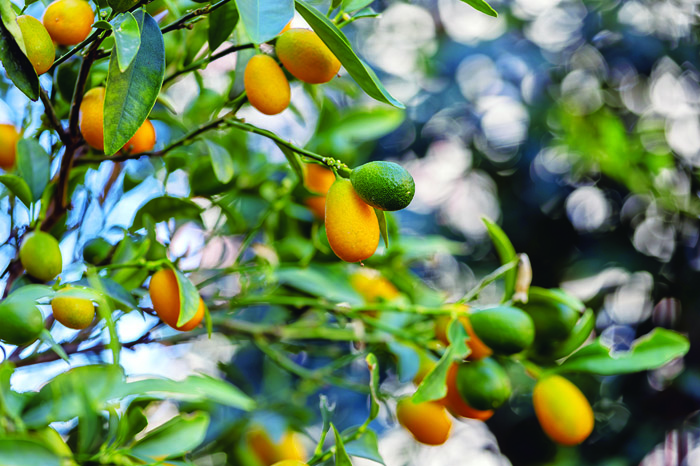
- Kumquats. Most folks know you can grow citrus best in the warm zones (there’s a reason California and Florida “argue” over who grows the best oranges). But kumquats have their own special little slice of the edible landscape. The whole fruit is edible (yes, even the peel, which is semisweet, and the seeds, which are mildly bitter). The tree itself is evergreen, boasting dark-green leaves and delicate white flowers that bloom in spring and early summer. Though considered cold-hardy, kumquats don’t do as well in areas colder than Zone 8a, as a hard frost will kill the tree.

- Grapes. Grapes require some patience to establish (they can be finicky, requiring a steady fertilizing and watering schedule), but once they take off, you’re in for an abundance! Personally, I’ll always sing the praises of the muscadine, a grape native to the U.S. and used in the South for everything from ice cream topping and jellies to wine. A word of caution: Don’t expect a good fruit the first year. Grapes in general take about a year to establish, and the second year tends to yield a better, sweeter harvest. Muscadines are best grown in hot, humid regions, and they can be harvested in fall.
- Jojoba. Yes, jojoba is a fruit, just not an edible one. Jojoba is well-known for its oil in body-care products, but did you know it can be used for minor wound care and even as a natural pest repellent? You’ll need a warm, arid environment to grow it, so Zones 9 and 10 are best-suited, but you’ll need at least two trees, as jojoba is dioecious (meaning plants are either male or female). Jojoba seeds are harvested in late summer, when they’re dry.
- Black cherry. Live in a swampy area? Wild black cherry (also known as “rum cherry”) is likely just down the bayou from you. Black cherry thrives in the hot, marshy regions of the South – up to Zone 9 – but, despite its name, it isn’t a true cherry; in fact, it’s more closely related to chokecherries. The trees bloom around April and the fruits are ready for harvest in late summer to early fall.
– Karmin Garrison
Andrew Weidman maintains a spread of fruitful landscaping, including figs, gooseberries, pears, and apples, in his suburban backyard in Lebanon, Pennsylvania. He has been involved with the Backyard Fruit Growers, a grassroots organization promoting at-home fruit culture, since 2002.
Originally published in the April/May 2026 issue of MOTHER EARTH NEWS and regularly vetted for accuracy.