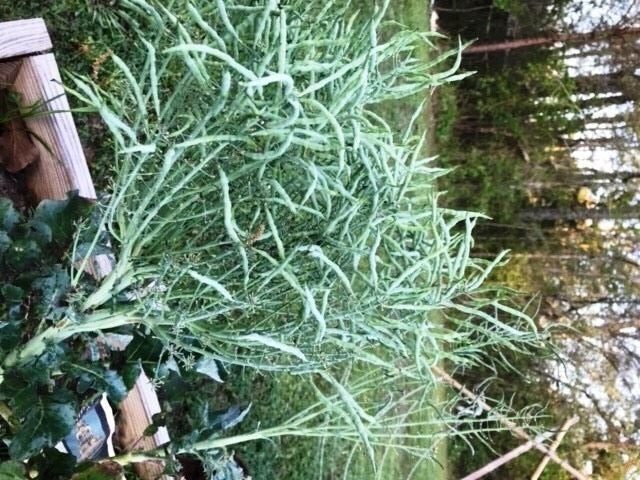
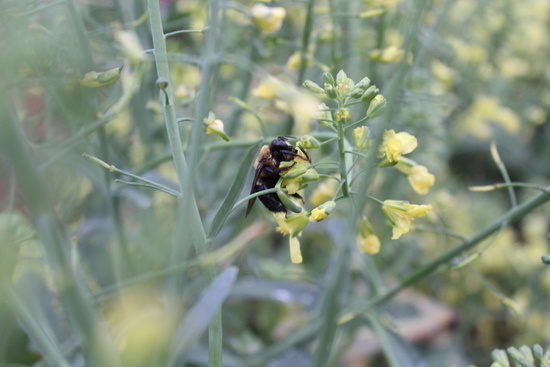
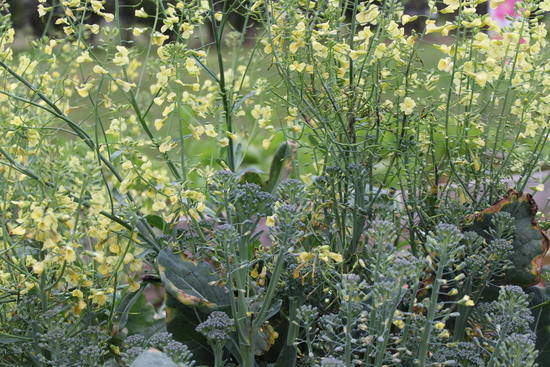
It’s March in Louisiana and I finally am turning my attention to my raised beds. Our weather has been, humid, cold, warm, wet, and even wetter (really, two kinds of wet). With all of the rain, I have been dragging my feet on preparing my raised beds for the spring and summer planting. However, I’ve actually had a great experience watching my Brassica plants go through a cycle that I’m usually in a hurry to disrupt so I can move the process along.
Pollinator Support During Brassica Lifecycle
I have never before watched the entire cycle of Brassicas: from seed to shoot, seedling to plant, harvest, to flower, to seed again. In January, after I harvested broccoli (and all the little delicious shoots), cauliflower, cabbage, and kale, I just left the plants alone. Over February I began to notice these bright beautiful flowers reaching for the sky.
I’d been reading about pollination and enhancing my habitat to encourage pollinators, so I was more than happy to allow the Brassicas to continue to thrive and told myself that my little early bees and butterflies would have a treat (courtesy of my laziness).
Then I started thinking that maybe I should go ahead and pull up the plants, because they must surely be taking nutrition from the soil and were a little unsightly with yellow leaves. Also, I’ve read in many Extension publications that disease begins to spread as plants age and that putting diseased plants in compost can risk its spreading if material ends up not becoming fully composted by the time of application.
So I decided to go ahead and start the process of pulling the Brassicas out. I was happy to discover small pods intact — my plants had healthy seeds.
Caution When Seed Saving
The small pods on the plants were amazing to me and I began to dissect the pods to see what their tiny contents held. Surprisingly, all of the Brassicas seeds were basically the same color (black) and most were soft. Evidently, the plants weren’t dry enough for any seed saving. Plus, the cross pollination with so many varieties of Brassicas would have caused me to have mystery seeds for the future.
Next year I will focus on seed saving from heirloom varieties and make a conscious effort to learn how to prevent cross pollination.
Brassicas, thank you for teaching me about all of your beautiful stages. From seedlings to seed pods, you have been enjoyable to my family. The pollinators enjoyed your flowers and have had nectar from your labor.
The winter season is coming to an end, however, I’m just now learning about the amazing plants that I pulled out to replace with something new. Plus, I found out from a gardening friend that consuming the Brassica flowers is delicious. But, that’s a topic for another day. Happy Gardening!
Esther Coco Boelives in Louisiana, where she works to enhance pollinator habitats, plants herbs in her home garden, grows heirloom tomatoes, and exposes children to gardening. Connect with Esther onFacebook.
All MOTHER EARTH NEWS community bloggers have agreed to follow our Blogging Guidelines, and they are responsible for the accuracy of their posts. To learn more about the author of this post, click on their byline link at the top of the page.