

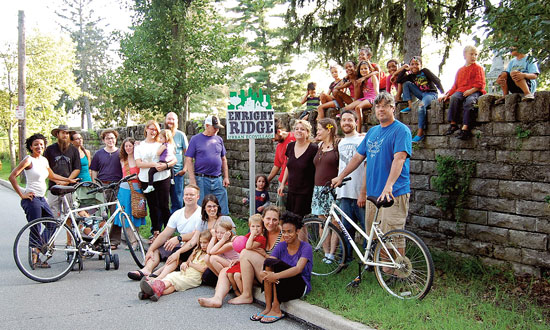
Located in Cincinnati’s historic Price Hill district, Enright Ridge Urban Ecovillage faces challenges familiar to any older urban neighborhood. In June 2004, Jim and Eileen Schenk invited several neighbors to consider pooling resources to strengthen the neighborhood’s ability to deal with potential disruption from such sources as climate change or economic breakdown. Their grass-roots ecovillage was born that night.
The neighborhood had been hit hard by the recession, and changing demographics led to exodus, foreclosures and vacant properties. The newly organized ecovillagers began buying these blighted houses, and then rehabbing and selling them to new homeowners. The strategy succeeded, and the ecovillage, now at 110 households, may expand to another street because it lacks sufficient housing to meet the many requests from potential new members.
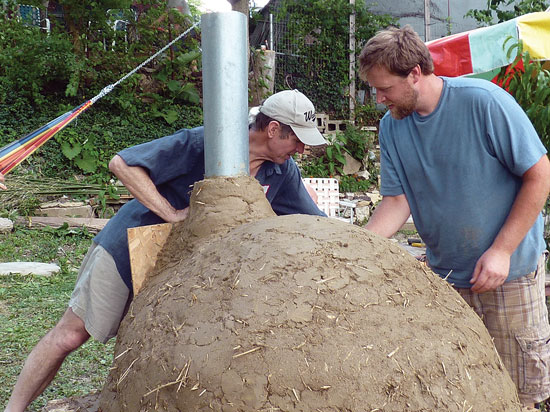
Though Enright Ridge’s residents come from a variety of faith backgrounds, they share a similar spiritual approach: The Earth is sacred, and humanity’s success depends on honoring that reverence in their daily lives. Residents promote sustainable living practices, tend rain gardens and forest gardens, plant trees, build walking trails through the woods, create shared rituals, and offer educational programs focusing on sustainability.
“We strongly believe in the need to revitalize our cities,” Jim Schenk says. “For practical reasons, it makes sense for humans to stay clustered in a geographic area, but we need to lead ecologically sensitive lives there. The urban ecovillage is a good way to do this — using existing houses and infrastructure.”
By organizing as a nonprofit, Enright Ridge has been able to secure funding to purchase and rehab foreclosed or badly dilapidated houses in the neighborhood. So far, in addition to the 110 households, they’ve fixed up 13 houses — making many energy-efficient upgrades. Some of the larger buildings were multifamily units that they’ve offered as rentals — a choice that has enabled younger and lower-income families to move in. The plan is to rebuild from within the neighborhood boundaries, one home at a time — and it’s working.
Some members have hired a farmer to grow a variety of crops in backyards and vacant lots for a CSA program. He’s moved to the ecovillage and helps residents grow their knowledge base beyond simply working a community garden. “People can buy into the CSA, trade their labor for shares, or volunteer their time to learn how to farm by working with ‘their’ farmer,” Schenk says.
Ecovillage members hold two potlucks a week and invite neighbors. These events help develop friendships and strengthen community bonds. Children are free to play outdoors throughout the neighborhood, in backyards and in the woods around the ecovillage — an experience urban children seldom enjoy.
Based on their experience, members of Enright Ridge Ecovillage have written Starting Your Urban CSA, a free step-by-step guide that’s available on their website. Schenk also says he’s happy to consult with anyone who wants to get started with any aspect of creating an urban ecovillage. Contact him online at Enright Ecovillage.
Want to learn more about our 2015 Homestead Hamlets? Read Joining Forces for More Sustainable Communities to learn more.
K.C. Compton is senior editor at MOTHER EARTH NEWS magazine, and formerly was Editor in Chief of our sister publications, The Herb Companion and GRIT. A huge fan of the food chain, from molecules to meals on the table, K.C. is passionate about the idea that most of what we need to be healthy can be found in the garden.





