


Every five to seven years, Congress passes a little understood legislation called the Farm Bill. To a large extent, the Farm Bill writes the rules and sets the playing field for the contemporary U.S. food system, determining what we eat, how much it costs and where it is grown. You may not be happy with what you learn. In this excerpt from Daniel Imhoff’s Food Fight (Watershed Media, 2012), read about how the Farm Bill could lead us from the “Age of Monoculture” into the “Age of Perennials.” The following excerpt is taken from Chapter 21, “The Next 50 Years: Perennialization and Ecosystem-Based Agriculture.” Stop by our online store’s promotional page to purchase Food Fight at a 25-percent discount until the end of 2012.
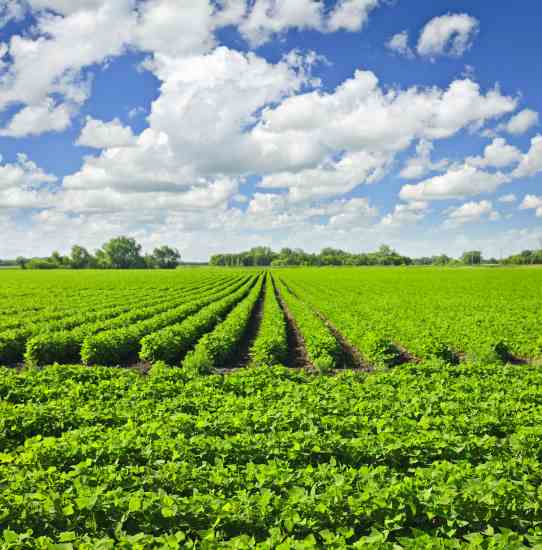
Ours is the Age of Monoculture. Farmers reap ever-increasing annual harvests by planting hybrid varieties, pumping them up with fossil fuel fertilizers, and managing them with pesticides, herbicides, and industrial machinery. A drive through rural North America can appear eerily sterile — feed corn, soybeans, wheat, or cotton as far as the eye can see, uninterrupted by so much as an acre of natural habitat.
In response to grave concerns that this soil-depleting industrial food system will eventually collapse, a new vision for agriculture is emerging: the Age of Perennials. This idea rests on a transition to deep-rooted, diverse, long-lived perennial plants that cover and permanently protect the soil, and don’t need to be re-seeded annually. Rather than being mechanically imposed on the landscape, a perennial mixture would be designed around natural ecosystems’ processes. Renewable resources like sunshine, groundwater management, and nutrient cycling would drive the production process.
According to the Salina, Kansas-based Land Institute, the goals of perennial farming include:
- Extending the productive life of soils from the current tens or hundreds of years to thousands of years;
- Developing resilience to extreme rainfall, droughts, and insect and pest pressures;
- Reducing land runoff that creates coastal dead zones with disastrous effects on fisheries;
- Maintaining the quality of surface and ground water;
- Building food security to deal with population growth.
Starting With Perennial Grasses
Already we have one common perennial agriculture system: hay and pasture-based grazing operations. Pastures can be comprised of a variety of perennials such as timothy, orchard grass, clover, and alfalfa. Some farms and ranches are exclusively devoted to grass-fed livestock production, while others rotate row crops with pastures to restore the soil, prevent pest buildups, and diversify the products they sell. Increasingly, orchards and vineyards are turning to permanent ground cover as well, and incorporating livestock grazing during certain times of the year. Such perennial farming systems are essential for regions like the Upper Mississippi watershed, where decades of erosion and leaching nutrients have resulted in a massive dead zone in the Gulf of Mexico.
A 12-year research program conducted by Minnesota’s Chippewa River Watershed Project has been studying this type of solution. Scientists have documented that where there are concentrations of perennial plants, significant reductions in soil sediments and agricultural nutrients in surrounding watersheds follow. Their findings suggest that if just 10 percent of critical lands in the Chippewa watershed were converted to rotations of pastures and other perennial crops and habitats, the surrounding waterways would see measurable improvements in water quality.
Critics frequently argue that shifting to such diversified agricultural methods is a luxury the world can’t afford; that only chemical- and technology-intensive farming can provide the volume of food necessary for a growing population. Peer-reviewed studies increasingly show the opposite, however. Sustainable agriculture systems are highly productive, and also have other benefits — such as a reduced carbon footprint, the elimination of toxic chemicals, prevention of soil loss, habitat protection, and beauty.
Modern farmers have developed sophisticated and profitable systems — including organic, biodynamic, and rotational grazing practices — based on the interplay of ecology and farming. This marriage of specialties is referred to as agroecology. Great strides already have been made in the production of dairy and beef cattle, swine, and poultry on small- and large-scale pasture operations. Animals are being raised in appropriate numbers and are not solely dependent on trucked-in feed. As in a healthy ecosystem, their wastes become soil nutrients rather than toxic byproducts that overflow into watersheds.
The Next Step: Perennial Grains
Science is now on taking on a new agroecological frontier: perennial grains. Perennials have many ecological advantages over annual crops. Because they live longer and develop deep roots over time, perennial plants have greater access to ground water. Also, those deep root systems make them less susceptible to wind and rain, protecting the soil from erosion.
Innovative research has been underway for decades at the Land Institute, Washington State University, and other institutions to cross-breed food crops with close wild perennial relatives. The goal is to develop commercially viable perennial grains, oil seeds, and other crops that would form the foundation of enduring farming practices that don’t compromise the soil, poison the environment, or degrade water quality. One can imagine, for example, a farm field dominated by perennial wheat or sunflowers that can remain productive for many years, without the need for annual tilling, reseeding, or applying heavy doses of chemicals.
The next leap forward in agroecology may not be that far off. According to the Land Institute, research in Canada, Australia, China, and the United States suggests that perennialization of major grain crops like wheat, rice, sorghum and sunflowers can be developed within the next several decades.
Toward a 50-Year Farm Bill
Just as in the days of the Dust Bowl, when the country faced devastating losses of soils, the Farm Bill presents the country’s primary tool for ushering in a new generation of agricultural thinking. It is, after all, the main economic mechanism we have for accounting for things that the market does not address: stewardship and health. Because it is renewed regularly every five to seven years, the Farm Bill also presents a path that can be assessed and updated at regular intervals.
A coalition of organizations and sustainable farming advocates, led by Land Institute founder Wes Jackson and author Wendell Berry, and farmer-philosopher Fred Kirschenmann, has called for perennialization to become a focus of Farm Bill spending over the next 50 years. U.S. Department of Agriculture funding from the Farm Bill could jump-start this urgently needed transition. And with its countrywide reach and mission to safeguard the food system, the USDA is poised to take the lead, as it previously did with the industrialization of farming. It already has a network of research and extension services, sizable budget, and interactions with tens of thousands of farmers and landowners.
Transitioning from the age of monoculture to the age of perennials and ecosystem-based farming will be a long process. The Land Institute’s June 2009 report “A 50-Year Farm Bill” asserts that such a revolution in farming is attainable if only we choose to realign priorities to achieve it. But these changes lie well within the capacities of American farmers working the world’s best soils, and all can be achieved on current levels of federal funding. It is a question of realigning incentives so that the self-interests of the farmer coincide with the collective long-term interests of the nation.
Fifty years may not be enough time for a complete transformation of the food system, but the challenges are so urgent we simply have no time to waste.
More From Food Fight:
American Farmers: An Endangered Species
Corn Ethanol: Growing Food, Feed, Fiber … and Fuel?
This excerpt has been reprinted with permission from Food Fight, published by Watershed Media, 2012. Visit the MOTHER EARTH NEWS store’s promotional page before the end of 2012 to buy Food Fight at a 25 percent discount.






