Vitamin B12 is the one nutrient that we can’t get from the plants in our gardens. If you are trying to feed yourself from homegrown food, you would need to include animals, since B12 is only available in significant quantities in animal products. Your body can store B12, so a deficiency won’t show up immediately—maybe not for years—but eventually it will catch up to you. Vitamin B12 deficiency affects the brain and the nervous system and an early sign may be irrational anger. In the elderly a B12 deficiency could mimic Alzheimer’s disease. If you are a student of permaculture, you already know that you need to look beyond the vegetable garden with your permaculture plan and include your whole property. In expanding beyond the garden, many people think of adding chickens.
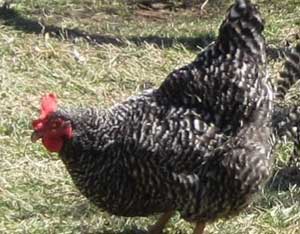
Besides the entertainment value of watching them, for the price of chicken feed, hens can give much back to you. Each hen can be expected to give you about 200 eggs or more per year plus her manure for fertilizer. At the end of her productive life, she will give you herself. In a sustainable diet, if we are eating eggs, we must consider the whole of the poultry that produced those eggs. There will be as many roosters hatch out as hens. They should go into your meals, as well as the old hens. In a sustainable diet, there will be no broiler industry, which are chickens bred and raised solely for meat. We would eat less meat in different ways.
Young roosters and old hens require different cooking methods than the broilers who don’t move much. The meat will not be as tender, but it will be tastier and more nutritious, as long as those roosters and old hens have been allowed to scratch in the earth. There is a lot of goodness in the bones of those hens that will come out when they are stewed. Slow moist cooking is best, which makes crockpot cooking ideal for these birds. I generally chop the meat fine and serve it in gravy made from the broth. That would be served over mashed potatoes or noodles. Or, forget making gravy and just add some skinny (spaghetti or linguine) noodles to the broth and you have chicken noodle soup. To make this even better, you would have added homegrown carrots, onions, and celery or parsley to the water at the start of the slow cooking.
If we allow our chickens to forage for themselves, they will eat considerably less grain. Harvey Ussery has been doing some serious consideration about a homegrown diet for chickens and you can read about it in his book The Small-Scale Poultry Flock. In her book City Chicks, Patricia Foreman discusses a healthy hen diet and homemade chicken feed. She is the author of the Mother Earth News article Chickens in the Garden that appeared in the current April/May 2013 issue.
You would have to eat 2.6 large chicken eggs a day to get your vitamin B12 requirement. If you included cows milk in your diet, you could eat 1 large egg and drink 1½ cups of cows milk each day to get your B12. If you don’t have room for a cow in your plan, you might consider joining a cow share program for your milk. In my research, I was surprised to find that goats milk has less B12 than cows milk. I also found out that duck eggs have considerably more B12 than chicken eggs.
If you had a cow, you would be making cheese and butter and the resulting whey and buttermilk would make good food for a pig. A 3 ounce serving of pork is 40% of your B12 requirement. Cows need to give birth before they will give milk. As with the chickens, the young males and old females would then become part of your diet. Your share would be in proportion to your share of the milk taken. Maybe you will grow alfalfa in your lawn or garden to feed rabbits. A 3 ounce serving of rabbit meat would give you enough B12 to last for three days. Learn more about including animals in your diet at Homeplace Earth.
A sustainable diet is one that sustains both the eaters and the earth, with no deficiencies. When eating this way, you look for the connections where the extra from one process within your circle of food production becomes a resource for another. It is an integrated way of looking at eating and growing, and different than following vegan, vegetarian, or any number of other diets that are popular these days. Finding the right balance can be an adventure that I hope you enjoy.
Learn more about Cindy Conner and what she’s up to at http://homeplaceearth.wordpress.com/