Real Food

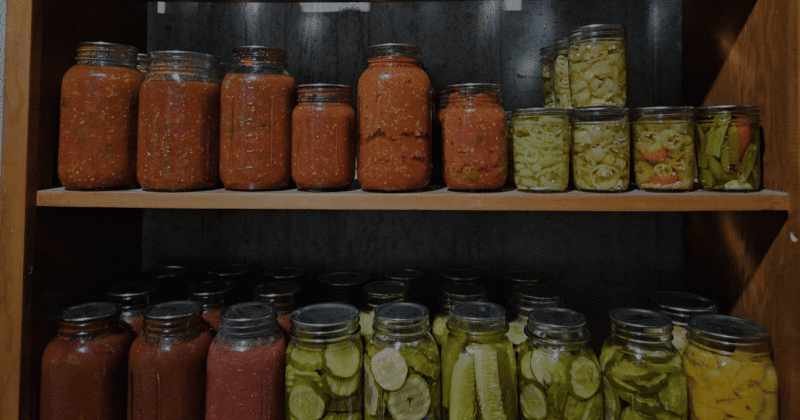
Savor the flavors of everyday real food, fresh from the garden or stored on your pantry shelves.


5/16/2013

Kari Underly of Range Meat Partners and Grrls Meat Camp, was part of the Good Food Financing Fair this year, and we asked Bob Benenson to check in about her plan for a comprehensive butchering academy in Chicago

The farm-to-table movement brings with it nose-to-tail eating as well, honoring animals by being careful to utilize the whole animal. There is great growth right now in the small-farm, pastured meat business, but this means we need more and more well-trained craft butchers.

Portland has Camas Davis, southern California has Lindy and Grundy, and Chicago has The Butcher and Larder and now we bring you Kari Underly who has a plan to train the next generation of craft butchers. 

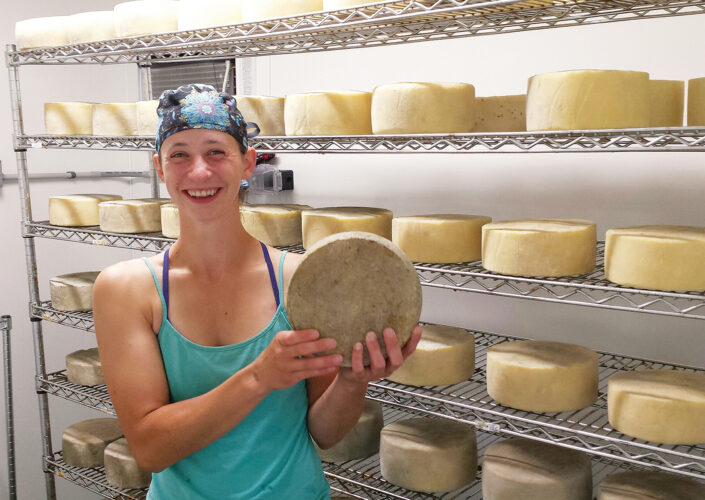
Kari Underly, an Indiana native and Chicago resident, is known nationally for her mastery of meat cutting. Her skill at butchery led her in 2002 to start Range, a consulting firm based in Chicago’s West Loop neighborhood that provides education and training, research and development, merchandising, and creative services for the fresh meat and perishable food industries.Kari Underly


Kari and her James Beard Award nominated book, The Art of Beef Cutting
Photo courtesy: Range Meat Partners

Now Underly has drawn up a business plan and is seeking to raise money to create the Range Meat Academy, which she says will be “the most comprehensive butcher training program in the industry.”

Underly made her case for this project at the Financing Fair staged by FamilyFarmed.org during its Good Food Festival and Conference held March 14-16, 2013 in Chicago, and said she gained confidence from the fact that a number of people stayed after the presentations to learn more about her project. “It’s more affirmation that this concept is right on target,” she says.

Underly plans to reach out to angel investors who put capital into new business, and says she will also inquire to see if there are restaurant groups that will want to put some money into the Academy. She is all ears if someone wants to partner on the project: “This is bigger than myself. So if somebody shares the passion and wants to partner, I’m also looking for that too. I need like-minded people who can help.”

And Underly hopes the project might attract public grants and/or tax concessions because of its educational mission, its job-producing potential and its link to the heritage of a city long known, through the poetry of Carl Sandburg, as “hog butcher to the world.”

She says, “I’d like to find a way to get to the mayor [and] Michelle Obama. People say, ‘Kari, you’re crazy.’ But I say, ‘No, this is a big idea.’”

Her goal is nothing less than setting the gold standard for butcher training, while helping to revive a trade that for many years appeared to be dying out as small, independent shops (like the one once owned by her father and grandparents) were replaced by supermarkets that increasingly obtained meat pre-cut and pre-packaged from big industrial packing houses.

Underly says there is no institution in the United States providing the kind of intensive, full-on training for butchers that she proposes for her Academy. She says even top culinary schools, whose core purpose is to train master chefs, lack the resources and space to provide training in ongoing whole-animal butchery.

“These kids coming out of culinary school, paying 50 grand and they’re slinging burgers for 12 bucks an hour, I’d like to offer them an alternative and focus on bringing back the trade,” Underly said. “That means butchery, hanging beef, being able to take that hanging beef, pork, process by hand, and learn different ways of preparing meat. Charcuterie, salumi, smoking brisket.”

Underly’s vision for the Academy includes a restaurant at which students would learn how to cook the meat they cut, and a retail meat counter. In each of these facilities, students would learn how to interact with customers, a skill that ultimately would help them succeed if they go into business for themselves.

Underly also says supporting a sustainable meat industry is one of her three goals for the Range Meat Academy, along with establishing the industry’s premier butcher training and certification program and elevating the value of the butcher’s trade.

She wants to build her school in the West Loop neighborhood in part to help preserve the area’s history as a food processing and wholesaling center, which in recent years has been challenged by gentrification. But she also foresees a possibility of providing economic development, jobs and healthful food options to distressed parts of the city, including some that have been labeled “food deserts.”

Says Underly, “The school could produce some of the products and then open up satellite businesses on the South Side and the West Side and bring these good quality meats and skills into these neighborhoods.”

a trussed hog

The star of Grrls Meat Camp, Chicago: A 205 lb Duroc Hog
Photo courtesy: Lily Baker

There are few butchers today of either gender who have the experience or family history in meat processing as does Underly. She is a third-generation meat cutter and learned the trade from her father at the family-owned Underly’s Market, which was located in Lydick, Indiana, just west of South Bend and about 90 miles from Chicago. Underly put her skills to print with a book titled The Art of Beef Cutting (John Wiley & Sons, Inc., 2011), and has made numerous television and radio appearances.

And while butchery has long been a trade made up mostly of men, Underly is in the forefront of the increasing number of women who have gained prominence in the field and she is actively trying to recruit more women to consider careers in butchering. She has become a featured teacher at the Grrls Meat Camp, described as a “modern butchery for women masterclass and workshop,” along with Kate Hill, who runs the Kitchen-at-Camont, a culinary retreat in southwest France.

The latest Grrls Meat Camp took place April 12-14 at Napoleon Ridge Farm in Napoleon, Kentucky, located about 40 miles southwest of Cincinnati. Underly is also scheduled to lead a Women Working in the Meat Business Retreat in Chapel Hill, N.C., May 20-22, which is being presented by the organization NC Choices and sponsored by the Farm Credit Associations of North Carolina.

Despite her family’s history in meat cutting, Underly said she faced varying degrees of sexism when she started on her own working for a supermarket chain near where she grew up — from relatively benign (suggestions she focus on ‘women’s jobs’ like the deli) to passive-aggressive (male co-workers who would not speak to her) to hostile, including inappropriate touching and “men who dropped trou in the cooler.”

But her triumphs over retrograde attitudes have helped establish her as a role model for an increasing number of women showing interest in the butchery trade, including younger aspirants who “don’t see ‘man’ and ‘woman’ as much as my generation does… The perceived stereotype is a little less for them.” Underly said she knew of five butcher shops that have been recently opened around the nation, and they’ve all been opened by women.

Want to know more about Kari Underly and her plans for Range Meat Academy?  Get in touch with her for more information!

We at FamilyFarmed.org and the Good Food Festival & Conference are proud to support her efforts to reinvigorate the art of butchery in the Midwest and around the country!

Author Bob Benenson is a journalist specializing in food and drink, with a focus on sustainability. Prior to relocating to Chicago in 2011, he covered elections and other things political at Congressional Quarterly in Washington, D.C., for 30 years. An avid home cook and fan of farmers’ markets and craft beverage makers, Bob lives with his wife Barb and cat Gracie in Chicago’s Lakeview neighborhood.


5/8/2013

white swansDon’t think I’ve given up on recipes, I promise, we’ll have more on the way. It’s just that’s there so much to write about! In this outing, though, I have inadvertently created an experiment with industrial food. All  to please some somewhat fussy swans. Swans, you say. Yes. The big white bird that swims variety. We live on a lake with a current (I know, that’s not supposed to happen in nature). It’s part of the Rideau Canal, UNESCO World Heritage Sight. Part of the heritage includes the Queen’s swans, descendants of a few pair given by the Queen many years ago. As I found out, these are discriminating birds of good taste, at least the ones here.

These birds having been stopping by for a handout now for a few years. The first time I saw them, I couldn’t believe it. I gingerly approached them with bread (their preference), knowing what they could do if you displeased them. This is one species of bomber class birds, and they can hurt you if they want to. Of the two that visit, one is more outgoing than the other, he (I think) preferring to be hand fed, while the other is more reticent. Now that we’re used to each other, they come 3-4 times a summer for a visit. And food. But not just any food.

Last year during one of their visits, I didn’t have bread (I haven’t a chance to test if whole grain is preferred over white), so I ran out there with plain doughnuts. Woe to me! They refused to eat them. Interesting, I thought.

They’ve already been twice this year, a couple of days apart, and now that I know what to keep for them, we’re happy. Please see latest photos. But now comes the second part of my inadvertent experiment. I had bought a while back some glazed doughnuts, ate one, decided to freeze the rest. And that was the status of things, until I decided I didn’t really like the doughnuts, figured they weren’t that good for me, but maybe the birds and animals would like one. So I took one and put it out there for them. OK, the doughnut moved a bit. Some little pieces were missing. Do you know, that after a week, this thing was still out there, more or less intact? It wouldn’t rot, it wouldn’t dissolve, it just sat there. I was amazed. And it didn’t get eaten. Which reminded me of the swans and the other doughnut. Hmmm. I got to thinking, these were both industrial doughnuts, and no animal wants them, avian or rodent. Not even a rodent? (As in squirrel, chipmunk.) Next thought: Why am I eating them? Time for the trash bin. In they went, with the assumption that 25 years from now, they may still be recognizable. Really causes one to wonder. I suppose the next thing to check is what’s in them, but I have a feeling I already know, or should have known.

So the moral of this long story is, industrial food is really not food at all. Yes, it can be eaten, but is it a food source, as in a nutritional source? If you ask the animals, the answer is no. Next conclusion: If I want a doughnut that badly, I’ll make my own. Which brings me to more experimentation, and a recipe for you next time. Isn’t life tasty? 

You can read more of Sue Van Slooten's food adventures at www.suevanslooten.com.


5/1/2013

Resist popping tabs this season and get familiar with the ultimate cola cure: soda syrups made from freshDIY Soda Syrups fruits and herbs.

Here's what you'll need:

Rhubarb Soda

  • 1 1/2 cups chopped rhubarb stalks
  • 1/4 c sugar
  • 1 1/2 c water

Mexican Root Beer

  • 1 bunch hoja santa leaves
  • 1 drop lemon oil
  • 1/4 c sugar
  • 1 1/2 c water

Honey Citrus Soda

  • juice of one navel orange + one red grapefruit
  • zest of 1/2 orange + 1/4 grapefruit
  • 1/4 cup honey
  • 1 c water

Here's how you'll do it:Homemade soda syrups

  1. Place fruit (or, for hoja santa, the leaves), sugar or honey, and water in a small saucepot and bring to a boil.
  2. Reduce heat and simmer for 15 minutes.
  3. Remove from heat and drain through a metal mesh colander.
  4. Let liquid cool for at least an hour. Store in a sealed jar or bottle in the fridge, where it will keep for up to two weeks.
  5. To use, pour two tablespoons syrup over ice (if desired) and top with 8 oz seltzer.

Old School brings back-to-the-basics content with a modern twist. Whether you want to learn to tie a bow tie, raise chickens in an urban environment, give yourself a honey facial, or drink your own homemade limoncello, Old School provides the needed inspiration and instruction to learn those skills. In just 4 months, Old School has garnered 9K Facebook likes, and a rapidly expanding fanbase that is extremely enthusiastic about our unique, visually breath-taking tutorials.


4/30/2013

On Friday, April 26, 2013, more than 1.8 million people sent comments vehemently opposing the approval of a genetically engineered (GE) salmon by the Food and Drug Administration (FDA). The effort was driven by a broad coalition organized more than three years ago by the Center for Food Safety and consisting of public interest, consumer, environmental and animal protection groups, along with commercial and recreational fisheries associations and food businesses and retailers.Salmon Steak

“It is extremely disappointing that the Obama Administration continues to push approval of this dangerous and unnecessary product through a broken regulatory system,” said Andrew Kimbrell, executive director for Center for Food Safety. “The GE salmon has no socially redeeming value; it’s bad for the consumer, bad for the environment, and bad for our native salmon.”

The FDA first announced that it was considering the approval of a GE salmon in August 2010. If approved, it would be the first-ever GE animal permitted for human consumption in the U.S. Friday marked the close of a 120-day comment period on a revised draft environmental assessment for the GE salmon, which has remained a concern for consumers and Congress alike.

“The fact that the consideration of AquaBounty’s genetically engineered salmon has gotten this far is a sign of how broken the U.S. current regulatory structure actually is,” said Dave Murphy, founder and executive director of Food Democracy Now! “If GE salmon is approved, it sets a dangerous precedent and will be a new low for the Obama administration in their failure to properly protect the American public and our food supply.”

In addition, documents disclosed on Friday through a Freedom of Information Act (FOIA) request raise serious questions about the adequacy of the FDA’s review of the AquAdvantage Salmon application. Among other things, while the FDA has refused to look at the environmental impacts of these GE fish beyond the Canadian and Panamanian facilities proposed in the application, it appears that U.S. Fish and Wildlife Service has already received requests to import AquAdvantage Salmon eggs into the U.S. for commercial production.

“Like FDA's food safety analysis, the environmental analysis leaves many questions unanswered, and includes numerous highly questionable and unsubstantiated assumptions,” said Michael Hansen, PhD, senior scientist at Consumers Union. “The decision on this fish is precedent setting; given the inadequacies of this document, a full EIS, including a failure-mode analysis that looks at the possibility of fish escapes, must be performed."

The groups responsible for organizing the over 1.8 million comments included: Avaaz, Center for Food Safety, Friends of the Earth, Food and Water Watch, MoveOn, Organic Consumers Association, Food Democracy Now, Credo, Consumers Union, Just Label It, Farm Sanctuary, Cascadia Wildlands, Earthjustice, American Anti-Vivisection Society, Institute for Responsible Technology, and the Alliance for Natural Health –USA.

"The public has spoken, loud and clear: There is simply no need for GE salmon," said Wenonah Hauter, executive director of Food & Water Watch. "It's time for FDA to put an end to this regulatory mess and admit that the environmental and public health risks are too big to approve this controversial product."

On Wednesday, 12 Senators led by Senator Mark Begich (D-Alaska) and 21 Representatives led by Congressmen Don Young (R-AK-01), Mike Thompson (D-CA-05) and Jared Huffman (D-CA-02) sent letters to the FDA urging it to halt its approval until their economic, regulatory and environmental concerns are addressed.  The Congressional letters come just months after an amendment offered by Senator Begich to the Senate Budget Resolution passed by voice vote in favor of the labeling of GE fish.

In addition to Congressional attention, the FDA received joint letters from major groups and businesses reflecting broad public opposition to GE salmon. A joint letter was submitted by CEOs of major environmental organizations including American Rivers, the Center for Food Safety, Earthjustice, Friends of the Earth, Food & Water Watch, Greenpeace, Natural Resources Defense Council, Ocean Conservancy and Sierra Club.  Led by the American Anti-Vivisection Society (AAVS), 22 animal protection organizations joined a letter to FDA opposing GE salmon, as did a number of religious groups.

"The AquAdvantage salmon studies, by their very design, underreport or fail to detect health problems and abnormalities in the fish. Yet we know that genetic engineering is fraught with failures and unintended consequences, and preliminary findings indicate that GE salmon are prone to deformities and may be more susceptible to disease,” said Nina Mak, research analyst with AAVS. “It is deeply concerning that FDA would ‘release’ this still-experimental technology into the environment."

A variety of other groups also have voiced their opposition to GE salmon, including several indigenous groups. Citing numerous fisheries and economic concerns, over 250 businesses, individuals, public interest groups and fisheries organizations, representing fishermen and -women across the U.S., joined a letter to FDA, including the Alaska Trollers Association, the Northwest Atlantic Marine Alliance, Bristol Bay Regional Seafood Development Association and the Alaska Marine Conservation Council.   

“U.S. fishermen take seriously the job of delivering a wholesome, sustainable, high quality product to market,” said Dale Kelly, executive director of the Alaska Trollers Association. “Applying such invasive technology to a food fish has not been adequately studied for its impacts on human health, the environment, or American jobs.”

The market has already started to reject GE salmon. Supermarket chains with more than 2,500 grocery stores across the county have committed not to sell GE seafood should it come to market and 260 chefs across the country have signed on to a letter by Chefs Collaborative objecting to the transgenic fish. 

“We don’t believe this engineered salmon is either healthful or sustainable,” said Trudy Bialic of PCC Natural Markets in Seattle. “We won’t sell it.”

“The FDA process is obviously flawed, and already the market is rejecting genetically engineered salmon,” said Eric Hoffman with Friends of the Earth. “The vast majority of consumers say they won’t eat genetically engineered fish and grocery stores are rejecting it. The submission of over 1.8 million comments in opposition to genetically engineered fish is just another sign that there is no future for this fish in the U.S."

Photo by Fotolia/onepony


4/25/2013

Fresh Peach PieButtermilk helps soften the whole grains in the crunchy topping, which is helpful if you’re using freshly milled grains. For a flaky pie crust recipe, read Perfect Pie Crust. Yield: One 9-inch pie.

Ingredients:

One 9-inch pie shell, unbaked

Filling:

5 to 6 cups peeled, pitted and sliced peaches
Zest and juice of half a lemon
1 tsp pure vanilla extract
1/2 tsp ground cinnamon
1/4 tsp kosher salt
3 tbsp brown sugar
2 tbsp cornstarch or potato flour

Topping:

1/2 cup cornmeal
1/4 cup whole-wheat flour
3 tbsp buttermilk or milk
6 strips bacon
1/4 cup (1/2 stick) unsalted butter, cut into pats
1/4 cup brown sugar

Instructions:

Preheat oven to 400 degrees Fahrenheit. In a mixing bowl, toss the filling ingredients together and set aside. The peaches will become juicy.

In a separate bowl, sprinkle the buttermilk over the cornmeal and flour and toss with a fork. Fry the bacon until crisp, and then crumble. Cut the butter into the damp flour mixture with a fork or pastry blender, until the texture is coarse and sandy. With your fingers, mix in the bacon and brown sugar, forming little clumps of various sizes. Chill the topping mixture.

Pour the peaches into the unbaked pie shell. Bake in the center of the oven for 25 minutes. Remove the pie and sprinkle the bacon-cornmeal topping all over the filling. Return to the oven and bake for another 25 to 35 minutes, or until the topping is golden brown. Allow the pie to cool for at least half an hour before serving.

Read more: Perfectly ripe peaches are tasty on their own or pair well with a variety of flavors. Learn how to cook and preserve this summer fruit in Peachy Keen Peach Recipes: Putting Summer’s Sweetest Fruit to Use.

Photo By Tim Nauman


4/25/2013

Smoked Peaches on PorkchopSmoked peaches pair well with roasted meats. Try using them as a sauce for (or to stuff) both pork loin and chicken breast. Or substitute smoked peaches for about a quarter of the fresh peaches in a pie or cobbler recipe. Add puréed smoked peaches to whiskey cocktails for a sophisticated tipple.

Smoke the peaches for approximately half an hour at a low temperature. If you have a fancy smoker setup, you know what to do. The instructions below will guide a beginner who has a simple barbecue grill. Yield: 1 to 2 pounds smoked peaches.

Ingredients:

2 handfuls fruitwood chips, such as apple or cherry
1 to 2 pounds peaches, peeled, pitted and sliced

Instructions:

Soak wood chips in water for about half an hour, then drain. Place peach slices in a foil packet or grill-safe pan. Prepare the grill.

If using a gas grill, place the wood chips in a foil packet or smoker box on the grill. Turn the gas on high until the wood begins to smoke. Reduce heat to low (between 175 and 225 degrees Fahrenheit).

If using a charcoal grill, aim for low heat, and place the wood chips directly on the charcoal when the coals are coated with ash. Place the peaches on the grill and close the lid. Peaches are ready in about 30 to 45 minutes, but begin tasting them at about 20 minutes to see how you like them.

Smoked peaches freeze well in an airtight container.

Read more: Perfectly ripe peaches are tasty on their own or pair well with a variety of flavors. Learn how to cook and preserve this summer fruit in Peachy Keen Peach Recipes: Putting Summer’s Sweetest Fruit to Use.

Photo By Tim Nauman


4/25/2013

Curled Peach LeatherBecause peach season is so brief, having some food preservation strategies is a must. This Simple Peach Leather Recipe makes enough to prepare 2 to 3 sheets on standard food dehydrator trays, or 2 to 3 large baking sheets in the oven. Yield: About 400 square inches.

Ingredients:

4 cups peeled, pitted and chopped peaches
Juice of half a lemon (about 5 teaspoons) or 1/4 tsp ascorbic acid (such as Fruit-Fresh)

Instructions:

Purée the peaches and lemon juice in a food processor. If you don’t end up with a pourable consistency (about that of applesauce), add water a tablespoon at a time. Line dehydrator trays or baking pans with leather-making inserts made for this purpose, or with silicone baking mats, oiled plastic wrap or freezer paper. Pour the purée onto the sheets and spread it about 1/8 to 1/4 inch thick, leaving an inch-wide border.

Dry the peach purée until it is still somewhat tacky and flexible — like leather — and pulls away from the plastic easily. This will take 4 to 8 hours in a dehydrator or oven set at 120 to 140 degrees Fahrenheit (see note). Leathers take longer at lower temperatures. Roll the finished leather between sheets of waxed paper or plastic wrap to store. If you’d like, dust the finished leather with confectioner’s sugar before rolling and storing.

Note: If your oven cannot be set low enough, set it to warm, then turn off the heat but leave the oven light on. Use an oven thermometer to guide you. Insert the baking trays, and keep an eye on them over the course of 8 to 20 hours.

Read more: Perfectly ripe peaches are tasty on their own or pair well with a variety of flavors. Learn how to cook and preserve this summer fruit in Peachy Keen Peach Recipes: Putting Summer’s Sweetest Fruit to Use.

Photo By Tim Nauman


Subscribe Today - Pay Now & Save 72% Off the Cover Price

First Name: *
Last Name: *
Address: *
City: *
State/Province: *
Zip/Postal Code:*
Country:
Email:*
(* indicates a required item)
Canadian subs: 1 year, (includes postage & GST). Foreign subs: 1 year, . U.S. funds.
Canadian Subscribers - Click Here
Non US and Canadian Subscribers - Click Here

Lighten the Strain on the Earth and Your Budget

MOTHER EARTH NEWS is the guide to living — as one reader stated — “with little money and abundant happiness.” Every issue is an invaluable guide to leading a more sustainable life, covering ideas from fighting rising energy costs and protecting the environment to avoiding unnecessary spending on processed food. You’ll find tips for slashing heating bills; growing fresh, natural produce at home; and more. MOTHER EARTH NEWS helps you cut costs without sacrificing modern luxuries.

At MOTHER EARTH NEWS, we are dedicated to conserving our planet’s natural resources while helping you conserve your financial resources. That’s why we want you to save money and trees by subscribing through our earth-friendly automatic renewal savings plan. By paying with a credit card, you save an additional $4.95 and get 6 issues of MOTHER EARTH NEWS for only $10.00 (USA only).

You may also use the Bill Me option and pay $14.95 for 6 issues.