Cookies made from pawpaws taste great right out of the oven, but they’re even better on the second and third days from the commingling of the fruit and nut flavors.
Ingredients
- 3/4 cup softened butter
- 1-1/3 cups sugar
- 1 egg, beaten
- 1-1/2 cups pawpaw pulp
- 3 cups flour, sifted
- 1 tablespoon baking soda
- 1 teaspoon salt
- 1/4 teaspoon ground ginger
- 1/4 teaspoon cloves
- 1 teaspoon nutmeg
- 1 teaspoon cinnamon
- 2/3 cup walnuts
Directions
- Cream the butter and sugar thoroughly.
- Add the beaten egg and pawpaw pulp. Sift together the dry ingredients and then stir them into the pawpaw mixture. Mix well.
- Form into small balls and place on cookie sheet. Press into flat, round shapes.
- Bake at 350 F for 11 to 12 minutes.
About 30 years ago, a friend told me he’d been gathering pawpaws (Asimina triloba) and offered to come over and help me plant some of the seeds. Although Elaine and I didn’t have any pawpaws growing on our land at the time, our hardwood hollow and creek bottomland are the types of places where this native understory tree thrives. We live in rural southwest Virginia, well within the pawpaw’s range, which covers much of eastern North America from Ontario to Texas.
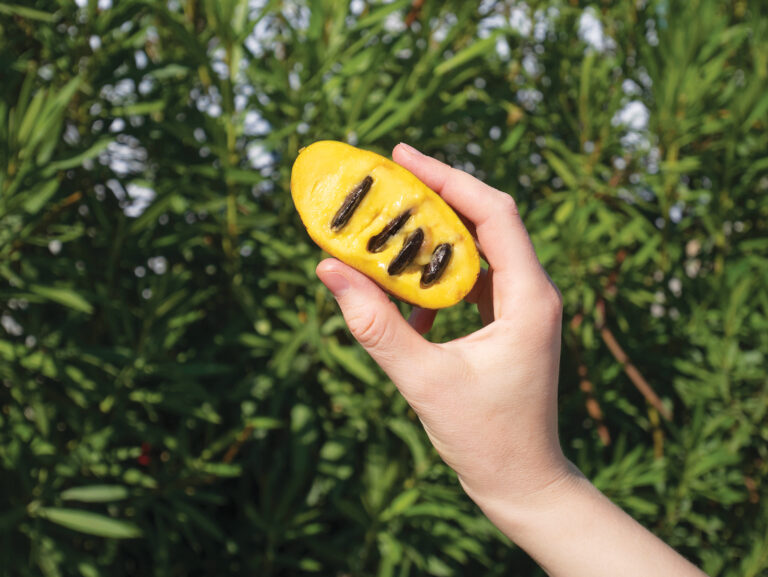
Within seven or eight years, we were able to start harvesting the fruit. Sometimes called the “poor man’s banana,” pawpaw fruit looks like a mango, and it has a citrusy smell and a flavor that’s one-third banana and two-thirds pineapple. Pawpaws are ripe when they feel soft and start to turn yellow-brown, but I’ll pick green pawpaws and put them in a brown paper bag to ripen. Gather them quickly if they’re ripe, since wildlife, from squirrels to bears, enjoy these fruits. Besides the fruits, another diagnostic trait of pawpaws is their large, oblong leaves that can extend 6 to 12 inches. Come autumn, those leaves will turn a golden-yellow and aid in locating the fruits in early to mid-September.
Chris Huffman, who operates Hidden Views Farm Land Management Specialists, gives his tips on encouraging this shade-tolerant tree to thrive. “Pawpaws will grow well in even the darkest coves and stream bottomlands,” he says. “Don’t thin the trees themselves, because they naturally grow close together. But what you can do is thin some of the smaller or misshapen branches on individual trees so more energy can be given to the fruits and limbs.”
Other Fall Fruits
Afterward, we went looking for other wild fruit trees and shrubs to do the same for. We found a black cherry tree (Prunus serotina) encompassed by red cedars, Virginia pines, and another autumn olive. Later, we freed up another soft-mast producer, a blackhaw (Viburnum prunifolium). When it comes to eating these delicious fruits, I like to sprinkle wild cherries on oatmeal and consume blackhaw fruits right off the tree.
Other wild edible fall fruits on our little 38-acre spread include spicebush (Lindera benzoin), and I’ve ordered several wild, native plums to plant. We’ve sourced native persimmons and other fruit trees from Chestnut Hill Outdoors; you can find them online or check to see if there’s a local grower or nursery close to you. No matter where you live in the Lower 48, you’ll find a wide variety of wild, native fruits just waiting to be discovered and turned into scrumptious delights.
More fall foraged fruit recipes:
Black Walnut Muffins with PawPaw Recipe
Persimmon and Wild Black-Walnut Waffles
Bruce and Elaine Ingram are the authors of Living the Locavore Lifestyle, a book covering how to fish, hunt, and gather for food. For more information, contact them at BruceIngramOutdoors@Gmail.com.
Originally published in the August/September 2025 issue of MOTHER EARTH NEWS and regularly vetted for accuracy.