

The following ice fishing tips can help you have a successful outing.
It the Ice “Nice?”
Before you venture out onto a wintry lake or pond, make certain that the water’s frozen surface is thick enough to hold you! Six inches of solid (not slushy, or so “rotten” that it’s brittle) ice is considered the minimum thickness to support an adult safely.
Weather Beaters
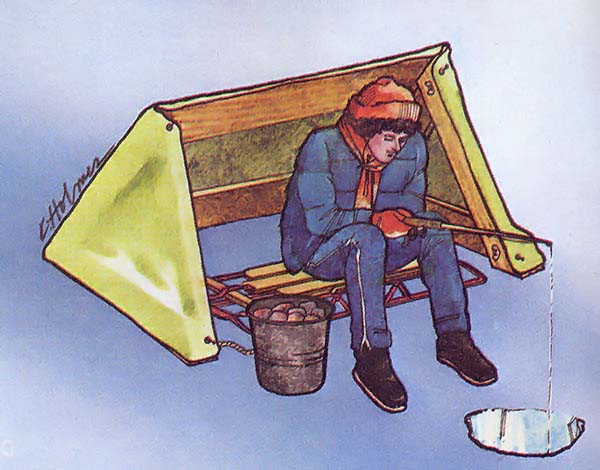
Your time on the lake will be more pleasant (and, because a comfortable fisherman tends to miss fewer strikes, more productive) if you take a few steps to weatherproof yourself. Warm clothing is, of course, essential when ice fishing. Many anglers wear snowmobile suits, or a number of insulating layers of lighter clothes. A canvas-covered knockdown windbreak can also help keep the chills away. Make one from scrap lumber, pre-drilled and assembled with bolts and wing nuts … so you can put it together–wearing mittens–on the ice and take it apart to haul back to shore on a sled. And, if you want to carry a little warmth with you, just fill a metal bucket about 1/4 full of sand and ad charcoal or sticks for an instant heater (you’ll probably need charcoal lighting fluid–or paper and some good reliable kindling–to get your bucket stove going).
Peek at Pike
Lots of fisherfolk don’t know that you can often actually peer down into the water beneath your drilled or chipped-open fishin’ hole–and find out if any fish are lurkin’ there–by simply throwing a dark cloth over yourself and the hole!
Local Lore
It stands to reason (usually, anyway) that a concentration of anglers indicates the presence of hungry fish. The novice ice fisherman or woman can often “follow the crowds” to big catches. Of course, good manners demand that the newcomer not crowd other folks, so don’t drill your hole closer than 20 yards from another angler’s without an invitation. You’ll also find that the “regulars” on any lake or pond will usually be willing to share information about choice baits, worthwhile locations, and so forth … that you might not pick up on your own in several seasons of fishing!
Tackle Tips
Although most any fishing rod can be used for angling through the ice, a short pole (between two and three feet in length) will enable you to sit nearly over the hole and respond immediately to the slightest nibble. A light line (two- to four-pound–test) and small hooks (anywhere from No. 6 to No. 14) are the best choices for small trout or panfish, but–if you’re after large pike or lake trout–use 10 to 15 pound–test monofilament and a hefty hook … from No. 4 on up, depending on the size of your bait. (Instructions for making your own rods and tip-ups can be found in the MOTHER EARTH NEWS’ article “Food Without Farming.”)
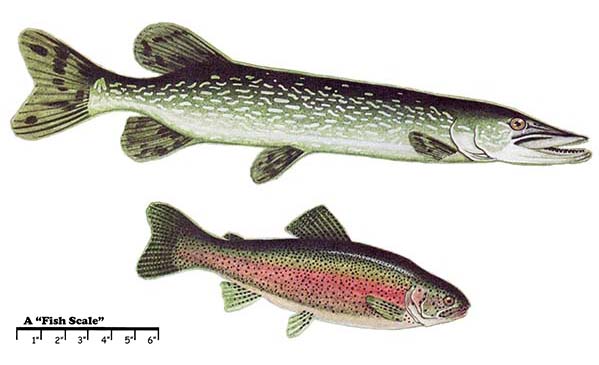
Northern Pike
(Esox lucius) Range: Throughout most North American ice fishing waters.
Size: From an average of about two feet in length to a maximum of about four feet.
Bait: Wobbling spoons (the Dardevle brand is a good choice) or perch or suckers of under ten inches length.
Rainbow Trout
(Salmo gairdneri) Range: Throughout North American ice fishing waters.
Size: From an average of about a pound to a maximum of 40 pounds.
Bait: Worms, grubs, minnows, artificial flies, spoons, or salmon egg baits (Pautzke’s brand green label “Balls O’ Fire” are especially effective lures).
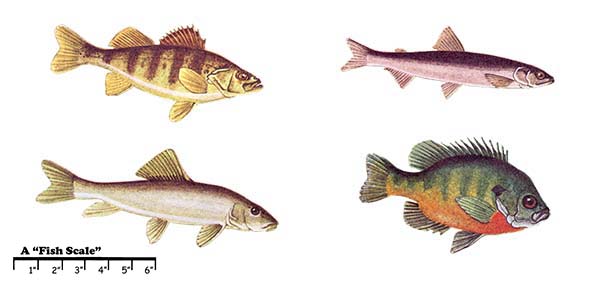
Yellow Perch
(Perca flavescens) Range: Throughout North American ice fishing waters.
Size: From an average of under one pound to a maximum of more than four pounds.
Bait: Grubs, worms, small jigs or spoons, artificial flies, or minnows.
White Sucker
(Catostomus commersonni) Range: East of the Rocky Mountains (related species throughout North American ice fishing waters).
Size: From an average of about a foot in length to a maximum of about 30 inches.
Bait: Worms, grubs, or prepared cheese, marshmallow, bread, or salmon egg baits.
American Smelt
(Osmerus mordox) Range: Although they’re saltwater fish, smelt have been introduced into all the Great Lakes.
Size: From an average of between six and nine inches to a maximum of about 14 inches.
Bait: Grubs, worms, small jigs, artificial flies.
Bluegill
(Lepomis macrochirus)Range: Throughout North American ice fishing waters.
Size: From an average of under one pound to a maximum of over four pounds.
Bait: Grubs, worms, small jigs, artificial flies, or small minnows.






