Alternative housing communities have existed for years, but as interest in healthy, green living grows, community living is being transformed from a fringe notion to a practical way of living together and reducing environmental impact. Here are three common types of communities popping up in North America.
1. New Urbanism
Reminiscent of compact, walkable European towns, New Urbanist developments typically have central business and shopping areas surrounded by housing–from apartments to single-family homes. Devoted to sustainability through reduced auto traffic, these communities have access to public transportation, and ideally everyone lives within a 10-minute walk from the town center. Neighborhood open spaces are designed to encourage community and discourage car culture. In the United States, 648 New Urbanist projects exist, are under construction or in the planning stages, according to New Urban News.
New Urbanism Spotlight: Village Homes, Davis, California
More than 30 years ago when architect Mike Corbett and his wife, Judy, bought 60 acres in Davis, they envisioned Village Homes as a sustainable, green community before most people even knew what that meant.
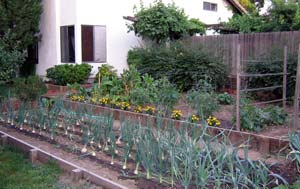
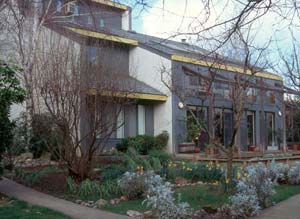
The Corbetts designed all Village Homes streets to run east/west, which allows all the houses to face south, facilitating the use of solar energy for space and water heating. Most of the 220 homes and 40 apartment units are clustered in groups of eight along narrow, winding streets. The clusters are surrounded by open space–40 percent of the total acreage–and most homes face common areas, which are linked by a network of paths. Homeowners decide how their common areas are landscaped, creating a tapestry of gardens, playgrounds, barbecue pits and outdoor art galleries. The open spaces also contain a natural irrigation system made from a network of creeks, swales and ponds that allow rainwater to soak into the ground rather than collect in storm drains. Of the commonly owned lands, 12 acres are dedicated to fruit and nut trees and row crops.
To minimize reliance on cars, the Corbetts devoted 4,000 square feet of their development to office and retail space. Now there are 17 small businesses in the village, including attorneys, accountants, a massage therapist, a dance studio and a restaurant. A grocery store and one of the area’s major employers, the University of California at Davis, are within walking distance. “It’s perfect for kids,” Judy says. “There are lots of safe places to play outside and plenty of nutritious fruit they can pick right off our trees.”
2. Ecovillages
These communities integrate a low-impact lifestyle with a supportive social environment. There are 323 ecovillages around the world, 73 of which are in the United States, according to the Global Ecovillage Network. These housing developments can be urban or rural, small or large, but they have one thing in common: They emphasize ecological design and building, permaculture, alternative energy, and other practices that help reduce negative impact on the planet.
Ecovillage Spotlight: Tryon Farm, Michigan City, Indiana
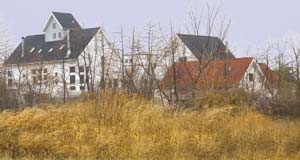
Located an hour’s drive or train ride east of Chicago, Tryon Farm encompasses a prairie, farmland, ponds, dunes and woods within its 170 acres. The first houses were completed in 2001; when it’s finished, the ecovillage will contain 150 homes in seven settlements, with 120 acres of open space. While a traditional homebuilder might have bulldozed the dunes, filled in the wetlands and covered the prairie with tract homes, developer and architect Ed Noonan and his wife, Eve, had a different vision. They created homes that nestle into the landscape, disturbing it as little as possible.
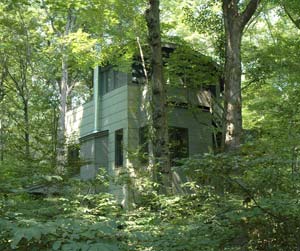
In The Pond settlement, Ed created grass-rooted houses, built of concrete with earth piled on two sides, that blend seamlessly into the surrounding dunes. In The Woods, Ed designed tall, narrow “treehouses” covered with Cor-Ten steel which, as it rusts, forms a protective coating that “makes it blend in with the tree trunks,” he says. The Village features “courthouses”– squares of homes facing a central courtyard.
Residents don’t buy the ground beneath their houses; instead, they get a 150th interest in the entire settlement. The Tryon Farm Institute, a nonprofit land conservancy, owns all the open space, so homeowners pay taxes only on their houses.
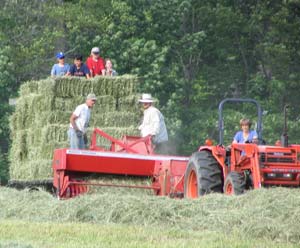
Eco-friendly features include septic tanks that flow into gravel beds covered in tuberous plants. The oxygen from the plant roots cleans the water, and the waste feeds the plants. “After seven days, the water is state certified to be clean enough to swim in,” Ed says. The purified water is pumped into the fields of hay and alfalfa used to feed the livestock.
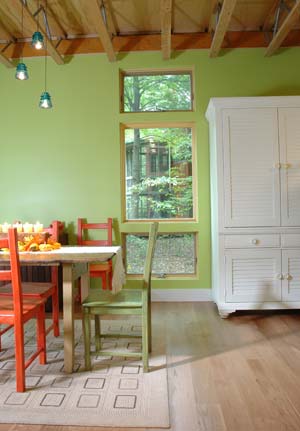
Many of the houses, which average about 1,000 square feet, have bamboo floors and recycled-denim insulation. The old brick farmhouse was turned into the community’s bed and breakfast. “The idea is that guests stay in the farmhouse so individual houses don’t need extra bedrooms and can be built smaller,” Ed says.
3. Cohousing
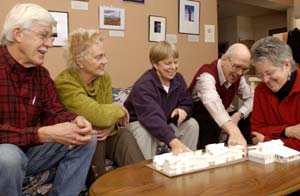
In these housing developments, which are often ecologically friendly, homeowners design, manage and maintain their community cooperatively, holding community meetings to determine everything from new memberships to garbage collection. Cohousing communities frequently center around a common house, where residents may gather to eat, socialize, do laundry or participate in playgroups, classes and crafts. Houses generally are clustered around a large open space and the common house, with parking on the periphery. According to the Cohousing Association of the United States, 194 of these communities exist nationwide.
Cohousing Spotlight: Cobb Hill, Hartland, Vermont
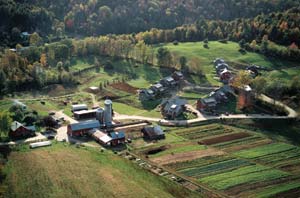
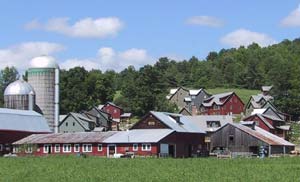
Although Cobb Hill is less than five years old, there’s already a waiting list to buy one of the 22 houses, duplexes and studio apartments on the 260-acre homestead in eastern Vermont. Potential residents visit and meet extensively with community members to discuss shared interests and community needs before mutually deciding to move ahead.
“It’s a big decision to move to a place like this,” says Judith Bush, co-chair of the membership committee, who estimates residents devote as much as 10 hours a week to sustaining the community. “You have to make a pretty extensive commitment to this community’s work, but you gain so much in return,” Bush says.
Residents volunteer to make group meals at the common house, and they work one day a month maintaining community land and buildings. Each household also is responsible for stoking a wood-burning furnace that delivers heat and hot water to all the houses via an underground duct system.
The homes have composting toilets; water comes from a community well. All the houses, which range from 1,100 to 1,600 square feet, are clustered on a 4-acre hillside plot, leaving the lush meadow below for a dairy farm, a community-supported agriculture enterprise and family gardens. The remaining 200-plus acres are community owned and will be conserved through a local land trust.
Cohousing 101
Abraham Paiss & Associates
cohousing workshops and information
Cohousing Association of the United States
The CoHousing Company
designs and manages cohousing projects
Cohousing Development
assists cohousing groups
Cohousing Resources
Bainbridge Island, WA
land search and acquisition for cohousing in early development
Wonderland Hill Development
Boulder, CO
cohousing community developer
Further Reading
Cohousing: A Contemporary Approach to Housing Yourself
by Charles Durrett and Kathryn McCamant (Ten Speed Press, 1993)
Ecovillages: A Practical Guide to Sustainable Communities
by Jan Martin Bang (New Society, 2005)
Senior Cohousing: A Community Approach to Independent Living
by Charles Durrett (Ten Speed Press, 2005)