
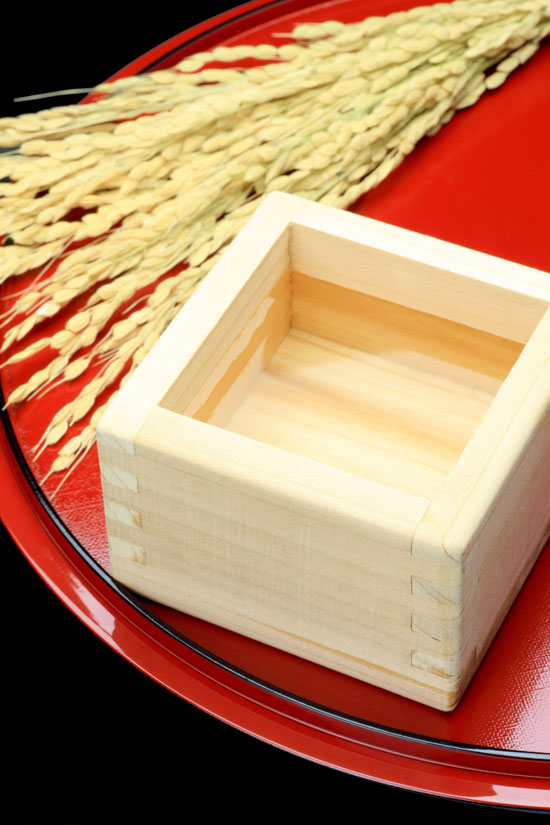
In The Drunken Botanist, Amy Stewart explores the dizzying array of herbs, flowers and plants that humans have transformed into alcohol over the centuries. With more than fifty drink recipes and growing tips for gardeners, this concoction of biology, chemistry, history and mixology will make you the most popular guest at any cocktail party. In this excerpt taken from part one, “The Classics,” learn how to make sake with the ancient plant — rice.
You can purchase this book from the MOTHER EARTH NEWS store:The Drunken Botanist.
For such an ancient and important plant, rice has not figured prominently in the tastes of American drinkers. In 1896, the NewYork Times called sake a “vile rice wine” and said that it had a “markedly poisonous effect” on native Hawaiians, who were choosing it over “less unwholesome California wines.” Even today, we tend to think of sake as a miserable hot, sour, yeasty drink we once tasted at the urging of an aunt who took us to a Japanese restaurant in Kansas City. But making a decision about sake based on a bad memory of that cheap, low-grade futsu-shu wouldbe like judging wine based on a jug of Boone’s Farm. In fact, sakeis as diverse and interesting as wine, with an even longer history.
And just as the grape is made into an endless parade of spirits, rice has been put to use in a wide range of alcoholic beverages around the world. It turns up in Budweiser, it’s an ingredient in premium vodkas, and its surprisingly floral essence is captured in Japanese shochu.
No Ordinary Grass
Evidence uncovered by both archeologists and molecular geneticists points to China’s Yangtze Valley as the origin of all varieties of rice grown around the world. It was domesticated there between eight thousand and nine thousand years ago. Making some sort of drink out of it was clearly the first order of business: archeologist Patrick McGovern found evidence of an eight-thousand-year-old brew of rice, fruit, and honey at the Jiahu site in Henan Province. (He worked with Dogfish Head brewery to re-create the brew, which they named Chateau Jiahu.) It would take centuries of trial-and-error to develop the intricate process used to create modern sake, but those early rice wines were headed in that direction.
But first, rice diversified and spread around the world. It is a water-loving grass that reaches up to sixteen feet in flooded fields. However, it does not have to grow in standing water. Its peculiar method of cultivation in rice paddies probably came about when people noticed healthy rice plants growing in flooded fields during the monsoon season. The plants just happen to have a well-developed system of airways that carry oxygen from the tip of the leaves down to the roots, just like aquatic plants do. Without this, they would rot and die during a flood. But unlike aquatic plants, they can grow in regular soil as well.
Growing rice in flooded fields turned out to be a useful strategy for early farmers throughout Asia and India. Low-lying areas prone to flooding were useless for any other crop but perfect for rice. The flooded fields were blissfully weed-free, since terrestrial weeds are incapable of living in standing water whereas the aquatic varieties cannot survive when the floods recede.
Rice is wind-pollinated and wildly diverse; over millennia, new varieties have been selected not just for their flavor and size but also for their ability to tolerate specific soil types and water levels and for the extent to which the grains cling to the stalk after they are ripe so they can be harvested. There are over 110,000 different varieties of rice around the world — and this does not include so-called wild rice, Zizania spp., a related grass native to North America and Asia. For the purposes of making alcohol, just a few specialized varieties of Oryza sativa var. japonica take center stage. But the rice is only part of the story. To understand how rice becomes a drink like sake, you have to understand the mold.
How To Make Sake
As with any grain, fermentation cannot begin until the starches have been converted to sugar. This can happen all by itself by getting the grain wet, which encourages enzymes to turn starch to sugar to feed the emerging seedling. Brewers could speed this process up with malted barley, which possesses abundant levels of those enzymes. But Asian cultures found other ways to do it. The Japanese method is just one example, but it’s the best known. First, the rice is first milled to remove some of the outer coating, called the bran. The bare, brown grains have to be carefully polished to strip the bran away without crushing the rice. Leaving each grain intact is tricky: corn, oats, wheat, and other grains are often milled and crushed at the same time to make meal or flour, so it takes a different approach to mill rice without breaking it at the same time. The technology used to polish rice has changed little over the centuries.
Although the equipment is more sophisticated, it still involves passing grains of rice across an abrasive stone hundreds of times to grind away the outer coating, leaving only a pristine, white kernel of starch. The only difference is that today’s machines have more endurance than human-powered mills. A modern brewery might polish its rice for four days straight, resulting in a remarkably smooth and even removal of the bran. The quality of sake is thought to be vastly better today than it was a hundred years ago; sophisticated milling technology gets most of the credit.
The variety is also important, just as the grape variety is to wine making. In good sake rice, the nutrients are not distributed throughout the grain. Instead, it has a kernel of pure starch inside and nutrients on the outside, which means that it can be more easily polished away. Yamada Nishiki is the best-known high-end rice variety for sake brewing; it was bred in the 1930s from two older strains of sake rice and is considered a full, round, mellow-flavored rice.
Other rice varieties include Omachi, prized for its wild herb and floral flavors, the cold-tolerant Miyama Nishiki, and Gohyakuman-goku, which was developed in the 1950s for lighter, machine-made sakes. On the West Coast, the ubiquitous Calrose rice, developed in California in 1948, is used by Sake One, a brewery just outside Portland, and other American sake makers.
Even more important than the variety of rice is the extent to which it is polished. This is the way to judge a good sake; the finest styles are made of rice that has been polished to half its original size. This gives the mold — which we’ll get to in a second — less protein, oils, and nutrients to contend with. It can go straight to the starchy core of the rice and do its work.
The polished rice is washed, soaked in water, and sometimes steamed, all of which helps increase the moisture content. At that point it’s taken into a room that resembles a Japanese sauna — warm, cedar-lined, and extremely dry. The damp rice is spread out in an enormous bed, and there it meets the mold, a species of fungus called koji, Aspergillus oryzae. Koji was domesticated in China about three thousand years ago; it traveled to Japan a thousand years later. Like Saccharomyces cerevisiae, the yeast used in the West for fermentation and bread making, koji is an entirely domesticated creature now. In addition to its role in sake production, koji is used to ferment tofu, soy sauce, and vinegar, making it a sort of staple microorganism in Japanese cuisine.
The koji mold spores are sprayed on top of the bed of damp rice. Normally mold would simply grow on the surface — picture a moldy loaf of bread — but the dry atmosphere forces the mold to grow into the bed of rice, and into each kernel of rice, to seek the moisture it needs to survive. There, inside that damp, starchy bit of grain, it releases the enzymes that break starch apart and turn it into sugar.
At the same time, a separate batch of rice, koji, water, and yeast are blended together to kick-start fermentation. The koji only turns the starch to sugar; now yeast have to eat the sugar and turn it into alcohol. Once the yeast start multiplying, the two batches are combined over three or four days, with more steamed rice, water, and koji meeting the yeast each day. At that point the two processes are happening simultaneously in the same vat: the koji mold is breaking the starch into sugar, and the yeast is eating the sugar as it is released. This complex brew of microbes has to be managed very carefully and stopped at the precise moment the sake is finished.
Because each ingredient is added gradually, the yeast don’t die off as quickly as they do in, say, wine or beer fermentation. They continue to live in the mash and excrete alcohol until the alcohol content reaches about 20 percent.
Once the brewer is satisfied, the entire yeasty, moldy mash is pressed to separate the sake from the solids. Then it is filtered and pasteurized with heat to stop the fermentation. Some enzymes survive and continue to work on the brew, so the flavor improves as it matures in tanks for a few more months. While most sakes are sold clear and full strength, some are diluted to make the alcohol content closer to that of wine, and some are only coarsely filtered so that the resulting beverage is cloudy from the remnants of yeast, koji, and bits of undigested rice. A high-quality sake will taste clean, crisp, and bright, with aromas of pears and tropical fruit or, in some cases, an earthier, almost nutty aroma.
Rice Spirits
Those distinctive sake flavors are even more concentrated in shochu, a distilled drink that starts with a sakelike mash. It’s bottled atonly about 25 percent alcohol, and loopholes in some United Statesliquor laws allow it to be served in restaurants with only a beerand wine license. This has led to shochu’s use as a mixer in Asian-inspiredcocktails — think lemongrass martinis — but it’s actuallybest on its own, over ice. Shochu is also made from barley, sweetpotatoes, buckwheat, and other ingredients, but the rice-basedversion is the most common. And “common” is an understatement:the best-known soju brand (the Korean version of shochu), Jinro,outsells every other spirit brand in the world, with the possible exceptionof some Chinese brands that don’t disclose their sales. MoreJinro soju is sold each year than Smirnoff vodka, Bacardi rum, andJohnnie Walker whiskey combined — 608 million liters in all.
Drinks similar to shochu and sake can be found throughout Asia. In addition to Korean soju, a Chinese rice wine similar to sake is called mijiu. In the Philippines, rice wine is tapuy and in India it is sonti. In Bali they make brem, in Korea a sweet version is called gamju, and in Tibet it is raksi.
Fermented rice cakes are also added to water to make home brews throughout Asia. One of the most interesting uses of rice cakes was described by French anthropologist Igor de Garine, who did field work in the Malaysian state of Terengganu in the 1970s. As deeply devout Muslims, the villagers he lived with never touched alcohol. But they did have a tradition of making steamed rice cakes called tapai. The cakes were cooked in combination with local yeast, wrapped in the leaf of a rubber tree, and left out in the heat for a few days. They fermented so well that when he tasted one, he thought that “someone had slipped a little gin into it.” He never mentioned the familiar flavor to his hosts, who managed to get some enjoyment from the cakes without realizing — or acknowledging — that they contained alcohol.
Rice is not limited to sake, shochu, and fermented rice cake. Kirin and many other Japanese beers are made with rice, as is Budweiser and a few other American beers. Premium rice-distilled vodkas have come onto the market in the last few years. At the other end of the spectrum, a Laotian rice whiskey called lao-lao is touted as the cheapest spirit in the world, at only about a dollar a bottle — and that bottle includes a perfectly preserved snake, scorpion, or lizard, a gimmick that puts the worm in mezcal to shame.
Enjoying Sake
Good sake should never be served hot. The tradition of heating sake was a way to hide the taste of rough, poorly made sake. Better fermentation technology has led to higher-quality sake that almost always tastes better cold. Drink it fresh: most sake brewers advise against storing a bottle for more than a year. Once opened, it lasts in the refrigerator slightly longer than wine, but it should be finished off within a couple of weeks. Because there are so many styles of sake, the best way to get acquainted is to go to a sake bar with some friends and order a tasting.
No. 1 Sake Cocktail
In the last few years, Asian restaurants in the United States have felt some obligation to create cocktails from sake and shochu. This is a shame, because both drinks are lovely on their own and seem to resist mixing — the flavors just don’t marry well with other cocktail ingredients. But here, after much experimentation, is one sake cocktail that is a proven crowd-pleaser.
It’s easy to make a batch before a party, which is why it is presented in portions rather than ounces. Make as much or as little as you need.
4 parts nigori (unfiltered) sake
2 parts mango-peach juice (a bottled blend is fine)
1 part vodka
Dash of Domaine de Canton ginger liqueur
Drop of celery bitters
Mix all the ingredients except the bitters briskly; then taste. It might need more ginger liqueur or vodka at this stage. Keep chilled until your guests arrive and then pour into cocktail glasses. Add a drop of celery bitters to the top of each drink as you serve it.
Sake Nomenclature
Daiginjo: The highest-quality sake, with at least 50 percent of the grain polished away.
Ginjo: The next highest designation; at least 40 percent of the grain is removed.
Junmai: No particular level of milling required, but the percentage must be stated on the bottle.
Genshu: Full-strength sake, up to 20 percent alcohol.
Koshu: Aged sake (uncommon).
Nama: Unpasteurized sake.
Nigori: Cloudy, unfiltered sake. Shake before serving.
Reprinted with permission from The Drunken Botanist by Amy Stewart and published by Algonquin Books of Chapel Hill, 2013. Buy this book from our store:The Drunken Botanist.