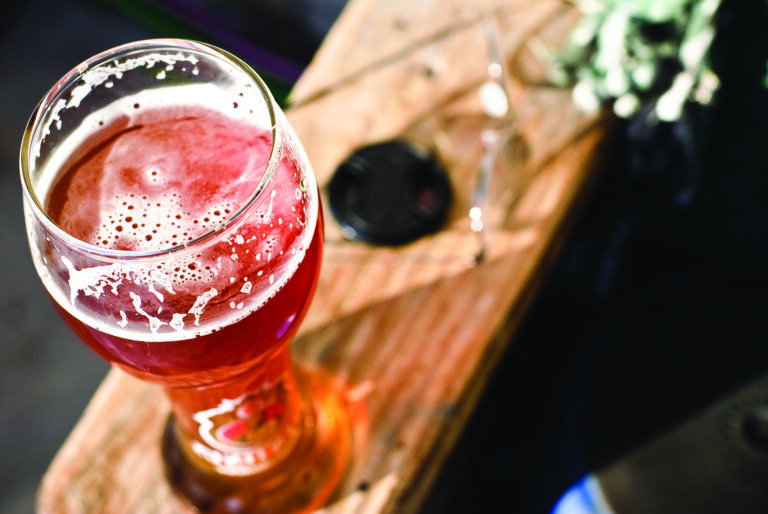
Rosé wines are an increasingly popular drink for many people. Canned rosé began appearing on liquor store shelves a couple of years ago, and it’s gotten a lot of attention since, especially in summertime. And in the craft-beer industry, brewers are always keen to brew something new and exciting. So, as trends are chased, many commercial brewers and homebrewers have decided to try their hand at making rosé beer.
What’s a Rosé, Anyway?
Rosé beer is a catchall term that encompasses a wide variety of beers. Most rosés are pale beer fermented with grapes or blended with wine after fermentation. The grape or wine addition adds a red color and, sometimes, a winelike character. Some rosé beers contain fruits or flavorings other than grapes. Most are dry, but some are sweet. (Many dry rosé beers are labeled “brut,” a word often used to designate a dry wine.) Some are sour. Most rosé beers have a relatively low alcohol by volume (ABV), but a few are stronger. Some are aged in oak barrels for flavoring, color, or souring. Most are only lightly hopped, but given the popularity of IPAs, some bitter rosés are produced. Many different styles of beer have been labeled “rosé,” including pale ales, pale lagers, lambics, saisons, goses, kettle-soured beers, and the list goes on. So you see, rosé beer really is a catchall term — it can mean almost anything.
There are fundamentally two ways to make a rosé beer at home. A homebrewer can add grapes during the brewing process, including grape juice during primary fermentation or maturation. Or, wine can be blended with a finished beer to make the rosé. The latter allows the homebrewer to blend the beer to their desired level of color and flavor. Just 1 part red wine to 19 parts pale beer yields a distinct pink cast. (The exact shade depends mostly on the depth of color in the wine.) With this technique, the brewer can enjoy both the unblended beer and the blended rosé. Also, this method eliminates the need to source wine grapes, which can be difficult outside of wine country, especially when it’s not harvest season in fall.
Brewing Rosé Your Way
The first step in brewing a rosé beer is to decide what sort of beer to infuse with grapes or other flavors. Almost all rosé beers are pale so that the red or pink color will show. Many rosé beers are meant to be dry and not alcoholic — a refreshing summer beer. However, sweeter and stronger types exist. Unless you like hops above everything else, I’d suggest brewing a lightly hoppy beer. The bitterness from the hops will obscure the fruit flavor and any astringency from the grape skins. You can either pick a lightly bitter beer style, or dial down the hop additions in a normally hoppy style.
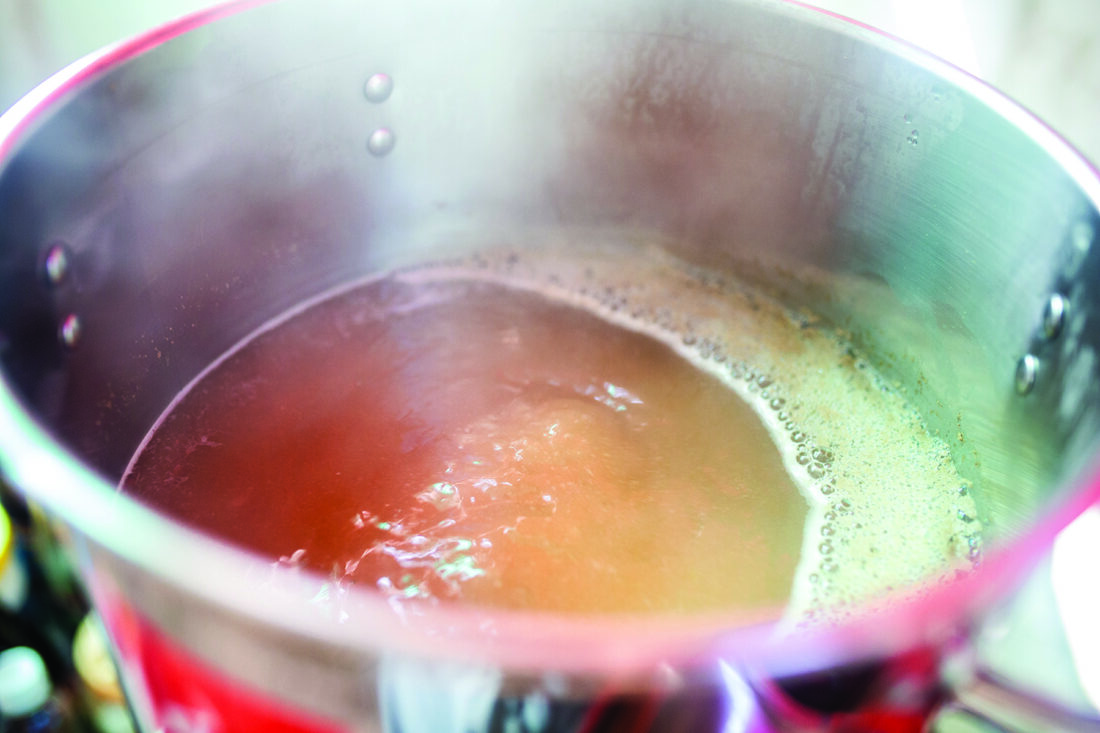
The next set of decisions involves the grapes or other flavors. Generally, you’ll want to pick wine grapes. If you’re brewing a rosé with just a hint of color, you could use table grapes, or even grape juice concentrate, but wine grapes will give you the best flavor. As an alternative or an additional flavor, you can use raspberries, strawberries, hibiscus, or any other edible red- or purple-colored fruit or flavoring. If you live in wine country, you’ll likely be able to find fresh wine grapes in fall. You can also buy grapes that have been de-stemmed, crushed, and stabilized with potassium metabisulfite. These are usually available in 5-to-7-gallon food-grade buckets. If you’re not a home winemaker, however, that’s a lot of juice. As an alternative, homebrewing shops almost always carry wine kits, which contain a pouch of concentrated wine juice that can be diluted to working strength and then fermented. More expensive kits have less diluted concentrates and are generally made from better grapes. A wine kit can supply you with enough juice for several rosé beers, and you can simply make wine with the remaining concentrate. You’ll need to dilute the concentrate to an appropriate strength before you add it to your in-progress beer, however. For example, if you’re brewing 5 gallons of rosé beer at an original specific gravity of 1.048, you may want to make 41/22 gallons of wort (unfermented beer) at 1.048. Next, dilute the grape concentrate to 1.048 and add that to your wort to make 5 gallons. Then, ferment the mixture as you would a beer. You could also add the grape juice to a secondary fermenter and rack the beer on top of it after primary fermentation. This approach will retain more of the fruit aroma. If you choose a fruit other than grapes, puréed fruit is (arguably) the best option. Fresh fruit — de-stemmed, rinsed in water, and cut up or crushed — is also an option. As with grapes, adding the fruit in secondary — diluted to an appropriate specific gravity, if needed — will give the best results. As a final option, you can simply blend commercial or homemade wine into your beer after fermentation.
How much grape flavor and color to add is strictly a matter of taste. Commercial rosé beers don’t exceed 49 percent grapes, because then they would have to be taxed as wine. As a homebrewer, though, this doesn’t matter. Rosé beers can have just a tinge of pink, or they can be a deep red. For reference, most rosé wines are pink. The corresponding grape flavor can be almost nonexistent, or very winelike, whichever you prefer. It’s easy to get a preview of what your beer will taste like by blending a similar beer with wine. Try blending the beer — in a line of identical glasses — with progressively more wine. Taste and decide the blend you like best, and note the percentage of wine that went into that blend.
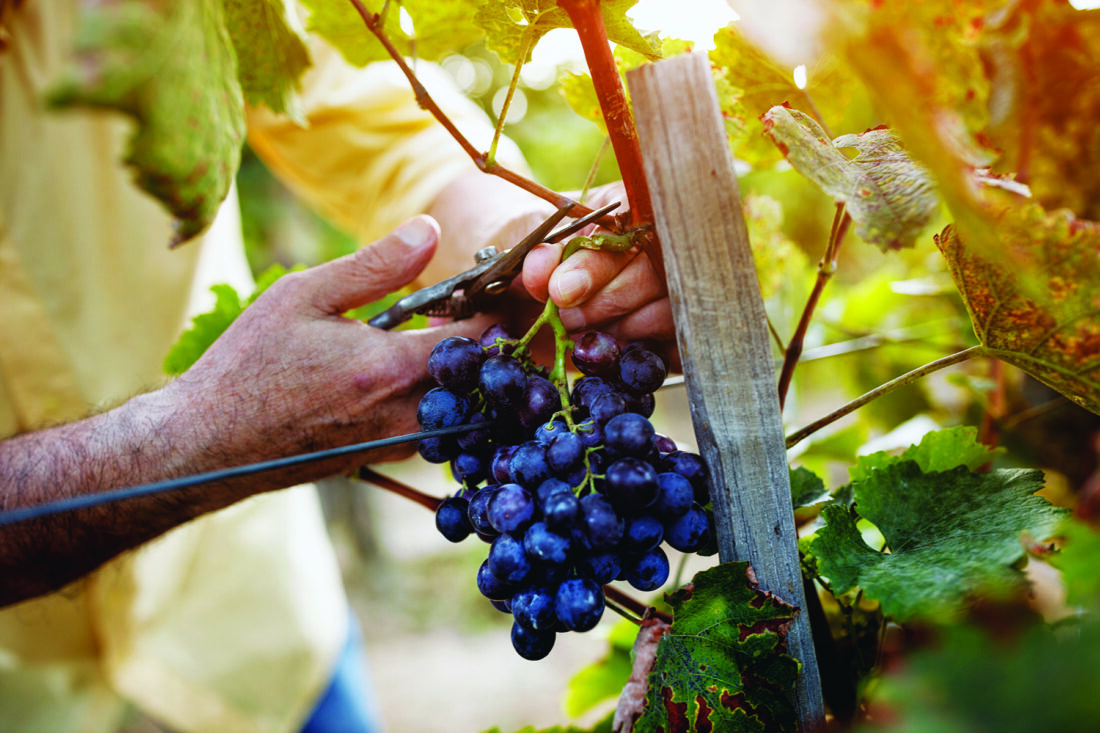
Grape juice contains a relatively high concentration of sugars, particularly glucose and fructose, but is low in other compounds that brewer’s yeast needs to perform an orderly fermentation. Nitrogen, in particular, is lacking. If you’re brewing a rosé beer with a high percentage of grapes, adding a small amount of yeast nutrients will increase the health and vigor of your yeast. For a 5-gallon batch of beer, 1/4 to 1/2 teaspoon of yeast nutrients should do the trick. Only use yeast nutrients made from powdered yeast cells, not diammonium phosphate (DAP).
Finally, some rosé beers are barrel-aged. Barrel aging can be done by acquiring a used wine barrel, but those are expensive and require the brewer to make 55 gallons of beer initially, plus a few extra gallons for keeping the barrel topped up. An easier approach is to soak oak cubes or spirals in wine and then add those to the beer. Oak cubes and spirals from French or American oak are available from most home winemaking stores. Soak the oak in wine for about three weeks, and then add it to the beer at the same time you add the grapes.
That’s really all there is to it. If you know how to brew, just add fruit in either your primary or secondary fermenter, or blend finished beer with wine to add color and flavor. This “style” of beer is broad right now, so feel free to explore the possibilities.
A Sour Rosé
A bit of sourness can make a rosé beer more refreshing. You can make a sour rosé beer a couple of ways. The simplest is via kettle souring. After boiling your wort, let it sit overnight. Hold the wort around 120 degrees Fahrenheit during this time, and inoculate it with souring bacteria, such as brewing strains of lactic acid bacteria. The next day, briefly bring the wort back to a boil. Cool and aerate the wort, and then ferment it. This will produce a lightly sour beer that won’t get progressively sour, as the second boil will kill the souring microorganisms. The level of sourness can be varied by letting the warm wort sit for more or less time, or by pitching more or less souring bacteria.
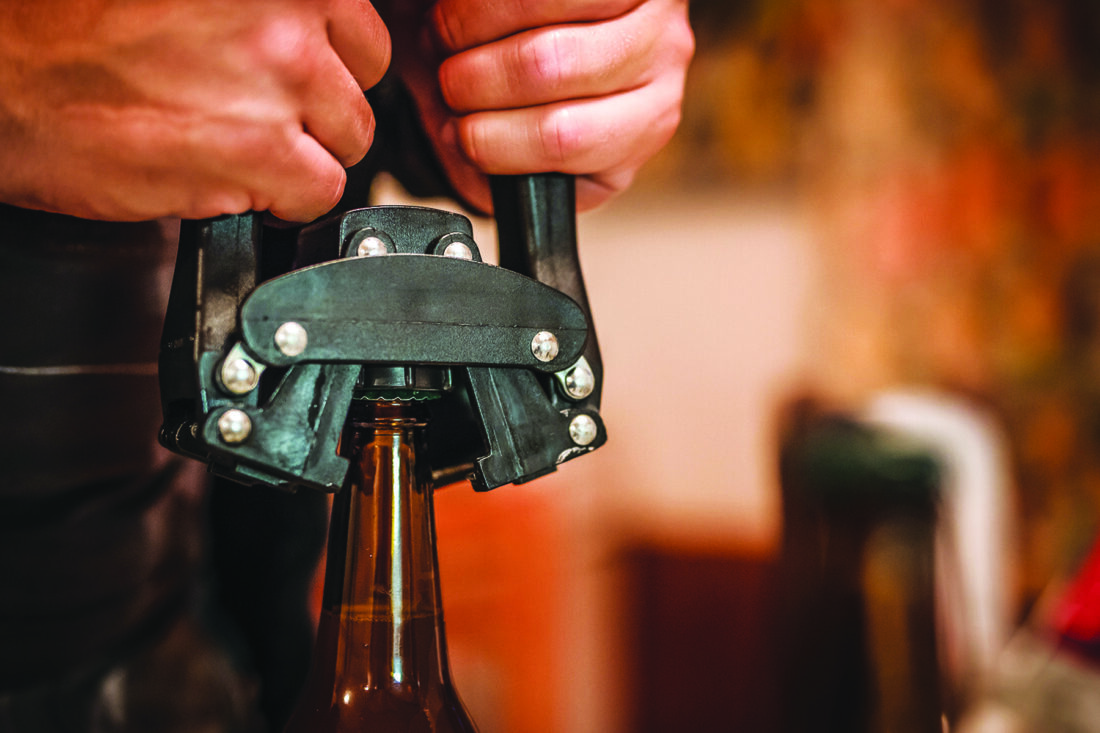
Alternatively, you can inoculate the beer with souring bacteria after primary fermentation, and then store the beer in a relatively warm place, around 80 degrees. Let it sour for at least three months, and up to a year. Then, add the grapes, and let the secondary fermentation proceed for another three months. Be careful when you bottle, as the beer may continue to ferment after it’s been packaged. This beer will be more sour than the kettle-soured beer, and it may grow more sour with age.
A Dry Rosé
Many rosé beers are meant to be dry and refreshing, and simply adding fruit to a beer will dry it out a bit. If you want a dry, refreshing rosé beer, follow these guidelines.
Keep the original specific gravity (OG) and subsequent alcoholic strength of the beer reasonably low. Anywhere between OG 1.036 and 1.056 — roughly 4 to 6 percent alcohol by volume (ABV), depending on attenuation — works well. Perform a single infusion mash for 90 minutes at 148 to 150 degrees, or do a step mash with a 30-minute or longer rest at 140 degrees. Make sure to pick a highly attenuative yeast strain. Making highly fermentable wort, diluting it slightly with grape juice, and fermenting it to a low final gravity will produce a dry beer. Carbonating the beer more than what’s typical for a beer will accentuate the dryness of the beverage, and will also make it seem slightly more like a sparkling rosé wine. If you want a sweeter beer, do just the opposite: a higher OG, a shorter rest at a higher mash temperature, and a less attenuative yeast.
Chris Colby is a writer with a background in biology and brewing. He lives with his wife and their cats in Bastrop, Texas. Chris enjoys gardening and drinking beer while admiring his garden.