PODCAST TRANSCRIPT
[00:00:00] Jennifer Quammen: From my perspective on the veterinarian side, always making sure that you are in communication with us as veterinarians because this is something that we know we can manage and we can treat. We just need to be able to identify those things early. And so I hope folks are out checking their herds and their flocks every day.
[00:00:16] And the top line would be if there are wounds that seem like they are getting a lot bigger, especially overnight, if there are wounds that have a really foul odor to them things just seem a little bit out of what you had previously seen before, that is the time to notify us sooner rather than later.
[00:00:34] Josh Wilder: Welcome to the Mother Earth News and Friends podcast. At Mother Earth News, for 50 years and counting, we’ve been dedicated to conserving the planet’s natural resources while helping you conserve your financial resources. In this podcast, we host conversations with experts in the fields of sustainability, homesteading, natural health, and more to share all about how you can live well wherever you are in a way that values both people [00:01:00] and our Mother Earth.
[00:01:01] Hello, and welcome to this episode of Mother Earth News and Friends. I’m Josh Wilder, and with me today I have lead editor Ana Skemp and Dr. Jen Quammen of the American Veterinary Medical Association. Thank you for joining us today. And if you’d go ahead and introduce yourselves and what you do, and we can talk about our subject for the day.
[00:01:24] Ana Skemp: You bet. I’m Ana Skemp. I’m in Wisconsin. I am a livestock producer, a farmer, a homesteader, and I have a background in ecology and evolutionary biology.
[00:01:33] Jennifer Quammen: And good morning. I’m Dr. Jen Quammen. I am currently serving as president of the American Veterinary Medical Association. And so what that means is I get to help represent the voice of veterinarians across this country and beyond.
[00:01:45] And so I’m based in the beautiful state of Kentucky, which is where you find me today.
[00:01:50] Josh Wilder: Great. Now today we’ll be talking about the New World screwworm which is something that obviously anyone who’s a listener of the show [00:02:00] will- should likely be aware of as a number of you have or are interested in having livestock in your small farm or homestead, and obviously an issue that veterinary community and small scale livestock producers are interested in.
[00:02:20] And please, Ana, if you go ahead
[00:02:22] Ana Skemp: You bet. So maybe you could get us started just with a bit of an overview. Where did we start from? Where were we in the 1960s? Where are we today? So just if an update on the situation basically would be great.
[00:02:35] Jennifer Quammen: Yeah big question. I would say top line, if I were to just get nothing across to people otherwise, is that New World screwworm is a serious but quite treatable and controllable disease.
[00:02:46] This is not also– or it’s a, it’s an infection, it’s a parasite infection. It’s also not directly contagious animal to animal. So if that helps to quell any initial fears folks might have, that might be a helpful way to think about this. [00:03:00] We did have this disease back in the ’60s. And so in my lifetime, this has not existed at least not in this country until more recently.
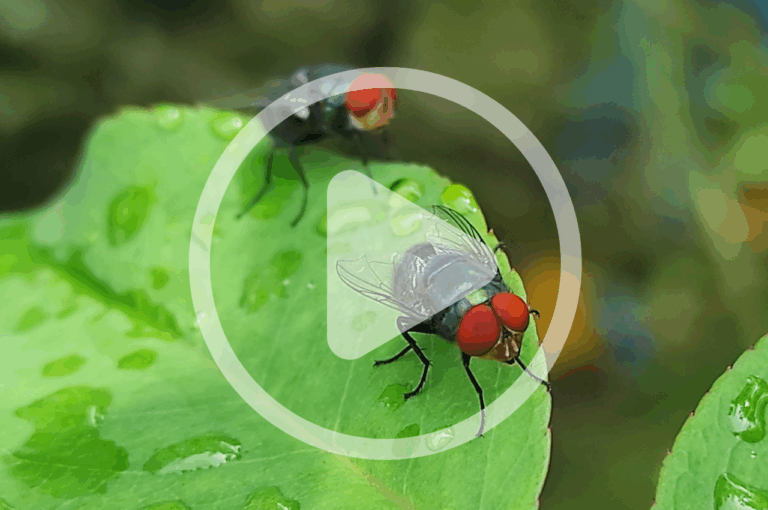
[00:03:09] But the interesting thing about New World screwworm is that it is not truly a worm. It’s a fly larva or sometimes what we commonly call a maggot. And unlike most maggots, this actually feeds on live animal tissue, so from warm-blooded animals. So for those of you who have small hobby farms or homesteads, you may have, some goats, some chickens, things like that around.
[00:03:32] Those are all animals that could possibly be infected with this. And we have some strategies, some actually really cool ones from a biological and with your evolutionary biology background, it might be fascinating to kinda go down that path. So we have some really great ways to help address this.
[00:03:48] At this point, we have had cases in the US, in Texas and New Mexico. And so depending on where you’re based in terms of your farm and things, there is a resource where you can track [00:04:00] the current active cases. We can dive into that if you’d like, if you think folks are interested in that. But top line is this is not truly a worm and it is something that we have dealt with previously, and I think the good news is we have some solutions on how to handle it this time as well.
[00:04:17] Ana Skemp: So the New World screwworm is a native species, an introduced species. Is it supposed to be in the United States?
[00:04:26] Jennifer Quammen: Yeah, it’s a, So this is a Cochliomyia omnivorax, if you love the wonderful Greek name that we all love to give these. These have been around mostly Central America. And so that is a more, n- natural range.
[00:04:41] I don’t know their original derivation, so I don’t wanna misspeak on that. But I would say this is a fly that is existing. It’s been around for some time. And again the really fascinating component of it from a like a species survival piece is that this really has a unique way of reproduction.
[00:04:59] And those [00:05:00] flies that lay the eggs, those legs- eggs, of course, become larvae or maggots, and then those are the thing that really cause the damage and potentially the death of our species, our livestock stock and pet species here that most of us keep in our homes or on our homesteads.
[00:05:16] Ana Skemp: So maybe let’s circle back a little bit to the 1960s and talk- … a little bit about the life cycle, in particular the fact that the females only mate once in their lifetime-
[00:05:25] Jennifer Quammen: Yep …
[00:05:26] Ana Skemp: and how the- Yep … how did we eradicate them in this country from the 1960s? What did we do then?
[00:05:32] Jennifer Quammen: Yeah. We did a really interesting thing.
[00:05:34] The… as you mentioned, the females really only mate one time, and so there was some development of of what’s called a sterile fly technique. And so males will breed these females, but we have treated these males so that they are essentially sterile. So the females will breed, but then they are not able to produce those larvae.
[00:05:53] And so then, over their average life cycle, they will live their lifespan, but not be able to lay eggs or [00:06:00] viable eggs that will then turn into those larvae or maggots. And so really fascinating. It’s a little bit of a numbers game, if you will, right? We are producing enough of these sterile male flies to help it’s a herd mentality in terms of outnumbering the natural males that would have been out there, and so we had that on our side. I would also say we had some geography on our side because we pushed them down to that peninsula down towards Central America, and so we had also a little bit of a geographic barrier at that point.
[00:06:29] Whereas now, since this has come across the Mexico-US border, it’s a little bit more wide breadth. We still have this tactic and others, but that was how we did this previously, was treating these and producing and releasing these sterile male flies so that we could outnumber how many of the n- of the non-sterile male flies there were out there.
[00:06:49] Ana Skemp: So how do you sterilize a male fly on a very basic level? There’s this big facility in Panama. What exactly are they doing?
[00:06:57] Jennifer Quammen: Yeah, they’re… So essentially they’re doing an [00:07:00] irradiation treatment on them, I guess is the most basic way. I am not a fly geneticist, so I am not the person to give you every single detail on that.
[00:07:07] But essentially we are producing these flies and they are being released into the environment, … where we know because we’re tra- I guess I’d also- I should also back up and say we’re surveilling, so we know where these flies are, right? And so we’re target treating those areas where we know that we are finding the flies or finding the larvae.
[00:07:25] And so again, it’s a numbers game at that point. It’s a a, a drop in an ocean or an ocean over a drop is more, more the way we would do that.
[00:07:32] Ana Skemp: So you have some type of trap out in the environment where you’re expected to find the flies, and then the females would be drawn to the traps.
[00:07:40] And you’re doing daily counts or weekly counts, or…?
[00:07:44] Jennifer Quammen: I… No, sorry, maybe I misspoke a little on that. Let me clarify. We are– So surveillance is out there to see where are these an animals at, these, these flies- Okay … these fruit worms. That is one way of doing it. Obviously, from our perspective now, we’re also looking for those larvae, and that’s a way that we can [00:08:00] target treat.
[00:08:00] But we are– there is natural surveillance that is happening. And so then once we have found or identified areas and again, this is up to the evolutionists or the environmental ecologists in terms of how much, how many of these numbers are in terms of where we decide to treat. But the goal is to identify where they are so that we’re not just releasing flies everywhere.
[00:08:19] We wanna be strategic about that, right? The same way that if I were to try and treat a particular disease or infection, I wanna make sure I know what I’m up against. And so this is a way for us to identify so we can just be smarter and more strategic about where those flies are getting released to.
[00:08:36] Ana Skemp: Yeah. Okay, and so there’s a big facility in Panama that’s been ongoing. There’s, I believe, Mexico, some facilities where these flies are being produced. And is the one in the United States up and running or almost ready, or where are we at with that?
[00:08:50] Jennifer Quammen: Yeah, very good question. So the one in the US is not quite up and running yet, but we expect it to be soon.
[00:08:56] So again, the goal is if you think about this we had not [00:09:00] really dealt with this disease here in this country for a while, and so like many sort of public health measures, when things are kind of quieter, we get a little I don’t know, lax is the right word, but we don’t need as much of that that treatment around.
[00:09:12] And so we’re not quite live with that US treatment facility yet, but I think it will be coming online here soon.
[00:09:20] Ana Skemp: Let me… So do you wanna touch at all, I believe there’s a new method of the flies are being irradiated, but there’s also a method of genetically modifying them that allows these facilities to up their production, and I believe it’s just the females die before they come, become viable.
[00:09:36] Can you speak to that at all?
[00:09:39] Jennifer Quammen: I can speak to the fact that I have some knowledge of that, but in terms of the specific genetics of that I can’t give you… if… I can’t give you direct details on that. If we- If you’d like, though, I can certainly follow up with that and/or there’s a ton of emerging.
[00:09:52] You can imagine this data is changing on the daily at this point and so we can make sure that we get that news back to you as well. Okay.
[00:09:59] Ana Skemp: I [00:10:00] just… And a lot of our listeners have interest in genetically modified organisms, whether it’s for food, for disease control, for whatever, so that is a question that I was hoping to address this week for them.
[00:10:11] So about two years ago, if I’m understanding correctly, we th- noticed that the flies were coming north from Panama, and we’ve kinda been keeping an eye on them, and then this summer is when we saw the first cases in Texas. Could you talk a little bit about what we were observing for a couple years and then what happened this summer that was a wake-up call “Hey, we need to address this right now”?
[00:10:34] Jennifer Quammen: Yeah, where we know we’re at right now is that we’ve had just over 40 animal cases in the US this summer. And those original detections, again, Texas and New Mexico is where we are seeing these. Those have come mostly across livestock species. And so this is a place where we really are relying on folks like your listeners who have those small farms to be aware of what’s happening with your animals.
[00:10:59] And from my [00:11:00] perspective on the veterinarian side, always making sure that you are in communication with us as veterinarians because this is something that we know we can manage and we can treat. We just need to be able to identify those things early. And so I hope folks are out checking their herds and their flocks every day.
[00:11:16] And the top line would be if there are wounds that seem like they are getting a lot bigger, especially overnight, if there are wounds that have a really foul odor to them things just seem a little bit out of what you had previously seen before, that is the time to notify us sooner rather than later.
[00:11:34] And to the point around the sort of life cycle of these animals, we wanna make sure that we’re finding and treating those conditions so that we’re reducing how many, if any, of those maggots and larvae are getting into the environment around that and then could, of course, reproduce into flies from there as well.
[00:11:51] Ana Skemp: Could you walk us just a bit through… I think it’ll help people who have animals if they can understand the life cycle of the fly. So let’s say we [00:12:00] have a bred female fly. She’s looking for a place to lay eggs. What happens next? Yeah.
[00:12:06] Jennifer Quammen: Yeah, so these flies are looking for a place that is I would say an open area of skin or an open wound is the most commonplace.
[00:12:15] And so in our animals that most of us would keep, you might think about an animal that’s had an injury, just through whatever means. Sometimes animals that are outside bump into things and get injured. But also our really young animals, and particularly our warm-blooded mammals that are having, just born, so their navel or where their umbilicus was attached. That is often a place that will close, naturally, but that is also a really good spot for those flies to be attracted to and to lay their eggs. Those eggs can then turn into the screwworm or the maggot and really cause significant detrimental disease to these animals.
[00:12:51] Ana Skemp: So the screwworm is unique. A lot of worms will eat dead or decaying tissue, but the screwworm is after living [00:13:00] tissue, correct?
[00:13:01] Jennifer Quammen: Correct, yep, and so that is the, that is a unique thing. We could go down the path of discussion about parasites for a while. But I think what is really interesting if we talk about these is they are unique compared to other fly larvae in that the live tissue is the thing that they’re really impacting, and it’s profound.
[00:13:20] Having seen some of these cases in terms of the reports afterwards I’ve not seen any one-on-one, thankfully. That may still be in my future, but as of today, that has not been my case at least. But what c- the damage that can be done to these animals is really significant, debilitating, painful.
[00:13:37] This is a really awful thing to think about for those especially those juvenile animals that are already, not fully developed. They’re already a little bit just trying to get their feet under them, physically and metaphorically, and this could be something that really really impacts them and even, again, even can kill them.
[00:13:55] Ana Skemp: So if you just start reading about screwworm online, you might come across the [00:14:00] fact that they’re drawn to wounds, but also open orifices. Yeah. Can a screwworm take hold, for example, in the nostril of a young calf? Or would that nostril have to have some type of damage in it for a screwworm to be attracted to that?
[00:14:13] Jennifer Quammen: Yeah, we… I would say any open wound, or any open wound or any open area could be something to be targeted by these. And again, we’re not talking big injuries. I don’t know where all your listeners and watchers are from, but we have seen cases where foxtails… are you familiar with foxtails?
[00:14:28] Do you know what those are? Is that a misnomer word for me to use?
[00:14:32] Ana Skemp: Nope, it’s great, but let’s give our readers a quick explanation of what it is. Yeah.
[00:14:35] Jennifer Quammen: Yeah. Do folks know what foxtails are? So foxtails are the seed of a grass, so a grass on. And they are pretty small. These things are millimeters in diameter.
[00:14:44] But they’re they will dig in and burrow into the skin of… We see this commonly in dogs and cats, especially if they’re out in the environment on hikes and things. And so those wounds can be pretty small the size of a, a pen tip or something, right?
[00:14:57] This is not a large wound. But that is a place that [00:15:00] those flies would be attracted to and could lay their eggs. And so this isn’t, doesn’t have to be a devastating injury to attract this fly to lay her eggs. And again, the flies are not doing anything, I guess I would say, bad, right? They’re doing their natural behavior.
[00:15:14] We just have to be really vigilant about making sure that we’re evaluating our animals. So if you notice, if folks have pets as welL somebody limping, somebody licking on a wound, something like that, that is something I wanna make sure that we’re getting evaluated. And that’s always a good place to be in connection with your veterinary team as well to know, is this something that I need to address?
[00:15:35] Again, we have treatment options for our small and our large animals. And so don’t think of this as a really scary thing in that way. As long as we find this early, we can often treat these wounds. But truly, any open wound, any orifice, and again, it does not have to be a large wound. These are regular house fly sized flies, if that makes sense.
[00:15:54] They’re not like some this isn’t T-Rex coming through our yard.
[00:15:57] Ana Skemp: So they have teeth in quotation marks, [00:16:00] but they’re actually hard mouth parts and they’re literally digesting the tissue of the animals, As their nourishment. So let’s say you have a newborn calf that has an umbilical wound, and the flies enter through that.
[00:16:13] What type of trajectory is it gonna follow? Do you have five days? How quickly does the animal pass if nothing’s done?
[00:16:20] Jennifer Quammen: Yeah, so we wanna, there are a multitude of factors involved in that. If I had the clear cut and dry this is the answer, I would definitely give that to you.
[00:16:28] But as I tell folks all the time, if there’s a dozen ways to do something, that, that means there’s a dozen variables. Here I think that depends a lot on size of animal, temperature, you know, all, all the things that could be involved. But in general I think folks are, and I would encourage them to continue evaluating those animals quickly, and at least once a day I want folks checking those animals.
[00:16:49] So I don’t need you out there looking at them every hour but I do want you checking those animals at least once a day if at all possible, and just getting a good look. Are, is there a strange [00:17:00] smell? Again, a large swelling that looks not typical? If you have a few calves around and one seems a little different than the other, that is the time to intervene and try to separate that calf off and get a look and see if we can figure out what’s going on.
[00:17:13] And that is the point of talking to your veterinarian. We have the ability then to talk through what are treatment options. Does this does need to be reported, right? And so that we can continue these containment methods at this point.
[00:17:26] Ana Skemp: So this is very much a time to not wait and watch- Correct
[00:17:29] but if you suspect anything, to immediately check in with your vet. And something we stress a lot in our magazine is forming that relationship with a vet before you’re in a situation where you need urgent help. So it’d be a great time to reach out to a large animal veterinarian if you have livestock.
[00:17:45] Make sure you have someone you can connect with, someone that can give you the treatment you need if you’re in a situation where you need it. Could you talk about treatment a bit? Like I have we have sheep on the farm. I have a can of screwworm spray for fly strike- … for example, that our it [00:18:00] worked super well.
[00:18:00] I didn’t lose any lambs. But is that, is it a spray? What are people working with? What are our options?
[00:18:06] Jennifer Quammen: Yeah, there are there are several conditionally approved and approved products out there depending on if we’re talking livestock or we’re talking small animals. All of that can really be found– There’s a couple places that I would direct folks, because again, that is, that can be changing pretty rapidly.
[00:18:21] So I would either drive folks towards the avma.org/nws for New World screwworm. There is information there on livestock and pets, and so that’s gonna give you the more detailed, up-to-date information. There is also a governmental website that’s screwworm.gov. And so either of those are places where that has been updated and is being updated all the time.
[00:18:43] That governmental website also has a case tracker on there. So there’s essentially a live, I think it’s updated once daily, maybe twice daily tracker of where those cases have been. But in terms of treatment, what we’re often talking about is speed. To your point, I don’t want anybody [00:19:00] panicking, but I also don’t want like super lackadaisical.
[00:19:02] I want identification. I want treatment as soon as reasonably possible, because that is our best chance to treat these animals, get a good outcome. And again, in particular for your listeners and readers thinking about the environment, this is something that could be connected back to the physical place where you’re at.
[00:19:20] And so that is something we wanna be really conscientious about environmental containment. So there’s information on there on what to do if you have found these, because we wanna be careful about the bedding these animals were in, in case there’s more eggs, right? Like all of those pieces are part of it.
[00:19:35] But there are, FDA has approved some oral medications. There’s some topicals. And again, because those are changing so frequently, I think best place to send folks is just over to that screwworm site.
[00:19:46] Ana Skemp: Absolutely. Okay. Yeah. Is there anything people can do on their properties to prevent the worms?
[00:19:52] Obviously they can’t prevent them, but maybe to lessen the number of flies that come to your land. Like what are they drawn to? Does it help to clean up manure or wet areas, [00:20:00] or what can we do?
[00:20:01] Jennifer Quammen: Wonderful question. The we know that these guys are attracted, again, to wounds, open wounds sores, things like that.
[00:20:07] So there’s no specific information around manure per se, but if you have had an animal that has been sick or debilitated, I would certainly try to have that animal separated from the others just to again, reduce the possibility from a geographical, right? We’re just trying to quarantine and keep that space a little bit separate.
[00:20:27] And again, there is a lot of information on there about how to treat and clean those areas if you’ve had an affected animal. And I hope that no one listening has to go through that, but I think the conversation is important for us to have because this, this may be coming. And again, if I were to come back to nothing else don’t panic.
[00:20:44] We’ve dealt with this before. We know what we’re doing. We have the tools and technology to do this. It’s just probably not something that, that most of us thought was gonna be happening. But we have a lot of coordinated efforts going on between our government, other governments veterinarians.[00:21:00]
[00:21:00] All of our regulatory vets are very well-versed in this conversation, so we have a lot of great experts that are helping us to get this under control.
[00:21:09] Ana Skemp: So we can’t predict the future, of course, but we do have multiple facilities ramping up their production of sterile flies. We have cases right now in New Mexico and Texas.
[00:21:19] In your glass ball, do you predict that it spreads further? Do we kinda nip it in the bud by this fall? Is it going to spread to other states? Do our listeners in Kansas need to be concerned? Where, what do you think is happening next?
[00:21:34] Jennifer Quammen: If I had the crystal ball, which I don’t I, gosh, it would be really great to know.
[00:21:38] I think what I would say is we are doing increased surveillance right now, and so with increased surveillance, there will be increased detections. And so from my perspective, just the fact that we are detecting more cases isn’t a bad thing. This isn’t the sky is falling, it’s coming everywhere. I think it is truly that we and you, all of us collaboratively learning about this, are helping to spread the [00:22:00] word and are getting the information out there so that folks know how to identify, how to treat these animals, and so we can keep those animals healthy, safe and keep all of us going.
[00:22:09] Will there be more cases? Yes, there will assuredly be more. But if we can be really conscientious about that reporting… And the good news now compared to back in the ’60s, we have a slightly different methodology of getting information out into the world, right? So podcasts were, I don’t think, at least from my recollection not a thing back then, right?
[00:22:27] So the idea of the way we get news out and the way we can communicate with one another is a little different now. And so I think we have the tools we’ve had before, we have new tools, and we have more I guess I would say holistic and more advanced communication techniques. And so don’t be fearful, don’t be panicking, but let’s think about how we continue to really work to identify, treat, and save these animals so that we can all live a happier, healthy, healthier life with our particular livestock and pets.
[00:22:57] Ana Skemp: So the daily [00:23:00] check-in that you’ve mentioned, this is, I see that’s working so well. So for so many of our listeners that have small flock, small numbers of livestock, how does that translate to someone running 1,000 cows on the range up in Colorado? What can they do and what are they doing? ‘Cause that’s a lot harder, obviously.
[00:23:14] You can’t check that many animals every day for small wounds.
[00:23:18] Jennifer Quammen: This is a place where we can still — I don’t wanna drive us down the technology path too far, but there are still processes that folks are using in terms of surveillance. If we think about, some of those larger facilities, some of those animals are wearing wearables in terms of their mobility, and they’re being tracked in terms of that.
[00:23:34] So it helps the ranchers to get out there and know where most of the herd is, so they can truly get an eye on as many of them as they can. And really, it’s identifying and knowing what is not normal for your animals, right? Cows tend to hang together. If you find that one that’s off on its own, we wanna investigate that a little bit and figure out what’s going on there.
[00:23:53] Is there an injury? Is there a wound? Is there something more significant going on? And so this is not a perfect world we live [00:24:00] in. I see folks doing surveillance of their animals with drones and things like that as well. So there are ways that we can help to facilitate this. But the number one thing is let’s not panic.
[00:24:10] Let’s identify, let’s treat and let’s all stay on a very vigilant path because I don’t think this is gonna be gone this summer, right? We’re gonna be dealing with this for some time, I suspect.
[00:24:21] Ana Skemp: So we know that New World screwworm is affecting livestock in the Southwest right now.
[00:24:26] Is it also affecting wildlife, and what type of monitoring is being done there?
[00:24:32] Jennifer Quammen: Yes, so New World screwworm can affect any warm-blooded animal, so mammals, dogs, cats deer, horses, cattle but also birds and quite honestly, humans. And so yes, there is increased surveillance, increased awareness about this.
[00:24:46] We do have veterinarians who are focused specifically on wildlife species as well, and so they are… I can’t speak specifically to their individual surveillance techniques. But I would say that among the veterinary community this con- conversation and topic has [00:25:00] become quite front of mind for us in this last year or so.
[00:25:03] And again, idea of knowing what is typical for each species, what is atypical, and particularly when there’s those wounds or injuries that we can’t account for. Those are the things we wanna investigate as much as we can. The other thing I would mention, and I know this sounds a little bit grim but if you are finding roadkill and this is a dead animal, it’s unlikely to be screwworm if this is a dead animal based on what screwworm is attracted to.
[00:25:28] So I know that sounds a little grim, but also something to be thinking about.
[00:25:33] Ana Skemp: Yeah. So worst-case scenario, you have a female fly laying eggs in the flesh of an animal. The eggs hatch out and go on to infect more livestock. So I’m picturing some of the larger, like the feedlots, the s- the auction houses, the slaughterhouses.
[00:25:49] What are we doing there to try to monitor and contain spread? Are we… what quarantine procedures are in place, basically, is my question.
[00:25:58] Jennifer Quammen: There are [00:26:00] tons of inspections that are done on animals before they get into our food supply. And I would just reiterate our food, milk, dairy supply is all very safe, right?
[00:26:08] So this is not something that we’re so specifically worried about in terms of screwworm impacting that for human consumption, if that makes sense. And I would say that there are healthcare professionals, including veterinarians, that are involved in inspections of these animals. And so there are certain criteria that these animals have to go through before they would enter the food supply.
[00:26:27] And so that is continuing to happen. Again, those folks are very much aware of this conversation. Those federal agencies are really working alongside one another. And we are we have a food safe, s- safe food supply in this country. Those are the words I wanted. And this is not something that’s gonna infest into our, post-slaughter meat products and things like that, is the other way I would think about that.
[00:26:49] Ana Skemp: Yep. Absolutely. Yep.
[00:26:53] I think I’ve perhaps exhausted all my questions. Josh, do you wanna add in anything else?[00:27:00]
[00:27:02] Josh Wilder: I would say the main thing that I’m curious about at this point is you know, obviously there are myriad things that a livestock producer, owner, farmer needs to think about when they’re taking care of their animals. How do you suggest they keep up to date on, potential issues and beyond, keeping in touch with a veterinarian?
[00:27:31] Jennifer Quammen: Yeah, so there’s… So really good question. So in terms of what folks can do in terms of, outside of only communicating with your veterinarian, like what, what habits do we have? I think knowing your animals, being aware of those animals, seeing what’s happening in your, in particular scenario, what your homestead looks like.
[00:27:47] And I think there are resources that are being updated all of the time, you know, in terms of from the American Veterinary Medical Association. Our website has great up-to-date information, so [00:28:00] avma.org/nws. And again, on the federal side, there’s the screwworm.gov site. Those are gonna be places that are gonna be good sources of truth because those are being checked, identified by experts before that information is out there.
[00:28:12] And so again, the tracking map in terms of where the cases are, the treatment possibilities, what to do, who to contact, all of those details are there. So if I were to do nothing else, it would be to drive folks to have an evaluation and just, open up that website, bookmark it. If you’re like me and you’ve got it on your phone, you just kinda keep it handy.
[00:28:30] And I would almost I would definitely rather folks be reporting something that seems out of sorts and it turns out not to be that than the other way around, if that makes sense.
[00:28:40] Ana Skemp: Absolutely. I have a quick personal question. Sure. I’m looking at a horse in Texas right now, and I know that the Mexican-US border is closed currently to cattle imports.
[00:28:51] I don’t know about other livestock. What type of state border restrictions are in place and other than carefully talking to my large animal [00:29:00] veterinarian, what else should I do if I’m bringing a horse in from Texas, for example, right now?
[00:29:05] Jennifer Quammen: I would always encourage someone that get, they get what we call a CVI or certificate of veterinary inspection, what we commonly call a health paper.
[00:29:11] And so health papers are important when you’re crossing state lines. They’re also important, obviously, from an international perspective. We won’t dive too much into the international component because those requirements are based on where you’re going to. And so that can vary obviously depending on where that animal is going to or coming from.
[00:29:29] But I do think this is where an equine veterinarian, a large animal veterinarian, a food animal veterinarian a mixed animal practitioner, and so for us in veterinary language, mixed animal means that you’re often doing like some dog and cat work, but also some farm animal work. And so being aware that those are all folks that you wanna connect with and you’ll probably want to find someone who has what’s called USDA accreditation.
[00:29:53] And that means that they can write those health papers. They’ll know what to look for. They’ll have to inspect that animal before traveling. But I would say [00:30:00] getting that animal inspected before transport would be top of mind for me.
[00:30:04] Ana Skemp: Yep, absolutely. And then proper quarantine always.
[00:30:07] Jennifer Quammen: Yes. Okay. Yes.
[00:30:08] Yeah. Hey, I live in Kentucky. We have a lot of horses here.
[00:30:13] Ana Skemp: Thank you so much for answering all of our questions and really diving into some of these topics and making it understandable. I really appreciate that.
[00:30:23] Jennifer Quammen: Yeah. Thank you so much. And if folks, need more information, AVMA is always here.
[00:30:27] I’m always happy to help and come back on as best as can be. And again, this is an evolving conversation, so we all wanna stay on top of it as best we can.
[00:30:36] Josh Wilder: Absolutely. We appreciate it. Thanks so much.
[00:30:38] Jennifer Quammen: Yeah. And thanks for helping to spread the word.
[00:30:40] Josh Wilder: Absolutely
[00:30:42] Thanks for joining us for this episode of Mother Earth News and Friends. To listen to more podcasts and get connected on our social media, visit www.motherearthnews.com/podcast. You can also email us at podcast@ogdenpubs.com with any questions or suggestions. [00:31:00] Our podcast production team includes Alyssa Warner and myself, Josh Wilder.
[00:31:05] Music for this episode is the song Hustle by Kevin MacLeod. The Mother Earth News and Friends podcast is a production of Ogden Publications.