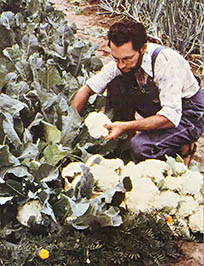
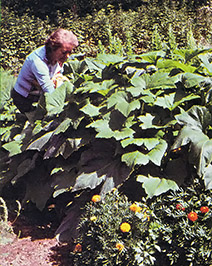
What could possibly have caused me — an essentially lazy, laid-back person — to take up homesteading? Ignorance, I think. Some years ago, when I was new to country life, I had a vision of days that consisted of quiet strolls in the forest and peaceful walks down by the river. Long hours spent hoeing corn — in the hot sun — hadn’t quite figured into my plans. I soon came face to face with grim reality!
Raising all the food my family needed — in an organic garden — turned out to be a lot of work until I discovered how to cultivate a low-maintenance garden. That approach has enabled me to be nearly food-self-sufficient and lazy at the same time. I’d like to pass along a few time-saving tips that have worked for me. Whether your cropping ground is in the city, town, or country, I think they’ll work for you, too.
For Starters
Plan to have as large a garden as possible. The maximum size of your plot, of course, will be determined by the amount of land at your disposal, the tools you have to work with, and the quantities of manure you can get hold of for fertilizing it. A large garden allows room for nice wide paths between doubly spacious rows, a layout which provides built-in soil relief and easy rotation. Vegetable crops use lots of soil nutrients, and I’ve found that they grow especially vigorously in earth that has lain “idle” for a while. So let the paths between your crops rest under mulch this year, and next season they can be put back into production.
A good-sized garden will also provide habitat for a variety of insects, making it less likely that any one particular bug will become a problem. If you can keep a well-rounded, diverse population of these small creatures in the garden, they will — all by themselves — limit the chances of an infestation because the separate insect types will control each other. I’ve always believed that a productive and healthy garden isn’t insect-free but is, instead, a balanced system in which the gardener works with (not against) the other creatures of the earth.
Anyway, if you have plenty of space, chances are you’ll be growing more food than you need. There’ll likely even be enough to feed your insect population (after all, they have to eat, too), which means that you won’t have to worry about their snacking.
Tenderfoot Tips
In order to produce a lot of food, the ground has to receive a lot of food … so feed your garden! In addition to the mulch and crop residues that you’ll be turning back into the earth, mix about an inch of chicken manure or four inches of cow manure into the soil every year.
To get that plant food underground, the whole garden will need to be tilled — or turned by some other method — at least twice in the spring and once in the fall. Now that may sound like a fair bit of heavy labor … but I know of no faster way to kill weeds and get organic matter into the soil. And, if you keep turning that earth, time-consuming composting won’t even be necessary. You’ll be able to simply spread vegetable wastes on top of the ground, with your other mulch, until tilling time!
It’s a good idea to grow a cover crop during the garden’s fallow seasons. I’ve had the best results with buckwheat and annual rye (neither of which will develop a persistent root system or set seed before the first spring tilling). Such plants protect the soil from erosion and supply valuable green manure besides.
When planning a “minimum intervention” garden, it’s important to concentrate on soil building. Plants grow faster and stronger (and become more insect-resistant) on humusy, fertile soil. If the earth they grow in is healthy, your vegetables will be better able to take care of themselves.
Choose Wisely
Once you have decided which garden crops are likely to do best in your climate, choose disease-resistant varieties whenever possible. Most seed catalogs will note which cultivars have a certain amount of built-in insect and disease resistance. With good soil and strong seed, your “battle” will be half won.
During each winter, I draw up a garden chart for the following spring, making sure that the crops are rotated every year. Even if a garden is quite small, annual crop rotation is very important because many insect eggs remain in the soil over the winter. By shifting the positions of your vegetables, you can at least keep the varmints from multiplying on their preferred host plants year after year.
Giving Them Company
Companion planting is another technique to keep in mind while drawing up your garden plan. You can prevent a lot of insect damage — and avoid extra work — by putting different varieties together so that they benefit from their proximity to each other. Interplanting can actually help mask the specific vegetable scents that insects use to locate their favorite foods! So instead of putting masses of cabbage, cauliflower, kale, and broccoli together, separate them with patches of onions, tomatoes, potatoes, and beets.
Marigolds are particularly beneficial throughout the garden both as general soil conditioners and because of their strong insect-repelling odor. You might want to try planting nasturtiums, basil, parsley, summer savory, or sweet marjoram as well for the same reasons.
Planting Time
Put your seeds in the ground as late in the season as possible. The longer you delay your planting (within reason, of course), the more chances you’ll have to till under all the weed sprouts instead of painstakingly hoeing around each young vegetable plant. I can till my entire half-acre garden in about two hours, but it would take days to hoe it by hand.
Plan to turn the soil once as soon as it becomes workable in the spring. Then wait for a good flush of weeds to appear (probably after about two weeks), and till the plot again. If you can wait a few more weeks before planting the seeds, till the soil a third time. The delay will pay off in the long run, and save you hours of hand weeding and hoeing. (The repeated tillings will also destroy most of the belowground cutworms that have wintered over in the soil.)
Of course, a relatively late planting could make it difficult to grow such cool-weather crops as lettuce … unless you apply plenty of mulch. A good organic ground covering will keep the soil cool and moist, build fertility (as you turn it under from year to year), and shade out most of the weeds that survive the spring tilling.
Cool-weather crops and root vegetables should be mulched (to within a few inches of the seeds) as soon as they’re planted. Hot -weather vegetables — such as squash, corn, tomatoes, and beans — should not be mulched until the soil has warmed up considerably … about the middle of June in my part of Idaho. (It’s also a good idea to mulch the garden’s paths even thicker than you do the rows. Heap the organic matter right on there, to a good foot deep!)
Even after your many preparations — which will insure that your vegetables have all the growing advantages you can give them — are done, you’re still going to have to deal with the weeds and bugs that remain. And the newer the garden is to organic culture, the more uninvited plants and insects you should expect.
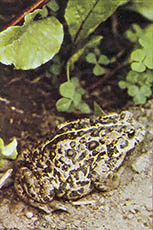
However, much of the remaining control work can be done by “helpers.” To keep the problems in hand, just call on wild birds, toads, and ( if you can get them) chickens. It won’t take much doing to attract such assistants to the garden. By harvest time any efforts that you’ve made to do so will have been paid back many times over. A single toad, for instance, will eat up to ten pounds of insects during one season. ( And snails, slugs, and cutworms are among the amphibians’ favorite treats!)
You’ll find it’s pretty easy to get a few toads to take up residence in your garden: Simply sink a small water-filled tub in the ground and place a few upsidedown flowerpot “caves” — with “tunnel” entrances beneath them — near its rim … you’ll soon have your own sticky-tongued midnight pest patrol!
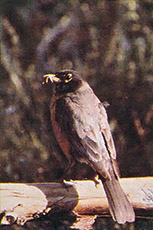
Wild birds, on the other hand, can help you to control insects during the day. They’ll eat just about any bug that moves … and will sing for your pleasure, too. If you want them to work in your garden, just provide nesting sites and water. (A stream is best, but a small birdbath will do if it’s kept really clean. You can put up birdhouses if there’s not much natural shelter nearby.) The backyard songsters will also need high places to perch near the vegetable patch. Garden fenceposts make great lookout towers for insect-hunting birds, and a few tail poles set among the rows will provide similar vantage points.
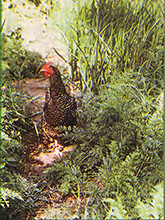
Chickens — another source of garden help — are birds of a different feather. They’re great weeders and cultivators, and will eat grubs, ants, or worms with gusto! However, they can be too thorough at scratching and cultivating if they’re not controlled. If let into the garden early in the season, your hens may well wipe out all of your newly sprouted seedlings. (Last year, my birds got into the garden in May and ate every tiny chard, beet, and Chinese cabbage plant in sight.)
By the time your crops are well along, however, chickens will be the best allies you can have. Their dirt scratching will control weeds … they’re efficient and methodical insect hunters … they’ll eat your household food scraps and provide wholesome fresh eggs in return for the privilege of sharing your garden. The biddies will even supply fertilizer while they work. Chickens require minimal housing and care, too, and the hens, at least, are quiet creatures not inclined to roam.
Even city dwellers may be able to keep a limited number of chickens around. You’ll find that some towns will allow it, and some won’t. When they do, city ordinances usually specify that premises must be maintained in clean and sanitary condition. A call to your local health department will tell you whether you can keep a flock.
In Conclusion …
Of course, even if you follow all of my tips, you’ll still spend hours in the sun (or perhaps during the cool of the evening) with shovel, tiller, or hoe turning the soil, building its nutrients, and planting the good seed. But time spent in such pursuits will keep you in touch with the earth. I no longer begrudge my hours of garden work, because I know there’ll be plenty of time left over for the other things I need to do … like taking long walks down by the river.