
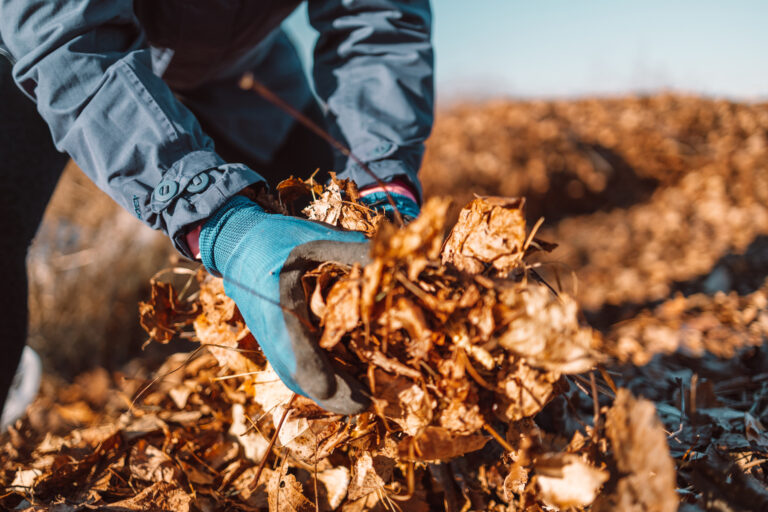
Explore how to compost leaves for vegetable garden soil with these composting tips. Learn composting tips and all about composting leaves.
Autumn is finally here, and soon it will be bringing much cooler temperatures (much appreciated after a long toasty summer) and plenty of falling leaves. If you happen to have trees, such as Chinese Pistache, Liquidambar, Ash, Crape Myrtle and many others that grow well in the high desert, you’ll have the added bonus of spectacular fall colors before the leaves drop to the ground. When the leaves do finally drop, think about recycling them into mulch or compost rather than putting them in the trash.

Composting Tips: Leaf Compost for Vegetable Garden
Leaves can be a great benefit to gardens and landscapes, because they hold a number of nutrients that can be released back into the soil for plant use, thus reducing the need for added fertilizers. According to Compost Guide, “The leaves of one large shade tree can be worth as much as $50 of fertilizers and humus. Pound for pound, the leaves of most trees contain twice as many minerals as manure.”
Using the leaves as mulch or compost not only adds the additional nutrients to the soil for use by plants, they also help to keep the soil warmer in the winter and cooler in the summer, allow the soil to retain moisture, so you don’t have to water as often, and shade the ground and prevent many weeds from growing.
If you happen to be using needles from pines (or the leaves from oaks), you can get the added benefit of adding a little acidity to the soil for plantings that struggle with the high desert’s alkaline soil.

How to Compost Leaves
- There are a number of ways to collect the fallen leaves — leaf vacuums, blowers, mowers, and, if you want to be “green,” the old-fashioned rake. You can also help out your neighbors and collect their leaves as well.
- The leaves release their nutrients and break down best if they are ground up or shredded, so running them through a mulching mower or chipper-shredder does the trick.
- After the leaves have been shredded, place the leaves directly on the ground around your plantings as a protective mulch. Or, better yet, because the leaves are more likely to blow away here in the high desert, place these high-carbon leaves in a compost pile or bin and mix with some green garden or kitchen scraps (vegetables, coffee grounds, tea bags, egg shells, etc.), manure, blood meal, cottonseed meal, grass clippings, or nitrogen fertilizer.
- Add some water and stir or turn periodically and have a nice batch of nutrient-rich compost for your spring garden. If the pile is not heating up, you might need a little more nitrogen-containing ingredients.
- For additional help in getting the pile to heat up, especially in the cooler months, cover the pile with clear plastic sheeting.
Now you know you can enjoy the leaves of your trees all year long — from the beautiful new spring growth to the great shade they provide during summer heat, from the incredible fall colors to the nutrient-rich compost and mulch made from the fallen leaves.
All MOTHER EARTH NEWS community bloggers have agreed to follow our Blogging Best Practices, and they are responsible for the accuracy of their posts. To learn more about the author of this post, click on the byline link at the top of the page.







