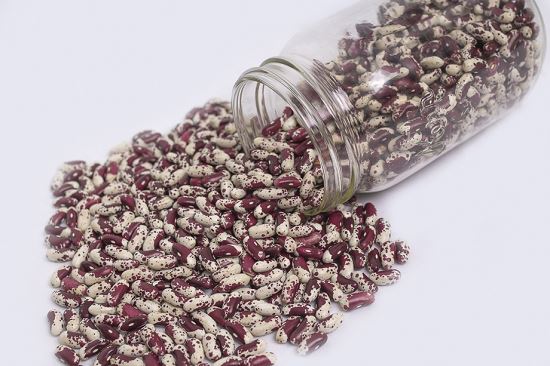
Saving seeds can be beautiful.
The seed library concept has always intrigued me. A central place to store a community’s seeds makes perfect sense.
Before the invention of overnight world trade and easy transportation, seeds were a local affair. Every season, individual farmers and gardeners saved seeds from their plots out of the necessity of next year. New variety infusions would happen from time to time through trade or barter from neighboring communities.
As people chose the best seeds from their best plants, local varieties (called “landraces”) evolved, giving the community plants adapted to regional conditions like rainfall and soil quality.
These days, local seeds have given way to national (or even international) commercial seed houses. Seeds, which were once scarce and sacred, are now ubiquitous, homogenized, and commonplace. The need for a seed library seems antiquated in our modern age, but within its simple structure is the power of the individual.
All we gardeners need to do is check out some seeds, grow them in our gardens, save the seeds, and return more than we borrowed. The highlight of this process is the seeds returned, no matter where they initially came from, are now localized and organic (as long as one’s garden is).
Just a few years ago, it seemed like seed libraries were being legislated out of existence. An issue cropped up with the Cumberland County (Pennsylvania) Library’s Simpson Seed Library. The Pennsylvania Department of Agriculture determined that their seed library violated the state’s seed legislation, and through a settlement, forced the Simpson Seed Library to be replaced with an annual seed swap (which is not nearly the same thing).
In March 2016, there was an amendment to the Pennsylvania law which allows seed libraries to once again become legal. Catastrophe averted.
My Local Seed Libraries
Personally, I’ve had the opportunity of assisting two different local seed libraries. My first experience was attending several “seed packing parties” with the Akron-Summit County Public Library’s Seed Sharing Library.
These gatherings are part work party and part social gathering. Discussing gardening while performing tedious manual activities is a great way to form bonds between strangers with a common interest, though the seed packing process will make you see cross-eyed if you don’t take breaks.
The Kent (Ohio) Free Library reached out to local gardening groups, including my local chapter of Food Not Lawns (Kent Ohio Food Not Lawns), to start their library last year — the Seed Library of the Kent Free Library. They even utilized a seed-saving workshop I gave last summer as their seed library launch.
Several seed packaging parties were organized and highly attended with over 40 people at the first one (thanks to our county Master Gardeners and Food Not Lawns). Opening this spring, the seed library has been well received so far.
What really drove home this new local resource’s importance was having beginning gardeners go down to pick out seeds after one of my recent gardening talks. Everyone loves receiving seeds.
Counting the above mentioned seed libraries, I personally know of 10 Ohio seed libraries. I’m sure there’s probably two to three times that many total in my home state. It seems to me that seed libraries have gone from almost extinct to flourishing in a short period of time.
I’m proud of those who have been brave enough to put their efforts into something that could have been closed down without warning. The next challenge will be keeping these entities going and growing as time goes by.
Seed Library Challenges
Despite these victories, seed libraries do have some problems to overcome. Receiving seed donations is not one of them. There are plenty of commercial seeds to be had at the end of every season. Seed companies can’t sell seeds older than the current year, so those “expired” seeds are available if you know who to ask.
Of course, seeds don’t really expire, though some are not much good after a year or two (parsnips and onions come to mind). Seeds do germinate less and less as time goes on but my answer has always been to plant more the older they get.
As I see it, the real challenge is motivating gardeners to return seeds that they “borrowed”. Beginning seed savers need education as the task at first seems daunting. Everyone should be able to save beans and peas. They are self-pollinating, so there’s little worry about crossing (though it can occur if varieties are planted too close together).
Tomatoes and peppers are the next easiest with lettuce right behind them. I will be teaching another seed saving class in late summer so we can try to overcome this obstacle.

Here are the seeds I checked out of the seed library.
To set an example, I recently checked out 4 varieties of beans (3 green bush and 1 pole) from Kent’s local seed library. They are the easiest to save. Simply grow the beans until the plant dies, wait until the pods dry up in a week or two, and harvest away.
It’s a ritual I already complete every fall with my Jacob’s Cattle dry beans. While splitting out the seeds from the dead pods, I often imagine my ancestors sitting around a fire or an old wooden table working on the same undertaking. Of course, they weren’t watching TV while working like I am, but you get the picture.
I also picked beans (pun not intended but cool nonetheless) as I’m in the market for a new green bean. I’ve grown the ‘Tendergreen’ variety over the last few years, but I’m not exactly sure they are the ones for me.
Starting a few seasons ago, I started canning dilly beans, even winning first place at the county fair last year. (Note: I was the only entry in the men’s canned bean category, but a win’s a win’s a win). Straighter, tastier beans with maybe a different color would be a nice change. So, having 40 seeds of 4 different varieties will give me the chance to “try before I buy” while showing others how give back to the library.
Ultimately, I believe our answer will be to find ways to motivate our borrowers beyond reciprocity. We could give rewards, like special mention in the seed library’s weekly email or membership to the “Seed Saver’s Club”. It’s a discussion we need to have since this is our first year.
I also thought about letting seed returners have “first dibs” at the donations before they are available to the public. In my Food Not Lawns experience, seeds are quite the incentive. Heck, maybe even paying people for their efforts might work (even if it’s with Time Credits from our local time bank). We just have to find the right buttons to push.
Final Thoughts
Being involved with these seed libraries has been fulfilling for me as a gardener and permaculture practitioner. Imagining all the heirlooms we can save and new varieties we can create gives me hope for the future. Like any venture, there will be trials and tribulations that will test our resolve, especially since a seed library is mostly a volunteer endeavor.
We also need to worry about the crossing of varieties, especially with newbie seed savers, but for me this is a minor concern. Another angle I believe helps the seed library movement is public libraries are looking to provide new services in this age of information.
With many traditional resources they provide (books, articles, etc) easily acquired online, libraries are now seeking different ways to remain relevant. Seed libraries make them pertinent on a local level.
My wish for you reading this is that you will search out your local seed library and participate. It’s a great way of giving back to your local community while making connections and obtaining resources for yourself and your family.
If you don’t have a seed library that’s close to you, ask your library if they have plans for one in the near future. Public interest often creates new programs. I just hope this new found enthusiasm I’m seeing continues and doesn’t become another green fad.
Don Abbott(aka The Snarky Gardener) is a gardener, blogger, author, educator, speaker, reluctant activist, and permaculture practitioner from Kent, Ohio. Professionally, he’s a software developer but spends his spare time producing food at Snarky Acres, his rented 0.91-acre urban farm. He is also the founder of the Kent, Ohio, chapter of Food Not Lawns and received his Permaculture Design Certification from Cleveland-based Green Triangle. Read all of Don’s MOTHER EARTH NEWS postshere.
All MOTHER EARTH NEWS community bloggers have agreed to follow our Blogging Guidelines, and they are responsible for the accuracy of their posts. To learn more about the author of this post, click on their byline link at the top of the page.