The green bean section of our northern Utah garden is always one of the most prolific parts of the produce patch. And the bushels of beans we pick each season are definitely at the top of my family’s list of year-round favorite vegetables.
That’s probably because we’ve developed our very own “down-home” methods of processing and growing green beans. Methods which yield a vegetable only remotely resembling the limp, tasteless, flat, canned green beans that most folks now pick from the supermarket shelves.
Growing Green Beans Starts With the Right Variety … And Cow Manure
We’ve found that growing pole beans (stringless pole beans) are a far better choice than bush beans for the home garden. The pole beans — which grow up, rather than out — take up less space. And if you keep them picked back, they’ll bear for a much longer period.
Here in northern Utah, we have good luck with Blue Lake Poles (available from Burpee, Henry Field, J.W. Jung, L.L. Olds, and George W. Park seed companies). Check with other vegetable raisers or a reputable garden center in your area for the names of stringless pole beans that grow best where you live.
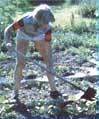
Perhaps a commercial fertilizer would achieve the same result. But we don’t know because we have cows, and we’ve never had to buy our vegetables’ plant food from a store. We just spread a moderate amount of barnyard droppings across the garden and plow and harrow it in with the tractor during the fall or very early spring. (If you don’t have real farm equipment to use, you can do the same job with a heavy-duty rototiller … or a shovel.) It’s then fairly easy to rake and re-rake the fertilized and worked soil Into an “onion bed” when planting time rolls around.
And we do plant early … while the ground is still moist and soft. The beans don’t require anything fancy either: We just scratch out a shallow trench — perhaps a couple of inches deep — with the point of the hoe. Then we drop in a thick row of beans, cover the seeds and tamp the soil lightly.
Most seed packet directions stress that green bean seedlings should be thinned as they sprout and break the ground. “Only adequately spaced plants,” we’re told, “will grow vigorously and bear heavily.” Well, in poor soil, maybe so. We’ve found, however, that our garden’s earth plus cow manure plus plenty of summer water produce growing conditions so good that we never have to thin our beans at all.
Our Beans Climb the Fence
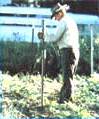
It’s so time consuming to set up an individual pole or string for each bean plant to climb that we simply don’t do it. Instead we wait until the seedlings are 2 to 3 inches tall, then we drive a steel fencepost (easy to put in and easy to take out again in the fall) into the ground at each end of each row of beans. We also pound a couple more of the posts into the earth at equally spaced points along every row.
It’s then a simple matter to string some lightweight woven wire fencing down each row and secure it to the posts with twists of used baling wire. Such a quickie fence — while far too flimsy to turn a rambunctious animal — is just what the climbing bean plants need. Within days, the seedlings’ tendrils begin to reach out, wrap themselves around the support and pull the profusely sprouting beanstalks up the wire grid work.
Fresh Air and Sunshine Do the Rest!
Beans need a lot of fresh air and sunshine. Not only to produce a bumper crop, but because anthracnose and blight (two of the plants’ worst enemies) cause the most damage under moist, damp conditions.
For that reason, we like to plant two rows of beans (spaced far enough apart for easy picking, weeding and tending) then a couple of rows of low-growing “spacer” crops then two more of beans, etc. Carrots and beets make good spacer vegetables. Or, if you want something that’ll help repel bean beetles, try onions, garlic and summer savory.
Water your beans regularly as they grow (but don’t keep the ground around them soaked), and if you fertilized, planted and supported the plants property in the first place, fresh air and sunshine will do the rest.
Bumper Harvests Are the Norm
I’ve said that our green beans are prolific, and I meant it. Although we sometimes plant more, three 12-foot rows are all we ever need to supply ourselves and our neighbors with fresh beans throughout the summer and feed our family all of the delicious vegetables that we want all winter long.
We usually start picking low on the vines (while the plants are still blooming farther up) and gradually work our way to their tops. And do pick those vines hard! The more beans you harvest, the more the plants will produce.
Use Your Green Bean Bounty Lots of Ways
One of the easiest and most popular ways to serve green beans is boiled with pepper, salt and butter. And there’s absolutely no need to laboriously pop off their ends and snap stringless bean pods into short lengths before cooking either. Just break off the stems, snap the extra-long pods once in their centers if you absolutely must and drop ’em in the kettle. The bloom-ends of the pods are powerhouses of vitamins and other nutrients, and it’s to your health advantage to leave ’em on. If your eager eaters are too proud to munch whole pods at once, they can cut ’em into pieces on their plates.
Overcooked beans — by the way — lose flavor, color, texture, eye appeal and nutritional value. Depending on your altitude, you should find that green beans fresh from the garden are ready to eat when boiled in an open pan for 10 minutes or less. Or put a mess of the tasty vegetables in a pressure cooker with a quarter cup of water and a pinch of salt, and they’ll be table-ready after cooking just two minutes.
Other green bean recipes: Green beans are hard to beat prepared with onions, peppers, chunks of ham, or bits of bacon. Or pickle the long ones in a vinegar-sugar-water solution for a cold salad. The beans also pickle well with cucumbers and/or onions. Green beans are delicious, too, in casseroles, and the boiled beans can always be chopped and added to an otherwise raw leafy salad. Use your imagination!
If some of the beans “get away from you” before you can pick them, don’t throw the oversized pods away. Pick ’em, snap ’em into bite-sized pieces, steam ’em, drain ’em, sauté the cooked beans in buffer with fresh mushrooms and serve. Mmmm-mmmm! Are they good!
And don’t forget that the juice from your cooked beans is also flavorful and nutritious. Save it and add it to soups, gravies, stews and casseroles. I even freeze some for later use.
Save Some Green Beans for Winter
Extra beans — either whole or snapped — can be dried very quickly and easily for winter eatin’. They reconstitute nicely in soups. Or soak ’em in water and add ’em to creamed dishes.
It’s also easy to freeze a lot of beans for later meals with little effort if you organize your work.
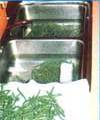
Pick the pods when they’re young and tender and wash them well. (Be sure to remove the fine, hair-like “fuzz” — which can harbor foreign matter and cause spoilage — from the pods.) I dump my fresh pickings into a sink of water, swish ’em around, pick out individual pods, snap off their stems, break the biggest ones in half and drop the pieces into another sink of water. The beans are then swished around again and transferred to a wire basket (with handle).
When the basket is half to two-thirds full, I plunge it into a pot of boiling water. As soon as the water (set over my stove’s high heat) has come back up to a boil, I start timing and blanch the beans for three minutes.
The bright-green pods are next dumped into a sink of ice water and swished around once more. As they cool, I start blanching another basket of the vegetables … then come back, scoop the cooled beans out of sink one and into a second sink of icy water. The pods are then swished around again for a minute or two (don’t leave them in the water any longer than necessary) until they’re chilled all the way through.
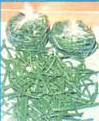
At that point, the cold pods are scooped out of the water, drained and spread on a porous terry towel to dry further before being sealed in plastic bags, labeled, dated and put in the freezer.
This “assembly line” processing goes quite rapidly, especially when I’ve frozen several blocks of ice ahead (in loaf pans, recycled cartons, etc.) for the chilling part. Later in the winter, it’s just as easy and convenient to dump a package of the frozen vegetables (no need to thaw) into a pan and cook ’em up exactly as if it were still summer.
Fresh and almost-fresh delicious green beans all year round! You and your family can enjoy these delights too. Just plant a few magic beanstalks this spring and you’ll be an expert at growing green beans in no time!