Wondering how to relieve mouth pain with herbal remedies? Read on to learn more about natural remedies for toothaches and oral thrush.
Addressing Mouth Pain with Herbal Remedies and Essential Oils
There are many ways we can make pain and discomfort more manageable. Often a multi-pronged approach is more effective than relying on a single approach, especially if pain is severe. It’s important to realize that a great number of sensations often accompany the feeling of pain and it is not simply a painkiller or an anodyne that will “make someone feel better.” For example, we might also tense our muscles in response to pain; we might become unsettled, even frightened; we might feel cold or run a temperature; indeed, we might feel irritable due to inflammation and/or a pervading sense of discomfort; we might be sleep deprived or even hungry as pain in the mouth makes eating difficult; we might be temporarily dehydrated, and a heaviness or tightness may pervade. Nervines are particularly valuable additions when addressing discomfort.

Herbal Remedies to Relieve Oral Pain and Discomfort
- A clove bud can be placed on a painful spot within the mouth with a significant pain-reducing effect.
- Myrrh, clove, wintergreen, and peppermint essential oils applied topically in drop doses help ease discomfort.
- Willow has an effect often described, like wintergreen, as akin to aspirin and can be used for tenderness and general discomfort. It can be decocted or incorporated into a poultice, taken internally as a tincture, applied directly to the gums or
externally on the skin, for example. It can also be blended with other herbs. - Prickly ash, cayenne, turmeric, and yarrow can be applied topically in a poultice, either singly or in varying ratios, depending upon the individual and their level of discomfort. Like willow, these herbs can also be swabbed directly
onto the gums. It is worth remembering that prickly ash is a sialagogue — too much in the mouth will cause excessive salivation. - Infused oil of arnica can be applied externally (never internally), and homeopathic pellets can be dissolved under the tongue to help relieve inflammation.
- Roasted and ground turmeric can be massaged into aching teeth to eliminate pain and swelling. (Note: Turmeric yields a lovely yellow color like its rhizome, even in the mouth.)
- Rosemary Gladstar, an herbalist contributing a significant energy in the resurgence of herbalism in America, suggests for a toothache a combination of equal parts of organically grown goldenseal, myrrh, and turmeric. She suggests powdering the herbs and adding a drop of clove oil to make the powder into a thick paste before applying it topically as need be (Gladstar 1999).
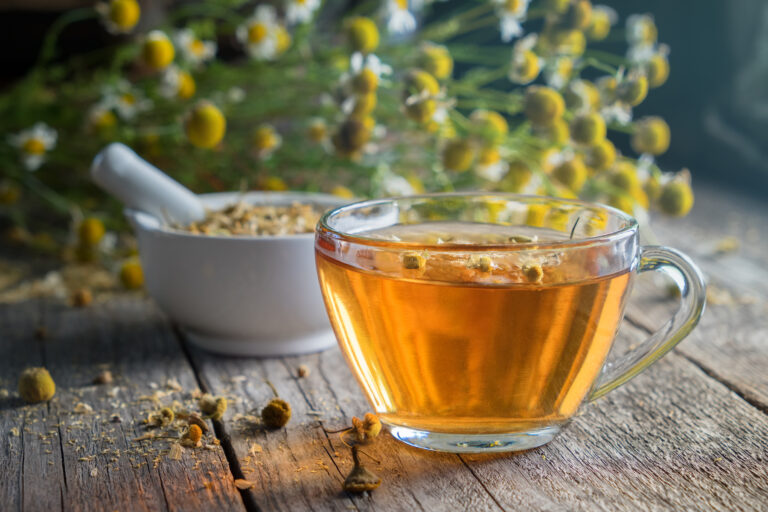
- Chamomile and fennel teas, as well as chamomile and lavender, are soothing for teething infants. These can be administered directly to infants in teaspoon doses, or the benefits of the tea can be transferred by a nursing mother to an infant via breast milk. These teas can also be used to infuse chews, as discussed previously.
- For gingivitis and periodontitis, a paste (1 teaspoon of turmeric, 1/2 teaspoon of salt, and 1/2 teaspoon of mustard oil) can be rubbed on the teeth and gums twice daily to provide relief. (Again, turmeric may stain.)

Jean Valnet’s Toothache Remedy
A medical doctor and practitioner of aromatherapy for more than 30 years, Jean Valnet is regarded as one of the world’s foremost authorities on essential oil therapy. He offers us this formula for toothache (Valnet 1980):
- 50 grams (1.8 ounces) arnica flowers
- 10 grams (0.4 ounce) clove buds
- 10 grams (0.4 ounce) cinnamon
- 10 grams (0.4 ounce) ginger (root)
- 100 grams (3.5 ounces) aniseed (anise seed)
- 1 liter (34 ounces) alcohol (grain alcohol or vodka preferred)
These herbs are macerated and left to infuse the alcohol for eight days before straining and retaining the liquid. Valnet suggests one teaspoon of this infusion in a half glass of raw honey water (one teaspoon raw honey dissolved in four ounces warm water), swilled two to three times daily. After rinsing, spit out the solution.
Thrush: An Oral Infection
“Candidiasis” and “candida” are terms used when we talk about thrush, a common oral infection. Men, women, and children can all contract thrush, and it’s important to be able to swiftly identify, or indeed rule out, the presence of this fungal infection. Our interventions will vary from person to person and will need to be adapted, as is the case in all of herbal medicine, to each individual’s age and well-being.
A Mouthwash for Thrush
Overcoming a candida overgrowth often necessitates changes in our oral health regime as well as a personalized systemic protocol. Additionally, barley water, blended with half teaspoons of barberry, calendula, goldenseal, and red clover, make an
effective oral rinse in the case of a thrush infection.
To make barley water, use 1 cup of barley to 4 cups water; simmer, covered, 20 to 30 minutes. Reserve the liquid after straining, and use it as a basis for mouth rinses. Additionally, the resulting liquid can be drunk freely each day, while the leftover barley can be added to food. It’s important to remember that, while barley water can be drunk freely as a beverage, when used as a rinse, it is never swallowed.
With any thrush infection, barley water can be used to moderate the pH of the mouth and support the digestive system as a whole. Also, marshmallow and yarrow tea can be used as a wash, a rinse, or both. Finally, as a reminder, slippery elm may exacerbate
symptoms of thrush.
World-renowned herbalist, naturopath, and educator Mary Bove suggests the following herbal treatment for thrush (Bove 2001):
Swab the mouth multiple times daily with an infusion of 1 ounce warm water, to which is added 5 drops each of tinctures of black walnut (Juglans nigra), bloodroot (Sanguinaria canadensis), and spilanthes (Spilanthes spp.); follow with a Lactobacillus bifidus solution (1 capsule to 4 ounces warm water per day) as a daily wash until symptoms disappear.
Gingivitis and Periodontitis
We introduced herbal interventions for gingivitis and periodontitis in chapter 8. In addition, when we formulate for these chronic conditions we generally choose from the use of rubefacients (i.e., circulatory stimulants such as cayenne), aromatics (cayenne, cinnamon, rosemary, thyme), astringents (red raspberry leaves, goldenseal, myrrh, oak, plantain, yarrow), immune-supporting herbs (barberry, echinacea, neem, propolis turmeric), and styptics (yarrow and oak are the finest), along with foods (Support from vitamins B and C can be gleaned from many sources, including barley, red raspberry leaf, rose hips, and slippery elm. We can also supplement with ascorbic acid. Finally, vulnerary herbs (e.g., calendula, myrrh, plantain, and propolis) help heal wounds.
Other herbal strategies might include:
- A rinse of a diluted tincture of myrrh, or propolis, or a few drops of the essential oil with a small pinch of dried cayenne powder, or a few drops of tincture.
- A rinse of barberry, cinnamon, myrrh, oak, and capsicum.
- For advanced periodontitis, a tincture which combines barberry and goldenseal at a ratio of 2 to 1, to which oak and propolis can be added in drop doses is useful as a rinse.
- A paste of turmeric and water is usefully applied nightly; water can be replaced by very small amounts of either a decoction or a tea of yarrow, barberry, or cinnamon to enhance activity.
An all-around useful mouthwash can be made by combining:
- Goldenseal: 1 ounce (30 milliliters) tincture
- Myrrh: 1/2 ounce (15 milliliters) tincture
- Peppermint: 2 drops essential oil
- Cinnamon: 2 drops essential oil
This can be used neat or diluted in water and used as needed.
Jethro Kloss’s Herbal Liniment (to be applied topically, only to the gums) Jethro Kloss was an early 20th-century leader in natural herbal remedies, perhaps best known for his seminal work Back to Eden, from which this recipe comes (Kloss 1939):
Tinctures of:
- Myrrh: 2 ounces (60 milliliters)
- Goldenseal: 1 ounce (30 milliliters)
- Cayenne: 0.5 ounce (15 milliliters)
Kloss suggested dissolving herbs in 1 quart rubbing alcohol (70%) and letting the jar stand for seven days, shaking daily. Then the liquid is decanted and stored, while the herbs are composted. The liquid can be applied topically to the gums or used as a mouth rinse but caution should be taken not to swallow the liquid.
Throughout this chapter, we have attempted to expand on the suite of recipes presented throughout our text in a way that enables those with less experience of herbs for the mouth to move forward. Of equal importance, we hope we provide more fluid ideas
about how to combine herbs to encourage the more experienced reader to blend in a less prescriptive manner.
Given that hundreds of herbs for the mouth have been used for generations, indeed millennia, there are a myriad of recipes and sources to investigate, develop, and incorporate into the foundational materia medica presented in chapter 11 and applied here in chapter 12. Perhaps most importantly, we have restrained our focus and urged readers to become familiar with a small, safe suite of herbs, their actions and interactions before launching into broadening a materia medica (and associated recipes).
We would do well to remember … if we could offer one herb to change a person’s life, which might we choose? Our choice of herb, how it is prepared and administered, and how it’s used needs to be supported more broadly by sound oral hygiene and healthy food choices that will make a lifetime of difference.

References
• Bove, Mary. 2001. An Encyclopedia of Natural Healing for Children and Infants, 2nd ed. New York: McGraw-Hill.
• Brinker, Francis J. 1998. Formulas for Healthful Living, 2nd ed. Sandy, Ore.: Eclectic Medical Publications.
• Cech, Richo. 2000. Making Plant Medicine. Williams, Ore.: Horizon Herbs.
• Chaturvedi, T. P. 2009. Uses of turmeric in dentistry: An update. Indian Journal of Dental Research 20(1): 107-09.
• Ellingwood, Finley. 1919. The American Materia Medica, Therapeutics and Pharmacognosy. Sandy, Ore.: Eclectic Medical Publications.
• Gladstar, Rosemary. 1999. Rosemary Gladstar’s Herbs for the Home Medicine Chest. North Adams, Mass.: Storey Publishing.
• ——. 2001. Rosemary Gladstar’s Family Herbal. North Adams, Mass.: Storey Books.
• Griggs, Barbara. 1982. Green Pharmacy. New York: Viking.
• ——. 2008. Helpful Herbs for Health and Beauty. Oxford: Infinite Ideas.
• Halawany, H. S. 2012. A review of miswak (Salvadora persica) and its effect on various aspects of oral health. Saudi Dental Journal 24(2): 63-69.
• Hoffmann, David. 1990. The New Holistic Herbal. Rockport, Maine: Element Books.
• Hudson, Tori. 2008. Women’s Encyclopedia of Natural Medicine. New York: McGraw-Hill.
• Kloss, Jethro. 1939. Back to Eden. Reprint. Twin Lakes, Wis.: Lotus Press, 2009.
• Kress, Henriette. 2011. Practical Herbs. Helsinki: Herbs and Herbal Therapy Henriette Kress.
• Lad, Usha, and Vasant Lad. 2009. Ayurvedic Cooking for Self-Healing, 2nd ed. Albuquerque, N.Mex.: The Ayurvedic Press.
• Lewis, Walter H., and Memory P. F. Elvin-Lewis. 2003. Medical Botany: Plants Affecting Human Health, 2nd ed. Hoboken, N.J.: John Wiley and Sons. • McGuire, Thomas. 1972. The Tooth Trip. New York: Random House.
• Moore, Michael. 1997. Herbal Formulas for the Clinic and Home. Bisbee, Ariz.: Southwest School of Botanical Medicine.
• Romm, Aviva Jill. 2003. The Natural Pregnancy Book: Herbs, Nutrition and Other Holistic Choices. Berkeley, Calif.: Celestial Arts.
• Schlueter, A. K., and C. S. Johnston. 2011. Vitamin C: Overview and update. Journal of Evidence-Based Complementary and Alternative Medicine 16(1): 49-57.
• Upton, Roy. 2010. Good Manufacturing Practices and the Community Herbalist. Presentation at the American Herbalists Guild 21st Annual National Symposium, Austin, Texas, October 1-3.
• Valnet, Jean. 1980. The Practice of Aromatherapy: A Classic Compendium of Plant Medicines and Their Healing Properties, ed. Robert B. Tisserand. Rochester, Vt.: Healing Arts Press.
• Werner, David, Carol Thuman, and Jane Maxwell. 1992. Where There Is No Doctor. Berkeley, Calif.: The Hesperian Foundation.
This excerpt has been reprinted with permission from Dental Herbalism: Natural Therapies for the Mouth, by Leslie
M. Alexander and Linda A. Straub-Bruce and published by Healing Arts Press, an imprint of Inner Traditions, 2014.