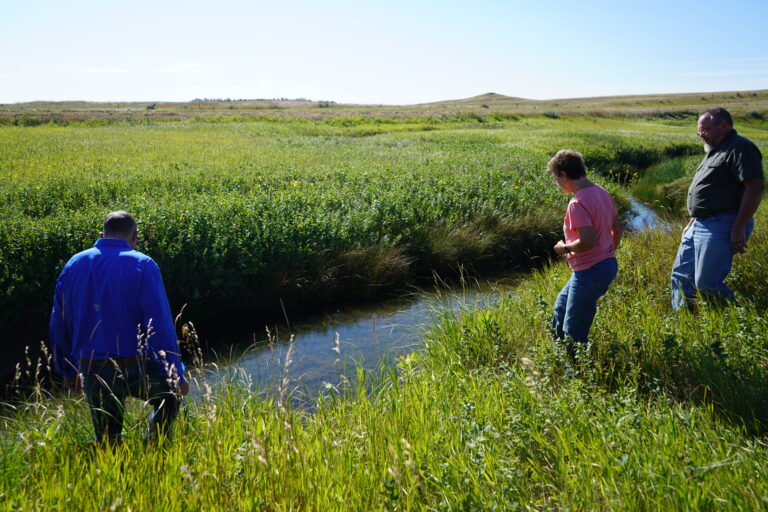
Think beyond a well to develop a resilient off grid water management system that accounts for potential disruption while also increasing the fertility of the land.
Last summer, we were in extreme drought. We had a significant number of forest fires in the region (the closest one started within 1/2 mile of our property), wells in the area dried up, and as a result, agricultural production was significantly lower. This blog post will talk about strategies to moderate both drought and flood.
It’s important to have a comprehensive water plan for your property. Most homesteaders are simply dependent on their well, which is predicated on cheap and reliable energy. Don’t misunderstand me: I love being able to flip a switch and get light and turn on a faucet and get water. It’s wonderful! However, we need to develop a resilient water plan that accounts for potential disruption in that system but also to develop other systems to increase the fertility of the land.
Water Principles
Here are some commonly known, yet rarely adhered to, water principles:
- Observe. take notice of your drier, wetter, warmer and colder areas. As the snow melts here in Northern Idaho it is abundantly clear where those different areas are located. We take note of these areas and it aids us in design, types of plants to put in those areas and even specific cultivars. It is very common to find me standing out in the rain watching water flows down to the micro level. I note where water flows, if it soaks in or if it pools up.
- Start at the highest point possible. If we can take advantage of gravity in our water systems this is very helpful. Think in terms of this when developing systems and placement of homestead elements like buildings.
- Start small and simple. Do not fall victim to analysis paralysis. Start small and simple. You do not have to have an elaborate gray water system to collect gray water. Start with a five gallon bucket under a sink. You do not have to start with a rainwater catchment system designed with massive storage capability and underwater cisterns. Start with a barrel on one corner of your house or chicken coop.
- Slow, spread and soak. We want to improve soil infiltration. In the ideal world we would all have beautiful loam soil that held in moisture but was well drained. That’s not the reality we live in. We will not be able to change the soil texture drastically but we can always improve soil infiltration through techniques like avoiding compaction, implementing swales and adding organic matter.
- Plan for overflow and manage as a resource. Most people implement strategies to get water off their property as quickly as possible to prevent erosion. We need to change our thinking and manage that water as a resource.
- Maximize living ground cover. The ally of erosion is bare soil. We need to keep it covered and ideally, we keep it covered with a living ground cover. If we look into a forest do we see massive pooling of water or erosion? No, because it’s covered and acts like a giant sponge. This is why it’s so important to keep riparian areas planted out to prevent erosion and moderate flood.
- Continually reassess. When we implement systems it’s vital to continually monitor and measure those systems for effectiveness and make appropriate changes if necessary.
With the previous principles in mind, let’s look at a few examples of how we can improve our water situation. This is not a comprehensive list and if you want more information listen to our podcast here.

Water Conservation
Water conservation is a simple and small, yet effective way to start a water strategy. If we are specifically conserving water that comes from our well we are likely doing three things: reducing pressure on the well, reducing pressure on our septic and potentially recharging ground water. Not bad! Here are a couple of suggestions to begin conserving water:
- If it’s yellow, let it mellow, if it’s brown flush it down. yes, we take the line from Meet the Parents literally. Otherwise, we are flushing down approximately three gallons of clean potable water with every flush. With seven people in the house that adds up quick!
- During the warm season, utilize solar showers and dry-composting toilets. No need to be extreme, during warm, sunny weather we use a solar shower and dry-composting toilet. The solar shower is run off rainwater and the dry-composting toilet takes no water!
- Use dishwater basins. It seems like common sense but most people wash dishes with a continuously running sink. This wastes an incredible amount of water. If you fill a dish basin with hot soapy water and use that for washing and rinsing, even in conjunction with a dishwasher you are conserving a lot of water.
Graywater Use
It boggles the mind why the use of graywater is not widespread in America. People tend to be apprehensive toward its use and governments impede the use of it under the catch-all, “safety and security.” Used properly with some simple precautions this is a great resource.
Graywater systems range from the very simple to the highly complex. If you remember one of our principles is to start small and simple. A 5-gallon bucket under a sink is a great way to do that. Another example of a simple system is to have the graywater from a solar shower drain into a reed bed or a rain garden type planting. This can be used to irrigate ornamentals or even food producing plantings.

Rainwater Catchment
Catching rainwater is something that has been done for millennia. This is another method that just makes sense. A good rule of thumb to use is for every 1 inch of rain, 2,000 square feet of catchment will yield 1,250 gallons of water that can be used for irrigation, animals or even households.
You need to understand local law regarding rainwater catchment because, believe it or not, it is not legal everywhere and where it is legal there are usually at least some regulations governing the process. Again, start small and simple. A downspout into a rain barrel works great. Much more complex systems exist with underground cisterns that can be used in a pressurized system but let’s not let “the perfect be the enemy of the good.”
Rain Gardens
Rain gardens are excellent for dealing with excess runoff from a roof or dealing with a “naturally” wet area. In locations where rainwater catchment may be illegal this is a great solution to utilize the overflow and use it as a resource. The idea of a rain garden is to take up that excess moisture and to allow it to infiltrate the soil.
Think of it as a way to deal with stormwater. Creating rain gardens is rather easy. Areas of depression, whether natural or manmade can be created to gather the flow. Usually a downspout into a lower area will work very well. Plant native plants that can do well with lots of moisture. They should be able to handle wet feet at least some of the time.
If you really want to get technical you can split your rain garden up into zones: wet, moist and dry (relatively speaking) and then plant appropriately for those areas. However, if you stick with hardy ornamentals that can handle diverse conditions, including wet, then you should be just fine.

Ponds
Ponds are very beneficial to the landscape. They are not really suitable for arid environments, but here in North Idaho, they work well. First, they are tremendously beautiful. Besides that very important benefit, they are useful for so much more. They provide water for irrigation, storage, animal watering and emergency water for the home. They provide a water source for wildlife of all kinds including amphibians and pollinators. The potential food sources in ponds are tremendous. The obvious one is fish and domestic waterfowl like ducks but also much more like watercress, cattail and duckweed.
Swales
Swales are water harvesting ditches on contour. They are masters at slowing, spreading and soaking water into the soil. They also happen to make excellent tree growing systems. Swales are a way to take water from valley or draw areas to ridge or finger areas. Essentially you are spreading water out to the areas where it is normally drier because rain tends to run off.

Making an Off-Grid Water-Management System Plan
This blog post was but a sampling of how to implement a comprehensive water plan. If you take each major element of your property and assign a primary, secondary and tertiary water source it would be a great start. Not every element will likely have three different ways to source water but it’s good to think through the situation in this manner.
I want to be clear. We don’t normally break up each element of property and think about in a singular sense but in the case of water it sometimes helps. As permaculture design consultants we integrate all the elements of property to work together synergistically.

If you would like to talk to us about setting up a comprehensive water plan for your property contact us on our website. www.ThePrepared.Homestead.org.
Sean and Monica Mitzel homestead with their family on 40 acres and are using permaculture techniques and strategies for the property. The property is a demonstration and education site where they teach workshops and raise dairy goats, sheep, pigs, rabbits, chickens, and ducks. The Mitzels have planted more then 200 productive trees and enjoy wildcrafting and propagating plants. Sean and Monica can often be found podcasting or speaking and teaching at different events. Listen to The Prepared Homestead Podcast. To learn more about the Mitzels, visit The Prepared Homestead. Read all of their MOTHER EARTH NEWS posts here.
All MOTHER EARTH NEWS community bloggers have agreed to follow our Blogging Best Practices, and they are responsible for the accuracy of their posts. To learn more about the author of this post, click on the byline link at the top of the page.