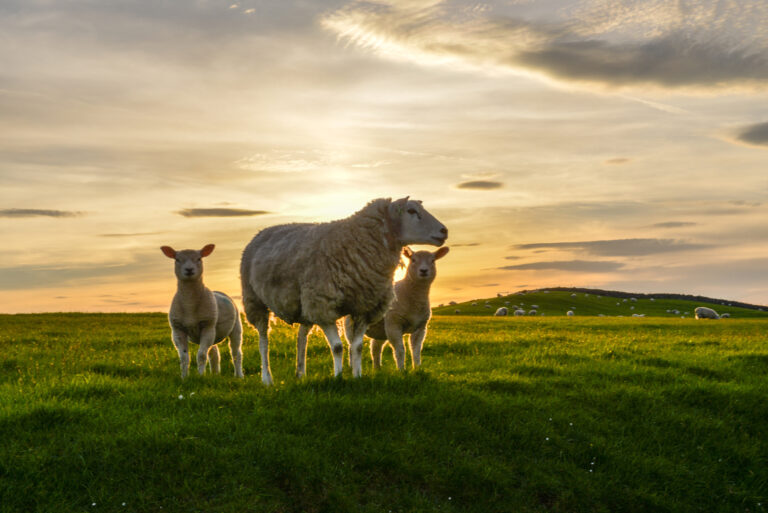
“Flystrike” refers to an outbreak of blowflies, and can cause harm and death in livestock. Here are some on-farm tips for how to prevent and treat flystrike in sheep.
Of the various adversities confronted in animal husbandry, insects and parasites can be some of the most mysterious, and destructive. Among those are a cadre of particular offenders belonging to the fly family. Technically, we are concerned here not with the “housefly” family of flies (muscidae) but with the “scourge of livestock” variety (family calliphoridae), which are a whole different kettle of fish.
“Flystrike” refers to an outbreak of blowflies: those green, blue, or bronze buzzers that proliferate in summertime. Blowflies are a particular plague to commercial shepherds in Australia, but they are quite plentiful in North America, where they can cause horrible distress, including death, to livestock.

Sheep are particularly susceptible to flystrike, because of their thick wool, where not only moisture but organic matter (soil or feces) can become enmeshed, luring females from this particularly noisome family of flies to lay eggs in the matted wool. Maggots (incongruously called “gentles“) are scavengers of carrion and dung, so open wounds are also an invitation. Blowflies are famous in forensic medicine as the first arrivals when death descends — the time of death of human corpses is sometimes estimated by measuring the larval development of blowflies.
How to Identify Flystrike
Goats, horses, and other livestock can be stricken, but sheep owners must exercise special vigilance. Be alert for signs of agitation, reduced appetite, anxiety, or distress. During heavy fly seasons these behaviors are not uncommon, but in flystrike they may signal an infestation that can spread both within the animal and throughout the flock. Though used medicinally to debride dead tissue, blowfly gentles will eat living tissue, and not very gently. They often infest the tail or hind area where both moisture and fecal matter attract females to lay their eggs.
The author encountered flystrike with no forewarning, after perhaps 15 years without ever a problem. One season in late summer in Vermont, following extended heavy rain and humidity, several ram lambs — who were born in early February and so had not been shorn — began to show signs of distress. They had a run-in barn, and we dusted them for lice, but their condition worsened. They became even more distressed, so we brought in our trusted veterinarian, who promptly apprised us of their condition. We immediately treated all the lambs, but one ram died a few days later. The maggots had literally bored into him, causing ammonia poisoning.
That was one of the worst experiences of our sheep-owning journey, and I don’t want others (or their animals) to suffer such trauma. Keeping animals clean and dry is paramount. Fly traps or treatments, removal of large manure piles, and tail removal for lambs are all helpful.
What to Do When the Flies Have Struck
If flystrike is present, infected animals should be separated from the flock and treated aggressively. Contaminated wool should be clipped away and destroyed. If their fleeces are heavy, shearing as soon as possible will reduce larval habitat and allow easier eradication. There are also a number of commercial products available, depending on application preferences and time to market (for meat animals).

Flystrike is just one fly-family attack that can occur against sheep, by the way.
John Klar raises grass-fed beef and sheep, and seeks to educate people about where their food comes from and how large corporate interests wish to dominate food production. He moved to Vermont and began farming in 1998. John and his wife, Jacqueline, built and operated an artisanal raw-milk cheese house, and have raised pigs, chickens, sheep, horses, cows, and goats, and grown many varieties of vegetables and herbs.
All MOTHER EARTH NEWS community bloggers have agreed to follow our Blogging Guidelines, and they are responsible for the accuracy of their posts.