

Even after a wet, lush summer, the leaves have taken on the bug-riddled green of summer’s end and the fall flora has begun to bloom here on Persimmon Ridge. The bees gather nectar from goldenrod, ironweed, asters and other wildflowers to make and store honey for the winter. It’s time to pay my end-of-summer visit to each hive.
Like other beekeepers across the country, this has been a difficult year for me. I’ve lost more than 50 percent of my hives, and those that survived produced only 25 percent of the honey crop that they produced last year. I’m anxious to see how the bees are faring.
It’s important to get into the hives now because I still have time to right things before winter if need be. For instance, if a hive is queenless, I can give it a frame of eggs from another hive. The bees will make a new queen, and she still has time to mate before the bees start kicking the drones out for the winter, to conserve food for the queen and overwintering worker bees. If a hive is too weak to make it on its own, I can combine the bees with those in another hive. If a hive has died, I can try to figure out why and salvage the equipment before it’s destroyed by wax moths. In other words, I am going to do something with the information I gather from working the bees today.
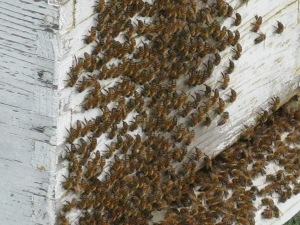
I don’t get into my hives unless I have a reason. Most of the time, I can tell how the bees are doing by watching the activity at the entrance.
Lots of coming and going or lots of bees just hanging out on the bottom board is a good sign. Bees coming in with full pollen baskets on their hind legs means they have young larvae to feed, so the queen is likely OK. Since robbing honey in early July, I have not gotten into a hive unless I saw little or no activity at the entrance. When I pulled off the harvest, I left each hive a shallow super of honey to get it through the summer until fall bloom time.
An aside here for new or would-be beekeepers: If you’re like me when I first started out, you may fear getting into a strong, mature colony of bees. Last week I wrote a blog on my website about how to prepare now to keep bees next spring. To start, I said all the protective gear you really need is a heavy cotton shirt and pants tucked into boots, a veil and bee gloves. A little spritz or two of sugar or honey water from a spray bottle will keep a small package of bees distracted while you install them. However, a mature bee colony or an apiary of established colonies requires a little more. The key to not being afraid to get into your hives is to be prepared and to know they can’t get at you.
Today I wear all my gear, nylon bee suit over my clothes and tucked into boots, veil, and gloves. I light my smoker and make sure I have plenty of fuel to keep it lit as I go from hive to hive. I’ve picked a dry, sunny day for this because the bees will be busy exploring for and mining the wildflowers and will pay me little mind. If it were windy or rain was threatening, the bees would all be home with little more to do than try to run me off. I do get stung on occasion, but it’s usually in the honey house or when I’m moving boxes or frames without gloves or protective gear.
At the first hive, I aim a delicate puff of smoke at the entrance just to let them know I’m here. Then I remove the top cover and set it upside down on the ground. The inner cover is covered with bees— good, lots of bees in this hive. A few hive beetles scurry across the inner cover looking for a place to hide. The bees pursue them and I am not concerned. This hive is strong enough to keep a few beetles in check. I give the entrance hole in the inner cover a couple of puffs of smoke and wait for most of the bees to disappear down inside the hive. I use my hive tool to pry up the shallow super of honey that sits on top of the two deep hive bodies, leaving the inner cover in place. As I set this covered box down on the upturned outer cover, I can feel that it is still quite heavy with honey. Food stores for this hive are in good shape. The bees have made it through the dearth of summer with food to spare.
The topmost hive body is covered with bees. 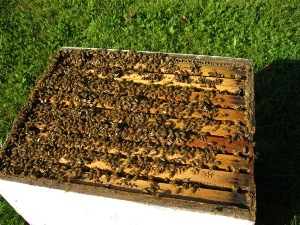
A few guard bees buzz me, but for the most part the bees go on about their business. The only reason to check further is to make sure I have a laying queen while the bees still have time to replace her. I carefully pry out one of the frames from the outside edge. It is full of honey and pollen and is covered with bees. I set it gently down on the ground, leaning it against the hive. I continue removing frames from the outside working toward the middle, setting them down in order so that I can return them as they were.
On the third frame, I see lots of capped brood and uncapped larvae. 
This is all I need to know about this hive. All is right. I return the hive to order, replace its super of honey and re-cover it. There is no need to see the queen. I’ve found the evidence that she is doing her job, and to tear down the hive further risks accidentally crushing her.
All but one of the hives in this apiary looks healthy and strong with lots of brood. The last hive still has plenty of honey but is light on bees. But when I pull out and check the frames, I notice two big peanut-shaped queen cells that have hatched, and I find lots of new brood. This hive has replaced its old queen and the new one has begun to lay. I will leave her to it for now. I make a note to check this one again before winter. The other hives look good. No sign of mite infestation, no deformed bee wings, no foulbrood. From now until winter, I will check only the entrances for activity, and then just before winter, I will lift the top boxes to make sure they’re heavy with honey. I will not disturb the hive bodies again until spring.
I have two more apiaries to check in the coming days, but today my heart is lighter. Earlier in the year, I railed against my hive losses and cussed everything big agriculture: the host of pesticides, herbicides, fungicides; GMO and pesticide-laden pollen from corn and other crops; and the loss of wild habitat to row crops. Today’s inspection of these hives has me again filled with hope and with plans of starting new hives from my survivors next spring!
Betty is a sideline beekeeper living in Middle Tennessee and promotes chemical-free, sustainable beekeeping. You can find her on Facebook and read more of her blogs at her website.





