

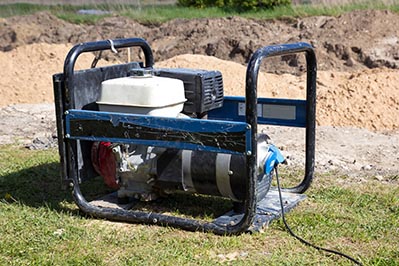
If you depend upon electrical energy to run your house or farm, you can’t afford to be caught by a power brownout or blackout. Though America’s utilities supply us with an amazingly reliable source of current—with an average of only 24 hours of outage every 10 years, per family—power failures do (and will) happen.
Furthermore, a loss of electricity even from natural causes such as hurricanes or blizzards (and the seasons that spawn such phenomena are nearly upon us), can leave you with a basement full of water or no heat. The average damage costs from such natural (or unnatural) disasters might be much higher than you imagine—often well over $2,000 (for the repair of damages caused by frozen pipes, for example). Worse yet, when the power does go out, you’re totally helpless to remedy the situation … unless of course you happen to have an auxiliary source of power.
It’s true! You don’t have to be completely dependent on those wires strung from the pole out front. Emergency generators are available that can put you back “on line” for a pretty reasonable price—especially if you consider your potential losses. (Better yet, you can—by simply opening the main jet—run on renewable alcohol fuel.)
So just [1] consult the list below that shows average electrical consumption for various tools and appliances, [2] add up the wattage of those you might want to supply, and [3] remembering that one kilowatt equals 1,000 watts, consult the output column in the accompanying Electric Generators Chart (which, though not all-inclusive, does contain a good sampling of the better units available) to choose a generator that suits your needs and budget.
Selected Power Consumption Figures
Radio 40-100W
Fan (window) 40-300W
Furnace fan 270W
Electric blanket 250W
Hair dryer 140-1400W
Water pump 350-500W
Washer 275-600W
TV 300-500W
Refrigerator 400-1500W
Space heater 750-1500W
Toaster 950-1500W
Water heater 1000-1500W
Electric range 1000-1500W
 (per element)
Air conditioner 1500W
1/4" drill 250W
1/2" drill 750W
6" saw 1000W
10" saw 2000W
Sander 1200W






