

Do you ever feel like the whole world is crazy and wonder what you and your lone voice can do to create real, positive change? Do you think about how to change the world via everyday actions? We’re all sometimes tempted to go into a corner and have a pity party because the insanity seems overwhelming and no one else seems to notice.
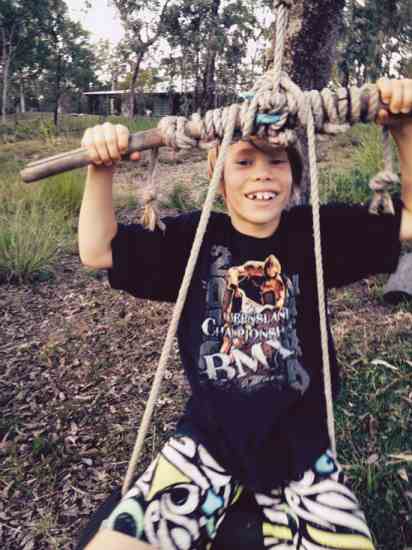
Before you give up hope, though, let me tell you about Jack, an Australian buddy of mine. Jack knows how to change the world. He’s 7 years old and lives in the province of Queensland. His parents own a small permaculture farmstead. They make their living by organizing and hosting educational seminars to acquaint farmers and ranchers in Australia with the best Earth-friendly production practices available on the planet. Jack’s parents are good people.
At school one day, Jack’s teacher created incentives in a new reading initiative by handing out lollipops to the highest achievers. An extremely bright boy, Jack earned his lollipop and then took a moment to look it over. Growing up in an Earth-aware, nutrition-focused, self-reliant family, he had doubts that this thing in his hand was something he should indulge in.
He took it home and asked his mom and dad whether the lollipop was OK to eat. His dad, being a wise man skilled in the Socratic method, responded simply, “What’s in it?” (Why couldn’t I be such a wise parent? His dad’s answer is non-judgmental and challenges the child to seek knowledge on his own. Brilliant.)
What ensued was Jack’s almost obsessive Internet search for lollipop ingredients. After he found those, he then searched for health benefits — or, as it turned out, harms — from those ingredients. To his horror and dismay, his research revealed that lollipops contain coloring and additives that could give him cancer.
A couple of days later, he went to the teacher — not his parents, mind you — and said, “I don’t want to eat something that could give me cancer. I don’t want this lollipop.” Taken aback, the judicious teacher responded, “OK, I won’t give you one. I’ll find another reward for you.”
Knowing he’d scored a victory, Jack felt good. He’d stood up for his convictions and created a protective hedge for himself. That evening, though, as he contemplated what had happened, he realized he didn’t feel good about it anymore. (Now, mind you, he arrived at this conclusion by himself, without parental goading.)
The next day, he went back to the teacher (I hope all of you wonderful elementary school teachers out there are enjoying this). “It’s OK that I don’t have to eat something that might cause cancer,” he said, “but these other kids are my friends, and I don’t want them to get cancer 40 years from now.”
Yes, tears are fine at this point.
That afternoon, Jack’s mother received a call from the school principal. By this time, the children in the class had begun to murmur. (Did I mention that Jack is precocious? You’d probably figured that out by now, but I thought I’d better make that clear.) Even if Jack’s classmates might have thought he was a bit wacko, Jack had courage and conviction — and, obviously, a heart that wrapped itself around his classmates.
Jack’s mother calmly offered the principal Jack’s research. The next day, Jack toted his printed-off research file to the principal’s office. Two months later, the principal issued his official ruling: “The evidence is not conclusive.”
At this point, Jack’s mother, like a true tigress, stepped in. She asked the principal one simple question: “Why would you risk it?” He didn’t have an answer, and the next day issued his final position: “We will stop giving lollipops to our students.”
You can applaud now.
In full disclosure, I don’t think eating one lollipop will give you cancer. I don’t even think eating at McDonald’s one time will kill you. It’s the habit that’s the problem. It’s the convictionless, go-with-the-flow orthodoxy that we must arrest. Jack, a 7-year-old, was not cowed by teachers, principals or peer pressure. His lone, small voice and willingness to take a stand changed an entire school’s policy.
What Are Your Lollipops?
Wouldn’t you want Jack to be your buddy?
The thing I love about this story is how Jack’s action grew, one little piece at a time. Most of us are intimidated by the sheer magnitude of the things that are messed up in our country. From tax policy to foreign policy, from agricultural subsidies to monocrops and aquifer depletion, the issues are monstrous. They’re complex. And it seems like more people have their hands in the pie of deficit-funded governmental largesse than have their hands tending gardens and their minds on their own business.
The whole situation can be depressing and emotionally debilitating. We actually might be more encouraged if we didn’t look at the whole situation, and instead narrowed our focus to details closer at hand. In his book, The 7 Habits of Highly Effective People, Stephen R. Covey admonishes us to be content to make a difference within our “sphere of influence.” Little in life will disempower us faster than the perception that an issue is too big to tackle. (Though, to be sure, some people speak from a pretty big stage and have a larger pond in which to create ripples.)
A radio program interviewed me recently and the first question the interviewer asked concerned the Farm Bill. What did I think of it? I admitted I didn’t even know what was in the Farm Bill, and hadn’t read it. It’s too big for me, too complicated.
I don’t think anything gets solved with the Farm Bill, anyway. Directing funds from one group of people to another group of supposedly better recipients will only push the good guys toward corruption. Switching the corruption from Group A to Group B won’t fundamentally change anything.
I only have 24 hours in a day, like everyone else. What’s my best return on that time? Some people are policy wonks and thrive on signing petitions, marching and organizing rallies. God bless ’em.
But I think a lot can be said for the notion of simply opting out of the messed-up system. Quit taking the lollipops.
What does opting out look like in the grown-up world? Does it look like a bunch of fuzzy-hairs holding hands and sitting cross-legged on the beach singing “Kumbaya”? Does it look like a tent city perched on the Capitol lawn?
I’m convinced that most people who rail against the system aren’t offering or role-modeling a credible alternative. What does a rebel look like in our modern America? What does a 47-year-old Jack do?
Small Changes Can Have Big Impacts
Here are some ideas to get you thinking. First, get into your kitchen. Do you know how many problems have been created in this country because Americans abdicated domestic culinary responsibilities? From TV dinners to Lucky Charms, the lion’s share of the entire adulterated diet is symptomatic of our having left the kitchen. Lest anyone jump to conclusions, this is not a sexist statement. When people ask, “What can we do?” my first answer — regardless of the sex of the person asking — is, “What you can do is get into your kitchen.”
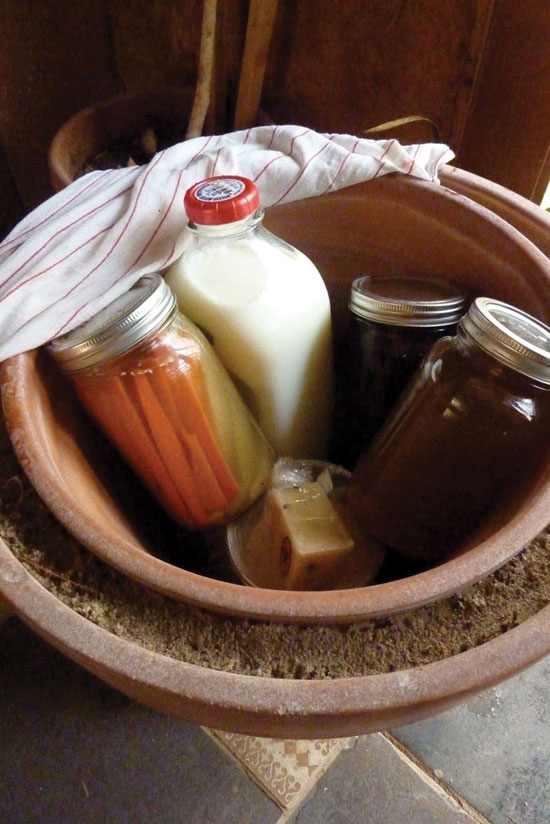
Our kitchens have never been more techno-glitzy and gadgetized. Let’s leverage that technology to prepare, process, package and preserve whole, local, compost-grown food. Instead of public outcry and resistance, you can help defund the food-adulteration complex by choosing to provide for yourself and to opt out of that complex entirely.
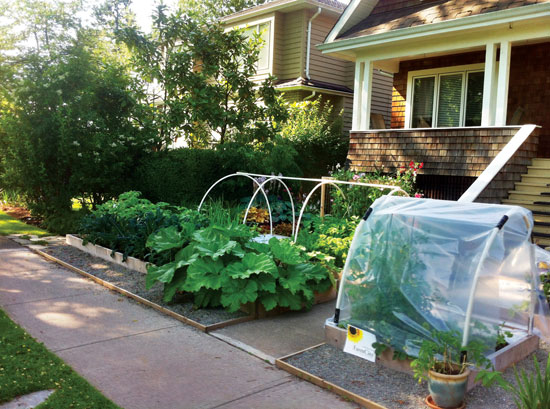
Secondly, how about you grow a garden? Did you know the United States has 46 million acres of lawn? And we now have 45 million acres devoted to housing and feeding recreational horses. That’s more than enough land to feed the entire country if we adopted biointensive-gardening guru John Jeavons’ methods. Ultimate food security can never come from a warehouse; it comes from a larder in-house. And having a well-stocked pantry doesn’t require that you live on 40 acres. Have a vacant lot next door? Turn it into an urban farm.
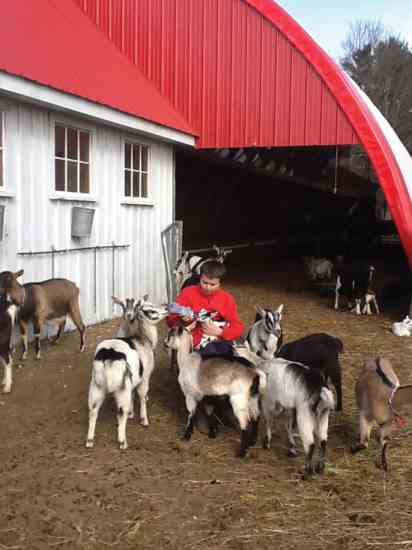
Thirdly, create self-reliant homesteads, complete with cisterns, solariums and backyard chickens. Living in such an environment gives our children chores to do, and that alone would solve a number of our domestic and juvenile-emotional issues. Kids want to engage meaningfully in the adult world. If their only skill is playing games, it’s no wonder they grow up confused and childish. Work isn’t abuse — it’s the greatest legacy we can imagine, and it helps create responsible, nurturing, persevering, dependable youths.
Finally, I’d suggest seeing how little you can earn rather than how much. Money, stacks of goods made in China? They don’t ultimately satisfy. Engaging with the Earth’s most visceral functions, building familial and social relationships, bettering your own character and cerebral capacity — these are way better than a pile of coins. Oh, all that money might be alluring for a time, but sooner or later you face the brevity of life and have to ask what matters.
What matters will become clear when your inner Jack reveals himself. Leaving a legacy of nutritious gardens and a pantry of homemade food instead of lollipops and plastic wrappers is noble, sacred, rebellious — and ultimately a deeply helpful act.
Now, go change your world.
Self-proclaimed “lunatic farmer,” Joel Salatin is an author as well as a catalyst for the local-foods movement. His family owns Polyface Farm in Virginia’s Shenandoah Valley. He has written several books about food and farming issues. You can purchase a selection of his books at the MOTHER EARTH NEWS store.






