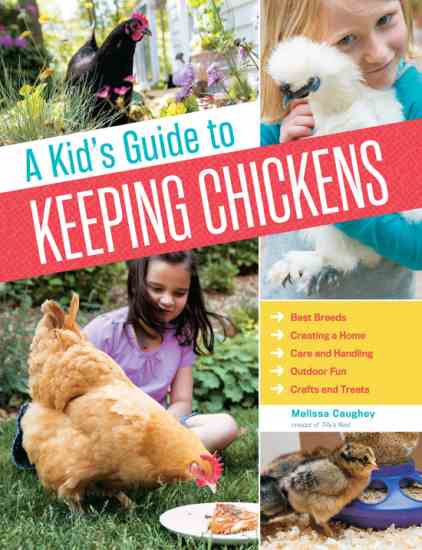
Melissa Caughey, award-winning blogger and owner of Tilly’s Nest, makes it easy for kids to master the basics of chicken raising in her new book, A Kid’s Guide to Keeping Chickens (Storey Publishing, 2015). The following excerpt is from Chapter 2, “Choosing the Best Chickens.”
You can purchase this book from the MOTHER EARTH NEWS STORE: A Kid’s Guide to Keeping Chickens.
Here are the 10 chicken breeds that we have found work well for families and tend to be the most docile, friendliest birds. By no means does this list include all the possible breeds: There are hundreds of different ones out there! You can always do more research to find out about breeds that aren’t included here.
Australorp
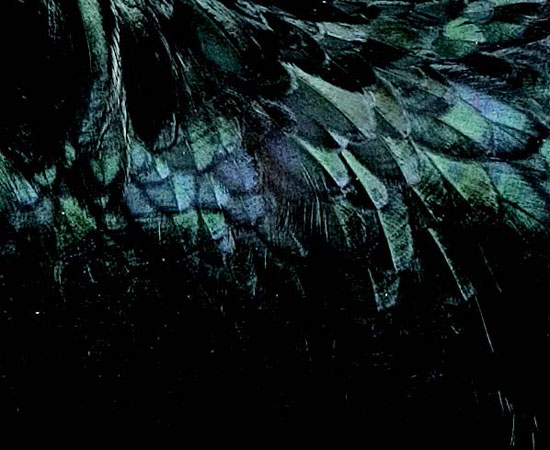
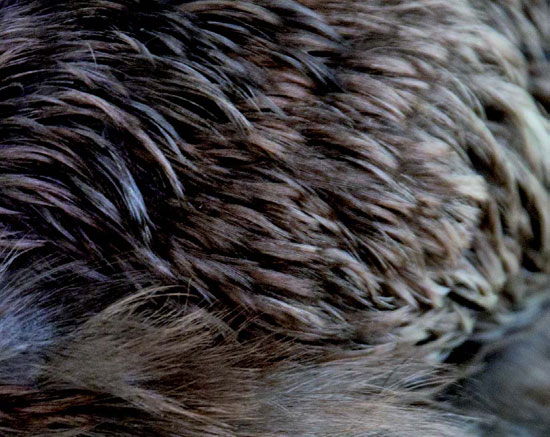
• This Australian breed has black feathers that shimmer iridescent green in the sun. As the birds age, sometimes the tips of their feathers become a bit speckled with brownish gray.
• These hens often establish themselves at the top of the flock.
• They are homebodies and handle confinement well.
• This breed is curious, friendly, and outgoing.
• Hens lay about five medium-to large brown eggs every week.
Plymouth Rock
• These chickens were developed during the nineteenth century in New England and continue to be popular in the region.
• They are standard-sized chickens known for living a long time.
• They are gentle creatures who do very well with people and get along with other pets.
• They lay four or five pinkish brown eggs per week.
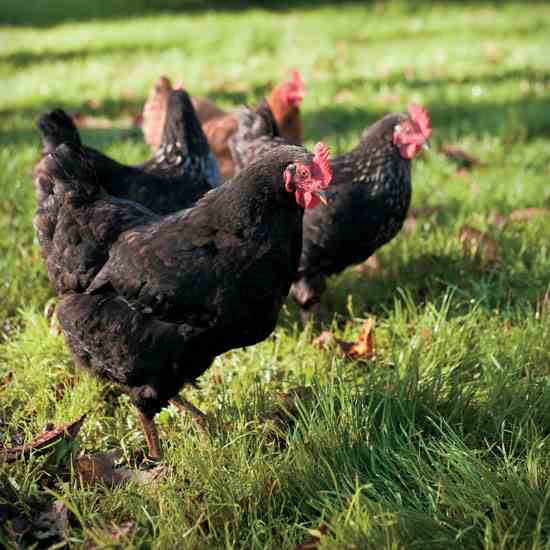
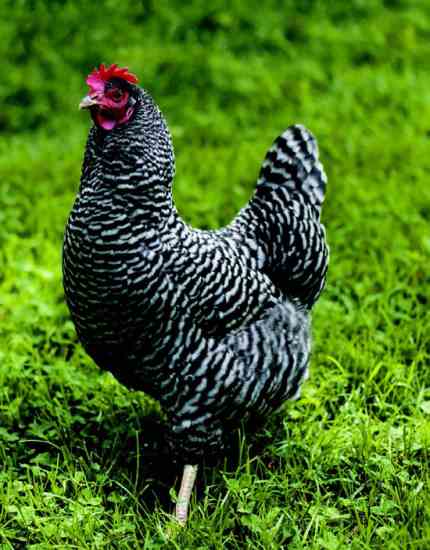
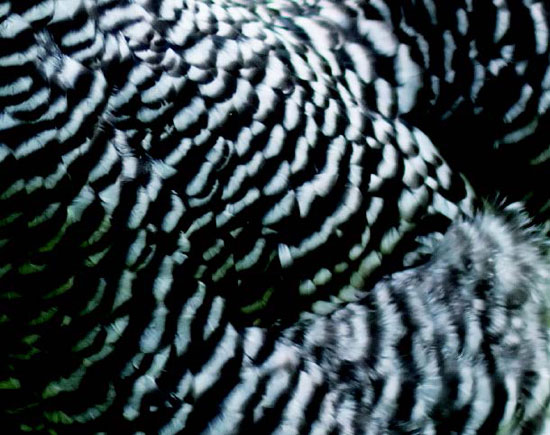
• The Barred Rock, shown here, looks a little like a zebra with its black-and white striped feathers.
Brahma
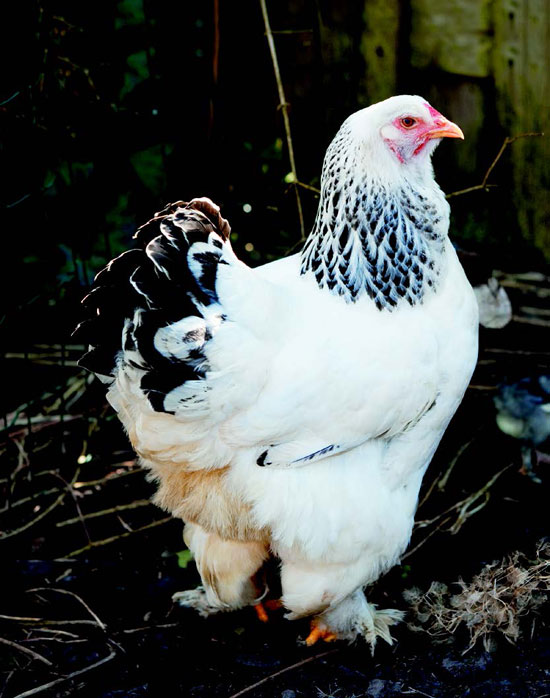
• Brahmas come in both standard and bantam sizes.
• These chickens are friendly, not skittish, and trainable and are good birds for children to show. They do not mind being handled, and even the males are a bit more docile than other breeds.
• They come in a variety of colors.
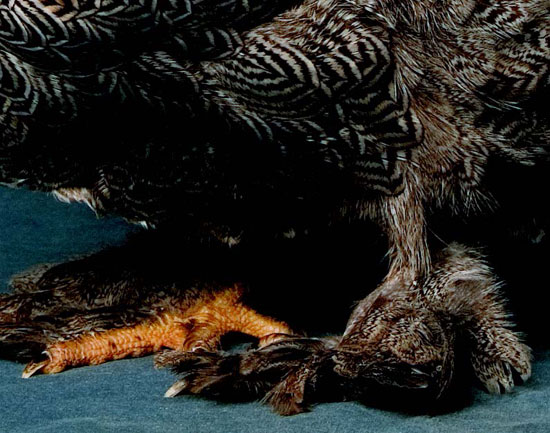
• They have feathers on their feet.
• The hens lay lovely brown eggs approximately three times per week.
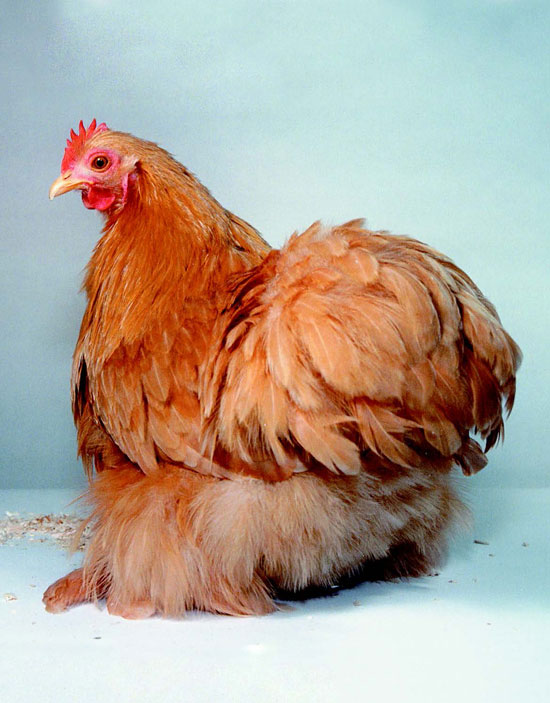
Buff Orpington
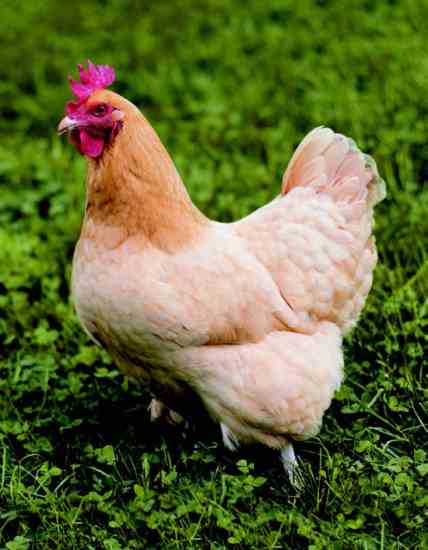
• These chickens are the golden retrievers of the chicken world.
• Originally from England, they are large, friendly birds with golden feathers.
• They are curious and incredibly lovable, and they enjoy being held.
• They handle confinement to the coop and run well.
• They can go broody and typically lay three large brown eggs per week.
Cochin
• Cochins, like Silkies, originated in China.
• These fluffy-feathered chickens even have feathered feet. Some have frizzled (curly) feathers.
• They come in eight different colors and both standard and bantam sizes.
• They can adapt to living in a coop for their entire life but also free-range well.
• They are a quiet, friendly, hardy, and very calm breed.
• You might expect three brown eggs per week.
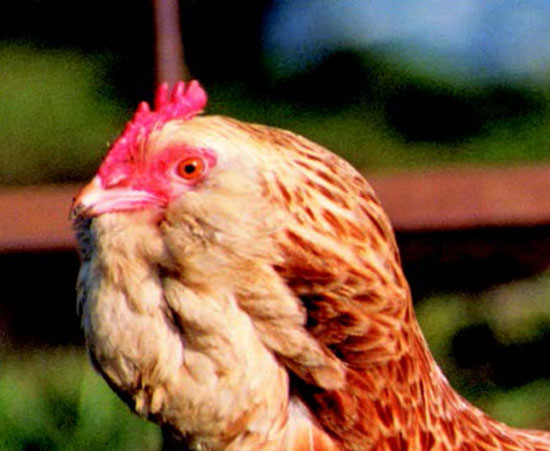
Easter Egger
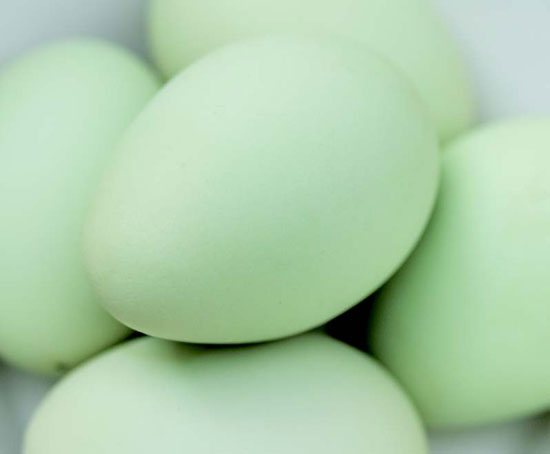
• If you want colored eggs, then you’ll want a couple of these hens. Their appearance can vary, but they carry a genetic trait that means their eggs can be tinted in hues of blue, green, olive, and pink.
• This is not an official breed but a type of chicken. They come in the standard size as well as bantam.
• Easter Eggers get their ability to lay colored eggs from either an Araucana or Ameraucana parent, but the other parent can be another breed.
• These are friendly, curious birds.
• They lay approximately four eggs per week.
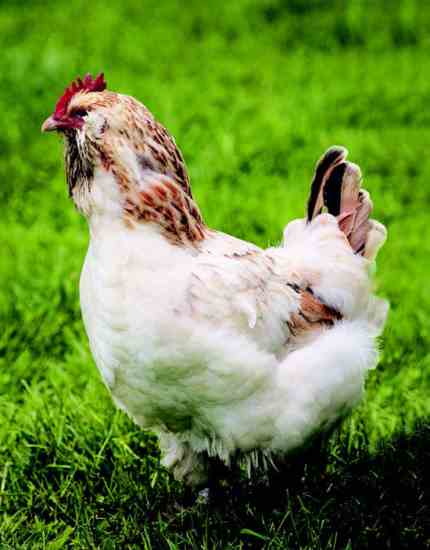
Faverolle
• These French chickens stand out by having five toes instead of the usual four, fluffy cheek feathers (called muffs, and a feathered beard.
• They come in a variety of colors; the most popular one is salmon.
• These chickens don’t mind being confined to the coop and run.
• They are incredibly docile, making them particularly suitable for younger kids.
• They lay about four light brown or creamy eggs per week.
Polish
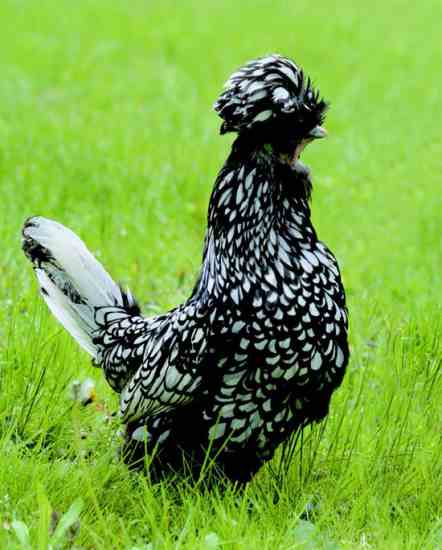
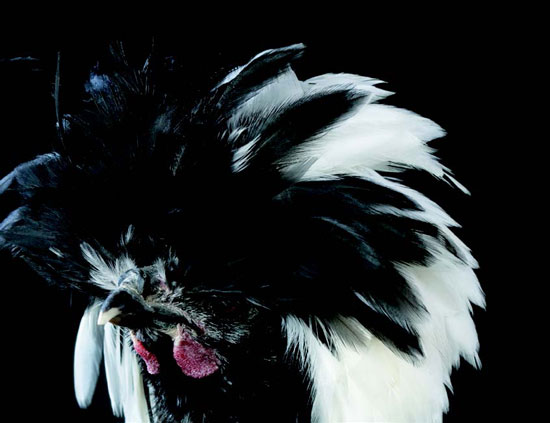
• This is a friendly breed with an unusual look.
• Some people say that this breed’s poufy head feathers can cause issues, such as problems with their vision and feather picking from the other hens. The feathers can be gently trimmed to help with vision, and if Polish chicks are raised with other breeds, problems usually don’t arise.
• Polish come in standard and bantam sizes.
• They are not the most reliable egg layers. If you are lucky, you can expect two white eggs per week.
Silkie Bantam
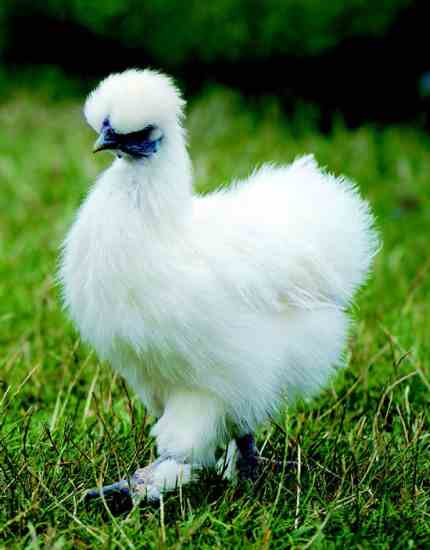
• This ancient breed was first described by Marco Polo on a visit to China in the thirteenth century.
• They are tiny, lightweight, and easy to handle, and they have a few unusual features.The most noticeable is that their feathers, which come in many colors, are fluffy instead of smooth.
• They also have five toes (most chickens have four) and black skin (instead of yellow).
• They tend to go broody a lot, so this is not a breed to depend on for eggs.
• The eggs are about half the size of standard eggs and range from cream to white in color — some even have a slightly pinkish tint. When a hen is laying, you can expect about three eggs per week.
Silver or Golden Laced Wyandotte
- These incredibly beautiful birds were developed in the United States.
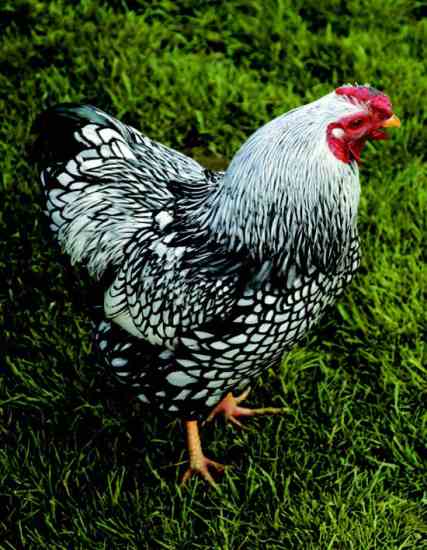
- They come in many colors, but the Silver and Golden varieties are the most readily available. They have either a white or gold lacing pattern between the black on their feathers.
- The rose-style comb is perfect for cold regions as it is less prone to frostbite.
- They are a smaller breed, averaging approximately 6 pounds for the hens
- Chock-full of personality, they can be domineering and are typically the head hens in their flocks.
- They make excellent mothers and lay lovely pale brown eggs four or five times per week.
Excerpted from A Kid’s Guide to Keeping Chickens © by Melissa Caughey, used with permission from Storey Publishing.