

Growing a garden for attracting butterflies to your flowerbed, including: water, shelter food, research and planting.
Just plant it and they WILL come–as if by
magic–a garden of flittering, fluttering butterflies.
Everything I read promised that it was just that easy. My
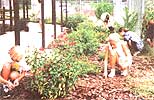
seventh-grade students and I wanted to build a place where
we could study living insects interacting with their
environment. We had very limited space and, of course, very
limited money, but lots of enthusiasm and free labor. We
did some research, got support from our school
administrator, and wrote a grant request for needed
materials. Now we have a garden of beautiful butterflies to
study in all stages of their life cycle that hundreds of
future seventh graders will enjoy. It really was that
easy–just like magic.
Butterflies need the same things that other animals
need–water, shelter, the right temperature, and the
right food. My seventh graders and I designed a garden to
provide survival needs that would attract butterflies. Here is how you can begin attracting butterflies to your flowerbed.
WATER: A shallow pan full of soil and water
will allow a butterfly to drink safely without endangering
its fragile wings in the water. Add a couple of rocks where a
butterfly can bask in the summer sunlight. Someone donated a
beat up, old baking pan from their kitchen for our garden and
we ran a sweat hose through the mud in the bot tom of the pan
for water. Your plants will also need lots of water.
SHELTER: Butterflies need protection from
wind, rain, and predators. They often hide in nearby woody
plants like azaleas or trees.
FOOD: Adult butterflies drink the nectar
from sturdy flowers. They prefer tubular flowers (yellow)
in full sun that will support their weight so they can
drink and rest at the same time. Adult butterflies will
also carefully seek the right plant to lay their eggs on so
that the larva will have the right food to eat upon
hatching. If you cultivate the plants needed for larval
food, you will see courting, mating, and egglaying in your
garden. For example, the monarch butterfly lays its eggs on
milkweeds. When the eggs hatch, the tiny caterpillars eat
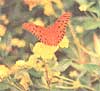
the milkweed plant. The Gulf Frittilary (also the Zebra
Longwing) butterfly only lays eggs on the passion vine; the
hatching caterpillars eat the leaves of the vine. (Don’t
use insecticides even though you will have holes eaten in
your plants! Otherwise, you won’t get to see the magical
transformation of a caterpillar “eating” its way into an
adult butterfly.)
HOW TO ATTRACT BUTTERFLIES TO YOUR FLOWERBED
RESEARCH: First, go to your local library
and get some books on butterfly gardening. Also contact
your agricultural extension agent, 4-H leader, and your
local garden club for specific (free) information about
your geographical area. The Freshwater Fish and Non-game
Wildlife Commission gave me free materials about Florida
butterflies. Like other animals, butterflies have a
specific geographic range and definite plant preferences
that you must learn about if you wish to attract them. Make
a list of butterflies in your area and the plants that will
attract them. Once you begin asking around, someone will
probably volunteer to give you free transplants from their
garden.
GET SUPPORT: If you are working
within an institution, it is essential that you enlist the
enthusiastic support of your administrator and your
groundskeeper. Agree on several different places that a
garden could be located, keeping in mind that sunlight,
water, and not too much wind are essential. Plan how the
garden will be maintained. Talk to parents, students,
businesses, family, and friends about your garden and the
butterflies that are going to come enjoy it.
JUST PLANT: Assemble materials and sketch out a plan
before the BIG day. Recruit anyone to come, bring tools,
and help plant. Those who work will have a personal
investment in the future of your garden. Now comes the hard
part: waiting for the plants to mature, flower, and attract
butterflies. They will come …but not by magic.
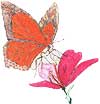
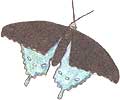
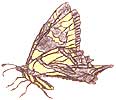
Butterfly illustrations in the image gallery are by seventh graders at Wilkinson Junior High in Middleburg, Florida.
BUTTERFLY GARDEN MATERIALS LIST
• Hand tools, shovel,
rake (loaned or donated)
• Garden hose and sprinkler
or sweat hose (donated or bought)
• Fertilizer, peat
(Azalea-Camellia fertilizer with trace elements added)
• List of specific nectar and larval food plants for
the butterflies In your area (may be transplanted, seeds,
or bought)
• List of nearby woody plants to provide shelter (you
may need to buy some if there are no places of shelter
close by)
• Shallow pan for water/mulch to discourage weed growth
• 14 butterfly field guide (optional)






