5/24/2013
Shiitake mushrooms are supposed to be one of the easiest mushrooms to cultivate. Partly because you don't have to deal with soils and substrates and partly because inoculating logs with just one type allows you to better recognize and identify the shiitakes.
Making your own mushroom logs is credibly easy. But with that said, if you plan to do more than 100 plugs or if you plan do start new logs every year, it will really pay off to purchase a special bit for an angle grinder. When I ordered 100 shiitake plugs, it took me the better half of two days to get them all done! Phew! No one told me that drilling one hundred holes into oak logs was going to be hard using just a home-use power drill. Well, maybe someone did, but I wasn’t listening.
Let's get started!
Firstly, you need 4-6″ diameter hardwood logs with the bark intact. Preferred woods include, but are not limited to: white oak, red oak, poplar, maple, alder, etc. Avoid evergreen hardwoods (live oak) and evergreen conifers (fir, cedar, pine, etc.). How many logs you need will depend on how many mushroom plugs you order. I put about 10-12 plugs in each of my 2-3' foot long logs. Try your best to find logs with a maximum length of four feet so that it is easier to handle them and also to soak your logs later if need be.
You will also need some sort of power/electric drill with a 5/16″ drill bit. The size of the drill bit needed will also depend on the size of inoculated dowels you order, but 5/16" is a typical size. There are several companies online that you can order mushroom plugs from and a simple Google search will help you find those various companies as well as reviews of their products. Some shiitake mushroom "plugs" (which is what the wooden dowels inoculated with mushroom spawn are called) are better suited for colder climates than others so be mindful of the highest and lowest temperatures in your area before ordering.
Drill holes about 2″ inches deep in a diamond pattern along your log. You will want your holes to be 3-5″ inches apart and in 4-5 rows depending on the size of your log. Then hammer in one dowel per hole. This is easy right?! Make sure the dowel sinks into the hole a bit and is not sticking out. If you need to, use a small punch to hammer the dowel into the log. The last step is to wax the top of each dowel-filled hole so that they are well sealed. You can also wax the ends of the log, but multiple sources have noted that it is not necessary. It is recommended that you use “cheese wax” or beeswax. Most mushroom suppliers also sell cheese wax for your convenience. Since I have an abundance of beeswax from my hives, I didn’t see a need to spend money on the cheese wax, although it is only about $8.00 a pound.
Next, simply stack the logs so that they are not touching the soil. Soil can contaminate your logs with other types of mushrooms. Considering all the time you just spent drilling holes and pounding plugs into these precious shiitake logs, I doubt you would want to risk it by setting them directly on the ground. Think about setting up a little rack or even some other logs for your shiitake logs to rest on. 
Now let's tap our toes impatiently as we wait six months to a year for our mushrooms to "fruit", or produce mushrooms. It is going to be awhile. After you inoculate, you should water the logs 2-3 times a week to maintain the moisture level in the wood. After a log is taken over by the mycelium (mushroomyness), they will start to fruit. Once the mycelium is established, you can also force fruit the logs by completely soaking them in water for 12 to 24 hours every five weeks. Your awesome new shiitake logs should produce for 4-6 years before they need to be replaced. But, really, if you start a new small batch every year or two, you will always have producing logs.
5/24/2013
When Arkansas native Rachel Reynolds Luster, a folklorist and fiddler, moved to Oregon County, Mo., a few years ago, she quickly scouted out local growers of meat, eggs, cheese, garden produce, honey and raw milk.
Although it meant many miles of driving in the large, sparsely populated county, Luster wanted fresh, all-natural food for her family.
Some of these local farmers traded their products in exchange for Luster’s sewing or fiddle skills. Instead of cash, a few ranchers traded homegrown beef for fiddle lessons.
“Sure, I could get paid and then go to the store and buy some hamburger, but I’d rather have grass-fed meat that my neighbor raised,” Luster said. “For me, it’s all about knowing where it comes from.”
As she drove the rocky roads from one farm to another, Luster thought about ways to bring these people together. To see if others might be interested in forming a network of food producers and crafters, Luster put up flyers and notified the local newspaper.
To her surprise, 30 people packed into Juggbutt’s Coffee House for an exploratory meeting on a rainy Saturday, the day before Easter, two years ago. Among the attendees were farmers, woodworkers, a chiropractor, spinners, weavers, soap makers, herbalists, artists, beekeepers, gardeners and craftspeople of all sorts, many of whom Luster had never met.
“People should not have to drive 40 miles to buy crummy lettuce when they can get fresh, organic lettuce from their neighbors,” Luster said. “They just have to know where to get it.”
Centralizing these homegrown products and skills in an area that has practiced an economy of neighborliness for 100s of years made good sense to Luster. With few jobs and a high poverty rate, people in the Ozarks have traded among their neighbors for generations, she said.
"Folks here take care of one another and feel a responsibility to their friends, neighbors and the land,” Luster said. “I love that so many people in our county, on whatever scale, are producing food for themselves and that there's a tradition of bartering."
Excited by the enthusiastic support at that first gathering, Luster set out to form a cooperative, find a suitable market building and learn all she could about other such ventures. After almost 24 months of setbacks and successes, the Oregon County Food Producers and Artisans Co-Op opened with 20 members in a former donut shop on the courthouse square in Alton, Mo., on Earth Day 2013.
Thirty days later, membership had grown to 47, from 11-year-old Grace Harms, who makes potato bracelets, to 95-year-old Bob Langston, Luster’s neighbor and avid local historian. In the first month of operation, sales exceeded $1,200, not including donations or membership dues.
“To see the co-op actually progressing, it’s better than I could ever have imagined,” Luster said. “I am continually blown away by the breadth of interest in what we’re doing here and the ways in which people are able and willing to contribute to our little project.”
Luster said representatives of many other service groups have stopped in to offer ideas of ways to work together. They recognize how the co-op can benefit their organizations, whether they assist the elderly, crime victims, children, low-income residents or people trying to rebuild their lives for whatever reason. Money also showed up unexpectedly after Luster spoke at the Ozarks Area Community Congress and posted co-op updates on Facebook. Strangers from as far away as Louisiana and Oklahoma mailed Luster money just to boost her efforts.
Co-op membership is $10 per month, or $5 with one hour of service. Dues can be paid in cash, service or product. All labor is by volunteer members, including special tasks such as accounting and public relations. Members set the price of their goods, with 70 percent of the net going to the member and 30 percent to the co-op.
While organized as a for-profit business (to avoid bureaucratic reporting and other requirements), the co-op functions more as a non-profit agency. After store rent, utilities and other overhead is paid, the co-op’s profits are reinvested into the community, with members deciding on recipients, possibly a local charity, school or to a family whose home burned, for example.
Besides the market, which includes a wide range of handcrafted and homegrown items, the co-op serves as an information center. A bulletin board in the store identifies who has a surplus of potatoes, makes leather horse bridles, sells hay or who will barter for beans.
Also, members and guest speakers are set to teach an assortment of classes on such things as canning produce, spinning wool and gathering wild edibles. Members will draw on the skills and knowledge of each other to provide workshops on various aspects of a land-based economy and other cultural activities. The shop also exhibits the work of local artists and will hold cultural events such as locally relevant film screenings, readings, and host a weekly jam session, or “picking circle” as they’re referred to here.
Luster said many more projects are being considered, including starting an heirloom seed library. Because the plants are raised here, the seeds will be tolerant of the Ozarks unique growing conditions, pests and diseases. Regional gardening tips, such as scooping in Epsom salt, sugar and lime when planting tomatoes, are freely exchanged.
Long-term co-op goals include a certified community kitchen with space for canning and baking, either for personal use or sale. Another goal is a year-round covered community garden plot for individual use and/or as a small-scale land-based business incubator.
The co-op has plans for a cultural lending library of local music, art, seeds and books that can be borrowed and added to by co-op members. A reading and listening area allows visitors to peruse rare Ozarks-based music albums and books.
The co-op’s chief goal is to nurture the culture of our place from below-the-ground up and by working together, Luster said.
“Our approach is intended to be holistic by encouraging the ecological, physical, spiritual, economic, and cultural health of Oregon County through our work in the belief that a vibrant and dynamic culture is both the flower and the seed of a well-tended community,” Luster said.
To learn more, visit the co-op at www.facebook.com/OregonCountyCo-Op.
Linda Holliday lives in the Missouri Ozarks where she and her husband formed Well WaterBoy Products, a company devoted to helping people live more self-sufficiently off grid, and invented the WaterBuck Pump.
5/22/2013
I’ve got a friend who purchased land close to us. Like a lot of people he was curious about our solar setup and what it was like to live off the grid. Remember, my definition of living off grid is providing your own sewer, water, and power.
Many people have septic systems (sewer) and draw (water) from a well, spring or other body of water. Not many people go that third step to produce their own power. I wonder why?
I helped this friend of mine acquire a site analysis for solar exposure to see if he would be a candidate for a solar power system. His site wasn’t ideal (southern exposure all year long) but it was excellent for nine months out of the year and still pretty good those three short solar day months of November, December, and January.
He decided to bring traditional power in. At $10.00 per foot underground the total cost was over $22,000. That was just to get power to the house. Solar (in his case) would have been approximately $15,000 for a complete system installed. With public power he will have a monthly power bill. With solar he wouldn’t. Public power continues to climb in cost per watt. Solar is getting cheaper.
He would have to have a generator to help charge his batteries at times but out here everyone has a generator anyway for many reasons so the only extra cost to be compared here is the generator fuel. We all know that any kind of fuel is expensive but would it be enough to disqualify solar power as a good alternative? In his case probably not.
If you have read my other blogs you will know I live in a modern home with typical appliances. The only difference between our house and yours is the source of power –in our case the sun. Well, ok, there is another difference. Our power usage. For some reason, when you make your own power you automatically become more conservative in how much power you consume. Other than that, if you stayed in my home for a week you wouldn’t know it was being powered by the sun.
There are a lot of options out there – sun, wind, and hydro. So why aren’t more people doing it? I think it’s because it’s different than what we were brought up with. Almost all of us have had public provided power all of our lives. We were born with it being available. We can all tell the same stories about being out of power for a few days, usually because of a storm. Whether you live in the city or country we’ve all grown up with power poles and power lines on the side of the road.
Change is difficult and for some, just plain scary. I understand human nature and for the most part I was skeptical, just like many of you. That being said, there is now so much information at your public library or bookstore, Internet and even TV, that there really is no excuse not to be well informed about alternative power. Articles from scientists at NASA to the simplest online blog from people who are living with alternative energy are available to anyone who wants to take the time to read them. Educate yourself and become informed.
Ultimately it will probably be economics that will be the driving force to changing where we get our energy from. When solar, wind, individual hydro systems, or something else entirely, become more cost effective than the more traditional means we use today then change will certainly occur. That has already happened to some extent. In the meantime some of us are pioneering the way, one watt at a time.
Ed and Laurie Essex live off grid in the Okanogan Highlands of Washington State where they operate their websites goodideasforlife.com and offgridworks.com.
5/22/2013
This month I’m writing to my HOMEGROWN friends about the ominous tale of what could have been.
I could have written about happy things.
I could have written about morel mushroom season, one of life’s glorious pleasures.
I could have written about our booming garden produce. We’re harvesting small volumes of mixed salad greens, spinach, turnips, mixed mustards, brassicas for braising, and beautiful radishes.
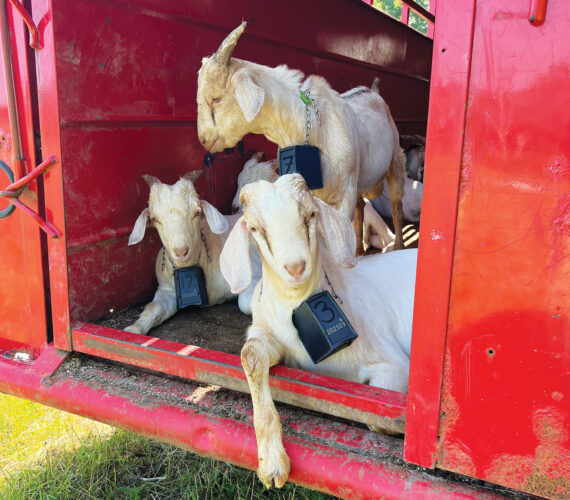
I could have written about the continued love-hate relationship I have with my goat herd, the goats having broken into our house one Saturday while we were out on the soccer field. They broke a lot of stuff, including lamps, coffee mugs, various canned goods, my son’s favorite illustrated poster of Greek deities, dozens of house plants, a prized National Geographic poster from the former Soviet Union, my sons’ taxonomy project (two months in the making), and much more. They got on both boys’ beds and tracked up their bedclothes with mud and manure and fur. Well, this wasn’t funny at the time, but in hindsight I suppose I can laugh about it.
But instead I’m going to write about a more serious matter that has reared its head on the western Missouri plains. Big oil is expanding, and it has me and many others in my small community deeply concerned.
You’ve probably heard about the fight against TransCanada and their Keystone XL Pipeline proposal from Northern Canada down to the Gulf of Mexico. The Keystone XL Pipeline would be carrying some of the most toxic and polluting oil on Earth, made by destroying Canada’s boreal forest in the Tar Sands region. The Tar Sands oil project has been called “game over for the climate” by NASA’s pre-eminent climate scientist, James Hansen. Climate activists, including 350.org and many others, have thus far been able to delay construction of the Keystone XL Pipeline since it crosses international borders, and the President/State Department has to sign off on it. It’s a great story about citizens fighting back against environmental destruction from the oil companies and winning—at least for now.
Enter our local situation, and the Enbridge Flanagan South Pipeline. This proposed pipeline is actually Enbridge’s play as the alternative to Keystone XL. It is being done with a lower profile, more piecemeal approach. So far it has gotten very little public scrutiny. We’re hoping our little group of concerned citizens can help change that.
We live in a rural community in West Missouri that has invested millions of dollars to improve the cleanliness of our public water infrastructure and to upgrade it. The proposed Flanagan South pipeline would carry highly toxic diluted bitumen through it, and that pipeline crosses one mile from the water intake of our local water supply. There are other towns along the route facing similar risks.
And while this fight is about the destruction of the climate and Northern Canadian tar sands development, it’s also a local fight about the risks associated with toxic oil coming through a pipeline that could rupture and foul our water and local ecology. Here are some concerns we’ve discovered about diluted bitumen, which the oil industry refers to as “dilbit,” as we’ve learned about the project:
• Dilbit contains benzene, mixed hydrocarbons, and n-hexane. All three are toxins that can affect the human brain and central nervous system.
• Dilbit contains hydrogen sulfide gas. Hydrogen sulfide can cause suffocation in humans in concentrations over 100 parts per million. This is a serious risk to workers breathing in vapors from the chemical mixture.
• Dilbit contains many toxic heavy metals that do not break down in the environment. Vanadium, nickel, arsenic, and other heavy metals can accumulate and cause toxicity in plants, wildlife, and people.
• Dilbit’s characteristics make it very different than conventional petroleum, therefore it operates very differently than conventional oil as it flows through the pipeline. Dilbit has much higher acidity, viscosity, sulfur content, pipeline temperature, and pipeline pressure than conventional oil pipelines. Dilbit also contains higher rates of flow per second of quartz and silicates than commercial sand blasters. These factors create concerns regarding pipeline spill risks.
• Unlike conventional oil, dilbit does not float when it spills into water. Dilbit sinks, making surface water containment strategies ineffective.
• Despite industry promises of safety and pipeline integrity, spills happen. Often. In fact, there are more than 100 petrochemical spills every year, flowing toxic poisons into our forests, fields, waterways, and communities.
• If you’ve read or heard about the recent dilbit spill in Mayflower, Arkansas, or the destructive pipeline that burst along the Kalamazoo River in Michigan a couple of summers ago, both spills were pipeline ruptures involving dilbit.
• To top off the risks of the pipeline operations, there is very little legislation or regulatory framework that we’ve found that addresses these concerns. Pipeline development, contrary to the popular imagination, is exempt from most national and local environmental standards. Even if they wanted to (and, yes, that’s a questionable proposition), the EPA and the Missouri Department of Natural Resources could do very little about this proposed pipeline. Instead, pipeline permits and inspections are governed by the Department of Transportation, which only requires inspections every six years.
So what’s going to happen? I don’t know. This is one of those situations where locals are shocked when they hear about what’s coming through our region—and yet, there has been almost no public information about the proposed Flanagan South Pipeline. We’re trying to change that. So stay tuned. There might be something interesting to tell in future months. Wish us luck, because we’re not tilting at windmills here. (We love windmills, after all.) We’re tilting at billions of dollars backing a highly toxic project that could spell real disaster in our region.
Bryce Oates is a farmer, father, writer, and rural economic development entrepreneur. He works with his family to raise organic vegetables, beef, lamb, chickens, goats and manage the bottomland forest woodlot in Western Missouri. He has helped to launch numerous social enterprises, including a sustainable wood processing cooperative, a dairy goat cheese processing facility, and a conservation-based land management company that incentivizes carbon sequestration in forests and grasslands. Bryce currently co-owns the Root Cellar Grocery in Downtown Columbia, Missouri, a local food store that operates a weekly produce subscription program called the Missouri Bounty Box. Bryce, along with 135 other farmers, sells his produce through this program.
5/21/2013
It has been fifteen months since heritage breed hog farmer Mark Baker sued the Michigan Department of Natural Resources (DNR) to stop the implementation of an invasive species order (ISO). The swine ISO supposedly targeted feral swine but could be applied to any domestic pig not raised in confinement. Baker has yet to have his day in court and it is still not settled when his trial will take place. It is common for lawsuits like this to turn into wars of attrition; the state has virtually unlimited resources while the farmers are bled of theirs over the course of the litigation.
Since April 2012, Baker has not been able to slaughter, process or sell the meat from any pigs he has
raised and has not been able to sell live pigs in the state of Michigan either. Seizing an opportunity to take advantage of the farmer’s business shutting down, the Attorney General’s office recently made a “settlement offer” to Baker: The AG would not to seek penalties for the farmer’s alleged violations of the ISO if Baker would depopulate what remains of his prohibited swine. Baker’s response was one word – “NUTS!”
The offer was made to Baker in an April 19 letter to Baker’s attorneys, Michelle Halley and Joseph O’Leary. In the letter, Assistant AGs Danielle Allison-Yokom and Kelly Drake state, “It is our position that your client is in possession of a number of swine prohibited by the Invasive Species Order . . . a person who possesses a prohibited animal is subject to a civil fine up to $10,000. It is our position that each animal constitutes a separate act for which a fine up to $10,000 is available . . . . It is also our position that the costs incurred by DNR in this matter including their attorney fees are recoverable.”
DNR’s “offer,” described by Baker as an ultimatum, was to not pursue civil penalties and costs of litigation if the farmer gave up his fight to overturn the swine ISO. Baker’s response was the same one that General Anthony McAuliffe gave General Heinrich Von Luttwitz at the Battle of the Bulge when the German commander requested that the American troops surrender.
Even though the purpose of the ISO is to prevent the growth of the feral swine population in Michigan, the way DNR interprets the order any domestic pig raised in the outdoors could be prohibited under the order. In a Declaratory Ruling issued by DNR in 2011, the department declined to base its classification of prohibited swine on whether the animal was living under the husbandry of humans; instead, DNR chose to define prohibited swine based on whether the animals exhibited any of eight physical characteristics (listed in the ruling) and a ninth characteristic consisting of “characteristics not currently known to DNR.” Under the ambiguous Declaratory Ruling, a pig with a “straight tail” could be prohibited and so could a pig with a “curly tail.” Only the white pork raised in confinement would not be subject to prohibition under the ISO; the Michigan Pork Producers Association has remained a strong supporter of the swine ISO since its inception.
The ISO is a threat to genetic diversity, property rights and the ability of small farmers to make a living. Fortunately to this point, the opposition to the order is not going away; it is only increasing. Three other lawsuits filed around the same time as Baker’s by farmer Roger Turunen, game preserve operator Greg Johnson and pet pig owner Matt Tingstad are still moving through the courts. Recently, Turunen’s wife Brenda, a member of the Keweenaw Bay Indian Community in Michigan’s Upper Peninsula, filed suit in federal district court challenging the ISO on the grounds that it violated a 1842 treaty between the United States and the Lake Superior Chippewa tribe that guaranteed the tribal members’ right to farm. The lawsuit opens up a new front in the effort to overturn the ISO. This is one fight where it looks like the state will not win a war of attrition.
Baker says he is getting more support at the grassroots level throughout Michigan. People become angry once they understand that DNR can use the ISO to confiscate any domestic pig that has never been in the wild. Those wanting to give financial help to Mark Baker and his family in their battle against DNR can
donate at www.bakersgreenacres.com
Those wanting to make a tax-deductible donation to go towards the Baker’s legal expenses can contact the Farm-to-Consumer Legal Defense Fund at 703-208-3276 or by email at info@farmtoconsumer.org. The fight to strike down the ISO is winnable; with your help the chances of success increase.
5/21/2013
The fork - the garden fork, that is – is a most excellent and invaluable tool. Four-pronged, with minimal curvature, and a short handle, the garden fork serves to aerate the soil into which it is worked, undo the effects of soil compaction, and loosen the grip of weeds beneath the ground’s surface.
The garden fork that Ryan and I have is old. We’re not quite sure how old is old … but it once rested inside Ryan’s grandmother’s toolshed before it took it’s place within ours. It’s wooden handle is old and weathered, the metal components a faded green. This fork has played a leading role as our gardens slowly claim territory from the encroaching woods. It has enabled us to easily weed our more established garden zones as well as pioneer new garden beds. From the “good dirt” to the “bad dirt,” from the existing beds to the creation of new ones, this savvy garden fork has navigated with determination and resolve a plethora of virgin’s bower, brambles, wild strawberries, sorrel, dandelions, thistles, and ferns, not to mention all manner of grasses and undefined weeds.
However, just the other day, the Snap happened: that unequivocal crack of long-dried wood. Then, the Exclamation. My initial dismay was vocal, and ricocheted adrenaline right through my stomach. In a split second, my mind was already wondering: how do folks garden without a garden fork?
This was a formidable query. I had other tools on hand, and did my best to adjust. A hoe, different styles of forks, a hori-hori trowel, a shovel…but nothing suitably erased the soil compaction without thoroughly disturbing the soil strata. And so, I resumed the task at hand with a rather reduced garden fork in my fist. Not quite as effective, but it did work comfortably…while kneeling. In this manner, the flower bed before me was prepared with more satisfactory results than my other options could offer.
This was not the end, however, of the old forkfor this is the beauty of tools. Wooden handles can be made or bought, and the new affixed to the old. Thus the work of our garden fork will continue, for the weeds have not halted in the interim. Always, there is much to do.
For ecological garden design and maintenance, orchard care, or weeds pulled from your garden or landscaped house front, please contact Beth via b.a.weick@gmail.com.
5/21/2013
When warm weather finally reached the Missouri Ozarks this spring, I wondered if I’d have to drain my newest rain collection system before it became a mosquito nursery.
I like to encourage propagation of several beneficial lower life forms here, including earthworms, ladybugs, toads and lizards. Snakes, too, are most welcome. Mosquitoes, however, are not on my protected species list. Besides the diseases they carry, a swarm of pesky skeeters will send me bolting into the house, screaming about how I miss winter.
Last spring, my husband surprised me with a spiffy 425-gallon portable stock tank, one of the truly nicest gifts of my life. As we have no livestock, we instead leveled a space for the tank to catch rainwater under a downspout. Already into the drought of the century, though, it was August before any measure of moisture was in the tank. But, wow, was that nutritious rainwater ever appreciated when it finally arrived. My parched plants loved every drop.
The tank came with a threaded lid, which we replaced with a circle of window screen. My husband drilled numerous holes into the bottom of an old flour canister that fit nicely into the opening, and then set it atop the screen. The downspout, a section of 6-inch PVC pipe, sits inside the canister, which holds down the screen and can easily be dumped of accumulated leaves.
I fashioned a remarkably sun-proof cover for the tank by sewing together recycled bed sheets (on my trusty treadle, of course) and then painting the fabric with some leftover green enamel paint. The cloth cover shades the tank enough to help prevent algae growth, even in 100+ degree heat, and should extend the plastic tank’s lifespan.
I suspect mosquitoes hate the dome-shaped contraption as they are banned from their favored habitat – warm, still water. Did you know mosquitoes can reproduce in 10 days? In wet weather, even a cow’s muddy footprint provides a breeding ground for them. I am not so proficient in math, but calculate that to be a multitude of mosquitoes in very short order.
The 70-gallon stock tank I toted home from the local thrift store for $20 has no such domed lid. While conveniently exposed just outside my greenhouse door, I knew preventative mosquito measures would soon be necessary. I’d read about various techniques such as chemical dunks, goldfish and a slick of vegetable oil, but none precisely suited me.
As I lamented over what sort of device would keep winged bloodsuckers out, yet still allow me to readily dip in my 2-gallon watering can, my innovative husband showed up.
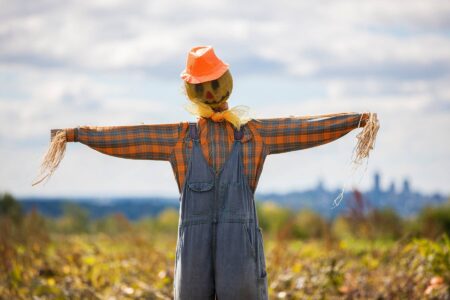
Incidentally, some years ago, I casually mentioned how I wished I had a scarecrow to keep the birds from stealing my squash seeds. Melding PVC pipe, galvanized metal fencing wire and 2- by 4-inch lumber, my husband erected a fully-clothed, spinning, life-sized mannequin with moveable arms that shook shiny pie pans at prospective intruders. The scarecrow worked well, not only for birds, but also terrified squirrels, rabbits and raccoons, eventually becoming an endeared family member. We named him Woody.
I can just throw a sheet over the stock tank, I mumbled as I remembered Woody.
My husband strode past me, made a bunch of noise in the shop and dashed back with an armload of tools and materials. “Here. Take a picture of this,” he said as he dumped the stuff on the ground.
That’s it? I wondered.
In less than 30 minutes, we assembled a simple, sturdy screen and plywood cover to keep the mosquitoes out and let me and my watering can in. I can still swish a huge handful of muddy radishes in the tank on my way to the kitchen and needn’t worry about increasing the bug population.
Build your own
To begin, lay a sheet of window screen material over the tank, leaving enough space open for your watering can. Fold under the raw edge a couple times on the open end to sturdy it. We used aluminum screen, but I suspect nylon screen would work just as well. Drape the screen over the tank sides, trimming it to allow an overhang of about 4 inches, and then lasso it securely with a strong rope. Use a razor knife to cut out an opening about 1/2-inch smaller than your downspout so it fits in snugly.
Next, cut a plywood top at least 4 inches larger than the width of the tank and length of the opening. Underneath, screw on strips of 1 1/2- by 1 1/2-inch scrap wood on three sides to hold the cover in place and to keep the plywood from warping. On top, screw on another wood strip as a handle and to keep the lid stiff over the screen. We repurposed an old plywood sign from a manufacturing company, so one side was already painted. I merely primed the remaining raw wood surfaces and called it good.
Already I can detect the mosquitoes’ agitation as they hover above the delightful water-filled tank, but can’t get in to multiply. While the cover and tank are not as lovely as our ol’ pal, Woody, they cost little and should safeguard our rainwater for many seasons.
Meanwhile, we are jotting down ideas for more rain collection systems, including the resourceful garden rainwater setup Mother Earth News editor Cheryl Long wrote about in the August/September 2012 issue.
Photos by Linda Holliday
Linda Holliday lives in the Missouri Ozarks where she and her husband formed Well WaterBoy Products, a company devoted to helping people live more self-sufficiently off grid, and invented the WaterBuck Pump.