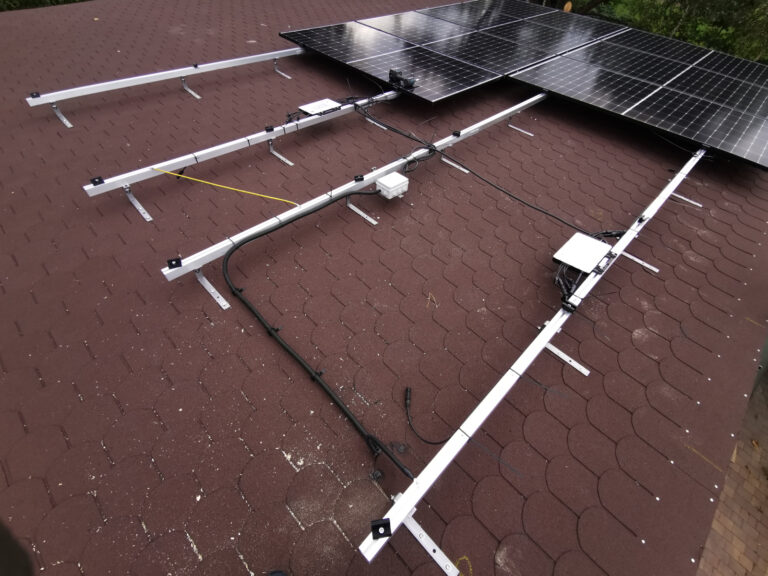
Avoid power surge solar panels damage by not using microinverters, grounding your system, and installing multiple whole-building surge protection devices.
Welcome to our series answering reader questions and concerns about how to cut the utility-company cord.
My daughter’s Texas neighborhood recently experienced a major power outage. She thinks her solar panels might have been damaged from the surge. Is this a possibility, and what equipment could have protected her panels?
I’ve never heard of an electrical surge damaging solar panels. Here in Texas, it’s more common to lose panels from hail, high winds, or the neighbor’s kids throwing rocks. For one of my commercial solar photovoltaic (PV) projects, lightning severely damaged a standby generator, but the solar system continued to work as if nothing had happened. Several reasons account for why the PV system was unaffected: The generator used different feeder-line connections than the PV, and the PV was isolated from the system when the lightning hit. We also built in redundant means for grounding, so all metal equipment enclosures, from the roof on down, were tied to multiple 8-foot grounding rods driven into the earth.
I have heard of power surges and lightning strikes damaging inverters (and lightning damaging solar panels from a direct hit). If your daughter’s system uses microinverters, a surge might’ve damaged the solar panels, because microinverters attach directly to the panels — so, I’ll assume microinverters were involved. In this case, it’s likely only the microinverters were damaged, because they’re tied directly to her home’s 120/240-volt AC electrical system, which surging electricity would’ve traveled through.
I agree with microinverter manufacturers who recommend surge protection at the point where the inverters interface with a house’s electrical system. These “surge protection devices,” or SPDs, ward against lightning strikes and regular grid surges alike, both common in Texas. (For this reason, surge protection compatible with central, or “standalone,” inverters is also a good idea.) Not all SPDs are equal: One that can protect a whole-house electrical system from a surge might not be sensitive enough to protect more fragile electronic devices, such as computers and solar inverters.
Take a multitiered approach: heavy-duty protection at your meter to stop a powerful surge from entering your premises; then, more sensitive protection downstream to protect your electronics. Keeping your computers connected to power strips is a good idea. I also prefer a single, central inverter over microinverters, because when using microinverters and one or more fails, the PV array must be disassembled to some extent, up on a rooftop, to replace the faulty microinverters (and it’s not always obvious which or how many are broken). In the rare cases where I’ve had central inverters fail, it’s simpler to stand flat-footed on the ground and disconnect a few wires and bolts.
To summarize this lengthy answer:
- Avoid microinverters.
- Install additional grounding on your system.
- Have your electrician install whole-building surge protection at your main disconnect by your meter. Ensure the protection devices are rated to handle surges caused by lightning as well as tamer powerline surges.
- Install more sensitive surge protection (following the inverter manufacturer’s specifications) at the point where your inverters integrate with your home’s electrical system.
A solar-PV system should last for decades — but stuff happens when decades are involved. Warranties for inverters are normally for 10 years; for solar panels, typical warranties cover workmanship for 15 years and power production for 25 years. For anything else Mother Nature may throw at your system, make sure to purchase insurance to cover it.
Send Us Your Power-Full Questions
We’ll do our best to answer your questions on energy in upcoming issues. Email them to Letters@MotherEarthNews.com with “Energy Q&A” in the subject line. May all your days be filled with sunshine – even when it rains!
 Hoss Boyd is founder, president, and CEO of TeraVolt Energy and a recognized solar and energy-storage expert. Learn more about TeraVolt Energy at http://TVNRG.com.
Originally published in the February/March 2026 issue of MOTHER EARTH NEWS and regularly vetted for accuracy.