

Learn how to recycle solar panels, from reusing working panels to where and when to scrap them.
Welcome to our series answering reader questions and concerns about how to cut the utility-company cord.
What’s the best way to handle solar panels at the end of their lifespan, including options for recycling? I’ve heard solar panels contain toxic substances. Is that true?
Archie, Minnesota
Though solar power has been around since at least the 1950s, the technology became widespread after 2006, when the U.S. Solar Investment Tax Credit (ITC) made going solar affordable for more households. Twenty years later, we’re beginning to see those solar installations reach the end of their life cycles. Solar photovoltaic (PV) panels are rated to last at least until their 25-year warranty runs out. At that age, a monocrystalline panel’s energy output should be at least 80 percent of its original rated production. But “stuff” happens. One of my customers lost his entire array of 144 panels in a 15-minute hailstorm (and his warranty didn’t cover hail damage). If you’re stuck with broken panels, what can you do with them?
Our solution then was to send the panels to the landfill. The agent at my local refuse department told me they’ll accept solar panels, but only on days designated for electronic equipment. And while solar panels do contain toxic materials – including lead, cadmium, arsenic, and PFAS – the Environmental Protection Agency (EPA) considers levels low enough to dispose of solar in landfills (for more information, see EPA solar panel recycling). Still, I can think of higher-value ways to dispose of, or otherwise repurpose, solar panels.
How to Recycle Solar Panels
- Reuse working panels. I work with off-gridders who have 40-year-old panels still producing electricity – just at a lower level of output from when they were installed. If you have the luxury of storage space, keeping older PV panels for future energy uses is the cheapest alternative with the greatest reward. Structurally sound panels that still produce electricity can be used for smaller off-grid projects, such as powering well pumps, lighting outbuildings, and charging electric vehicles.
- Recycle professionally. Solar cells are made using silica mined in several places around the world: China, Russia, Brazil, the U.S. Midwest, and Norway, among others. Between layers of glass, silicon cells, and backing are layers of polylaminate. Thin-film panels used more often in large commercial solar projects are a different story. They’re made from a baked-on “film” of chemicals that include cadmium telluride. Cadmium telluride shouldn’t go into landfills, but because it’s over 90 percent recyclable, it can be recovered and used again – as can over 90 percent of the components in the more common monocrystalline and polycrystalline panels. That said, the PV-recycling industry is in an emergent stage, so you may need to pay to send your panels to a recycler, and it may not accept small quantities. The Solar Energy Industries Association lists recyclers. If you can’t find one nearby, contact recyclers that serve the residential market, such as SOLARCYCLE and Cleanlites; check with your municipality for e-waste events; or search for certified e-waste recyclers through programs like EPA e-Stewards.
- Scrap ’em. Consider disassembling panels yourself to sell the components to scrap-metal and glass-recovery companies. Scrap-metal companies will often pay for clean aluminum frames and racking. The glass in solar panels (the heaviest component) is tempered for high strength and is clearer than typical window glass. Check with your local glass companies to see if they’re possible buyers. Now, for the silicon solar cells: They’ll contain about 20 grams of silver for a single panel. Because a troy ounce of silver (31.1 grams) is currently worth about $90, reclaiming the silver could be a lucrative effort.
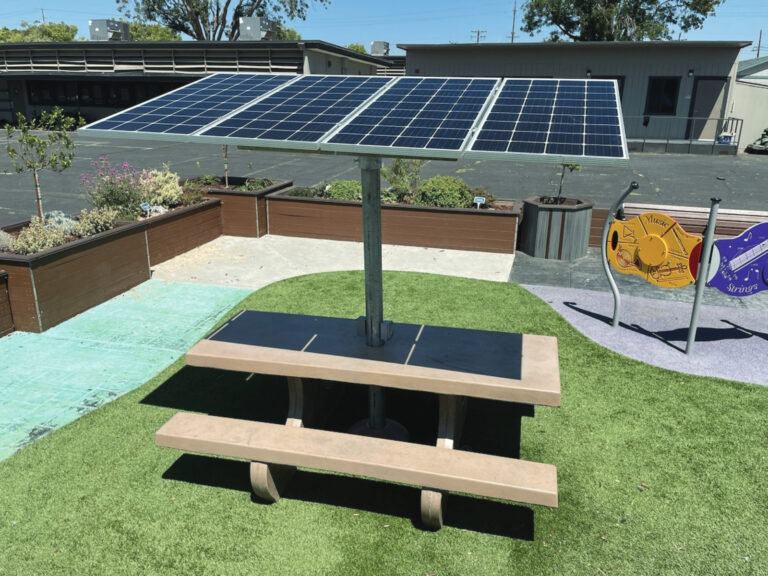
- Repurpose. But what if you have faulty panels and seemingly none of the options above? Make something out of them. Solar panels are designed to be sturdy enough to withstand hail and hold up in high winds. Consider using them for shade structures or small livestock enclosures. If you remove the solar cells and laminate from behind the glass, you’ll have high-quality windows and frames for a greenhouse. I’m sure readers will have nearly unlimited clever ideas for using old panels.
Send Us Your Power-Full Questions
We’ll do our best to answer your questions on energy in upcoming issues. Email them to Letters@MotherEarthNews.com with “Energy Q&A” in the subject line. May all your days be filled with sunshine – even when it rains!
Hoss Boyd is founder, president, and CEO of TeraVolt Energy and a recognized solar and energy-storage expert. Learn more about TeraVolt Energy at http://TVNRG.com.
Originally published in the April/May 2026 issue of MOTHER EARTH NEWS and regularly vetted for accuracy.





